
13 Must-See Sculptures Around the World in 2026: Travel Guide to Art's Greatest Masterpieces
From Michelangelo's David to Rodin's The Thinker, discover 13 iconic sculptures worldwide and exactly where to see them in person.

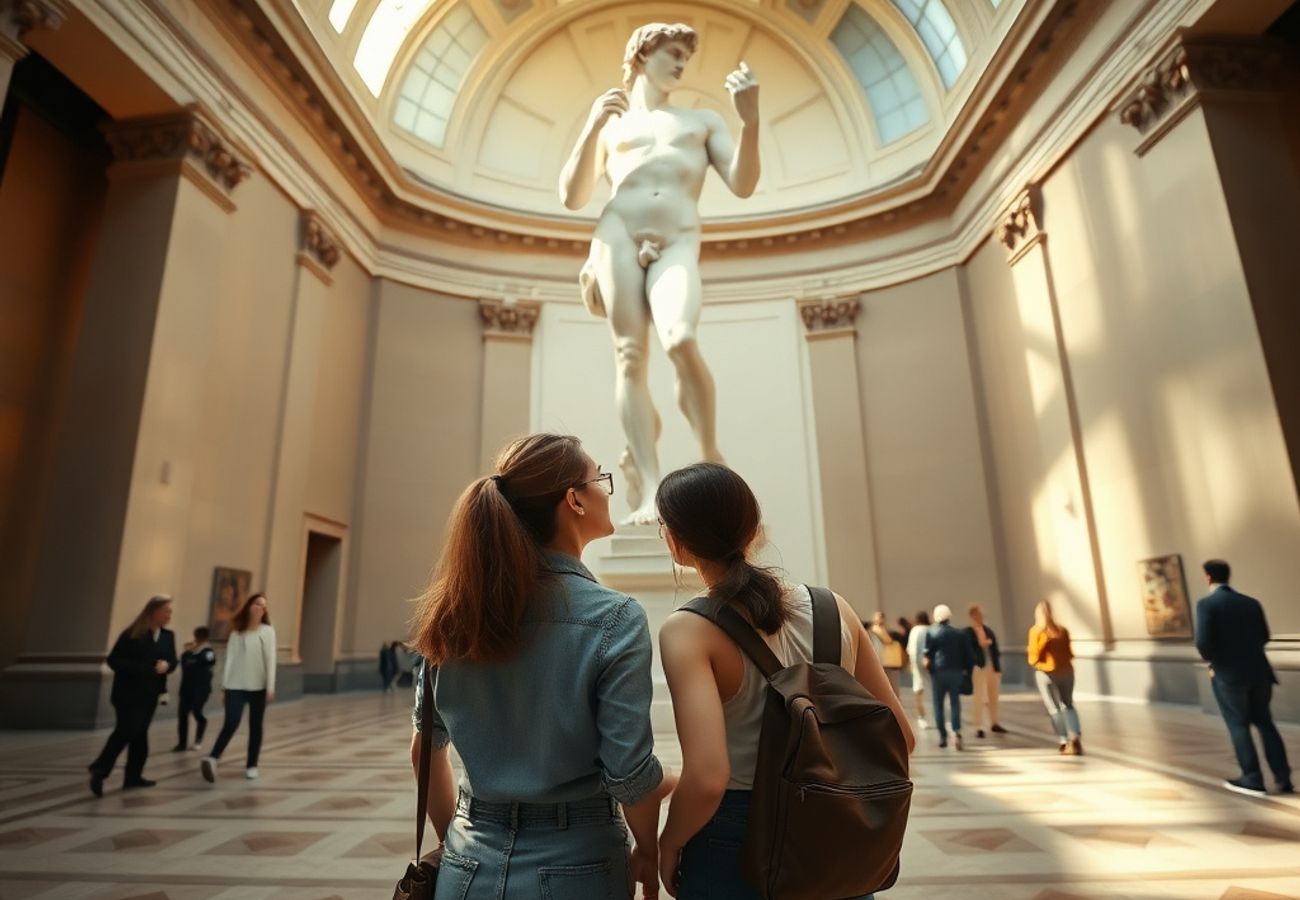
Image generated by AI
Sculpture isn't just art — it's humanity's conversation with itself across millennia. From ancient Greek bronzes to contemporary installations, these three-dimensional masterpieces tell stories of power, faith, beauty, and revolution. Some live in the world's greatest museums, others command public squares. All of them stop you in your tracks.
I've traced the geographic footprint of sculpture's greatest achievements, and what emerges is a travel map every art lover should bookmark. Here are 13 sculptures that changed how we see art — and exactly where to find them.
Michelangelo's David: Florence's Renaissance Crown Jewel
Michelangelo's David is the non-negotiable sculpture pilgrimage. Standing 17 feet tall, carved from a single block of marble that other sculptors deemed impossible, this Renaissance monument depicts the biblical hero in that suspended moment before his battle with Goliath.
Originally commissioned for the Florence Cathedral in 1504, David now resides in the Accademia Gallery, where it's been protected since 1873. The marble doesn't just depict musculature — it breathes with psychological tension. You'll understand why within seconds of seeing it.
Reddit: "Seeing David in person broke me emotionally. Photos do nothing." — r/travel
Visit during early morning hours to avoid crowds. The gallery operates daily, and skip-the-line tickets are worth every rupee.
The Little Fourteen-Year-Old Dancer: Degas' Radical Gesture
Edgar Degas created only one sculpture in his lifetime — and it scandalized Paris. Unveiled in 1881, this wax figure of a young ballerina wore an actual fabric tutu and satin ribbon, making viewers deeply uncomfortable with its unflinching realism.
The sculpture now lives at the National Gallery of Art in Washington, DC. What makes it revolutionary isn't just the craftsmanship — it's Degas' refusal to idealize. The dancer's posture is slightly awkward, her expression candid. Museums have since cast 28 authorized bronze editions, but seeing the original leaves a different impression entirely.
This work bridges the gap between painting and sculpture, between classical perfection and modern honesty.
Cloud Gate: Chicago's Reflective Icon
Walk into Millennium Park in Chicago, and you'll encounter Anish Kapoor's Cloud Gate — instantly recognizable as "The Bean." This 66-foot-long stainless steel sculpture curves and warps the Chicago skyline, turning architecture into liquid.
The sculpture's mirrored surface invites interaction. You're not just viewing art; you're becoming part of it. The structure has become one of the most photographed landmarks in America, and for good reason — it's Instagram perfection meeting genuine artistic innovation.
Best visited during golden hour when the city's reflection transforms throughout the afternoon.
The Thinker: Rodin's Philosophical Anchor
Auguste Rodin's "The Thinker" has become shorthand for human contemplation itself. Originally titled "The Poet," this bronze sculpture depicts a man hunched in deep deliberation, part of Rodin's larger collection inspired by Dante's "Inferno."
You'll find authorized casts worldwide, but the original resides at the Musée Rodin in Paris. Standing before it, you understand why — the original carries weight that reproductions cannot replicate. The museum's gardens surrounding the sculpture add an unexpected serenity to the experience.
This sculpture proves that simplicity and depth are not opposites.
Discobulus: Ancient Athletic Perfection
Discobulus — the Discus Thrower — dates to 450 BC, carved by Greek sculptor Myron. No original survives, only Roman copies. Yet this pose has become THE visual shorthand for athletic grace and dynamic movement.
You can see faithful replicas at the British Museum in London or the National Roman Museum in Rome. The sculpture captures motion in stillness, a paradox that makes it timeless. The athlete's body twists with tension, frozen milliseconds before release.
The Bust of Nefertiti: Ancient Beauty Encoded
Discovered in 1912 within the ruins of Amarna — the revolutionary city built by Pharaoh Akhenaten — this limestone bust of Queen Nefertiti is believed to be one of humanity's most important artistic discoveries. Now housed at the Neues Museum in Berlin, the sculpture's elegant proportions and distinctive crown have made it a global symbol of feminine beauty.
What's often overlooked: Nefertiti wasn't merely decorative. She played a central role in converting ancient Egypt from polytheistic to monotheistic religion, making this sculpture a portrait of religious and political power.
Venus de Milo: Hellenistic Perfection at the Louvre
Unlike most classical Greek sculptures you'll encounter, Venus de Milo at the Louvre Museum in Paris is an original Greek work, not a Roman copy. Discovered by a farmer in the 19th century, this marble goddess of love embodies Hellenistic sensuality without sacrificing dignity.
The missing arms sparked centuries of speculation — were they deliberately removed? Lost to time? The mystery only deepens her allure. She's been drawing crowds since joining the Louvre's collection in 1821.
The Winged Victory of Samothrace: Drama on Stone
Ascending the Louvre's grand staircase, you encounter The Winged Victory of Samothrace — Nike, the goddess of victory herself, frozen mid-descent. Dating to 190 BC, this marble figure appears to move with such force that her drapery seems caught by actual wind.
The sculpture's placement on the staircase, its dynamic positioning, and its architectural drama make it arguably the Louvre's most viscerally powerful work. Many visitors skip the Mona Lisa to linger here instead.
Reddit: "Winged Victory > Mona Lisa. Fight me." — r/ArtHistory
The Colossus of Rhodes: Lost Wonder Lives On
Though the actual sculpture was destroyed by earthquake in 226 BC, The Colossus of Rhodes — one of the Seven Wonders of the Ancient World — deserves remembrance. This 108-foot bronze statue of Helios, the sun god, stood guarding Rhodes' harbor for merely 56 years.
Today, no original remains, but archaeological sites in Rhodes, Greece preserve the legacy. The monument reimagines how ancient civilizations approached scale and ambition.
Christ the Redeemer: Rio's Modernist Miracle
Christ the Redeemer overlooking Rio de Janeiro, Brazil represents 20th-century ambition. Completed in 1931, this 98-foot-tall art deco statue by Heitor da Silva Costa has become Brazil's most recognizable monument and one of the New Seven Wonders of the World.
The sculpture isn't classically perfect — it's bold, geometric, modern. Visiting requires a train ride up Corcovado Mountain, where the statue overlooks the city with undeniable majesty. The surrounding landscape transforms the sculpture into environmental art.
David by Donatello: Florence's Earlier Innovation
Before Michelangelo's marble giant, Donatello created a bronze David in the 1440s, now housed in Florence's Bargello Museum. This version is smaller, more intimate, and psychologically rawer. Donatello's David is a boy, not yet a man, making the sculpture's vulnerability cut deeper.
Comparing the two Davids — Donatello's bronze and Michelangelo's marble — reveals how the same subject transformed across artistic generations.
The Gates of Hell: Rodin's Unfinished Masterpiece
Auguste Rodin's "The Gates of Hell" at the Musée Rodin in Paris remains deliberately incomplete. This monumental bronze doorway, inspired by Dante's descent through hell, contains over 200 figures. Rodin worked on it for 37 years without finishing, suggesting that art's power sometimes lies in the journey, not the destination.
The sculpture is simultaneously architectural, narrative, and philosophical — proof that three-dimensionality allows storytelling that painting cannot achieve.
The Little Mermaid: Copenhagen's Controversial Icon
Edvard Eriksen's "The Little Mermaid" sits on a rock in Copenhagen, Denmark's harbor. Despite being repeatedly vandalized and having become a tourist cliché, the sculpture retains strange power. Cast from Hans Christian Andersen's tale, this bronze figure gazes toward the sea with melancholy that no amount of tourist selfies can diminish.
The sculpture's vulnerability — both literally (it's weathered countless attacks) and emotionally — makes it unexpectedly profound.
Planning Your Sculpture Pilgrimage
These 13 works span continents, centuries, and artistic movements. Some require museum visits; others command public spaces freely. All repay in-person contemplation that photographs cannot substitute.
Travel insurance, booking in advance, and timing your visits for lower-traffic hours will enhance every experience. Museums increasingly offer digital skip-the-line ticketing, making logistics seamless.
The investment — in time, money, and effort — transforms how you see both art and the cities that hold these treasures.
These sculptures didn't survive millennia through luck; they endured because humans couldn't stop looking at them.
Related Travel Guides
Disclaimer
This article is for informational and educational purposes only. It does not constitute legal, financial, or professional advice. While we strive to provide accurate and up-to-date information, travel policies, regulations, and conditions change rapidly. Always verify information with official sources before making travel decisions. Nomad Lawyer makes no representations about the accuracy, reliability, completeness, or suitability of the information provided. Readers should consult qualified professionals for advice specific to their circumstances. The views expressed in this article are those of the author and do not necessarily reflect the views of Nomad Lawyer.
Raushan Kumar
Founder & Lead Developer
Full-stack developer with 11+ years of experience and a passionate traveller. Raushan built Nomad Lawyer from the ground up with a vision to create the best travel and law experience on the web.
Learn more about our team →