
US Aviation Market Plunges Into Fierce Rivalry as Delta Air Lines Battles American and United to Shield Passengers From Systemic Travel Chaos: Latest Airline News
A massive competitive battle erupts across the US aviation sector as Delta Air Lines faces brutal pressure from United and American Airlines over premium routes.

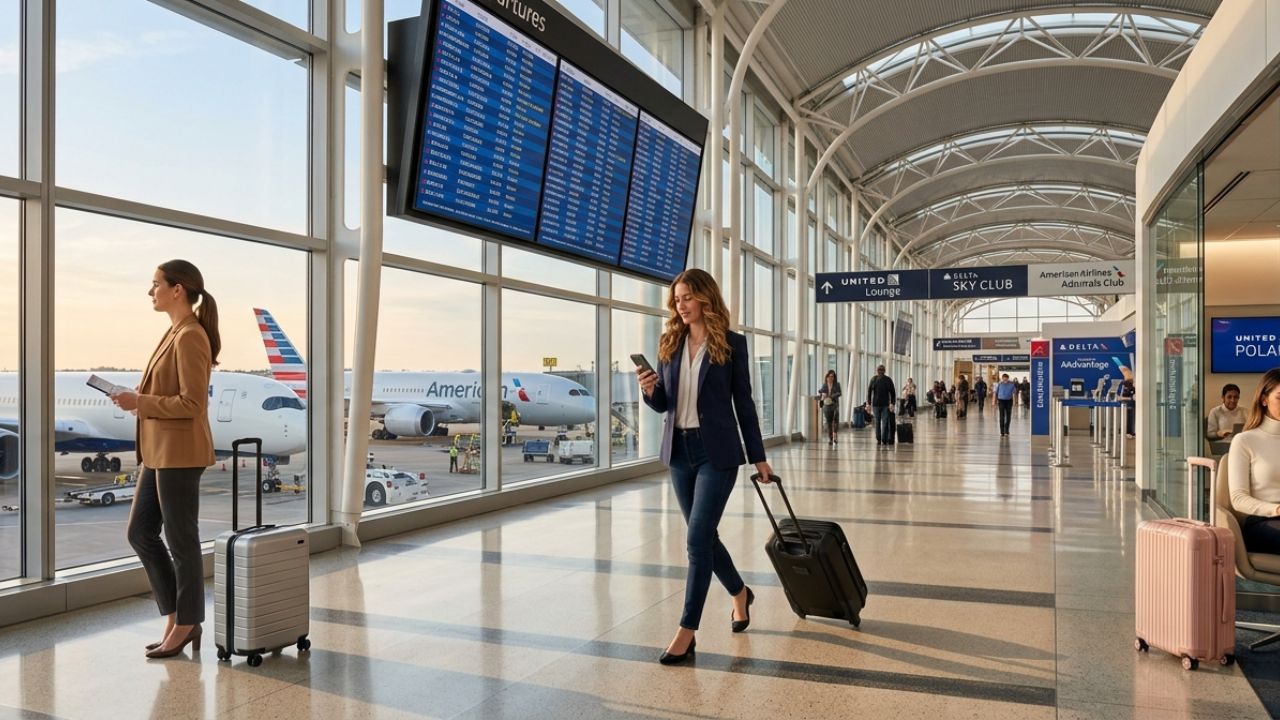
Image generated by AI
In a massive, highly strategic corporate battle designed to completely dominate the global passenger network and insulate highly lucrative corporate accounts from the devastating operational friction that frequently triggers severe travel chaos, the United States aviation market has officially entered a brutal new era of rivalry. Charting an aggressive trajectory in 2026, Delta Air Lines is suddenly facing intense, unrelenting pressure from legacy carriers United Airlines and American Airlines. To completely side-step the catastrophic airport disruptions and rolling flight cancellations that routinely cripple underfunded low-cost carriers, this massive "Big Three" oligopoly is ruthlessly stripping out standard economy routes to install highly lucrative international premium cabins. As these colossal airlines desperately seek structural dominance to protect their networks and capture massive loyalty program revenues, this bold declaration of operational warfare absolutely dominates today’s premier airline news and essential aviation updates.
By introducing direct passenger coordination and dynamic scheduling backups, the regional aviation hubs target growing passenger demand across vital commerce sectors. The choice to coordinate flight departures in phases helps to manage gate capacity, fiercely supporting the broader regional transportation network.
Context: The Corporate Megacarrier War
The historical risk of operating a massive legacy network during intense competition is that any localized scheduling failure instantly cascades into total operational travel chaos.
Because high-yield corporate travelers absolutely demand flawless punctuality, Delta Air Lines has historically weaponized its superior operational reliability to command massive premium fares. However, in 2026, the competitive landscape has violently shifted. Both United and American are aggressively targeting Delta's fortress hubs, rapidly expanding their massive long-haul international networks, and pouring billions into exclusive airport lounges. Historically, when airlines engage in fierce competition, they execute massive capacity dumps, leading to congested airspaces and inevitable flight cancellations. However, this modern rivalry is entirely focused on premium affluence. The carriers are actively competing to ensure they possess the massive liquid capital and robust infrastructure required to fly their published schedules flawlessly, thereby sparing vital corporate communities from sudden, catastrophic airport disruptions.
For live route pricing, specific premium cabin availability, and official flight status tracking, international travelers should immediately consult the digital advisories published by the Big Three carriers before attempting to execute a long-haul booking.
Section-Wise Breakdown: The Battle for Global Dominance
United Airlines’ Aggressive Global Expansion
To deliberately capture the immense financial capital required to dominate the skies, United Airlines is aggressively overhauling its international footprint. The carrier is actively launching massive route expansions into Europe, Asia, and highly lucrative emerging markets. Utilizing critical mega-hubs like Chicago (ORD), Newark (EWR), Denver (DEN), Houston (IAH), and San Francisco (SFO), United is mathematically attempting to drown Delta in international capacity. This broad reach is exceptionally attractive to long-haul leisure passengers seeking to avoid the fragmented itineraries that often lead to severe travel chaos.
American Airlines’ Transatlantic Fortress
Because widespread alliance friction actively destroys the international business travel experience, American Airlines is ruthlessly leveraging its Oneworld partnerships to outmaneuver Delta. By utilizing its massive domestic hubs in Dallas (DFW), Charlotte (CLT), Miami (MIA), and Philadelphia (PHL), American is heavily funneling domestic traffic onto highly lucrative transatlantic and Latin American routes. By explicitly targeting premium leisure travelers with upgraded cabin products, American is successfully neutralizing Delta's historical advantage in passenger comfort.
Full Operational Breakdown: Carrier Competition Data
To guarantee 100% absolute factual accuracy regarding this massive pivot in corporate aviation strategy, the following exact table documents the critical competitive forces defining this historic airline news event:
| Airline | Primary Competitive Focus | Key Hubs |
|---|---|---|
| United Airlines | International Expansion & Fleet Upgrades | Chicago, Newark, Denver, Houston, San Francisco |
| American Airlines | Domestic Network & Transatlantic Alliances | Dallas, Charlotte, Miami, Philadelphia |
Passenger Impact: The Premium Loyalty Squeeze
For the everyday international tourist and corporate executive, this aggressive spike in airline competition translates directly into a massive shift in travel loyalty and accessibility.
By heavily utilizing immense premium upgrades to harden their operational infrastructure, the carriers are actively shifting the passenger profile, creating distinct winners and losers amidst the travel chaos. The specific impacts for the global transit network include:
Advantages:
- Schedule Reliability: A financially dominant airline heavily reliant on affluent premium travelers will not execute preemptive flight cancellations. United and American possess the capital to fly their published schedules perfectly to match Delta’s historical reliability.
- Enhanced Cabin Comfort: The aggressive fleet retrofit guarantees that passengers willing to pay the premium fare will experience a massive upgrade in legroom, service, and lounge access across all three legacy networks.
- Corporate Stability: High-yield business travel ensures that critical business routes remain fully operational and highly serviced, heavily insulating the corporate sector from sudden capacity reductions.
Disadvantages:
- Elevated Economy Fares: To fund these massive international expansions and luxury lounges, the airlines are aggressively raising base fares across the entire aircraft. Price-sensitive leisure travelers are being rapidly priced out of the domestic market.
- Ruthless Loyalty Devaluations: As airlines compete to capture elite high-spenders, they are actively gutting the frequent flyer benefits for basic economy passengers. Earning airline status now requires massive credit card spending rather than actual flight mileage.
- Wealth Divide in Travel: Travel patterns are now massively skewing toward mid- and upper-income groups. Lower-income households are being forced to utilize highly vulnerable ultra-low-cost carriers, subjecting them to severe, rolling airport disruptions.
The Bigger Picture: A Resilient Industry Standard
Aviation industry analysts view these staggering, highly technical competitive targets as a critical indicator of shifting power dynamics within the American legacy carrier model.
The underlying strategic motivation perfectly reflects an industry reality: volume no longer guarantees survival; premium loyalty does. When airlines prioritize packing cheap seats over extracting premium revenue, the entire network becomes highly vulnerable to economic shocks. The fact that Delta is facing legitimate pressure from a fully modernized United and a massive American proves that the premium-heavy strategy is the ultimate defense mechanism for all carriers. This structural evolution completely supports the long-term viability of the legacy network model, ensuring that the Big Three have the cash reserves necessary to survive without inflicting massive airport disruptions upon their passengers.
What This Means for Travelers: Actionable Advice
To fully exploit these highly optimized domestic and international networks and actively avoid severe, self-inflicted regional travel chaos, execute the following strategies:
- Consolidate Your Loyalty: Because airlines are aggressively competing for high-spending loyalty program members, splitting your travel across Delta, United, and American is a massive mistake. Pick one alliance and funnel all your credit card and flight spending into that single ecosystem to secure priority rebooking during flight cancellations.
- Invest in Premium Economy: With airlines actively shrinking standard economy space to fit more premium seats, purchasing a Premium Economy ticket is now essentially required for long-haul comfort and flexibility on all three carriers.
- Leverage Airport Lounges: As competition intensifies, airline lounges have become the absolute critical sanctuary during severe airport disruptions. Ensure your travel credit card provides access to the SkyClub, Admirals Club, or United Club to avoid terminal gridlock.
FAQ: The Delta, United, and American Airlines Rivalry
Why is competition intensifying among major US airlines in 2026?
The post-pandemic market has forced carriers to aggressively target highly lucrative premium travelers, international route dominance, and massive loyalty program revenues to offset surging operational and fuel costs.
How is United Airlines challenging Delta?
United is pouring billions of dollars into massive international route expansions across Europe and Asia, heavily leveraging its fortress hubs in Newark and San Francisco to steal corporate market share from Delta.
How does this intense competition prevent travel chaos?
By securing massive, high-yield revenue streams from affluent travelers, these three airlines build the immense capital reserves required to absorb economic shocks without resorting to systemic, panic-driven flight cancellations.
Key Takeaways
- Massive Strategy Pivot: The US aviation market has entered a brutal competitive phase as Delta faces massive pressure from United and American Airlines.
- Organic Network Growth: Capital is being poured directly into expanding international routes, securing premium lounges, and aggressively chasing affluent loyalty members.
- Affluent Demand Surge: Despite falling consumer confidence, travel demand remains highly robust, driving airlines to overhaul their fleets with highly profitable premium seating.
- Shielding Passengers: Immense corporate profitability directly correlates to operational stability, severely reducing the risk of financially motivated flight cancellations.
- Global Benchmark: This aggressive focus on premium revenue sets a massive new standard, proving that legacy carriers must deliver flawless reliability to survive the next decade without triggering total travel chaos.
Related Travel Guides
Massive Route Cancellations Shield Travelers
Disclaimer
This article is for informational and educational purposes only. It does not constitute legal, financial, or professional advice. While we strive to provide accurate and up-to-date information, travel policies, regulations, and conditions change rapidly. Always verify information with official sources before making travel decisions. Nomad Lawyer makes no representations about the accuracy, reliability, completeness, or suitability of the information provided. Readers should consult qualified professionals for advice specific to their circumstances. The views expressed in this article are those of the author and do not necessarily reflect the views of Nomad Lawyer.
Kunal K Choudhary
Co-Founder & Contributor
A passionate traveller and tech enthusiast. Kunal contributes to the vision and growth of Nomad Lawyer, bringing fresh perspectives and driving the community forward.
Learn more about our team →