
Air Canada, PAL, and Jazz Trigger Massive Flight Cancellations Across Toronto and Vancouver, Unleashing Canadian Travel Chaos: Latest Airline News
As sudden operational gridlock paralyzes Canada, massive flight cancellations violently sever domestic transit arteries across Toronto, Vancouver, and Montreal.

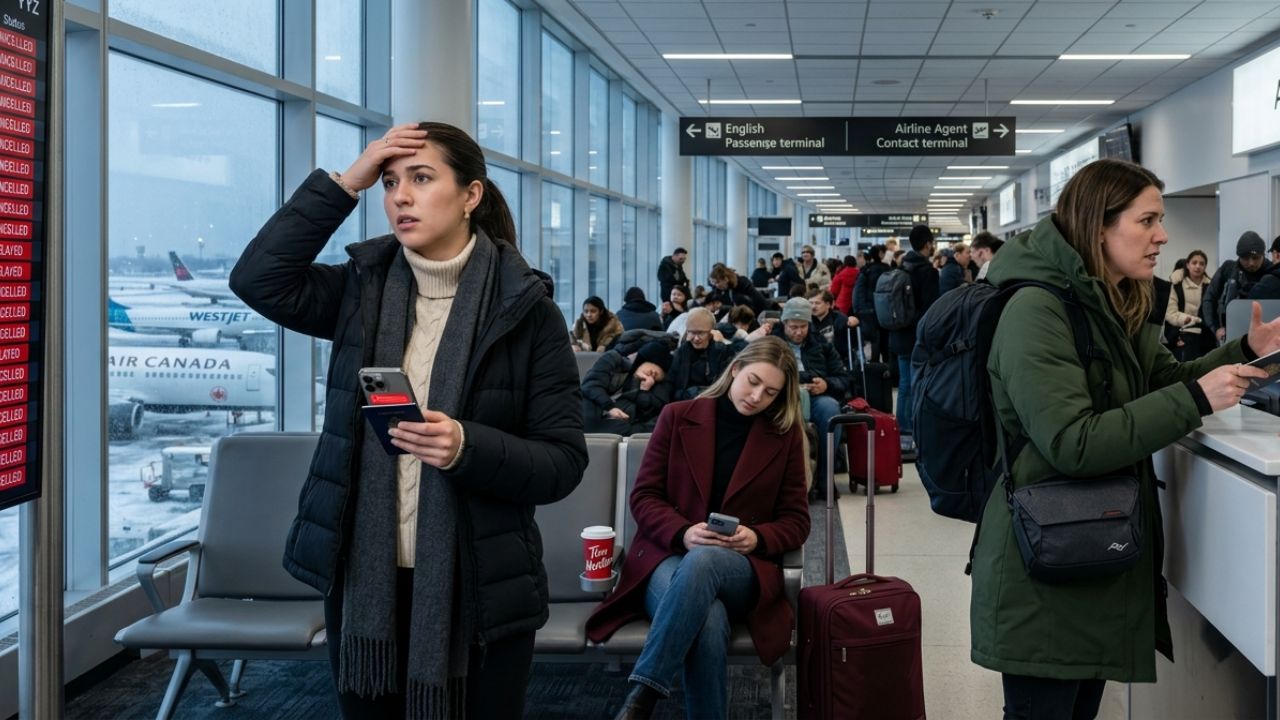
Image generated by AI
In a massive structural breakdown directly triggering a devastating wave of domestic and international travel chaos, Canada's premier aviation network has suffered an unprecedented operational collapse. Driven by compounding operational bottlenecks and severe terminal congestion, a massive wave of 30 sudden flight cancellations and 173 severe delays violently severed global transit arteries across the nation's most critical aviation hubs, including Toronto Pearson, Vancouver International, and Montreal-Trudeau. This absolute collapse in connectivity heavily impacted massive aviation titans including Air Canada, PAL Airlines, Jazz, and Air Inuit, completely destroying travel itineraries for thousands of connecting passengers. As widespread airport disruptions physically paralyze these critical gateways and their vital connections to remote regional outposts like Kuujjuaq and Trail, this catastrophic failure totally dominates today’s premier airline news and global aviation updates.
By introducing direct passenger coordination and dynamic scheduling backups, the regional aviation hubs target growing passenger demand across vital commerce sectors. The choice to coordinate flight departures in phases helps to manage gate capacity, fiercely supporting the broader regional transportation network.
Context: The Collapse of the Canadian Crossroads
The historical vulnerability of funneling massive volumes of domestic and regional travelers through highly constrained, weather-dependent mega-hubs like Toronto Pearson has repeatedly resulted in extreme physical exhaustion and severely destroyed passenger itineraries.
Because massive capacity crunches and localized operational strain constantly threaten punctuality, the sudden loss of 203 scheduled flights plunged the entire Canadian aviation network into absolute disarray. These paralyzing flight cancellations hit the Toronto and Vancouver hubs violently because they function as the absolute primary switching points for transcontinental travel; one canceled narrowbody immediately cascades into massive crew shortages and stranded passengers nationwide. While airlines are desperately attempting to salvage the schedule, thousands of stranded travelers face immediate, severe disruption. Rather than a quick fix, this crisis represents a terrifying synchronization of operational gridlock, forcing travelers into agonizing terminal waiting games during a critical operational window.
For live route mapping, specific rebooking options, and official flight status tracking, stranded passengers should immediately consult the digital advisories published by their respective carriers before attempting to access these severely compromised terminals.
Section-Wise Breakdown: Hub-by-Hub Travel Chaos
The Eastern Epicenter: Toronto Pearson and Montreal-Trudeau
To deliberately manage the immense volume of transcontinental traffic, Canada relies heavily on its eastern hubs. However, Toronto Pearson International Airport absorbed a highly destructive blow during this operational meltdown, recording an absolutely staggering 73 delays and 16 outright cancellations. This makes it the single most paralyzed airport in the nation, mathematically guaranteeing severe delays for any passenger utilizing it as a connecting gateway. Simultaneously, Montreal-Trudeau International Airport faced massive disruption loads, logging 55 delays and 4 cancellations, violently severing connectivity across Quebec and the Maritimes.
The Western Gateway: Vancouver International
Because massive airport disruptions actively destroy the passenger experience across the region, the operational strain violently spilled over to the Pacific coast. Vancouver International Airport recorded 40 delays and 6 cancellations, placing massive pressure on western Canada's primary aviation artery. This failure completely trapped business and leisure travelers attempting to access Asia, the US West Coast, or domestic routes over the Rockies.
The Regional Paralysis: Kuujjuaq and Trail
The operational shielding heavily failed across the essential regional networks that support Canada's remote communities. While massive mega-hubs can eventually absorb delays, regional airports cannot. Kuujjuaq Airport suffered 5 delays and 2 cancellations, while Trail Airport recorded 2 outright cancellations. Because regional carriers often provide the only vital lifeline to these areas, a single cancellation mathematically guarantees that passengers are physically stranded without alternative same-day routing options.
Full Operational Breakdown: Airport and Airline Data
To guarantee 100% absolute factual accuracy regarding this massive pivot to ultra-restrictive capacity, the following exact tables document the critical flight disruptions currently driving this travel chaos:
Airport-Wise Disruption Table
| Airport | Total Delays Today | Total Cancellations Today |
|---|---|---|
| Toronto Pearson International Airport | 73 | 16 |
| Vancouver International Airport | 40 | 6 |
| Montreal-Trudeau International Airport | 55 | 4 |
| Kuujjuaq Airport | 5 | 2 |
| Trail Airport | 0 | 2 |
Airline-Wise Flight Disruptions Across Canada
| Airline | Cancelled Flights | Delayed Flights |
|---|---|---|
| Air Canada | 7 | 46 |
| PAL Airlines | 6 | 18 |
| Jazz | 5 | 29 |
| Air Canada Rouge | 3 | 13 |
| Air Inuit | 2 | 25 |
| Pacific Coastal Airlines | 2 | 3 |
Passenger Impact: The Eradication of Reliable Transit
For the everyday domestic and international traveler, this aggressive spike in flight cancellations and terminal gridlock translates into a massive surge in travel anxiety and the total eradication of passenger confidence.
By heavily experiencing these sudden schedule alterations, passengers face brutal rebooking delays, agonizing missed connections, and severely reduced seat availability on alternative routes. A business executive attempting to cross from Toronto to Vancouver on Air Canada, or a regional passenger trying to reach Kuujjuaq on Air Inuit, is now forced into a devastating cycle of standby queues and financial loss. The sheer removal of massive widebody jets and critical turboprop connectors physically guarantees that hundreds of passengers are currently suffering maximum emotional and logistical friction across these high-frequency routes.
The Bigger Picture: The Economics of Terminal Gridlock
Aviation industry analysts view these staggering, highly targeted airport disruptions as a critical indicator of systemic operational sensitivity within Canada's massive geographic transportation sector.
The underlying strategic motivation perfectly reflects a massive industry reality: when high-frequency airports like Toronto Pearson operate at absolute maximum capacity, an isolated operational anomaly rapidly cascades into significant national travel failure. Because Canada’s massive geographic scale demands highly reliable domestic aviation, the fact that the flag carrier (Air Canada) delayed 46 flights and canceled 7, while its regional partner (Jazz) delayed 29, proves that the legacy networks are under severe stress. Airlines will face continued, devastating scheduling pressure if these hub-level disruptions persist.
What This Means for Travelers: Actionable Advice
To fully exploit these highly efficient international networks and actively avoid severe, self-inflicted regional travel chaos, execute the following strategies:
- Demand Immediate Rebooking: If your Air Canada flight out of Toronto is violently canceled, do not wait in physical terminal lines. Instantly access the digital app to secure alternative routing before other passengers completely deplete the remaining seat inventory.
- Pad Your Connections: If you are transferring through Toronto or Montreal, this data proves you cannot rely on tight connections. Always book layovers exceeding three hours to physically insulate yourself from the severe travel chaos paralyzing Canadian departure banks.
- Pack Survival Essentials: When traveling to regional airports like Trail or Kuujjuaq, physically keep medications, chargers, and a change of clothes in your carry-on. Because alternative flights may not exist for 24 hours following a cancellation, you must be prepared to survive sudden airport disruptions.
- Monitor Air Passenger Protection Regulations (APPR): Canada mandates specific compensation and welfare measures for disruptions within carrier control. Aggressively demand food vouchers and hotel accommodations if your flight is severely delayed or canceled.
FAQ: Canada Flight Disruptions
Why did Toronto and Vancouver suffer sudden flight cancellations?
The disruptions were driven by localized operational strain and compounding scheduling constraints, forcing a massive wave of 30 cancellations and 173 delays across the constrained Canadian hubs.
Which airlines were most impacted by the travel chaos in Canada?
Air Canada suffered the highest overall disruption with 46 delays and 7 cancellations. Regional carriers PAL Airlines, Jazz, and Air Inuit also logged critical network failures.
Which airports were violently paralyzed?
Toronto Pearson recorded the highest volume with 89 total disruptions, followed closely by Montreal-Trudeau and Vancouver International, severely degrading national connectivity.
Key Takeaways
- Sudden Disruption Wave: 203 highly critical flights were violently delayed or canceled across Canada.
- Air Canada Devastated: The national flag carrier suffered a massive wave of delays and cancellations.
- Toronto Epicenter: Pearson International Airport absorbed 73 delays and 16 outright cancellations.
- Regional Paralysis: Vital routes to Kuujjuaq and Trail were severed, trapping passengers in remote areas.
- Passenger Friction: The sudden schedule failures forced thousands of travelers into severe localized travel chaos.
Related Travel Guides
Massive UK Route Cancellations Shield Travelers
Disclaimer
This article is for informational and educational purposes only. It does not constitute legal, financial, or professional advice. While we strive to provide accurate and up-to-date information, travel policies, regulations, and conditions change rapidly. Always verify information with official sources before making travel decisions. Nomad Lawyer makes no representations about the accuracy, reliability, completeness, or suitability of the information provided. Readers should consult qualified professionals for advice specific to their circumstances. The views expressed in this article are those of the author and do not necessarily reflect the views of Nomad Lawyer.
Kunal K Choudhary
Co-Founder & Contributor
A passionate traveller and tech enthusiast. Kunal contributes to the vision and growth of Nomad Lawyer, bringing fresh perspectives and driving the community forward.
Learn more about our team →