
US Airlines to Narrow Meal and Hotel Vouchers as 10 New Delay Types Classified as Uncontrollable in 2026
A new federal rule taking effect October 19, 2026, reclassifies 10 types of flight disruptions as uncontrollable, allowing US airlines to legally decline meal and hotel vouchers for stranded passengers.
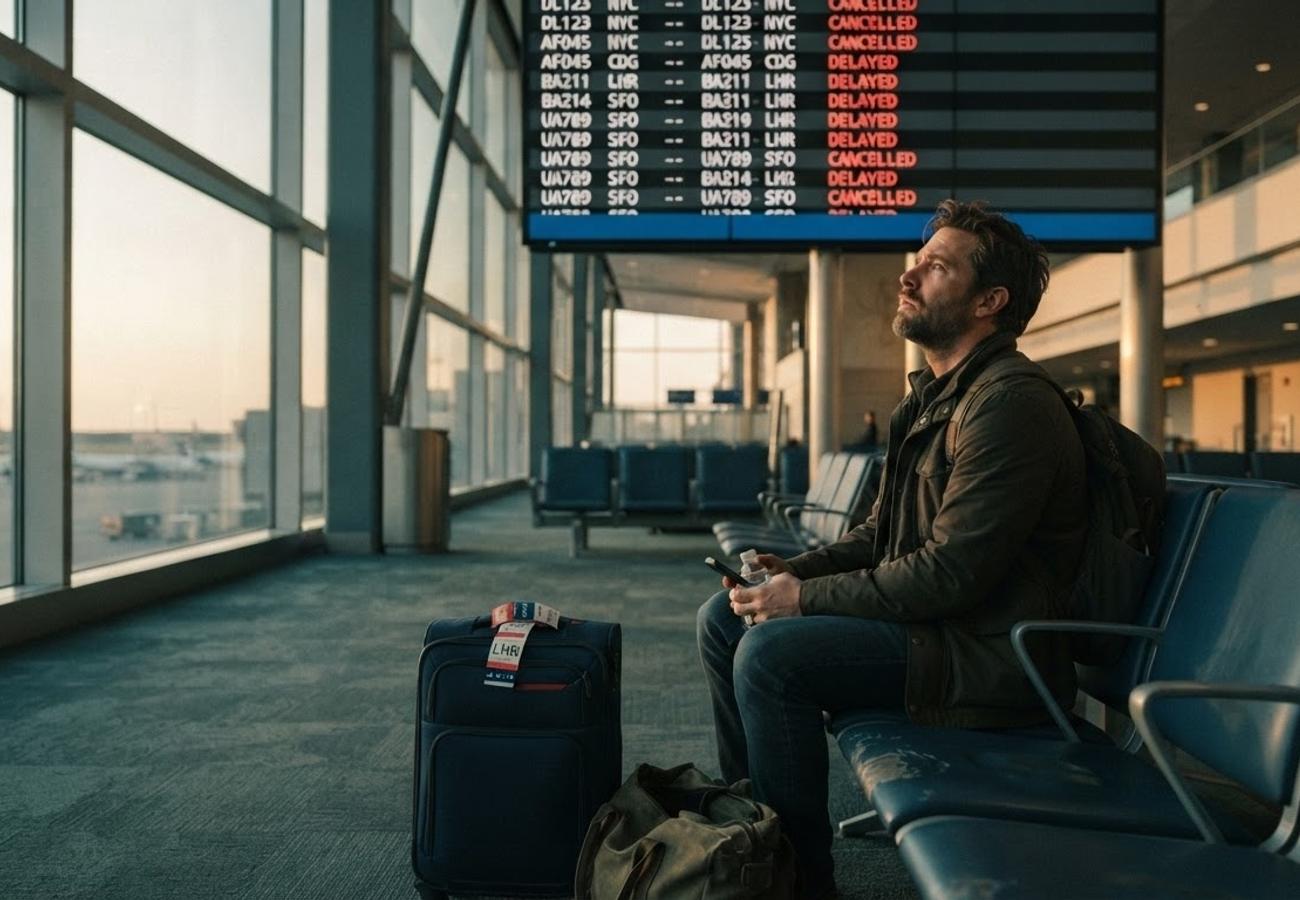
Image generated by AI
A new federal rule taking effect October 19, 2026, formally reclassifies 10 types of flight disruptions as "uncontrollable," significantly reducing the instances where US airlines are committed to providing meals, hotels, or ground transportation.
The Department of Transportation (DOT) has published a final rule in the Federal Register that updates the categorization of flight delays and cancellations. By shifting 10 specific causes out of the "air carrier" category, the government is effectively narrowing the window in which passengers can claim voluntary amenities promised by the 10 largest US airlines.
The Shift in Delay Classification
The core of this regulatory change lies in how data is reported in the DOT’s monthly Air Travel Consumer Report and the public Airline Cancellation and Delay Dashboard. Previously, many disruptions were categorized as airline-caused, triggering voluntary customer service pledges from carriers to provide amenities to stranded travelers.
Starting October 19, 2026, 10 specific causes—including certain unscheduled maintenance required by safety directives, airport or air traffic control (ATC) constraints, and various security-related operational disruptions—will no longer be attributed to the air carrier. This reclassification follows petitions from industry groups who argued that previous reporting overstated carrier responsibility.
While the rule does not explicitly set compensation standards, it creates a loophole for airlines. Because most airline commitments for meals and hotels are tied specifically to "controllable" delays, this shift allows carriers to label a wider array of disruptions as "uncontrollable," thereby removing the obligation to provide vouchers.
Impact on Passenger Amenities
Since 2022, the DOT has tracked voluntary pledges from major carriers to offer free rebooking, meal vouchers, and hotel accommodations for controllable events (such as crew scheduling errors). Under the new framework, the following changes apply:
| Feature | Previous Status (Controllable) | New Status (Reclassified/Uncontrollable) |
|---|---|---|
| Meal Vouchers | Promised for carrier-caused delays | Discretionary/Likely Declined |
| Hotel Lodging | Promised for overnight carrier delays | Discretionary/Likely Declined |
| Ground Transport | Promised for carrier-caused disruptions | Discretionary/Likely Declined |
| Reporting Category | "Air Carrier" Delay | "Non-Carrier" / Operational Delay |
| Effective Date | Pre-October 19, 2026 | October 19, 2026 |
The DOT has acknowledged that it cannot precisely estimate the total reduction in amenities provided to consumers because it lacks full visibility into how often these 10 specific causes occur. However, the regulatory text explicitly notes that compensation linked to "air carrier" causes is expected to decline.
Traveler Logistics Guide: Navigating the New Rules
From a ground-level perspective, the best way to navigate this shift is to stop relying on airline "goodwill" and move toward a self-sufficient contingency model. As the gap between "controllable" and "uncontrollable" widens, passengers must take proactive steps.
1. Verify the Delay Category Immediately When a delay occurs, ask the gate agent specifically how the disruption is being categorized in the DOT system. If they label it as a "safety directive" or "ATC constraint," they are likely using the new reclassifications to avoid providing vouchers.
2. Leverage Third-Party Protections With the reduction in carrier-provided hotels, travel insurance is no longer optional for long-haul or tight-connection trips. Ensure your policy specifically covers "Trip Delay" and "Travel Interruption" for non-carrier causes. Similarly, check if your premium credit card offers built-in trip delay reimbursement, which often triggers after a 6-to-12 hour delay regardless of the airline's classification.
3. Prioritize Cash Refunds Over Vouchers Despite the changes to meals and hotels, federal law still mandates that passengers are entitled to a full cash refund (not a voucher) if a flight is canceled or significantly changed and the traveler chooses not to fly. This remains true regardless of whether the delay is classified as controllable or uncontrollable.
4. Documentation for Claims If you believe a delay was within the airline's control but were denied amenities, document the interaction. Keep a record of the flight number, the reason given by staff, and the time of the disruption. These details are essential when filing a formal complaint with the DOT’s Aviation Consumer Protection office.
Infrastructure and Policy Assessment
This move represents a pivot in US aviation policy. Earlier proposals under the current administration suggested mandating cash compensation and guaranteed expense coverage—similar to the EU’s EC 261/2004 regulations. However, those mandates never materialized.
Instead, the US has moved toward a transparency-based model. While the DOT is mandating automatic refunds for cancellations and requiring airports to post passenger rights posters, the actual financial burden of delays is shifting from the airline to the passenger. This recalibration favors carrier operational flexibility over consumer guaranteed support.
Travelers should prepare for a winter 2026 season where "uncontrollable" becomes the default label for flight disruptions.
Related Travel Guides
Disclaimer
This article is for informational and educational purposes only. It does not constitute legal, financial, or professional advice. While we strive to provide accurate and up-to-date information, travel policies, regulations, and conditions change rapidly. Always verify information with official sources before making travel decisions. Nomad Lawyer makes no representations about the accuracy, reliability, completeness, or suitability of the information provided. Readers should consult qualified professionals for advice specific to their circumstances. The views expressed in this article are those of the author and do not necessarily reflect the views of Nomad Lawyer.