
Croatia and Greece Face Intense Coastal Crowding as Summer Tourism Peaks
Croatia and Greece carry Europe's heaviest midsummer tourism concentration. Explore Eurostat stats, regional coastal pressure, and sustainable travel strategies.
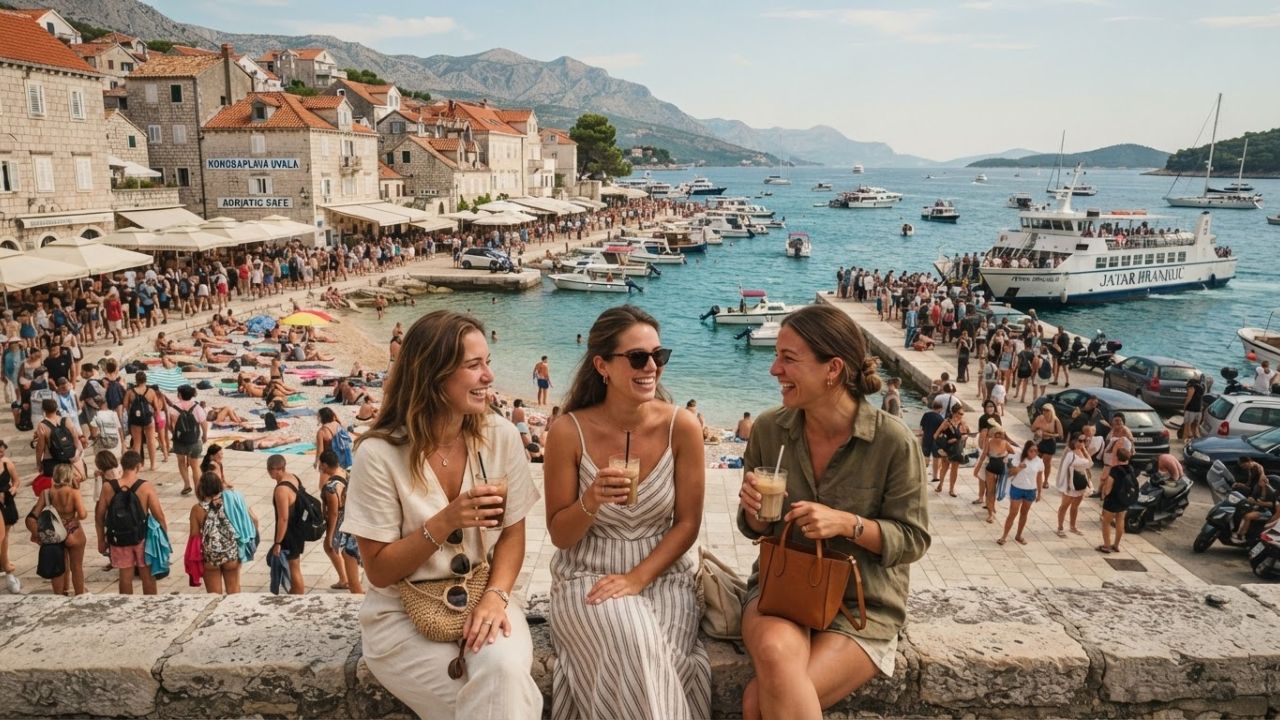
Image generated by AI
Midsummer tourism concentration in Croatia and Greece has reached record-high densities, with July and August accounts generating 54.5% of Croatia’s and 41.6% of Greece’s annual overnight stays. According to regional Eurostat data, this high seasonal pressure is heavily concentrated along the Adriatic coastline and Southern Aegean islands rather than engulfing the entirety of either country.
The Scale of Seasonal Concentration in Southern Europe
The international tourism sector in southern Europe is experiencing a transition as destinations manage high seasonal concentrations of visitors. According to Eurostat data from 2025, July and August generated 54.5 per cent of Croatia's annual overnight stays and 41.6 per cent of Greece's, compared with a much lower average of 31.1 per cent across the European Union.
This seasonal concentration creates a significant gap between peak summer demand and off-season occupancy. The ratio of overnight stays in August compared with January stood at 41.1 times higher in Croatia and 20.5 times higher in Greece, against a broader European Union average ratio of 3.6. Despite these seasonal challenges, overall tourism demand in early 2026 remained strong. European Union tourist accommodation registered 471.1 million nights in the first quarter of 2026, representing a 3.4 per cent increase compared with the same period in 2025. Foreign-visitor nights rose by 5.5 per cent, while domestic nights grew by 1.7 per cent. Short-term rentals booked through digital platforms (such as Airbnb, Booking, and Expedia) reached 144.3 million nights in the first quarter of 2026, representing a 9.7 per cent increase year-on-year and a 16.6 per cent increase compared with the first quarter of 2024.
Geographic Compression: Croatia's Adriatic Coast Under Pressure
Croatia recorded 12.4 million arrivals and 59.1 million nights from January through July 2026. The month of July alone delivered 4.7 million arrivals and 29.6 million nights, representing increases of 2.5 per cent and 1 per cent respectively compared with the previous year. This single month supplied 50.1 per cent of all overnight stays recorded during the first seven months of the year, demonstrating the high concentration of summer demand.
This pressure is also geographically concentrated. Adriatic destinations generated 56.1 million nights, representing 94.9 per cent of Croatia's national total. The regional distribution shows that three coastal areas carry the majority of the volume:
- Istria: Led the country with 16.7 million nights.
- Split-Dalmatia: Followed with 11.1 million nights.
- Kvarner: Recorded 9.7 million nights.
Together, these three regions produced 37.5 million nights, representing 63.5 per cent of Croatia's national total and 66.8 per cent of all Adriatic nights. The primary municipal targets for this demand include Dubrovnik, Rovinj, Poreč, Split, and Umag.
Greece's Island Pressure: Southern Aegean Tourist Densities
Inbound travel to Greece also carried strong momentum into the summer season. Non-resident arrivals increased by 20.9 per cent from January to May 2026, while travel receipts rose by 25.8 per cent year-on-year.
The Southern Aegean region, which includes the islands of Rhodes, Kos, and Mykonos, faces the highest concentration of seasonal visitors. In August 2024, the region recorded an average of 896 overnight tourist nights per day for every 1,000 local residents. This means that registered overnight guests equaled nearly 90 per cent of the resident population on an average peak day. This ratio understates the total pressure, as it excludes cruise ship passengers, day trippers, second-home owners, and visitors staying with friends or relatives. The Southern Aegean recorded the highest peak-season tourism intensity among all European Union regions under this issue.
Infrastructure Strain: Water, Waste, and Seasonal Staffing
The concentration of tourist demand during a short summer window creates operational challenges for coastal municipalities. The surge in temporary populations strains local public utilities, particularly water supply and waste management systems.
Key pressure points for coastal destinations include:
- Ports and Airports: High passenger volumes create queues and reduce transport availability around scheduled ferry departures and flights.
- Historic Centers: Crowded entry points at heritage sites require timed-entry ticketing and visitor-flow management.
- Resort Roads: Peak-season traffic increases travel times and creates parking deficits near popular beaches.
- Staffing: Seasonal businesses experience hiring difficulties, placing pressure on local housing markets and service quality.
Because infrastructure must be constructed to handle peak summer volume, local councils face high capital maintenance costs for facilities that sit underutilized during the winter months.
Regulatory Countermeasures: Off-Season Subsidies and Sustainable Planning
To address seasonal overcrowding, tourism authorities in Croatia and Greece are implementing policies to distribute visitor demand throughout the calendar year and across less-visited regions.
Croatia has introduced destination sustainability plans and carrying-capacity assessments to help local councils manage tourist numbers. The country is promoting rural, active, and health tourism to encourage visits to inland areas like the Gorski Kotar region and the Istrian interior.
Greece is utilizing its domestic "Tourism for All 2026–2027" program to support off-season travel. The program directs 70 per cent of its budget toward trips scheduled between October and April, providing eligible domestic travelers with digital-card subsidies ranging from €200 to €600. By linking these subsidies with its "Mountainous Greece" promotional campaign, the government aims to support inland destinations during the winter months.
Visitor Guide: Ston Oysters, Ferry Bookings, and Mountainous Escapes
Exploring Croatia and Greece during the transitional seasons allows travelers to avoid the heaviest summer crowds while supporting local economies. By coordinating itineraries in advance, visitors can enjoy a more comfortable travel experience.
Sample regional culinary specialties when tourist volume is low. In Croatia, visit Mali Ston Bay on the Pelješac Peninsula between March and May to taste fresh Ston oysters, which are considered to be at their best during these months. Try Crni Rižot, a traditional black risotto made with cuttlefish and squid ink, and sample local olive oils. In Greece, order grilled octopus served with wild oregano, and taste fresh extra virgin olive oil in the Peloponnese region, particularly in Messenia, during the autumn harvest season from October through December.
Plan your maritime transport bookings in advance. If traveling along the Adriatic coast, check the Jadrolinija ferry schedules online, as service frequencies decrease significantly during the off-season from November through March, and sailing times can be affected by weather. For Greek ferry routes, book your vehicle spaces online well ahead of your travel dates.
Consider alternative destinations to avoid coastal crowding. Explore the Zagori region in northwestern Greece, featuring 46 traditional stone villages, the Vikos Gorge, and historic stone bridges. Hike through the region during the autumn months of September and October when the weather is cool. In Croatia, visit the inland hills of the Zagorje region or explore the Plitvice Lakes National Park during the spring or autumn shoulder seasons.
Observe local environmental guidelines to protect coastal ecosystems. Minimize your use of single-use plastic water bottles by carrying a reusable filtered bottle, and support family-owned tavernas and guesthouses located away from the main harbor fronts to ensure that tourism revenue reaches the local community directly.
Future Outlook: Rebuilding Sustainable Adriatic and Aegean Tourism
The long-term viability of tourism in Croatia and Greece depends on managing visitor density to protect natural and cultural heritage. As tourism authorities implement carrying-capacity caps, the focus is shifting from increasing arrival numbers to improving economic yield per visitor.
Sustainable developments include upgrading wastewater treatment plants in coastal towns, implementing cruise ship arrival limits in historic ports like Dubrovnik and Santorini, and expanding public transit networks. By distributing visitor flows across the map and the calendar, these destinations aim to secure a stable economic future while preserving their natural environment for future travelers.
Related Travel Guides
Disclaimer
This article is for informational and educational purposes only. It does not constitute legal, financial, or professional advice. While we strive to provide accurate and up-to-date information, travel policies, regulations, and conditions change rapidly. Always verify information with official sources before making travel decisions. Nomad Lawyer makes no representations about the accuracy, reliability, completeness, or suitability of the information provided. Readers should consult qualified professionals for advice specific to their circumstances. The views expressed in this article are those of the author and do not necessarily reflect the views of Nomad Lawyer.