
Lake Varner: The Quiet Outdoor Escape in North-Central Georgia
Discover Lake Varner (Cornish Creek Reservoir) in Newton County, Georgia. Explore nature trails, freshwater fishing, and peaceful electric-only boat rules.

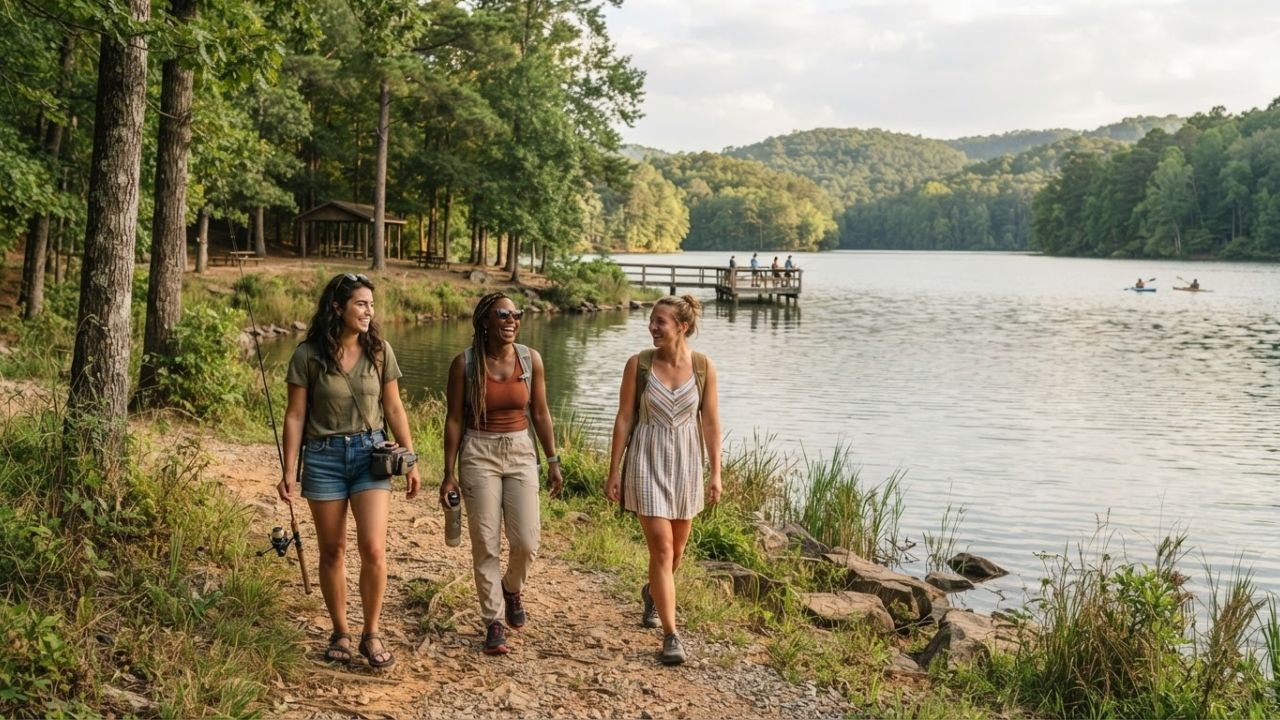
Image generated by AI
Lake Varner, also known as the Cornish Creek Reservoir, offers a peaceful 850-acre escape in Newton County, situated conveniently between the metropolitan hubs of Atlanta and Athens. By banning swimming and gas-powered boat engines, this north-central Georgia reservoir preserves a quiet, scenic refuge for walking, paddling, and record-setting largemouth bass fishing.
A Protected Reservoir in Georgia's Piedmont Region
The outdoor recreation sector in north-central Georgia is experiencing a transition as travelers seek out quieter alternatives to crowded state parks. Completed in 1991, the 850-acre Cornish Creek Reservoir serves as a primary water supply system for Newton County. Located near the city of Covington, the reservoir is situated within convenient driving distance of the Atlanta metropolitan area and the Athens region, making it an ideal destination for a day trip.
For visitors arriving via Hartsfield-Jackson Atlanta International Airport, Lake Varner presents an accessible introduction to Georgia’s forest-fringed reservoirs. The surrounding Newton County area is rich in historical heritage, allowing travelers to combine their outdoor excursion with walks through historic Covington. By establishing these low-impact park spaces, local authorities support regional tourism while ensuring that the county's natural ecosystems are protected from rapid urban expansion.
Geographically, the reservoir is located within Georgia's Piedmont region, where rolling hills and pine forests create a transition zone between the flat coastal plain and the northern Appalachian Mountains. This wooded setting provides an environment that feels rural and isolated, despite its proximity to two major population centers. By preserving the shoreline's natural character and protecting the water quality, Newton County has created a public space where visitors can connect with the outdoors without travel-related friction.
Quiet Water Recreation: Decibel and Engine Rules
Unlike conventional recreational lakes that permit speedboats and jet skis, Lake Varner is managed under strict environmental regulations designed to protect its watershed and maintain a quiet environment.
Key regulations governing the reservoir include:
- No Swimming: Swimming and wading are strictly prohibited to protect water purity.
- Electric or Paddle Power Only: Gas-powered boat engines are banned from the reservoir.
- Permitted Vessels: The county provides a boat launch for vessels equipped with electric trolling motors, canoes, kayaks, and paddleboards.
These quiet water policies also support local bird populations, including great blue herons, osprey, and bald eagles that nest near the shoreline. Anglers and kayakers often report seeing these raptors hunting over the open water, adding a wildlife-watching dimension to the trip. The absence of gas engines means that paddlers can navigate the lake's quietest coves without disturbing these sensitive nesting areas.
These restrictions shape the visitor experience, ensuring that kayakers and canoeists can explore the reservoir's inlets without noise or wake disturbances. Bank fishing is also supported, with numerous public access points situated along the shoreline, allowing anglers to fish in quiet settings.
Walking Trails and Shoreline Exploration
For land-based recreation, Lake Varner features walking trails designed for relaxed exploration rather than strenuous hiking. The park infrastructure includes a paved walking trail near the shoreline, providing an accessible route for families, casual walkers, and visitors with strollers.
For a more natural walking experience, a separate unpaved primitive trail enters the surrounding pine and hardwood forest. This trail allows visitors to explore the wooded terrain and observe local bird species and wildlife.
The primitive trails are particularly popular during the autumn months when the hardwood trees display vibrant gold and orange foliage, providing excellent photography opportunities. During the spring, wild azaleas and dogwoods bloom along the paths, filling the woods with color. These seasonal changes make the trail system a popular weekend destination for local photography groups and nature enthusiasts looking to document the area's native flora.
To support family outings and group gatherings, the park facilities include:
- Covered picnic pavilions and open grassy areas.
- Playgrounds for children.
- Benches situated at scenic viewpoints along the shoreline.
- An ADA-accessible fishing pier and dedicated bank-fishing locations to accommodate visitors with different mobility needs.
Newton County recreation guidelines require that children be accompanied by an adult, and pets must remain on a leash at all times, ensuring a safe environment for all visitors.
Freshwater Fishing: Pursuing the Largemouth Bass Record
Freshwater fishing is the primary attraction at Lake Varner, which has established a reputation as one of the most productive bass fisheries in north-central Georgia. The reservoir's diverse habitats, including submerged timber and aquatic vegetation, support healthy fish populations.
According to the Newton County Recreation Department, the reservoir supports several popular freshwater species:
- Largemouth Bass: The primary target for local anglers, known for reaching substantial sizes.
- Crappie and Bream: Abundant species that support seasonal panfish angling.
- Catfish and White Bass: Found in the deeper sections of the reservoir.
- Chain Pickerel and Redear Sunfish: Present in shallow, weed-lined bays.
The reservoir's reputation is supported by its historic largemouth bass record. In 1993, an angler landed a 15-pound, 13-ounce largemouth bass at Lake Varner, a record that continues to draw sport fishermen to the reservoir.
Anglers planning a visit must possess a valid Georgia fishing license if they are aged 16 to 64. Under the current 2026–2027 Hunting and Fishing Regulations, licenses can be purchased online through the Georgia Department of Natural Resources (DNR) Go Outdoors Georgia portal, by phone, or at authorized retail agents.
Visitor Guide: Southern Dining, Park Logistics, and Licensing Rules
Planning a day trip to Lake Varner involves understanding local park schedules, purchasing the correct licenses, and exploring nearby dining options in Covington. By preparing in advance, travelers can enjoy a comfortable outing.
Sample traditional Southern culinary specialties in historic Covington. Visit the Mystic Grill on the town square, a dining spot famous as a filming location for television series, and order fried green tomatoes, Southern sweet tea, and sweet tea fried chicken. Try hickory-smoked barbecue pork and warm peach cobbler served with vanilla ice cream at local diners nearby.
Verify the seasonal park operating hours before setting out. Newton County adjusts access schedules throughout the year, with longer operating hours from April through October and shorter hours from November through March. There are no entry fees for the park, but boat launch permits are required for launching vessels.
Obey local conservation guidelines to protect the watershed. Alcohol, tobacco products, smoking, and vaping are strictly prohibited at all Newton County recreation facilities. Carry out all trash, and respect the wildlife nesting zones located in the northern sections of the reservoir.
Purchase your Georgia freshwater fishing license before arriving at the lake. If you plan to launch a kayak or electric-powered boat, ensure your vessel has the required registration and safety equipment, including personal flotation devices for all passengers.
Future Outlook: Rebuilding Sustainable Watershed Conservation
The long-term management of Lake Varner relies on balancing public recreation with watershed protection. Because the reservoir serves as a drinking water source for Newton County, municipal boards and the Georgia Department of Natural Resources implement water-quality monitoring programs.
Sustainable projects include maintaining natural vegetation buffers along the shoreline to filter runoff, upgrading erosion control systems at the boat launch, and limiting development in surrounding areas. This management approach ensures that Cornish Creek Reservoir remains a clean public utility and a preserved natural sanctuary, protecting the region's resources for future generations of residents and travelers.
Related Travel Guides
Disclaimer
This article is for informational and educational purposes only. It does not constitute legal, financial, or professional advice. While we strive to provide accurate and up-to-date information, travel policies, regulations, and conditions change rapidly. Always verify information with official sources before making travel decisions. Nomad Lawyer makes no representations about the accuracy, reliability, completeness, or suitability of the information provided. Readers should consult qualified professionals for advice specific to their circumstances. The views expressed in this article are those of the author and do not necessarily reflect the views of Nomad Lawyer.
Preeti Gunjan
Contributor & Community Manager
A passionate traveller and community builder. Preeti helps grow the Nomad Lawyer community, fostering engagement and bringing the reader experience to life.
Learn more about our team →