
Colombia Is Under Danger as Bogotá and Other Cities Have High Wildfire Risks Alerting Travelers Before Visiting
Colombia Is Under Danger as Bogotá and Other Cities Have High Wildfire Risks Alerting Travelers Before Visiting

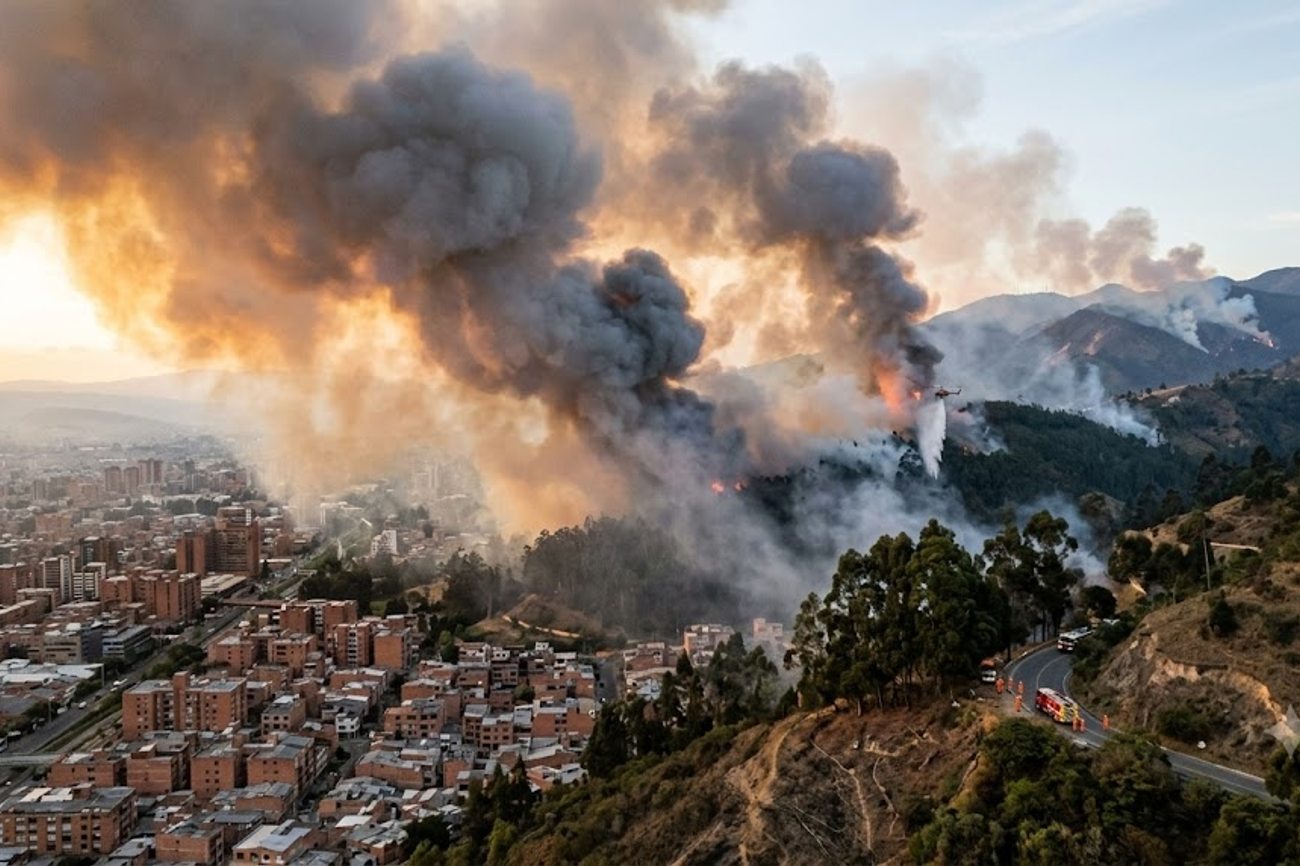
Image generated by AI
[Bogotá, October 2023] — Colombia is facing an escalating wildfire crisis across its mountain, forest, and arid regions, threatening high-profile tourism hubs and critical ecological reserves. Extreme heat, prolonged drought, and volatile wind patterns are driving fast-moving blazes that jeopardize the country's travel infrastructure and natural attractions.
The emergency is centered primarily in the Andean highlands and Caribbean coastal regions, where dry vegetation has become highly flammable. Local authorities are currently monitoring high-risk zones in Bogotá, Villa de Leyva, Santa Marta, and the Santander department. The combination of limited rainfall and rising temperatures has created a "tinderbox" effect, allowing small ignitions to rapidly evolve into large-scale forest fires that threaten hiking routes, rural tourism zones, and urban peripheries.
Environmental Triggers and Climate Drivers
The current surge in wildfire activity is the result of a convergence of geographic vulnerability and shifting climatic patterns. Colombia’s diverse topography—ranging from high-altitude páramos to tropical dry forests—makes it susceptible to varied fire behaviors. In the Andean region, cities are often nestled directly against steep hills and protected forests, creating a dangerous interface between urban development and combustible wildlands.
Meteorological data indicates that decreased precipitation levels have stripped moisture from the soil and vegetation. When these conditions meet high temperatures and strong winds, flames can leap across grasslands and forest canopies with extreme speed. This acceleration complicates the efforts of emergency response teams, as fires frequently jump established firebreaks and migrate from rural wilderness toward critical transport arteries and tourist communities.
Climate experts point to a broader global trend of warming temperatures and erratic rainfall cycles, which have extended the traditional dry seasons in Colombia. This environmental shift is transforming once-stable ecosystems into high-risk zones, necessitating a permanent change in how the National Natural Parks of Colombia and local municipalities manage land and visitor access.
Regional Risk Assessment and Impacted Zones
The wildfire risk is not uniform across the country; it varies significantly by department and ecosystem. The following table outlines the current threat levels and specific vulnerabilities for major tourist destinations:
| City / Area | Region | Risk Level | Primary Vulnerability | Key Impacted Sites |
|---|---|---|---|---|
| Bogotá | Cundinamarca | High | Eastern Hills dry vegetation | Monserrate, forest reserves |
| Villa de Leyva | Boyacá | Very High | Dry mountain landscapes | Historic center periphery, rural trails |
| Santa Marta | Magdalena | High | Sierra Nevada forest density | Tayrona National Park, Sierra routes |
| Bucaramanga | Santander | High | Dry canyon ecosystems | Chicamocha Canyon, hiking trails |
| Tunja | Boyacá | High | High-altitude dry grasslands | Cultural tourism routes |
| Neiva | Huila | High | Arid drought conditions | Tatacoa Desert, rural sites |
| Cúcuta | N. Santander | High | Seasonal dry climate | Rural border landscapes |
| Cali | Valle del Cauca | Med-High | Dry forest/valley interface | Farallones de Cali, nature trails |
| Medellín | Antioquia | Med-High | Aburrá Valley slopes | Hillside viewpoints, eco-parks |
| Ibagué | Tolima | Med-High | Mountain ecosystem dryness | Los Nevados access routes |
| Cartagena | Bolívar | Medium | Caribbean brush/grassland | Rural coastal sites, islands |
| Manizales | Caldas | Medium | Changing weather patterns | Coffee region trails |
| Pasto | Nariño | Medium | Páramo ecosystem dryness | Volcanic landscapes, reserves |
| Valledupar | Cesar | High | Sierra Nevada foothills | Rural tourism zones |
Practical Traveler Advisory and Strategic Insights
For the international nomad or tourist, these alerts do not typically necessitate the cancellation of city-based trips, but they fundamentally alter the safety profile of outdoor excursions. The primary impact is the unpredictable closure of natural attractions.
Immediate Impacts include:
- Trail Closures: Hiking routes in the Eastern Hills of Bogotá or the Sierra Nevada de Santa Marta may be closed without notice to prevent visitors from becoming trapped by fast-moving flames.
- Access Restrictions: Entry to protected areas, including Tayrona National Park, may be restricted by park authorities during high-alert periods.
- Health Hazards: Smoke inhalation is a significant risk in cities like Medellín and Bogotá when nearby hills are burning, potentially impacting those with respiratory conditions.
- Logistical Delays: Rural road closures are likely in the Santander and Boyacá regions if fires encroach upon highway corridors.
Travelers are urged to abandon the use of open flames in all rural areas and strictly adhere to the guidance of local emergency services. The "glamour" of Colombia's rural landscapes currently comes with a high operational risk, requiring a shift toward "responsible travel"—which includes verifying the current fire status of a destination within 24 hours of arrival.
Emergency Management and Future Outlook
The Colombian government and regional environmental agencies are currently prioritizing the monitoring of "interface zones"—the areas where urban sprawl meets wild vegetation. This is particularly critical for the capital, Bogotá, where the Eastern Hills serve as both a tourist draw and a potential fire corridor into the city.
Looking forward, the focus is shifting toward long-term climate adaptation. This includes improving early warning systems and enhancing the capacity of rural fire brigades. However, as long as the current drought patterns persist, the risk remains elevated. Travelers should expect a seasonal cycle of closures and alerts that align with the driest months of the year.
The integration of satellite monitoring and real-time alerts is expected to improve, but the burden of safety currently rests on the traveler. Checking updates via the Colombian Ministry of Foreign Affairs or local municipal portals is now a mandatory step for any itinerary involving the Andean or Caribbean interior.
FAQ: Colombia Wildfire Safety 2023
Do I need to cancel my trip to Bogotá or Medellín? No. Urban centers remain safe for general tourism. However, you must monitor alerts if you plan to visit hillside viewpoints, hiking trails, or ecological parks surrounding these cities.
Which national parks are most at risk? Tayrona National Park and the routes within the Sierra Nevada de Santa Marta are currently high-risk zones. Always verify park access with official authorities before departing for the coast.
How can I check for active fire alerts? Monitor local news, check the official websites of the National Natural Parks of Colombia, and follow the instructions of local civil defense (Defensa Civil) and fire departments.
Are the beaches in Cartagena affected? The urban center of Cartagena is generally unaffected. However, rural excursions to nearby islands or coastal nature sites carry a medium risk due to dry Caribbean brush conditions.
Stay vigilant and prioritize local directives over pre-planned itineraries.
Related Travel Guides
Disclaimer
This article is for informational and educational purposes only. It does not constitute legal, financial, or professional advice. While we strive to provide accurate and up-to-date information, travel policies, regulations, and conditions change rapidly. Always verify information with official sources before making travel decisions. Nomad Lawyer makes no representations about the accuracy, reliability, completeness, or suitability of the information provided. Readers should consult qualified professionals for advice specific to their circumstances. The views expressed in this article are those of the author and do not necessarily reflect the views of Nomad Lawyer.
Kunal K Choudhary
Co-Founder & Contributor
A passionate traveller and tech enthusiast. Kunal contributes to the vision and growth of Nomad Lawyer, bringing fresh perspectives and driving the community forward.
Learn more about our team →