
Japan Reveals Essential Typhoon Safety Rules Every Oshima Visitor Must Know
Japan Reveals Essential Typhoon Safety Rules Every Oshima Visitor Must Know

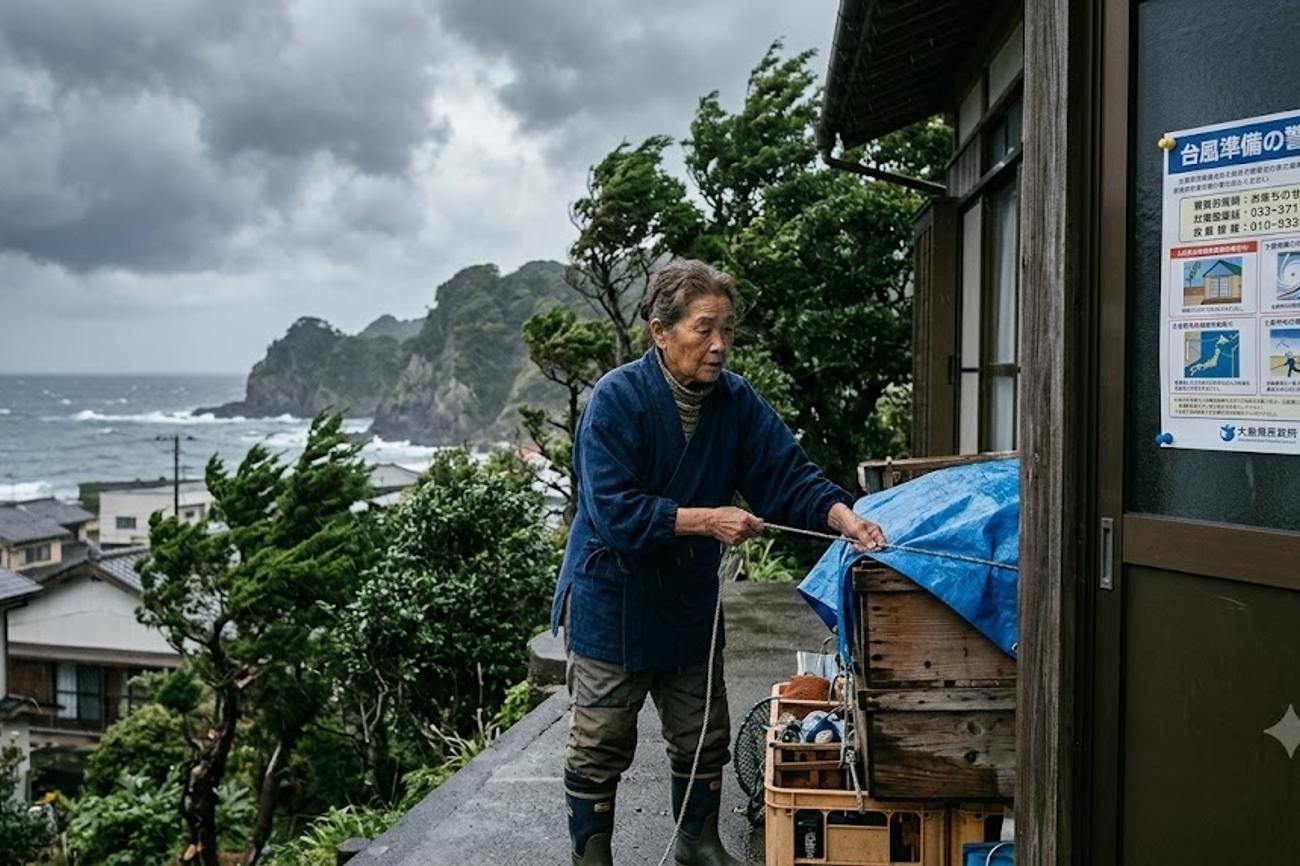
Image generated by AI
500 millimetres of rainfall plummeted onto Oshima Motomachi between 19 September and 21 September 2026, transforming a scenic volcanic getaway into a high-risk disaster zone. This extreme precipitation event, coinciding with Typhoon No. 25, triggered a Level 5 landslide emergency warning—the highest possible alert in Japan's revised disaster framework. For the international traveler, this event serves as a stark reminder that "Tokyo" is not a monolithic weather zone; while the capital's central districts may remain operational, its outlying island territories can face catastrophic environmental shifts that sever transport links and threaten life.
The Geographic Fallacy of the Tokyo Prefecture
Travelers often make the mistake of grouping all destinations under a single administrative banner. Oshima is legally part of Tokyo, yet its geological and meteorological profile is entirely distinct from the urban sprawl of Shinjuku or Shibuya. The island is defined by Mount Mihara and dramatic Pacific coastlines, making it a magnet for hikers and geology enthusiasts. However, this same topography creates extreme vulnerability during typhoon season.
During the events of September 2026, the Tokyo Metropolitan Government had to implement disaster-relief provisions specifically for Oshima Town. The disparity in risk across the region was evident: while Oshima faced a Level 5 emergency, neighboring islands including Toshima, Niijima, and Kozushima were placed under Level 4 urgent warnings. This fragmentation proves that weather risks in Japan are intensely localized. A traveler checking a general "Tokyo" forecast may miss a critical landslide warning for a specific valley or coastal strip on an island, leading to a dangerous delay in evacuation.
The 2026 Disaster-Weather Framework
On 29 May 2026, the Japan Meteorological Agency (JMA) launched a fundamental overhaul of its disaster-weather information system. This shift was designed to eliminate the ambiguity that often plagues non-Japanese speakers during crises. Previously, the overlap of various "warnings" and "advisories" created a cognitive load that could lead to hesitation. The current system replaces linguistic nuance with a rigid five-level numerical scale.
This system is integrated across public announcements and digital alerts, ensuring that a visitor seeing a "Level 4" notification knows exactly what is required without needing to translate complex meteorological terminology. The International Air Transport Association (IATA) and other global bodies emphasize the importance of standardized safety communication, and Japan's move toward a numbered system aligns with this global trend toward intuitive emergency signaling.
| Alert Level | Official Designation | Required Action for Travelers |
|---|---|---|
| Level 1 | Attention | Monitor weather updates and charge all electronic devices. |
| Level 2 | Preparation | Identify local evacuation routes and safe zones near accommodation. |
| Level 3 | Early Evacuation | Vulnerable groups (elderly, infants) must begin moving to safety. |
| Level 4 | Urgent Warning | Immediate evacuation from dangerous areas is mandatory. |
| Level 5 | Emergency | Disaster is imminent or occurring; immediate survival action required. |
Expert Analysis: The Logistics of "Invisible" Danger
The transition from Level 3 to Level 4 is where most travel itineraries collapse. For the nomad or luxury traveler, the instinct is often to wait for a transport update—a ferry cancellation or a flight delay—before deciding to move. This is a critical error in judgment.
The pricing and logistical pressure created by these warnings means that once a Level 4 is issued, the window for organized departure closes. In the case of Oshima, the 500 millimetres of rain didn't just create mudslides; it rendered port areas impassable due to rough seas and unstable roads. For travelers booking these routes, the direct consequence is a total loss of mobility.
The "invisible" danger here is the assumption that evacuation means leaving the island. In a Level 4 or 5 scenario, attempting to reach a port or airport can be more dangerous than staying put in a reinforced structure. The pricing pressure this creates for travel insurance is significant; many standard policies do not cover "natural calamities" if the traveler ignored an official Level 4 warning. The data suggests that the only viable strategy is "vertical evacuation"—moving to higher floors or designated shelters—rather than attempting horizontal transit across an unstable landscape.
Key Takeaways
- Hyper-Local Monitoring: Never rely on a city-wide forecast. Check warnings for the specific municipality, island, or district where you are staying.
- The Level 4 Threshold: Treat a Level 4 "Urgent Warning" as a hard deadline for safety. Do not wait for transport updates; move to a designated shelter immediately.
- Vulnerability Timelines: If traveling with children or elderly companions, the evacuation window begins at Level 3, not Level 4.
- Infrastructure Failure: Extreme rainfall (such as the 500mm seen in Oshima) can render roads and ports unusable long before the storm peak hits.
- Support Resources: Utilize the Japan Visitor Center's 24/7 multilingual hotline for English, Chinese, and Korean assistance during emergencies.
FAQ: Japan Typhoon Safety 2026
What should I do if my hotel is in a Level 4 warning zone? Immediately follow the instructions of hotel staff and local authorities. Move to the designated evacuation area or a reinforced part of the building. Do not attempt to drive to a port or airport unless specifically instructed by emergency services.
Can I rely on my phone's weather app for Japan's alert levels? While apps are useful, you should cross-reference them with the official Japan Meteorological Agency website and local government announcements to ensure you have the correct Level (1-5) for your specific coordinate.
Does a Level 3 warning mean my ferry to Oshima will be cancelled? Not necessarily, but it indicates that transport disruptions are likely. Use Level 3 as a signal to finalize your exit strategy or prepare to extend your stay at a safe location.
Where can I get English help during a natural disaster in Japan? The Japan Visitor Center operates a 24-hour multilingual hotline providing assistance in English, Korean, and Chinese for tourists facing illness, emergencies, or natural calamities.
In the Pacific, the distance between a scenic vista and a disaster zone is often just one alert level.
Tags: Oshima Town, Japan Meteorological Agency 2026, Typhoon No 25, Tokyo Metropolitan Government, Mount Mihara, Japan Disaster Alert System
Related Travel Guides
- Mali Travel Risk Escalates After Six Nights of Reported Shelling at Sévaré Airport
- France Aligns With Mexico And More As Canada Issues New Travel Advisory Highlights ATM Frauds, And Major Safety Pressure Points For Visitors
- New York Airports Face Massive Delays After Rare Radar and Frequency Failures in September 2026
Disclaimer
This article is for informational and educational purposes only. It does not constitute legal, financial, or professional advice. While we strive to provide accurate and up-to-date information, travel policies, regulations, and conditions change rapidly. Always verify information with official sources before making travel decisions. Nomad Lawyer makes no representations about the accuracy, reliability, completeness, or suitability of the information provided. Readers should consult qualified professionals for advice specific to their circumstances. The views expressed in this article are those of the author and do not necessarily reflect the views of Nomad Lawyer.
Naina Thakur
Contributor & Travel Specialist
Travel enthusiast and legal writer covering visa regulations, responsible tourism, and cultural journeys across global destinations.
Learn more about our team →