
China Implements Strict New Zoning Laws for Sanjiangyuan and Hoh Xil Adventure Travel
China enforces new National Park Laws and Ecological Environment Codes for Sanjiangyuan and Hoh Xil, restricting unauthorized trekking and adventure travel.

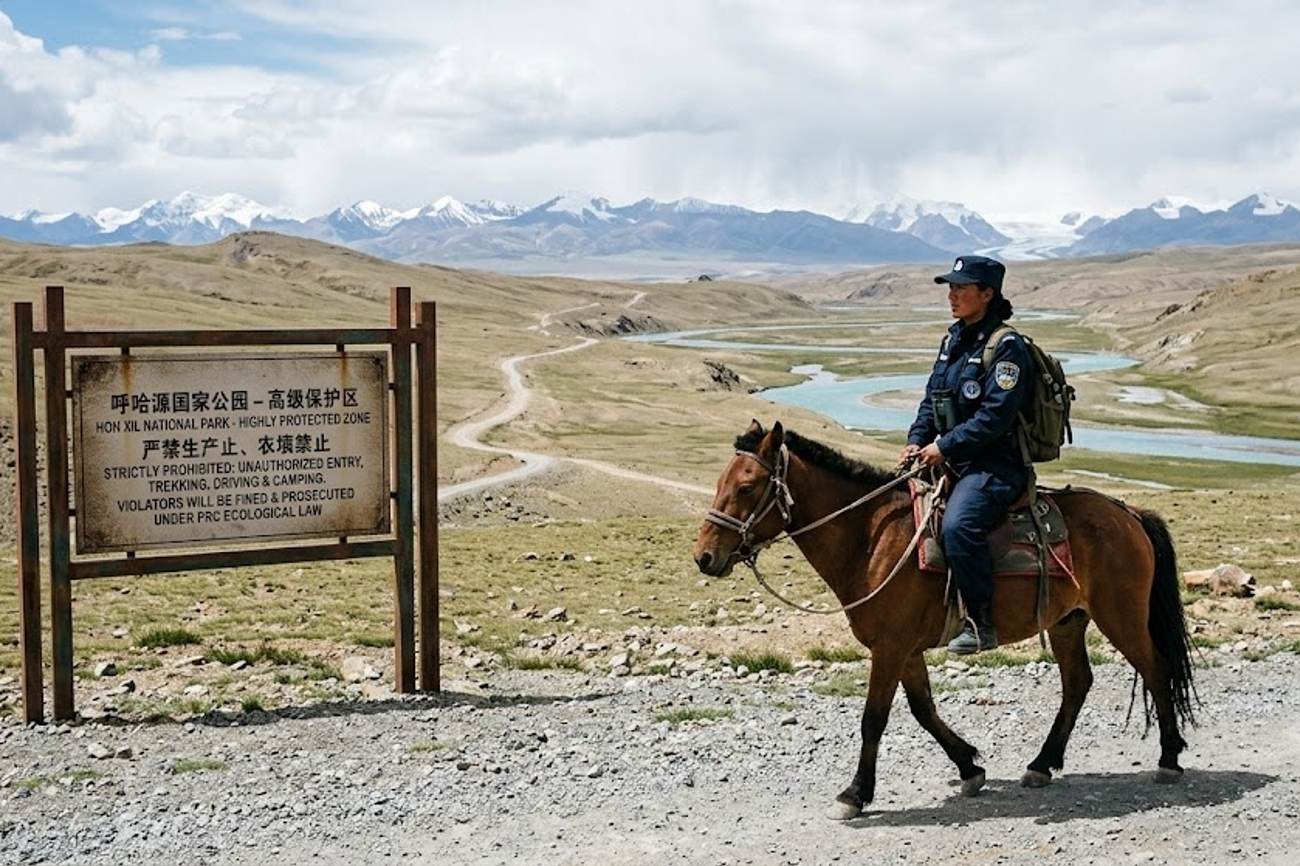
Image generated by AI
China Redefines High-Altitude Wilderness Access
[Beijing, September 7, 2026] — The landscape of adventure travel on the Qinghai-Tibet Plateau has undergone a fundamental legal transformation in 2026. New national mandates have established a sharp divide between strictly protected core zones and designated areas where ecotourism is permitted. As the Sanjiangyuan National Park Administration tightens oversight, the focus for visitors and tour operators has shifted from basic access to strict legal compliance.
The introduction of a comprehensive environmental code and a new national park law means that activities such as independent trekking and off-grid exploration are now subject to intense judicial scrutiny. For those planning expeditions to the plateau, the primary concern is no longer the physical challenge of the terrain, but the legal validity of their permits and the specific zoning of their planned routes.
Zoning Restrictions Within Sanjiangyuan National Park
Sanjiangyuan National Park is not an open wilderness for unrestricted exploration. Spanning approximately 190,700 square kilometres across south-western Qinghai, the park serves as the critical headwaters for the Yellow, Yangtze, and Lancang rivers. The region is characterized by extreme geography, including alpine grasslands, glaciers, wetlands, and deserts.
The physical demands of the region are severe; the average elevation exceeds 4,700 metres, with atmospheric oxygen levels plummeting to between 60 and 70 per cent of those found at sea level. However, the most significant barrier for 2026 travelers is the National Park Law, which took effect on 1 January 2026.
This legislation divides the park into two distinct categories:
- Core Protection Zones: These areas are subject to extreme restrictions, and human activity is heavily curtailed to preserve the ecosystem.
- General Control Zones: These areas may host specific activities, including science education, ecological tourism, and certain cultural or sporting events, provided they align with conservation goals.
For travel agencies and independent explorers, this means that a location appearing on a digital map or a social media itinerary does not grant a legal right of entry. Crossing into a core zone without explicit authorization is now a punishable offense.
Legal Risks and Penalties for Hoh Xil Expeditions
The regulatory environment in Hoh Xil has transitioned from a matter of "access" to a matter of "compliance." Authorities are now maintaining two parallel systems: one for regulated ecological sightseeing via approved corridors and another for unauthorized exploration, which is being actively suppressed.
The National Forestry and Grassland Administration has issued formal warnings to individuals and organizations engaging in unauthorized hiking, crossing, or adventure tourism. This notice specifically targets the recruitment of travelers into prohibited areas. Those found in violation face several severe consequences:
- Legal Penalties: Increased fines and judicial actions for unauthorized entry.
- Blacklisting: Offending parties may be placed on a Sanjiangyuan National Park access blacklist, barring future entry.
- Financial Liability: Organizers and participants are now held fully responsible for the costs of public-resource rescue operations in the event of an accident.
This shift drastically alters the risk profile for expedition operators. Marketing a trip as "off-grid" or "remote" is no longer a selling point but a potential legal liability. Operators must now verify that every kilometer of their itinerary is compatible with current zoning laws.
The Impact of the August Ecological Environment Code
The regulatory pressure intensified on 15 August 2026, with the implementation of China’s Ecological Environment Code. Article 883 of this code explicitly mandates that local governments at the county level and above on the Qinghai-Tibet Plateau must increase supervision of mountain outdoor sports and cultural tourism to ensure ecological security.
This code complements the existing Qinghai-Tibet Plateau Ecological Protection Law. Specifically, Article 46 of that law requires all ecological tourism to conform to strict resource protection standards. This involves the scientific design of routes, strict caps on visitor numbers, and the limitation of infrastructure development.
Together, the National Park Law and the Ecological Environment Code create a statutory "stack" that removes the ambiguity previously associated with high-altitude wilderness travel.
2026 Regulatory Framework for Plateau Tourism
| 2026 Development | Date/Status | Direct Travel Implication | Official Basis |
|---|---|---|---|
| National Park Law | Effective 1 January 2026 | Establishes core and general-control zoning; tourism only in legal frameworks | National Forestry and Grassland Administration |
| Sanjiangyuan Illegal-Entry Action | Publicised 13 January 2026 | Unauthorized hiking/exploration leads to penalties, blacklisting, and rescue-cost liability | National Forestry and Grassland Administration |
| Hoh Xil Judicial Wildlife Protection Order | Issued 5 June 2026 | Adds preventive judicial-protection layer for rare wildlife and habitats | Golmud City Government |
| Ecological Environment Code | Effective 15 August 2026 | Strengthens supervision of cultural tourism and mountain outdoor sports | State Council / Local Governments |
Why This Matters: The New Reality for High-Altitude Travelers
For the modern traveler, these changes mean the end of the "frontier" era of the Qinghai-Tibet Plateau. The transition from flexible guidelines to strict statutory law means that a mistake in route planning can lead to permanent blacklisting or significant financial penalties.
From a logistical standpoint, this creates a heavy burden of proof for tour operators. It is no longer sufficient to have a local guide; operators must now possess documented proof that their routes avoid "Core Protection Zones." For the traveler, this means higher costs as operators invest more in compliance and legal vetting, and a likely reduction in the "wild" nature of the experience, as trips are confined to approved corridors.
The judicialization of wildlife protection—particularly the June 5 order from the Golmud City Government—indicates that the state is now using the court system, rather than just park rangers, to protect the habitat. Any disruption to rare wildlife is now treated as a legal violation rather than a mere administrative error.
Related Travel Guides
Disclaimer
This article is for informational and educational purposes only. It does not constitute legal, financial, or professional advice. While we strive to provide accurate and up-to-date information, travel policies, regulations, and conditions change rapidly. Always verify information with official sources before making travel decisions. Nomad Lawyer makes no representations about the accuracy, reliability, completeness, or suitability of the information provided. Readers should consult qualified professionals for advice specific to their circumstances. The views expressed in this article are those of the author and do not necessarily reflect the views of Nomad Lawyer.
Preeti Gunjan
Contributor & Community Manager
A passionate traveller and community builder. Preeti helps grow the Nomad Lawyer community, fostering engagement and bringing the reader experience to life.
Learn more about our team →