
Chile's Carretera Austral Route 7 Transforms Into Strategic Patagonia Tourism Corridor With CLP 800 Billion Infrastructure Investment Through 2030
Chile's Southern Highway evolves from scenic road icon to major tourism engine as CLP 800 billion infrastructure plan reshapes Patagonia connectivity, protecting wilderness access while strengthening remote community economies.

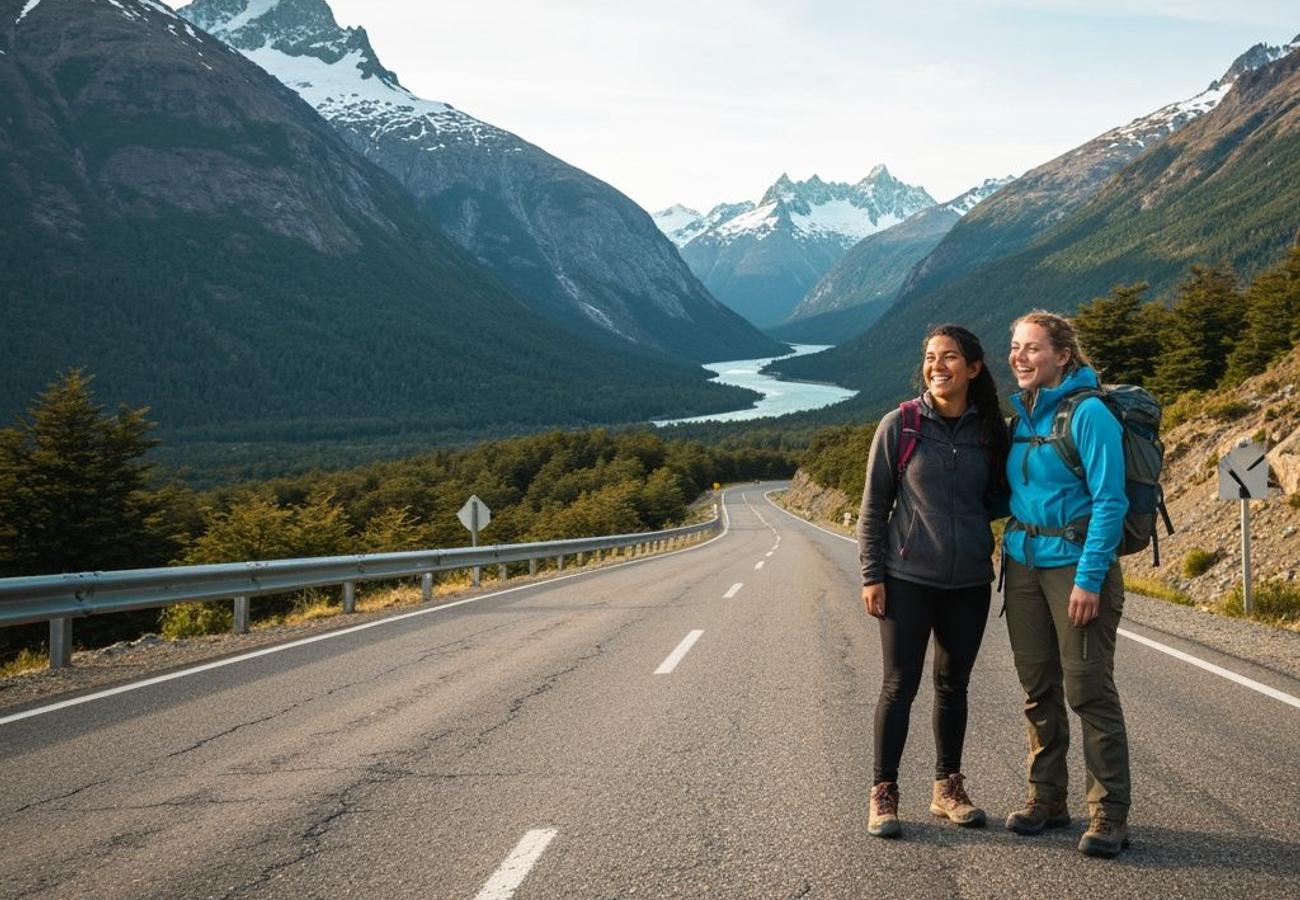
Image generated by AI
Chile's Southern Highway Graduates From Niche Adventure Road to National Tourism Priority
Route 7, Chile's legendary Carretera Austral, is no longer just a bucket-list road trip for hardcore adventurers. The 1,240-kilometer Southern Highway connecting Puerto Montt to Villa O'Higgins has officially become a centerpiece of Chile's national tourism strategy—backed by a massive CLP 800 billion infrastructure investment spanning 2026 through 2030.
What makes this shift significant? For the first time, Chile is treating Patagonia's most iconic self-drive corridor not as a scenic sidebar, but as a critical economic corridor. The route now anchors Chile's post-pandemic tourism recovery while strengthening isolated communities that have historically relied on maritime transport and limited road access.
For travel businesses, tour operators, and adventure travel planners, this signals something crucial: the Carretera Austral is transitioning from rugged niche product to a mature, professionally-supported destination spine.
Reddit: "Finally someone is taking the Southern Highway seriously. Used to be sketchy gravel and ferry waits for days. Now Chile's actually committing real money to make this work." — r/overlanding
More Than a Road: Understanding the Carretera Austral's True Identity
The Carretera Austral is not your standard highway. It is a hybrid transportation experience that defies simple categorization.
Officially designated Route 7, this road cuts through Chilean Patagonia's most dramatic and challenging terrain. Dense temperate forests give way to turquoise glacial rivers. Sheer fjords slice into the landscape. Mountain passes wind through isolated settlements accessible only by this corridor. When geography makes road continuity impossible, ferries fill the gaps—ferry points at Caleta La Arena and Puerto Yungay are as much a part of the journey as the asphalt itself.
This complexity is actually the route's greatest asset. Unlike standardized highway experiences, the Carretera Austral demands traveler engagement. Planning matters. Patience is essential. Vehicle suitability requires real consideration. That friction creates authenticity—the exact experience modern adventure travelers increasingly seek.
The route integrates five distinct travel modalities: self-drive touring, ferry transport, lodge-based nature travel, guided adventure experiences, and heritage storytelling through small communities. No other South American road corridor offers this integrated mix.
The Historical Infrastructure Story That Shapes Today's Tourism Value
The Carretera Austral was never originally built for leisure travel. It emerged as a state connectivity project to solve one of Chile's greatest geographical challenges.
Before modern road access, Aysén Region and southern Chilean territories depended almost entirely on maritime routes, bush aircraft, and difficult local tracks. Mountains, forests, and fjords created near-absolute physical barriers between communities. The road changed that reality, transforming isolated settlements into connected places.
Today, that same connectivity infrastructure now distributes visitor spending. The road that linked towns now spreads tourism revenue. For small lodges, rural restaurants, local guides, transport operators, and national park gateways throughout Patagonia, this single corridor represents their primary path to visitor economies.
This historical dimension matters to B2B travel planners because it becomes part of the product narrative. Travelers journeying Route 7 are not just seeing landscapes—they are witnessing how infrastructure reshapes remote regions and enables nation-building in some of Earth's harshest terrain.
Chile's Official Investment Plan: CLP 800 Billion Signals Serious Long-Term Commitment
The Chilean Ministry of Public Works has positioned Route 7 as the centerpiece of Patagonia's infrastructure modernization through 2030. This is not promotional rhetoric. This is committed capital.
The investment framework includes 23 integrated projects spanning three distinct infrastructure categories: road improvements, maritime connectivity, and lake transport systems. This tri-modal approach directly reflects Patagonia's geography and the reality that ferries remain permanently central to the route's operation.
Here is what the investment plan actually covers:
Road Infrastructure: 20 separate initiatives target key sections, with 150.4 kilometers designated for definitive paving programs. This gradual improvement approach is strategic—the investment maintains the route's wilderness character while reducing unnecessary travel stress and improving reliability.
Maritime and Lake Projects: 3 dedicated initiatives strengthen ferry infrastructure and port facilities. This recognizes a fundamental reality that most planners miss: you cannot modernize the Carretera Austral by treating it as a standard highway. Water crossings are permanent features requiring equivalent infrastructure attention.
Bridge and Connectivity Works: Multiple projects address critical bottlenecks where geography currently forces detours or seasonal closures.
The practical reality for tour operators: 244 kilometers of planned intervention across the route will gradually shift the Carretera Austral from a demand-managing experience (where traveler flows are naturally constrained by difficulty) to a capacity-supporting experience (where infrastructure can handle higher volumes without sacrificing character).
Four Protected Areas Create a Conservation Corridor, Not Just a Road
The greatest tourism value of the Carretera Austral exists not in the road itself, but in the protected landscapes surrounding it.
Queulat National Park anchors the route in the north, protecting dramatic forests and mountains across 154,093 hectares of Aysén terrain. Visitors access towering waterfalls, native forest trails, and some of Patagonia's most photogenic mountain scenery directly from the highway corridor.
Pumalín Douglas Tompkins National Park adds substantial conservation value with extensive native temperate rainforest protection. This park, acquired and developed by private conservation efforts before transitioning to Chilean state management, demonstrates how private-public conservation models strengthen tourism offerings in remote regions.
Further south, Patagonia National Park protects over 760,000 hectares across General Carrera and Capitán Prat provinces, offering wildlife viewing, adventure activities, and serious wilderness experiences near towns like Cochrane and Chile Chico.
Finally, Bernardo O'Higgins National Park—Chile's largest protected area at over 3.6 million hectares—anchors the southern terminus. This park encompasses glacier systems, remote fjords, and some of South America's most untouched wilderness.
Together, these protected areas transform the Carretera Austral from a point-to-point road journey into a conservation-led corridor experience. This positioning creates powerful value for premium adventure travel packages, multi-day wilderness itineraries, and conservation-focused tourism operators.
Market Context: Why Chile's Tourism Recovery Creates Perfect Timing
Chile received more than six million international arrivals in 2025—marking decisive post-pandemic recovery momentum. This national trajectory creates immediate opportunity for Patagonia's infrastructure investment.
Long-haul travelers increasingly reject city-centric itineraries. They seek landscape immersion, wilderness access, authentic community interaction, and conservation engagement. The Carretera Austral answers every one of these demand signals simultaneously.
The route also positions Chile competitively in the global soft-adventure market. While famous Patagonian destinations like Torres del Paine remain anchors, the Carretera Austral offers something distinctly different: unscripted remoteness, authentic small-community economies, and a journey-based rather than destination-based travel experience.
According to data from Chile's Servicio Nacional de Turismo (SERNATUR), Patagonia now represents approximately 18% of Chile's international tourism arrivals. Infrastructure investment in Route 7 directly targets expansion of that percentage.
Travel Trade Implications: What Route 7's Investment Means for Operators
For travel agencies, tour operators, and hospitality businesses, the infrastructure investment creates distinct strategic opportunities.
Capacity Expansion: As road conditions improve and ferry reliability strengthens, the route can accommodate higher traveler volumes without creating congestion that degrades the experience. This means existing operators can scale offerings, and new entrants can enter the market.
Itinerary Diversification: Improved infrastructure enables longer, more complex multi-day itineraries. Four-day or seven-day Carretera Austral packages become increasingly viable as travel reliability improves.
Lodge and Accommodation Growth: Communities along the route now have credible signals that visitor numbers will increase. This attracts hospitality investment in remote areas like Puyuhuapi, Marble Caves region, and Villa Santa Lucia.
Premium Positioning: As infrastructure matures, operators can position Route 7 experiences at higher price points. Improved conditions do not cheapen the experience—they allow focusing on authentic community interaction, expert guiding, and conservation narratives rather than logistics management.
Seasonal Extension: Better infrastructure gradually pushes the route toward year-round viability. Currently, harsh winter weather (May-August in the Southern Hemisphere) limits operations. Infrastructure investment enables shoulder-season expansion.
The Realities Remain: Route 7 Is Still a Demanding Journey
Critical point: CLP 800 billion infrastructure investment does not transform the Carretera Austral into a standard highway. The route will remain challenging by design.
Significant sections will continue as gravel roads. Weather patterns across Patagonia remain unpredictable and demanding. Ferries will remain operational necessities. Some stretches will continue requiring careful vehicle selection and seasonal planning.
This constrained difficulty is intentional. Travel planners should not position Route 7 as an easy scenic drive. It remains an adventure travel experience—sophisticated, rewarding, but requiring legitimate preparation and appropriate expectations from travelers.
The infrastructure investment strengthens reliability, improves safety margins, and reduces unnecessary stress. It does not eliminate the journey-based character that makes the route distinctive.
The Bottom Line: From Niche Icon to Strategic Corridor
Chile's Carretera Austral is completing a quiet but significant transition. It is moving from romantic road-trip fantasy to professionally-supported tourism corridor, from marginal regional asset to centerpiece of national Patagonia strategy.
For travel businesses, this signals genuine long-term viability. The infrastructure commitment proves Chile is serious about Patagonia tourism as an economic driver. Investment timelines through 2030 create medium-term planning certainty.
For travelers, the route's experience will remain grounded in wilderness, challenge, and authentic remoteness. Infrastructure improvement will reduce frustration and increase reliability—not eliminate the adventure.
For remote communities along Route 7, the investment finally delivers on decades of connectivity promises, enabling genuine economic participation in Chile's tourism recovery.
The Carretera Austral earned iconic status through difficulty and beauty. Now it is earning strategic priority through serious state investment. That combination rarely appears in global tourism development.
The Southern Highway's greatest journey is just beginning.
Related Travel Guides
Disclaimer: Information in this article reflects official investment announcements from Chile's Ministry of Public Works and protected area designations as of June 2026. Infrastructure timelines and project scopes remain subject to budgetary, environmental, and regulatory processes. Travel planners should verify current road conditions, seasonal accessibility, and ferry schedules directly with regional tourism authorities before finalizing Route 7 itineraries. Weather and terrain conditions in Patagonia remain inherently challenging and demand appropriate vehicle preparation and traveler experience levels.
Raushan Kumar
Founder & Lead Developer
Full-stack developer with 11+ years of experience and a passionate traveller. Raushan built Nomad Lawyer from the ground up with a vision to create the best travel and law experience on the web.
Learn more about our team →