
Chile Expands Pichoy Airport Terminal to 5,000 Square Metres for Valdivia Tourism Growth by 2027
Chile is upgrading Pichoy Airport with a CLP44 billion investment, more than doubling terminal capacity to 5,000 square metres to drive tourism in the Los Ríos region by early 2027.

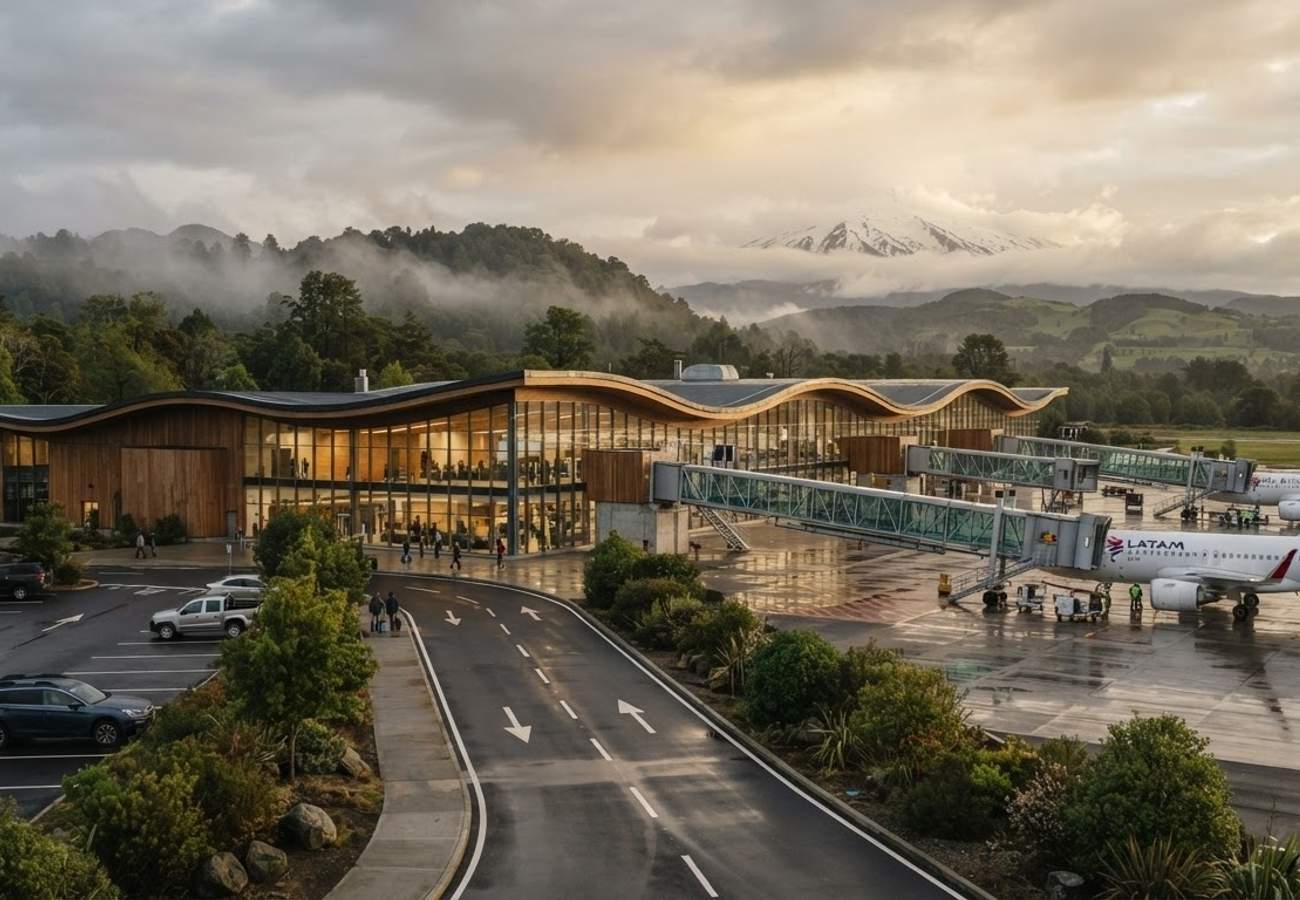
Image generated by AI
Chile is accelerating the modernization of Pichoy Airport, with construction now exceeding 60% completion. The project aims to more than double the terminal's footprint to support a surge in domestic and international arrivals to the Los Ríos region by the first half of 2027.
The expansion is a strategic move by the Chilean government to eliminate infrastructure bottlenecks in Valdivia. Undersecretary of Public Works Nicolás Balmaceda recently confirmed that main structural works are finished, shifting the project's focus toward internal fit-outs, including electrical installations and mechanical networks.
To maintain seamless connectivity during this transition, a temporary modular terminal of 2,407 square metres has been operational since July 2025. This ensures that flight schedules remain unaffected while the permanent facility is finalized.
Infrastructure Upgrades and Technical Specifications
The project, executed by Belfi SA and funded by the Ministry of Public Works, involves a total investment of CLP44 billion. The upgrades target both the passenger experience and the technical backend of the aerodrome.
Terminal and Passenger Facilities:
- Size Increase: The passenger building is expanding from 2,200 square metres to approximately 5,000 square metres.
- Boarding Access: Total boarding bridges will increase from one to three.
- Amenities: Installation of a new cafeteria and full air conditioning systems.
- Processing: New X-ray security systems and modernized baggage-claim facilities.
Ground Access and Technical Works:
- Parking: Capacity is increasing from 111 spaces to 135 spaces.
- Roads: Comprehensive improvements to road connections and new perimeter fencing.
- Utilities: Construction of a new electrical substation and upgrades to the wastewater treatment plant.
Pichoy Airport Expansion Metrics
| Feature | Current State | Post-Expansion (2027) |
|---|---|---|
| Terminal Size | ~2,200 sq metres | ~5,000 sq metres |
| Boarding Bridges | 1 | 3 |
| Parking Capacity | 111 spaces | 135 spaces |
| Project Completion | < 60% | 100% (Target H1 2027) |
| Total Investment | N/A | CLP 44 Billion |
Why This Matters: Aviation Analysis
From a logistical perspective, this expansion solves a critical capacity issue for the Los Ríos region. For travelers, the jump from one to three boarding bridges is the most significant operational change; it reduces aircraft turnaround time and eliminates the reliance on tarmac boarding, which is often weather-dependent in the rainy Valdivia climate.
Our analysis of the region's growth suggests that the CLP44 billion investment is not merely about square footage, but about "tourism readiness." By doubling the terminal size, the airport can now handle larger peak-hour surges without the congestion that previously deterred high-spending international visitors. For the aviation industry, this signals that Chile is diversifying its tourism gateways beyond Santiago, pushing for decentralized growth in the south.
Industry Outlook
The target inauguration in the first half of 2027 will likely trigger a review of flight frequencies by domestic carriers. With a 5,000 square metre facility, Pichoy can support higher aircraft rotations and potentially larger aircraft models.
Regional authorities, led by Los Ríos Governor Luis Cuvertino, expect this infrastructure to shift Valdivia from a seasonal destination to a year-round hub. The next phase of development will likely focus on expanding the "last mile" connectivity from the airport to the city center to match the increased passenger throughput.
A modernized gateway is the first step in transforming Los Ríos into a global tourism competitor.
Related Travel Guides
Disclaimer
This article is for informational and educational purposes only. It does not constitute legal, financial, or professional advice. While we strive to provide accurate and up-to-date information, travel policies, regulations, and conditions change rapidly. Always verify information with official sources before making travel decisions. Nomad Lawyer makes no representations about the accuracy, reliability, completeness, or suitability of the information provided. Readers should consult qualified professionals for advice specific to their circumstances. The views expressed in this article are those of the author and do not necessarily reflect the views of Nomad Lawyer.
Raushan Kumar
Founder & Lead Developer
Full-stack developer with 11+ years of experience and a passionate traveller. Raushan built Nomad Lawyer from the ground up with a vision to create the best travel and law experience on the web.
Learn more about our team →