
London Charing Cross and Waterloo East Closures Disrupt Southeastern Rail Services in 2026
Major infrastructure upgrades at London Charing Cross and Waterloo East have forced extensive Southeastern service diversions, including a 22-day blockade and subsequent follow-up closures.

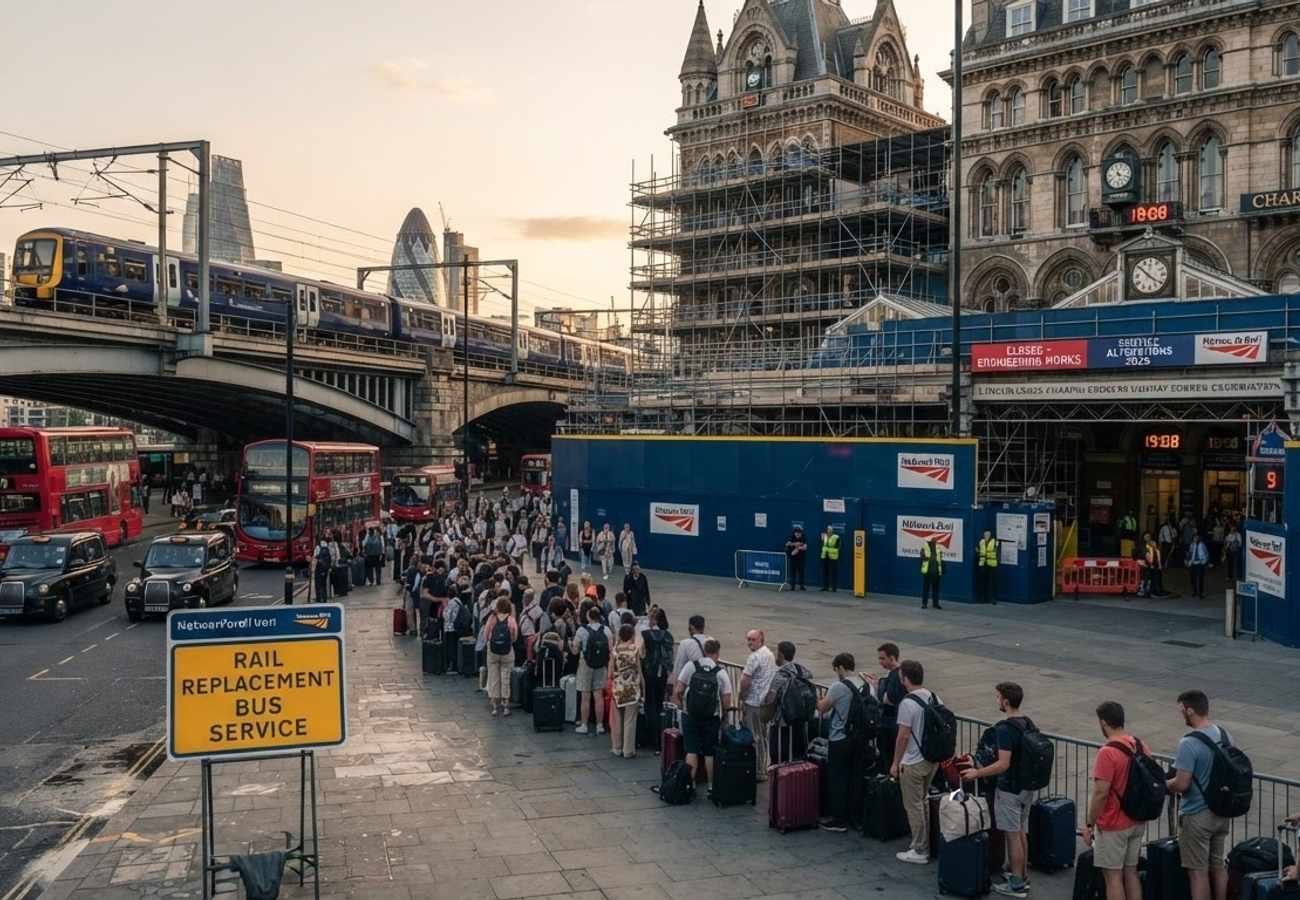
Image generated by AI
Southeastern rail passengers are facing significant disruptions as London Charing Cross and Waterloo East undergo a multi-million pound infrastructure overhaul. A primary 22-day blockade has been supplemented by follow-up closures, forcing thousands of commuters to divert to alternative central London termini.
Infrastructure Overhaul and Station Closures
London Charing Cross and Waterloo East are currently the focus of a critical infrastructure project designed to stabilize and modernize one of the most heavily utilized segments of the South Eastern Main Line. According to data from Network Rail and Southeastern, the primary phase of this project involved a 22-day blockade from Sunday, 26 July to Sunday, 16 August 2026. This period saw a total suspension of all Southeastern services to both termini.
The scope of the engineering work is extensive, focusing on the replacement of nearly two kilometers of life-expired track and the upgrading of track drainage systems. Physical assets being renewed include:
- Rebuilding specific platform sections at Charing Cross.
- Structural repairs to the Hungerford Bridge approach.
- Refurbishment of the pedestrian link bridge connecting Waterloo East and London Waterloo.
From a financial and operational standpoint, the project has delivered over £30 million in enhancements. Network Rail opted for a concentrated summer closure to execute these works in a single window, aiming to avoid the cumulative disruption of multiple weekend shutdowns during peak travel periods.
Service Diversions and Route Specifications
During the blockade and subsequent follow-up windows, Southeastern services have been redirected to alternative hubs. While the primary 22-day window ended on 16 August, residual engineering restrictions and "snagging" work have led to further intermittent closures, including a scheduled full-day closure on Sunday, 23 August 2026.
The following table outlines the diversion patterns for affected routes:
| Original Terminus | Alternative Termini | Affected Routes/Lines | Impact Status |
|---|---|---|---|
| Charing Cross | London Victoria | Kent Services / Hayes Line | Diverted |
| Charing Cross | London Cannon Street | North Kent / South East London | Diverted |
| Charing Cross | London Blackfriars | North Kent / South East London | Diverted |
| Charing Cross | London Bridge | North Kent / South East London | Diverted |
| Waterloo East | London Waterloo | Southeastern Commuter Services | Diverted/Suspended |
| Various | Orpington / Sevenoaks | Specific Kent services | Terminated Short |
Traveler Logistics Guide: Navigating the Disruption
From a ground-level perspective, the best way to navigate this disruption is to abandon the assumption that your usual terminal is operational. The diversion of trains to Victoria and Cannon Street has significantly altered passenger flow and increased crowding at these hubs.
Booking and Connections If your itinerary involves a connection at Charing Cross, you should now plan for a transfer via the London Underground or a bus link from London Bridge or Victoria. Allow an additional 30 to 45 minutes for transit between these diverted termini and your final destination.
Ticket Acceptance Passengers should be aware that ticket acceptance is typically extended to other operators for affected journeys. If your train is terminated short (e.g., at Orpington or Sevenoaks), verify with station staff regarding the fastest alternative route into the city via Thameslink or other Southeastern diversions.
Digital Transit Tools To avoid stranded journeys, use the National Rail live journey planner or the Southeastern app immediately before departure. Early morning and late evening services are currently the most susceptible to last-minute alterations due to the ongoing follow-up engineering activity.
Regional Connectivity and Infrastructure Impact
The closure of these two termini has created a ripple effect across the wider Southeastern network. Corridors passing through Lewisham, Greenwich, and the North Kent routes have seen knock-on timetable amendments. Some services have been curtailed entirely to manage the capacity limits of the alternative termini, which are now absorbing the displaced demand from the Charing Cross and Waterloo East corridors.
This "blockade model"—concentrating massive amounts of work into a single window—represents a shift in British rail maintenance strategy. While it causes acute short-term disruption, the objective is to eliminate the "death by a thousand cuts" caused by perpetual weekend closures, ultimately resulting in a more reliable permanent service for the millions of passengers utilizing the South Eastern Main Line.
Infrastructure stability remains the priority as London's rail network prepares for the 2026-2027 peak travel seasons.
Related Travel Guides
Disclaimer
This article is for informational and educational purposes only. It does not constitute legal, financial, or professional advice. While we strive to provide accurate and up-to-date information, travel policies, regulations, and conditions change rapidly. Always verify information with official sources before making travel decisions. Nomad Lawyer makes no representations about the accuracy, reliability, completeness, or suitability of the information provided. Readers should consult qualified professionals for advice specific to their circumstances. The views expressed in this article are those of the author and do not necessarily reflect the views of Nomad Lawyer.
Kunal K Choudhary
Co-Founder & Contributor
A passionate traveller and tech enthusiast. Kunal contributes to the vision and growth of Nomad Lawyer, bringing fresh perspectives and driving the community forward.
Learn more about our team →