
London Charing Cross and Waterloo East Stations Close August 22-23 2026 for £20 Million Rail Upgrade
London Charing Cross and Waterloo East face strategic closures on August 22-23, 2026, as part of a £20 million modernization project to overhaul 36-year-old rail infrastructure.

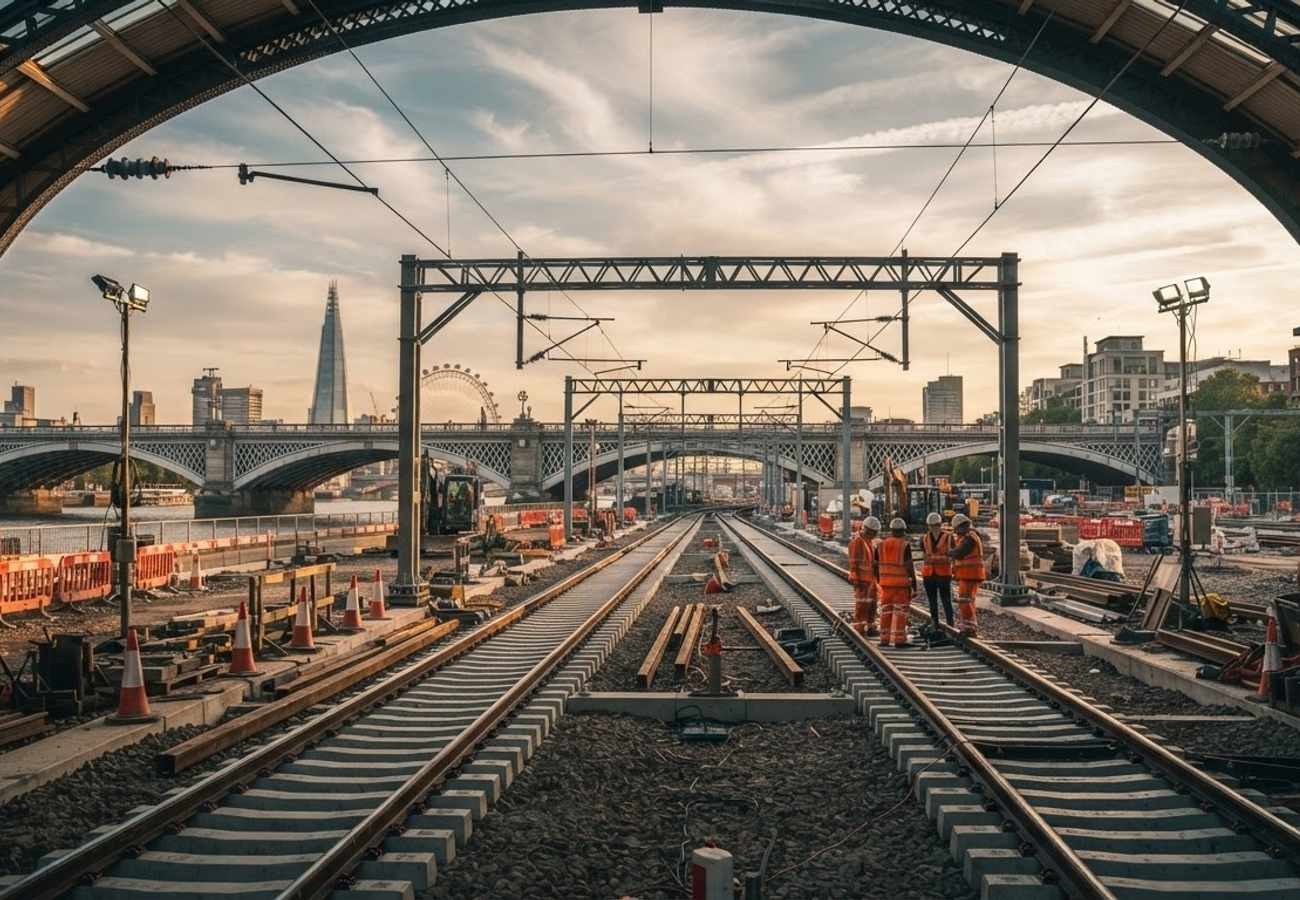
Image generated by AI
A £20 million investment is currently transforming London's rail artery, resulting in the total closure of Charing Cross and Waterloo East stations on Saturday, August 22, and Sunday, August 23, 2026.
The Shift Toward Rail Resilience
London is currently navigating a high-stakes infrastructure pivot. Following a massive 22-day engineering blockade from July 26 to August 16, 2026, the network is entering its final refinement phase. This weekend's shutdown is not a standalone event but a critical follow-up to a "once-in-a-generation" effort to modernize rail assets that had remained largely untouched since the early 1990s.
The decision to implement a concentrated blockade rather than sporadic weekend works was a strategic move by Network Rail and Southeastern. Officials calculated that a continuous shutdown during the summer holidays—when commuter volume typically drops by approximately 20%—was more efficient than the alternative: 60 separate weekend closures over 14 months.
Engineering the Future: The £20 Million Breakdown
The scale of this investment targets three primary failure points that had plagued the corridor for decades. For the traveler, the result is a shift from a system prone to sudden failure to one designed for high-frequency stability.
Track and Drainage Overhaul
Engineers have replaced nearly two kilometres (1,800 metres) of outdated track. A key technical highlight is the installation of 16 new sets of switches and crossings south of the Hungerford Bridge. To combat the effects of volatile weather and climate change, the drainage systems at Waterloo East were completely upgraded to prevent flooding and allow trains to maintain full line speeds.
Structural Safety at Charing Cross
The "country end" (southern extremity) of Charing Cross platforms had been suffering from severe subsidence. To prevent emergency closures, crews demolished 540 tonnes of degraded concrete. This was replaced with steelwork foundations and 2,000 square metres of glass-reinforced plastic (GRP) surfacing, chosen for its slip resistance and long-term durability.
Preserving the Hungerford Bridge
The historic Hungerford Bridge, now 175 years old, received critical structural attention. Work included replacing wheel timbers (the railway equivalent of sleepers) and treating ageing steelwork. Additionally, the pedestrian footbridge connecting Waterloo East to the mainline Waterloo station now features self-cleaning glass and improved ventilation panels to enhance the passenger environment.
Data Impact: Why the Disruption Was Mandatory
The necessity of this project is highlighted by the staggering volume of previous failures. Official data from Network Rail and South Eastern Railway revealed that infrastructure faults in this specific corridor had caused over 21,000 minutes (roughly 350 hours) of cumulative delays for passengers.
| Project Component | Specification/Metric | Impact/Benefit |
|---|---|---|
| Total Investment | £20 Million | Long-term network stability |
| Track Replaced | 1,800 Metres | Reduced speed restrictions |
| Concrete Removed | 540 Tonnes | Eliminated platform subsidence |
| New Surfacing | 2,000+ Sq Metres | Enhanced passenger safety (GRP) |
| Previous Delays | 21,000 Minutes | Baseline for improvement |
Visitor Insider Tips
Navigating London during a major rail blockade requires a shift in strategy. To avoid the chaos, keep these local insights in mind:
- The "60-Minute Rule": Transport authorities are advising an additional 60 minutes of travel time. If you are heading to a timed appointment or flight, double this buffer.
- Alternative Terminals: Southeastern services are being diverted. Check if your route now terminates at London Victoria, London Cannon Street, London Blackfriars, or London Bridge.
- The Digital Safety Net: Do not rely on static timetables. Use the National Rail Enquiries Journey Planner in real-time, as diversions can shift based on track availability.
- Avoid the Hubs: If possible, use the London Underground (Tube) or the Elizabeth Line to bypass the affected surface rail zones entirely.
Tourism and Regional Outlook
This project represents a new era of integrated management under the South Eastern Railway partnership, merging the publicly owned operator, Southeastern, and Network Rail Kent Route under one leadership team. By prioritizing a "heavy hit" blockade over rolling disruptions, London is setting a precedent for how aging urban infrastructure can be modernized without paralyzing the city for years. The long-term outlook is a significant reduction in the "bottleneck effect" that has historically hampered travel between the South East and Central London.
A modernized rail link ensures London remains accessible, even as its Victorian-era foundations meet 21st-century demands.
Related Travel Guides
Disclaimer
This article is for informational and educational purposes only. It does not constitute legal, financial, or professional advice. While we strive to provide accurate and up-to-date information, travel policies, regulations, and conditions change rapidly. Always verify information with official sources before making travel decisions. Nomad Lawyer makes no representations about the accuracy, reliability, completeness, or suitability of the information provided. Readers should consult qualified professionals for advice specific to their circumstances. The views expressed in this article are those of the author and do not necessarily reflect the views of Nomad Lawyer.
Kunal K Choudhary
Co-Founder & Contributor
A passionate traveller and tech enthusiast. Kunal contributes to the vision and growth of Nomad Lawyer, bringing fresh perspectives and driving the community forward.
Learn more about our team →