
Castle Cary Station Completes £835,000 Vintage Restoration as Key Glastonbury Festival Gateway in 2026
Castle Cary station has undergone an £835,000 heritage-led transformation, upgrading facilities for 350,000 annual passengers and enhancing the rail gateway for Glastonbury Festival attendees.

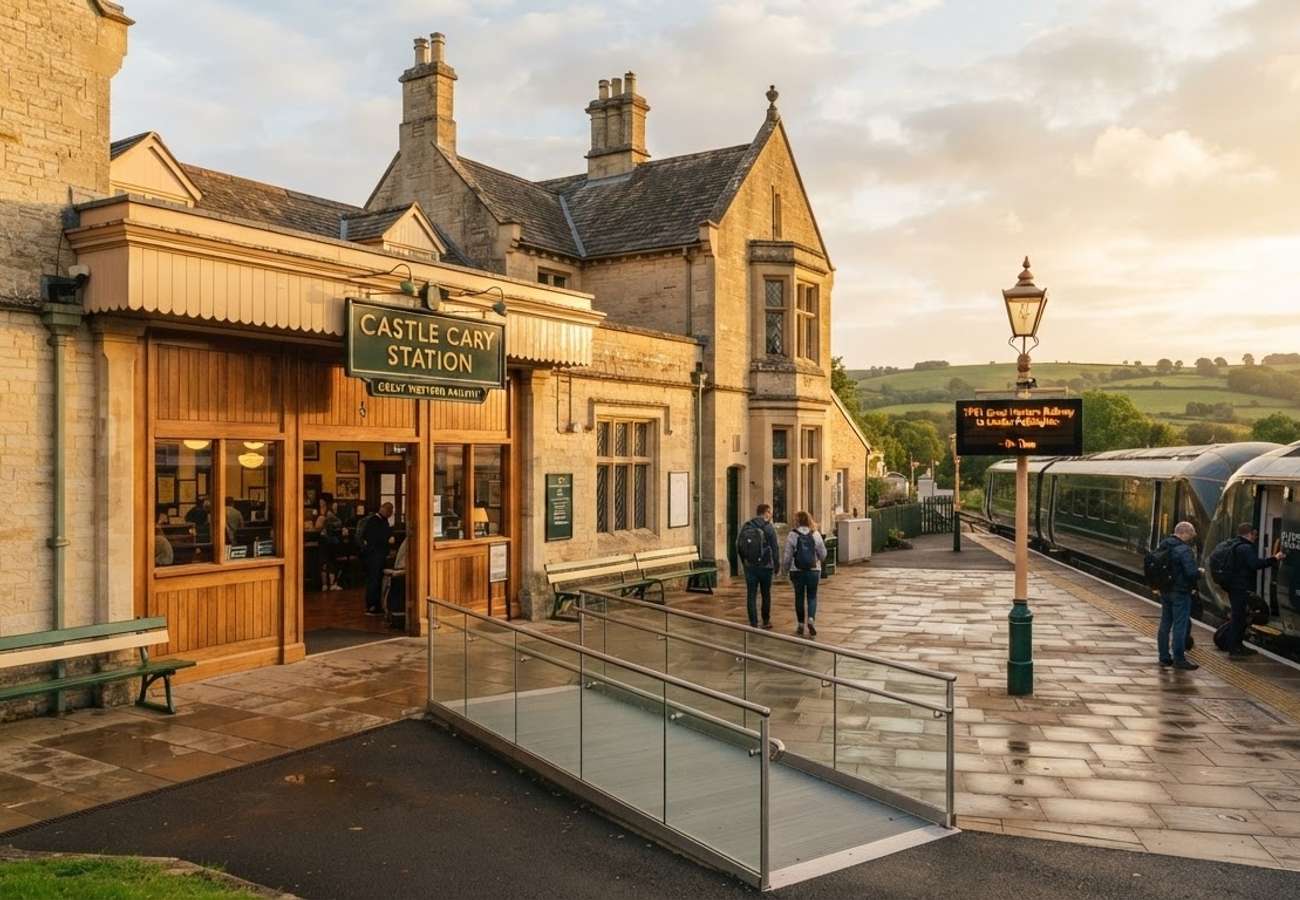
Image generated by AI
Castle Cary station has completed an £835,000 refurbishment, merging historic Great Western Railway (GWR) aesthetics with modern infrastructure to better serve as a primary transit hub for Glastonbury Festival.
The project focuses on restoring the station's vintage character while addressing the logistical demands of 350,000 annual passengers. Located in Somerset, England, the station serves as a critical link for domestic and international travelers, particularly during the world-famous Glastonbury Festival, where 20,000 attendees from surrounding areas utilize passenger rail.
Heritage Restoration Meets Modern Logistics
The refurbishment prioritizes a "vintage revival" aesthetic, ensuring the station remains a functioning transport hub rather than a static museum. A primary feature of the project is the reopening of the original entrance, designed to restore the historic sense of arrival for visitors.
Internal upgrades include:
- Ticket Office: Now featuring a period-inspired sign and a wooden-panelled exterior.
- Interior Palette: Integration of brown tones to reinforce the heritage railway atmosphere.
- Passenger Comfort: Installation of additional platform seating and a new toilet facility.
- Information Systems: Deployment of a digital departure board for real-time journey updates.
- Accessibility: Construction of a new wheelchair ramp to ensure inclusive access.
The Railway Heritage Trust specifically highlighted the reproduction of original Great Western Railway benches. According to Tim Hedley Jones of the Trust, removing clutter and restoring these design elements creates a more positive environment that allows passengers to appreciate the historical quality of railway furniture.
Strategic Importance for Glastonbury Festival
Castle Cary occupies a unique position in the Somerset tourism landscape. Situated approximately six miles from the Glastonbury Festival site, the station acts as a strategic gateway. During the event, a free shuttle service operates between the station and the festival grounds, reducing road congestion and providing a sustainable alternative for thousands of visitors.
Beyond event-based travel, the station maintains strong regional connectivity via direct Great Western Railway services to London Paddington, supporting year-round tourism and local commuting.
Infrastructure Improvements Overview
| Castle Cary Station Improvement | Travel Significance |
|---|---|
| Restored original entrance | Strengthens the historic arrival experience |
| Heritage-style ticket office | Preserves traditional railway character |
| Additional platform seating | Improves passenger comfort |
| New toilet facilities | Adds practical convenience |
| Digital departure board | Provides clearer journey information |
| Wheelchair-access ramp | Supports more accessible travel |
| Festival shuttle connection | Links rail passengers with Glastonbury Festival |
Why This Matters: Industry Analysis
From a logistical perspective, this investment proves that "heritage" and "efficiency" are not mutually exclusive. For travelers on this route, the real impact is the reduction of friction during high-stress peak periods. When 20,000 regional passengers descend on a small station for a single event, the presence of digital boards and improved accessibility is the difference between an organized transit flow and total gridlock.
Our analysis of the route map suggests that Castle Cary is being positioned as more than a stop; it is becoming a "branded" entry point to the Somerset experience. By investing in the "first impression" (the station), the region enhances the perceived value of the entire trip. In the broader aviation and rail industry, we are seeing a trend where transport hubs are integrated into the tourism product itself.
Forward Outlook
Expect other small-scale UK stations to follow this hybrid model of "functional heritage." As travelers become more discerning, the demand for unique, place-based experiences will likely drive further investments in station aesthetics. For Castle Cary, the next phase of growth will likely depend on the continued scalability of the festival shuttle system to handle increasing international rail arrivals.
A seamless blend of 19th-century charm and 21st-century utility.
Related Travel Guides
Disclaimer
This article is for informational and educational purposes only. It does not constitute legal, financial, or professional advice. While we strive to provide accurate and up-to-date information, travel policies, regulations, and conditions change rapidly. Always verify information with official sources before making travel decisions. Nomad Lawyer makes no representations about the accuracy, reliability, completeness, or suitability of the information provided. Readers should consult qualified professionals for advice specific to their circumstances. The views expressed in this article are those of the author and do not necessarily reflect the views of Nomad Lawyer.
Preeti Gunjan
Contributor & Community Manager
A passionate traveller and community builder. Preeti helps grow the Nomad Lawyer community, fostering engagement and bringing the reader experience to life.
Learn more about our team →