
Australia High Speed Rail Authority Selects Global Suppliers for 320km/h Sydney to Newcastle Line 2026
The High Speed Rail Authority has appointed international consortia to develop the 320km/h Newcastle-Sydney corridor, marking a critical shift toward Australia's first dedicated high-speed rail network.

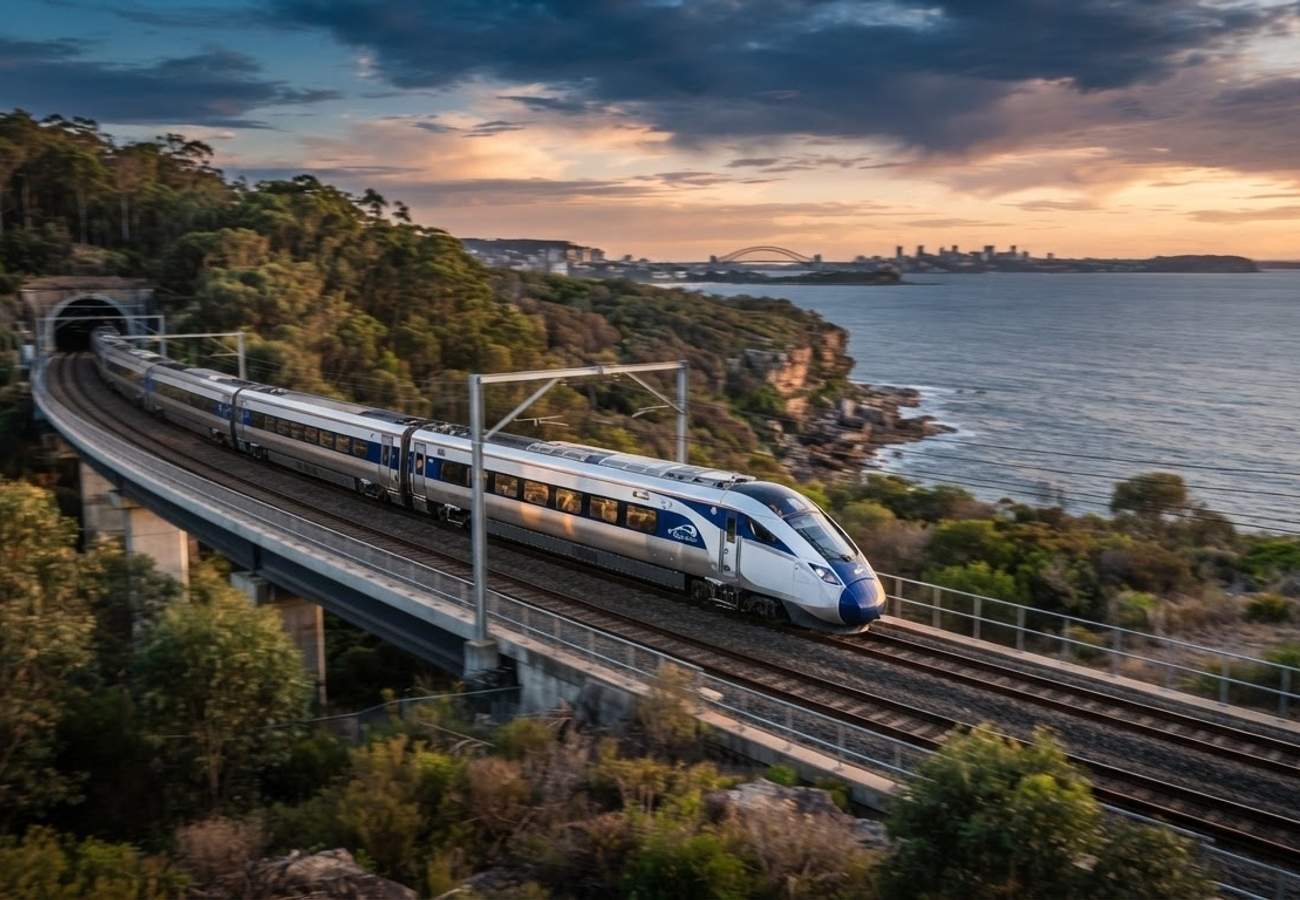
Image generated by AI
The High Speed Rail Authority (HSRA) has officially entered the critical development phase for the Newcastle-Sydney corridor, appointing global supply teams to design a network capable of 320km/h. This project represents a fundamental shift in New South Wales' transport architecture, aiming to decouple regional transit from road dependency.
Project Scope and Technical Specifications
The current phase focuses on Early Contractor Involvement (ECI), a strategic procurement step where the Australian Government secures expert data on costs, design, and approvals before final construction commitments. The project is designed to integrate advanced rail technology already proven in international markets to ensure the 320km/h target is sustainable and safe.
The HSRA has segmented the development into two primary work packages:
- Trains, Systems, and System Integration: Focusing on the rolling stock, operational facilities, and testing protocols.
- Tunnelling and Construction: Focusing on the physical infrastructure, land use, and engineering requirements.
Global Consortia and Supplier Breakdown
Our analysis of the selected supplier groups indicates a heavy reliance on established European and Asian rail expertise to adapt high-speed technology to Australian geography.
Trains, Systems & System Integration Teams
The following groups have been selected to develop Australia's first high-speed train sets:
- Alstom/UGL Joint Venture (comprising Alstom Transport Australia and UGL Engineering)
- ARC Joint Venture (comprising Siemens Mobility, Mott MacDonald Australia, and Hitachi Rail STS Australia)
Infrastructure and Construction Partners
The broader project involves a competitive pool of global engineering firms tasked with cost evaluation and design development, including:
- Acciona
- John Holland
- Gamuda
- Samsung C&T
- CPB Contractors
- Ferrovial
- Vinci
Impact on Passenger Transit and Regional Tourism
For the traveler, the implementation of this corridor transforms the Newcastle-Sydney route from a standard regional commute into a high-efficiency transit link. This reduces the friction of multi-destination itineraries, allowing passengers to combine metropolitan Sydney experiences with the coastal attractions of Newcastle.
Expected passenger benefits include:
- Drastic Travel Time Reduction: A projected top speed of 320km/h will significantly shorten the journey compared to existing rail and road options.
- Reliability Gains: Dedicated high-speed tracks eliminate the delays often associated with shared-use regional lines.
- Sustainable Mobility: A shift toward lower-carbon domestic travel, reducing the environmental footprint of New South Wales tourism.
Passenger Advisory: Rights and Expectations
It is imperative for travelers to understand that this project is currently in the planning and development stage. No passenger services are currently operational, and tickets are not available for purchase.
For the affected traveler, this means:
- Current Planning: All current journeys between Sydney and Newcastle must continue to utilize existing NSW TrainLink services, road transport, or air connections.
- Booking Alerts: Be wary of any third-party sites claiming to offer "pre-bookings" for high-speed rail; official bookings will only occur via the High Speed Rail Authority or authorized government channels.
- Timeline Monitoring: Passengers should monitor official HSRA announcements for the transition from the ECI phase to the actual construction phase, as this will dictate when service commencement dates are announced.
Industry Analyst View
The selection of firms like Alstom and Siemens suggests that Australia is prioritizing "off-the-shelf" proven technology over bespoke, unproven systems. This minimizes technical risk but necessitates significant modifications to the existing New South Wales rail gauge and signaling infrastructure.
From a macro-economic perspective, the integration of robotics and precision production in the manufacturing phase indicates that the Australian Government views this not just as a transport project, but as an industrial catalyst for local high-tech engineering.
The transition from regional rail to high-speed connectivity marks the beginning of a new era for Australian domestic mobility.
Related Travel Guides
Disclaimer
This article is for informational and educational purposes only. It does not constitute legal, financial, or professional advice. While we strive to provide accurate and up-to-date information, travel policies, regulations, and conditions change rapidly. Always verify information with official sources before making travel decisions. Nomad Lawyer makes no representations about the accuracy, reliability, completeness, or suitability of the information provided. Readers should consult qualified professionals for advice specific to their circumstances. The views expressed in this article are those of the author and do not necessarily reflect the views of Nomad Lawyer.
Raushan Kumar
Founder & Lead Developer
Full-stack developer with 11+ years of experience and a passionate traveller. Raushan built Nomad Lawyer from the ground up with a vision to create the best travel and law experience on the web.
Learn more about our team →