
Carnival Cruise Line Enhances Onboard Menus With Global Culinary Themes: All You Need To Know
Vietnam's Đồng Nai province is building an AI-powered smart tourism and airport hub at Long Thành to rival Dubai and Sin

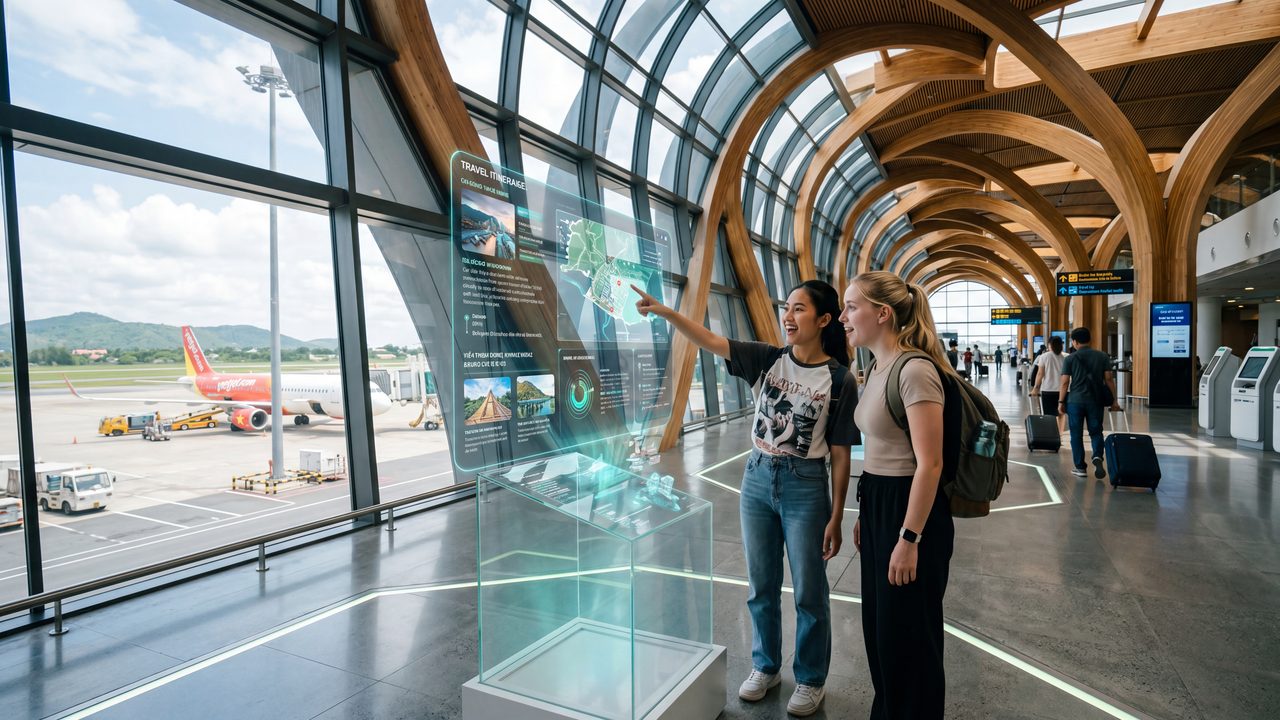
Image generated by AI
[Đồng Nai, June 26, 2026] — Vietnam is initiating a massive transformation in travel technology as the Đồng Nai province develops an AI-powered smart tourism and aviation hub designed to compete with global benchmarks such as Singapore, Dubai, Shenzhen, and Barcelona. By integrating artificial intelligence with urban planning and airport infrastructure, the region is establishing a connected ecosystem to redefine future mobility and digital travel.
The Evolution of Southeast Asian Smart Infrastructure
The shift in Đồng Nai represents a strategic move away from fragmented tourism and transport management toward a unified digital framework. Industry reports indicate that the province is prioritizing a holistic approach where digital services, urban development, and transport are developed as a single, interlocking system. This strategy positions Vietnam as a primary testing ground for AI-driven governance and infrastructure in Southeast Asia.
The core of this ambition is the transition toward "smart" environments where the physical movement of people is synchronized with data-driven decision-making. This evolution is not merely about upgrading existing facilities but about rethinking the relationship between a city and its primary transit gateways.
Long Thành Smart City and Urban Transformation
A central pillar of this technological leap is the development of the Long Thành smart city. Rather than creating a standard residential or commercial zone, officials are designing an urban space that serves as an intelligent extension of the regional aviation gateway. The objective is to ensure that the transition from an aircraft to the city is seamless and digitally managed.
Key components of the Long Thành urban strategy include:
- Automated Urban Services: The implementation of digitally managed municipal services to improve efficiency.
- Passenger Flow Systems: Integrated transport networks designed to optimize the movement of travelers.
- AI-Driven Operations: Using artificial intelligence to plan and manage city-wide operations in real time.
- Innovation Zones: Creating connected spaces for residents and tech innovators to foster a digital economy.
AI-Driven Enhancements in Vietnamese Tourism
The application of AI is fundamentally altering how visitors interact with destinations in Vietnam. In Đồng Nai, the focus has shifted from static sightseeing to a dynamic, AI-supported experience that manages the entire visitor journey. This digital tourism innovation aims to remove friction from the travel process, making it more intuitive for international and domestic tourists.
According to industry observers, the practical application of these AI tools includes real-time management of tourist traffic to prevent overcrowding and the synchronization of transport links with popular attractions. Data-driven platforms are also being deployed to provide personalized travel guidance and faster access to essential public services, ensuring that the tourist experience is tailored to individual needs.
Digital-First Aviation Infrastructure at Long Thành
The construction of Long Thành International Airport is being treated as the creation of a "digital travel backbone" rather than a traditional aviation project. The airport is being designed as a connected network that integrates with the surrounding regional infrastructure, ensuring that data flows freely between the terminal and the city.
The digital infrastructure framework focuses on several critical areas:
- Smart Connectivity: Establishing high-tech transport links between the airport and adjacent urban centers.
- Operational Communication: Implementing digital systems to streamline airport operations and reduce delays.
- Integrated Logistics: Merging passenger services with logistics data for a more efficient supply chain.
- Data-Centric Planning: Utilizing real-time data to inform the ongoing expansion and maintenance of airport facilities.
AI Mobility Systems and Regional Transport
Transport within Đồng Nai is evolving through the adoption of predictive AI mobility systems. This approach aligns with a broader trend across Southeast Asia to move away from isolated road networks in favor of connected transport ecosystems.
The province is exploring predictive traffic management models that can anticipate congestion and adjust signal timings or route suggestions automatically. Other initiatives include the rollout of unified digital ticketing systems and the use of real-time mobility data to optimize urban routing. This shift suggests that future mobility in the region will be defined as much by data processing as by physical road capacity.
The Role of Semiconductors in Digital Travel
While much of the transformation is visible through apps and airports, a significant portion of the infrastructure is hidden. The success of Đồng Nai’s travel tech depends on the development of advanced semiconductors and robust digital circuitry.
These hardware components provide the necessary processing power for AI travel tools and smart city sensors to operate at scale. Without this underlying semiconductor layer, the high-speed data processing required for real-time traffic management and personalized tourism would be impossible. This hidden foundation is what enables the province to scale its ambitions from small pilots to region-wide systems.
Integrated Digital Experiences for Modern Travelers
The culmination of these efforts is a fully connected digital travel experience. The traditional model of separate bookings for flights, hotels, and local transport is being replaced by an integrated ecosystem.
| Feature | Traditional Travel Model | Đồng Nai Smart Model |
|---|---|---|
| Trip Planning | Manual research and separate bookings | AI-based integrated planning tools |
| Transport | Isolated taxi/bus services | Unified, predictive mobility networks |
| Guidance | Static maps and brochures | Real-time, personalized AI guidance |
| Service Access | Manual queues and paperwork | Digital-first public service access |
| Traffic Flow | Reactive management | Predictive, AI-driven optimization |
Why This Matters: The Broader Impact on Aviation and Tourism
The strategic overhaul in Đồng Nai is significant because it signals a shift in how Southeast Asia views the "gateway" concept. Historically, airports were seen as transit points—places to arrive and depart. However, the model being built in Vietnam treats the airport as a digital nerve center that controls and optimizes the entire surrounding region.
By integrating the airport, the city, and the tourism sector into one AI-driven loop, Vietnam is attempting to solve the "last mile" problem that plagues many global hubs. When an airport's digital infrastructure is synced with the city's mobility data, the result is a drastic reduction in congestion and a significant increase in tourist satisfaction.
Furthermore, this development places Vietnam in direct competition with established tech-hubs like Singapore and Dubai. By leapfrogging traditional infrastructure stages and moving straight to AI-integrated systems, Đồng Nai is not just improving its tourism industry; it is creating a blueprint for the next generation of smart cities in developing economies. This move emphasizes that the future of travel is not about the destination itself, but the intelligence of the network that leads there.
Related Travel Guides
Disclaimer
This article is for informational and educational purposes only. It does not constitute legal, financial, or professional advice. While we strive to provide accurate and up-to-date information, travel policies, regulations, and conditions change rapidly. Always verify information with official sources before making travel decisions. Nomad Lawyer makes no representations about the accuracy, reliability, completeness, or suitability of the information provided. Readers should consult qualified professionals for advice specific to their circumstances. The views expressed in this article are those of the author and do not necessarily reflect the views of Nomad Lawyer.
Preeti Gunjan
Contributor & Community Manager
A passionate traveller and community builder. Preeti helps grow the Nomad Lawyer community, fostering engagement and bringing the reader experience to life.
Learn more about our team →