
Cape Breton Infrastructure Crisis: Flooding Disrupts Nova Scotia Tourism
Torrential rainfall exceeding 200 millimetres has triggered states of emergency across three Cape Breton counties, crippling critical road networks and bridge

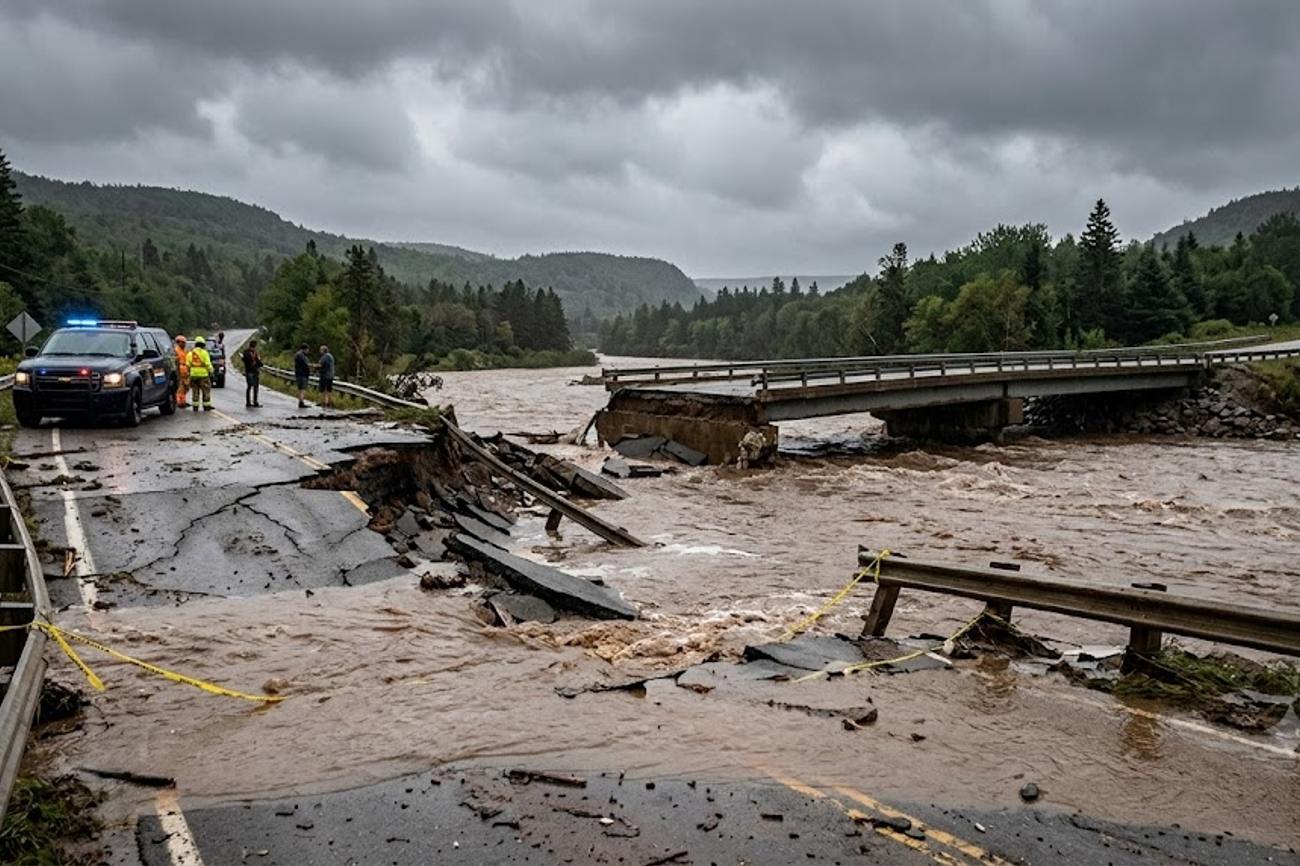
Image generated by AI
The Local Trend Revealed
Nova Scotia is currently grappling with a severe infrastructure crisis following a prolonged storm system that dumped massive volumes of rain across eastern Canada. The impact is most acute on Cape Breton Island and northeastern mainland Nova Scotia, where the geography—defined by rugged coastlines and rural mountain passes—makes the region highly dependent on a limited number of arterial roads.
The crisis has centered on Inverness County, Richmond County, and Victoria County, all of which remain under local states of emergency. This isn't just a weather event; it is a systemic disruption of the region's primary tourism engine. Because Cape Breton’s appeal relies heavily on self-drive itineraries and scenic coastal routes, the damage to culverts, barriers, and bridges has effectively severed access to several rural tourism hubs.
Cultural & Environmental Value
For the visitor, the real impact is the sudden fragility of the "wild" experience. The flooding has underscored a growing tension between the desire for remote, nature-based tourism and the reality of climate-driven volatility. When 200 millimetres of rain hit these highlands, the result is more than just a detour; it is a total shutdown of the connectivity that allows visitors to engage with Gaelic culture and highland ecology.
The human cost has been stark, with the Royal Canadian Mounted Police confirming the death of a 46-year-old woman from Cleveland, Nova Scotia, whose vehicle was swept across a flooded bridge. This tragedy serves as a grim reminder that the "scenic route" can become lethal during extreme weather events. The current recovery phase, supported by Prime Minister Mark Carney and Federal Emergency Management Minister Eleanor Olszewski, focuses on restoring the very infrastructure that sustains the local economy.
Visitor Insider Tips
If you are planning a trip to Nova Scotia or are currently in the region, adhere to these local guidelines to ensure safety and support the community:
- Avoid "Shortcut" Rural Roads: Stick to main highways. In Richmond and Victoria Counties, smaller roads may look passable but often have compromised culverts or washed-out shoulders that cannot support vehicle weight.
- Check Real-Time Alerts: Before departing, consult the Nova Scotia Department of Public Works and local municipal feeds for Inverness and Richmond Counties.
- Support Local "Slow" Tourism: With some major routes delayed, pivot your itinerary to support small-scale artisans and cafes in non-affected villages. This helps distribute economic recovery to those who didn't see their usual seasonal foot traffic.
- Autumn Window: If visiting for the fall foliage, be aware that road crews are prioritizing essential repairs. Expect delays on the Cabot Trail and other scenic loops.
Tourism Outlook
The long-term impact for Cape Breton will likely be a shift toward "resilient tourism." The vulnerability of these three counties proves that the current infrastructure is insufficient for the increasing frequency of extreme weather. To maintain its status as a premier nature destination, the region will need to invest in climate-hardened bridges and diversified transport options. For now, the focus remains on the immediate restoration of power—which saw tens of thousands of outages—and the rebuilding of the road networks essential for the autumn travel peak.
Related Travel Guides
Disclaimer
This article is for informational and educational purposes only. It does not constitute legal, financial, or professional advice. While we strive to provide accurate and up-to-date information, travel policies, regulations, and conditions change rapidly. Always verify information with official sources before making travel decisions. Nomad Lawyer makes no representations about the accuracy, reliability, completeness, or suitability of the information provided. Readers should consult qualified professionals for advice specific to their circumstances. The views expressed in this article are those of the author and do not necessarily reflect the views of Nomad Lawyer.
Preeti Gunjan
Contributor & Community Manager
A passionate traveller and community builder. Preeti helps grow the Nomad Lawyer community, fostering engagement and bringing the reader experience to life.
Learn more about our team →