
Aviation Updates: Unverified Canada-US Trade Shock Sparks Asia Pivot Panic and Corporate Travel Chaos
Viral rumors of a North American trade collapse have ignited panic across the aviation sector, threatening to completely upend long-haul routes connecting Canada, the US, and the Indo-Pacific.

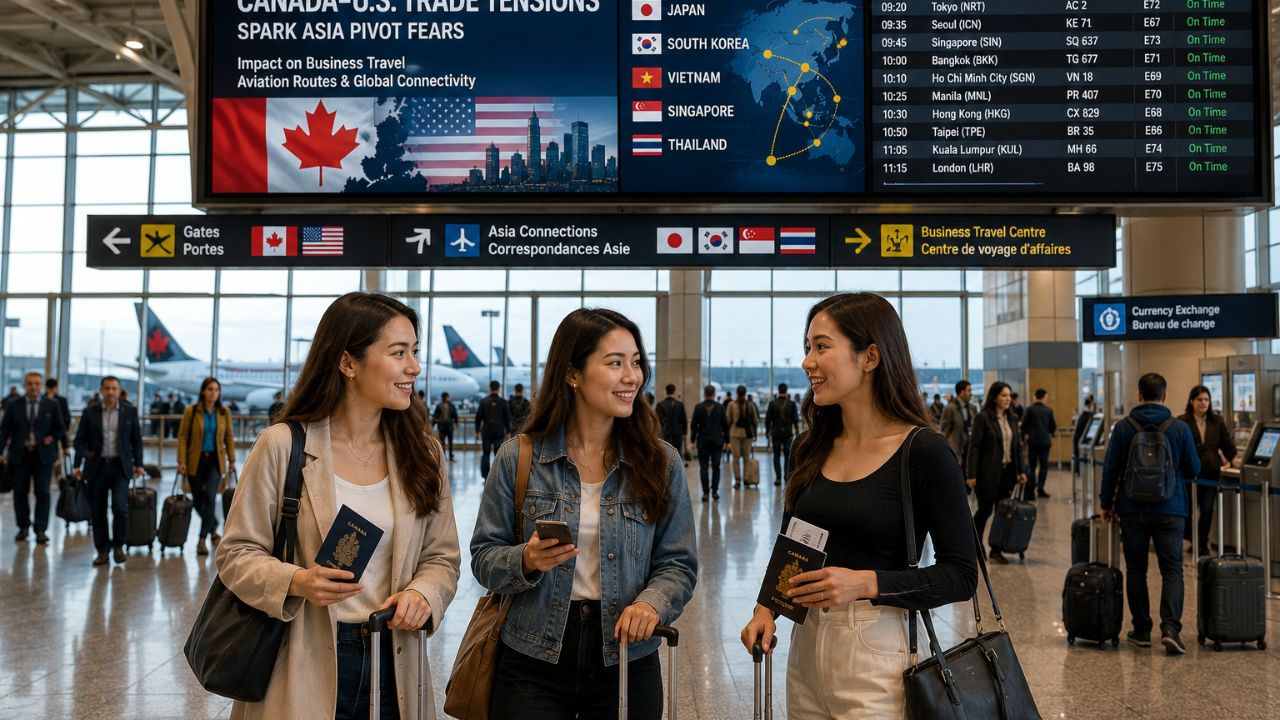
Image generated by AI
Aviation Updates: Unverified Canada-US Trade Shock Sparks Asia Pivot Panic and Corporate Travel Chaos
As viral speculation of a sudden North American trade collapse rapidly saturates global media, the mere threat of Canada pivoting its massive economic focus toward the Indo-Pacific is actively paralyzing corporate travel planning, threatening unprecedented, system-wide travel chaos.
Image generated by AI
As urgent airline news platforms and highly critical aviation updates constantly monitor the fragile stability of global commerce, a massive, unverified geopolitical rumor has ignited absolute panic across the aviation sector. As of June 2026, a wildly viral—yet completely unconfirmed—claim suggests that high-level trade talks between Canada and the United States have suffered a catastrophic breakdown. The claim explicitly states that Canada is aggressively shifting its economic focus away from its southern neighbor and rapidly pivoting toward Asian powerhouses like Japan, South Korea, Vietnam, Singapore, and Thailand. Although Transport Canada, the U.S. Department of Transportation, and major regulatory bodies have issued absolutely zero official statements, the perception alone is causing severe friction. The North American air corridor is one of the most heavily utilized corporate travel networks on earth. If trade patterns suddenly shift, airlines will be forced into massive fleet redeployments, aggressively stripping capacity from Canada-US routes to feed new transpacific demand. This sudden, violent restructuring would instantly guarantee severe airport disruptions, wildly unpredictable fare fluctuations, and a massive wave of long-haul flight cancellations, plunging international executives into inescapable travel chaos.
Expanded Overview: The USMCA Aviation Lifeline
When analyzing the massive macroeconomic forces dictating North American fleet planning, the sheer scale of the Canada-US aviation corridor is staggering.
Under the USMCA framework, Canada and the U.S. share one of the most deeply integrated, hyper-dependent trade relationships in the global economy, with the U.S. serving as Canada’s absolute largest trading partner. Millions of passengers cross this transborder air corridor annually, heavily relying on the tight, high-frequency synchronization between massive hubs like Toronto Pearson and New York JFK. A sudden, violent pivot toward the Indo-Pacific would instantly shatter this operational balance. Cargo supply chains, dedicated corporate travel routes, and long-term North American aviation planning would completely collapse. Even as unverified rumors, these claims instantly destabilize long-haul travel confidence, forcing multinational corporations to freeze their travel budgets out of sheer unpredictability.
Section-Wise Breakdown: The North American Vulnerability
The absolute core of this speculative crisis centers on the sudden vulnerability of the continent's most powerful aviation gateways.
If a trade suspension were to materialize, the immediate casualties would be the massive North American super-hubs. Operations at Toronto Pearson, Vancouver, and Montréal-Trudeau International Airports would face catastrophic capacity reshuffling as transborder demand evaporates. Across the border, massive U.S. hubs heavily reliant on Canadian corporate traffic—specifically New York JFK, Los Angeles (LAX), and Chicago O’Hare—would experience severe, immediate route destabilization. The sudden void in business travel across these heavily fortified corridors would leave airlines scrambling to completely redraw their North American network maps.
Section-Wise Breakdown: The Indo-Pacific Rebalance
Conversely, the massive Asian aviation gateways are being thrust into the speculative spotlight as the absolute beneficiaries of this rumored pivot.
If Canada aggressively forces its trade focus westward, the Indo-Pacific aviation network will experience a massive capacity surge. High-yield corporate routes would instantly shift, heavily flooding massive Asian super-hubs. Tokyo (Narita and Haneda) and Seoul's Incheon would absorb massive North Asian business traffic, while Singapore's Changi, Bangkok's Suvarnabhumi, and Ho Chi Minh City's Tan Son Nhat would see unprecedented surges in Southeast Asian corporate mobility. Asian tourism boards are already highly aware that such a massive structural pivot would generate a massive influx of Canadian corporate and leisure travel, heavily influencing long-distance travel pricing across the entire Pacific Rim.
Aviation Details: North America-Indo-Pacific Trade Shock Aviation Matrix
The exact operational telemetry outlining this highly speculative geopolitical shock, detailing the specifically exposed transborder hubs and the targeted Indo-Pacific expansion zones, has been consolidated into the mandatory matrix below.
North America-Indo-Pacific Trade Shock Aviation Matrix (2026)
| Geographic Zone | Exposed Aviation Hubs |
|---|---|
| Canadian Gateways | Toronto Pearson, Vancouver, Montréal-Trudeau |
| U.S. Critical Hubs | New York JFK, Los Angeles, Chicago O’Hare |
| Asia-Pacific Airports | Tokyo (Narita/Haneda), Incheon, Changi |
| Southeast Asia Hubs | Suvarnabhumi, Tan Son Nhat |
| Aviation Regulators | Transport Canada, US DOT, FAA, ICAO (No statements) |
Passenger Impact: Navigating Speculative Gridlock
For the international corporate traveler, the mere existence of this viral claim translates into immediate, highly frustrating logistical anxiety.
Even without official government confirmation, the psychological impact is severe. Corporate travel planners are actively observing shifting patterns in transatlantic and transpacific demand. Because travel routes are perceived to be becoming less predictable, passengers are aggressively avoiding booking long-haul flights on vulnerable corridors. The fear of suddenly finding oneself on a discontinued route, battling severe airport disruptions and fighting for rebooking options, forces executives into a defensive posture. Travelers are heavily advised to meticulously compare alternate routes via Asia-Pacific hubs and secure highly flexible booking policies to survive the potential reshuffling of North America-Asia connectivity.
Industry Analysis: Airline-Specific Risk Profiles
Aviation economists explicitly highlight that different carriers face drastically different risk profiles should this geopolitical rumor materialize.
For transborder operators, the threat is massive. Air Canada faces a highly critical risk to its domestic and transborder dominance, while United Airlines (highly reliant on U.S.-Canada business routes) and WestJet (balancing transborder leisure and business) are equally vulnerable. American Airlines faces a medium risk regarding its North American hub connectivity. Conversely, massive transpacific carriers like Japan Airlines, Singapore Airlines, and Korean Air face an indirect, yet highly lucrative, shift in demand. As airlines potentially move long-haul fleets to support these new Asian trade patterns, the global hub connectivity model will be ruthlessly restructured to accommodate the rise in transpacific airline competition.
Conclusion: Waiting on Official Confirmation
Ultimately, the viral claims of a massive Canada-U.S. trade collapse and an aggressive Canadian pivot toward the Indo-Pacific remain completely unverified, yet they have successfully injected deep travel chaos into global aviation planning. Because absolutely no statements have been issued by Canadian Trade authorities, the FAA, ICAO, or IATA, airlines have not executed physical operational changes. However, the sheer panic surrounding the potential disruption of Toronto-JFK corridors and the subsequent flooding of Tokyo, Singapore, and Incheon hubs proves how incredibly fragile the global aviation network truly is. International travelers must remain fiercely vigilant, completely ignoring unverified social media claims while aggressively monitoring official government travel advisories to survive the intense, speculative volatility currently rocking the North American aviation market.
Key Takeaways
- Unverified Viral Shock: A highly viral, completely unconfirmed rumor as of June 2026 suggests Canada is abandoning U.S. trade talks to pivot toward the Indo-Pacific.
- Transborder Vulnerability: The rumored disruption immediately threatens massive North American hubs, specifically targeting Toronto Pearson, Vancouver, JFK, LAX, and Chicago O'Hare.
- The Asian Beneficiaries: A massive trade pivot would forcefully redirect corporate travel capacity toward Tokyo (Narita/Haneda), Incheon, Changi, Suvarnabhumi, and Tan Son Nhat.
- High-Risk Airlines: Air Canada, United Airlines, and WestJet are identified as facing severe, immediate risks to their transborder business models if the shock materializes.
- Zero Official Confirmation: Transport Canada, the U.S. DOT, FAA, IATA, and ICAO have issued absolutely no statements, meaning all current claims are strictly speculative.
FAQ: Canada-US Aviation Trade Shock 2026
Are flights between Canada and the US currently canceled? No. As of June 2026, there are absolutely no confirmed flight cancellations or operational changes. The reports of a massive Canada-U.S. trade shock remain completely unverified and speculative.
Which Asian countries are named in the rumored Canadian trade pivot? The viral claims heavily suggest that if Canada abandons U.S. trade, it will aggressively redirect its economic and aviation focus toward Japan, South Korea, Vietnam, Singapore, and Thailand.
What should travelers do during this speculative disruption? Aviation experts strongly advise travelers to completely ignore unverified social media rumors. Instead, passengers should monitor official updates from their airlines and secure highly flexible long-distance booking options in case route restructuring actually occurs.
Related Travel Guides
- JetBlue Flight B6685 Diverts to Fort Myers Airport
- Los Angeles International (LAX) Gripped by Global Schedule Collapse: 151 Delays and 5 Cancellations Impacting Routes to London, Tokyo, Paris, and New York; American, Delta, and United Facing Major Travel Chaos
- GE9X Engine Crack Exposes Critical Design Challenges in World's Largest Commercial Jet Engine
Disclaimer: This article is strictly for informational and geopolitical aviation analysis purposes. The specific claims of a Canada-U.S. trade shock, the rumored economic pivot toward the Indo-Pacific (Japan, South Korea, Vietnam, Singapore, Thailand), and the speculated vulnerability of transborder airlines (Air Canada, United, WestJet) are based entirely on viral, unverified media reports circulating as of June 2026. Absolutely no official confirmation or regulatory safety alerts have been issued by Transport Canada, the U.S. Department of Transportation, the FAA, ICAO, or IATA. Passengers holding itineraries across North America or the Pacific Rim must explicitly verify exact airspace status, potential corporate route cancellations, and live emergency advisories directly with their operating carrier and national aviation authorities.
Disclaimer
This article is for informational and educational purposes only. It does not constitute legal, financial, or professional advice. While we strive to provide accurate and up-to-date information, travel policies, regulations, and conditions change rapidly. Always verify information with official sources before making travel decisions. Nomad Lawyer makes no representations about the accuracy, reliability, completeness, or suitability of the information provided. Readers should consult qualified professionals for advice specific to their circumstances. The views expressed in this article are those of the author and do not necessarily reflect the views of Nomad Lawyer.
Raushan Kumar
Founder & Lead Developer
Full-stack developer with 11+ years of experience and a passionate traveller. Raushan built Nomad Lawyer from the ground up with a vision to create the best travel and law experience on the web.
Learn more about our team →