
Aviation Updates: Unverified US-Iran Strike Claims Near Bahrain Threaten Massive Europe-Asia Travel Chaos
As geopolitical tensions violently escalate, unverified reports of military strikes near Bahrain threaten to collapse the Gulf airspace corridor, risking global flight cancellations.

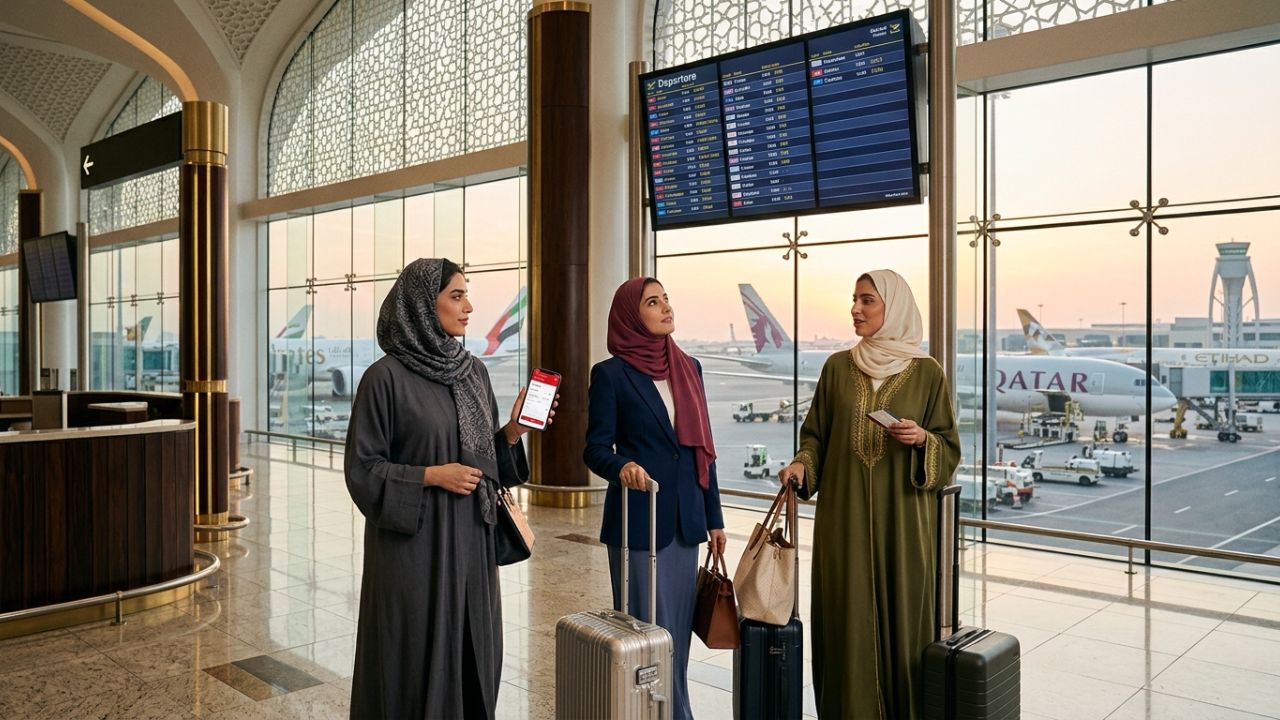
Image generated by AI
Aviation Updates: Unverified US-Iran Strike Claims Near Bahrain Threaten Massive Europe-Asia Travel Chaos
As unverified reports of military strikes rapidly saturate intelligence networks, escalating geopolitical friction between the United States and Iran is aggressively threatening the stability of Gulf airspace, pushing the vital Europe-Asia flight corridor to the absolute brink of severe regional travel chaos.
Image generated by AI
As urgent airline news platforms and highly critical aviation updates continuously monitor the rapidly deteriorating geopolitical landscape in the Middle East, a massive new security shock is actively threatening global flight stability. Unverified reports detailing potential military strikes within a highly sensitive maritime zone near Bahrain have instantly ignited severe airspace security alerts. Because the Gulf serves as the ultimate global aviation choke point—connecting over 60% of all long-haul traffic flowing between Europe and Asia—these United States-Iran maritime incidents have placed the entire international flight network under extreme pressure. While regional aviation regulators have not yet confirmed any physical destruction, the mere threat of escalating conflict has forced massive global carriers, including Emirates, Etihad Airways, Qatar Airways, and Gulf Air, into implementing aggressive precautionary monitoring protocols. If this highly volatile situation escalates into physical airspace closures, millions of transiting passengers will face immediate, unprecedented travel chaos, characterized by massive dynamic rerouting, severe airport disruptions, and the very real threat of rolling flight cancellations.
Expanded Overview: The Global Aviation Choke Point
When analyzing the massive macroeconomic and logistical forces dictating global air travel, the geographic vulnerability of the Persian Gulf cannot be overstated.
Bahrain sits directly in the center of one of the largest, busiest, and most tightly integrated commercial flight corridors on the planet. All major commercial air traffic connecting Western Europe to the economic powerhouses of Asia is heavily routed through this specific airspace. Any potential military threat in this region forces airlines to instantly evaluate massive operational changes. If the Gulf corridor is compromised, international carriers will be forced to aggressively reroute flights over Saudi Arabia or utilize significantly longer northern trajectories through Central Asia. This defensive maneuvering instantly guarantees lengthened travel times, massive spikes in fuel consumption, extreme operational surcharges, and the total disruption of meticulously timed global transit schedules.
Section-Wise Breakdown: The Bahrain Vulnerability
The core of this immediate aviation crisis stems from the rampant, unverified reports of strikes dominating both traditional intelligence networks and social media platforms.
Currently, the alleged military engagement occurred in a highly sensitive maritime and military zone directly adjacent to Bahrain. Despite the massive surge in speculative reporting regarding escalating US-Iran tensions, it is critical to note that US defense officials and regional civil aviation regulators have not yet confirmed any physical impacts. Crucially, the International Civil Aviation Organization (ICAO) has not issued a formal notice to airmen mandating the closure of Bahraini airspace. However, in modern geopolitical aviation, perception dictates operations; the sheer speculation of anti-aircraft activity or maritime strikes is entirely sufficient to force commercial carriers to aggressively evaluate emergency route deviations to protect passenger safety.
Section-Wise Breakdown: The Global Hub Exposure
Because Gulf airspace is the foundational pillar of the global hub-and-spoke transit model, this security shock heavily exposes the world's most critical airports.
If the airspace destabilizes, the operational integrity of massive super-hubs including Bahrain International, Dubai International, Abu Dhabi International, Hamad International (Doha), Kuwait International, and Muscat International will be severely compromised. Furthermore, this disruption instantly bleeds into secondary international gateways. Major European departure points like London, Frankfurt, Paris, and Amsterdam, alongside massive Asian arrival hubs such as Delhi, Mumbai, Singapore, and Bangkok, are highly vulnerable. Because these airports rely on flawlessly timed inbound Gulf traffic to facilitate onward connections, any airspace delay instantly triggers a cascading wave of severe airport disruptions across multiple continents.
Aviation Details: Gulf Airspace Geopolitical Impact Matrix
The exact operational telemetry outlining this highly volatile geopolitical crisis, detailing the primary carriers exposed and the specific geographic zones under threat, has been consolidated into the mandatory matrix below.
Gulf Airspace Geopolitical Impact Matrix (2026)
| Operational Metric | Verified Aviation Impact Data |
|---|---|
| Crisis Catalyst | Unverified US-Iran strike claims near Bahrain |
| Geopolitical Zone | Gulf Airspace (Persian Gulf maritime corridor) |
| Global Significance | Handles >60% of Europe-Asia long-haul traffic |
| Primary Carriers Exposed | Emirates, Etihad, Qatar Airways, Gulf Air |
| International Carriers Exposed | British Airways, Lufthansa, Air France-KLM, Air India |
| Current Regulatory Status | Precautionary monitoring (No ICAO closure issued) |
Passenger Impact: Navigating the Geopolitical Gridlock
For the international traveler currently holding a ticket between Europe and Asia, the threat of this conflict translates into immediate logistical anxiety.
Even if the airspace remains open, the precautionary rerouting executed by risk-averse airlines will significantly increase flight times, heavily jeopardizing tight layovers in Gulf hubs. Travelers are explicitly warned to anticipate sudden schedule buffers and potential dynamic rerouting. Passengers must aggressively monitor their airline's live flight status before heading to the airport and avoid panic-canceling their flights until official government notices are issued. To survive this specific breed of travel chaos, aviation experts strongly advise booking flights with significantly longer layovers and prioritizing flexible travel classes when transiting through hyper-sensitive Middle Eastern hubs.
Industry Analysis: Airline-Specific Defensive Maneuvers
Aviation economists explicitly highlight that different carriers are deploying highly specific defensive strategies to mitigate this threat.
The major Gulf carriers—Emirates, Etihad Airways, Qatar Airways, and Gulf Air—are the most heavily exposed, actively monitoring advisories to potentially reroute operations around southern Gulf corridors. Meanwhile, European legacy carriers are preparing aggressive detours. British Airways is currently evaluating alternative routings for its London-to-Asia services, anticipating much longer flight times. Lufthansa is preparing to completely avoid affected zones on its South Asia and Southeast Asia routes, absorbing the massive fuel cost penalties. Air France and KLM are actively increasing their reliance on northern routings, while Air India, which heavily depends on Gulf corridors for its immense expatriate workforce traffic, faces severe operational instability.
Conclusion: Surviving the Speculative Shock
Ultimately, the unverified reports of US-Iran strikes near Bahrain have plunged the global aviation industry into a severe state of precautionary defensive posturing. Because the Gulf airspace manages over 60% of the long-haul transit traffic between Europe and Asia, even the speculative threat of military escalation is enough to trigger massive operational friction. While ICAO and regional authorities have not yet closed the skies, Emirates, Etihad, Qatar, and international legacy carriers are actively preparing for emergency rerouting. As the geopolitical situation develops, international passengers must remain fiercely vigilant, maintaining flexible bookings and preparing for extended travel times as the global aviation network attempts to navigate this highly volatile, extremely dangerous airspace security shock.
Key Takeaways
- Geopolitical Aviation Crisis: Unverified reports of a military strike near Bahrain, linked to escalating US-Iran tensions, have triggered massive security alerts across Gulf airspace.
- The Global Choke Point: The threatened airspace is a hyper-critical aviation corridor that actively handles over 60% of the long-haul flight traffic between Europe and Asia.
- Airlines Under Pressure: Gulf carriers (Emirates, Etihad, Qatar Airways, Gulf Air) and global operators (British Airways, Lufthansa, Air France-KLM, Air India) are evaluating immediate route detours.
- No Official Closures Yet: As of publication, neither US defense officials, regional regulators, nor ICAO have confirmed the strikes or officially mandated airspace closures.
- Passenger Survival Strategy: Travelers are aggressively advised to secure flexible bookings, anticipate significantly longer flight times due to rerouting over Saudi Arabia or Central Asia, and avoid panic cancellations.
FAQ: Gulf Airspace Bahrain Strike Alert 2026
Is the airspace over Bahrain and the Gulf currently closed? No. As of publication, no regional aviation authority or ICAO has confirmed that Gulf airspace is closed. Airlines are currently operating under heightened precautionary monitoring protocols.
Which airlines are most impacted by this geopolitical alert? Carriers based in the Middle East, specifically Emirates, Etihad Airways, Qatar Airways, and Gulf Air, are the most directly impacted, alongside international airlines like British Airways and Lufthansa that heavily utilize the Europe-Asia corridor.
Should I cancel my flight through Dubai, Doha, or Abu Dhabi? Aviation experts strongly advise against panic cancellations. Passengers should maintain flexible bookings, continuously monitor live updates directly from their airline, and prepare for potential delays or extended flight times due to defensive rerouting.
Related Travel Guides
Europe Aviation Tourism Housing Crisis Travel Chaos 2026
Juneyao Airlines Shanghai Jakarta Manila Delay Travel Chaos 2026
Middle East Regional Flight Disruption Survival Guide 2026
Disclaimer: This article is strictly for informational and geopolitical aviation analysis purposes. The specific unverified strike reports (US-Iran tensions near Bahrain), regional hub exposure (Dubai, Abu Dhabi, Doha, Kuwait, Muscat, Bahrain), and airline defensive strategies (Emirates, Etihad, Qatar, Gulf Air, BA, Lufthansa, Air France-KLM, Air India) are based on early intelligence monitoring and aviation security alerts available at the time of publication. Gulf airspace security, military engagements, and international flight routing mandates are incredibly volatile and subject to immediate, unannounced modification by sovereign defense forces, regional civil aviation authorities, and ICAO. Passengers holding itineraries transiting the Middle East must explicitly verify exact airspace status, potential flight cancellations, and live emergency rerouting directives directly with their operating carrier prior to airport departure.
Disclaimer
This article is for informational and educational purposes only. It does not constitute legal, financial, or professional advice. While we strive to provide accurate and up-to-date information, travel policies, regulations, and conditions change rapidly. Always verify information with official sources before making travel decisions. Nomad Lawyer makes no representations about the accuracy, reliability, completeness, or suitability of the information provided. Readers should consult qualified professionals for advice specific to their circumstances. The views expressed in this article are those of the author and do not necessarily reflect the views of Nomad Lawyer.
Raushan Kumar
Founder & Lead Developer
Full-stack developer with 11+ years of experience and a passionate traveller. Raushan built Nomad Lawyer from the ground up with a vision to create the best travel and law experience on the web.
Learn more about our team →