
Canada-US Tariff War 2026: Border Tourism and Hospitality Sector Face Massive Economic Risk
A fierce trade dispute between the US and Canada is crippling border tourism, with New York reporting 3 million fewer Canadian visitors as tariffs soar to 50%.

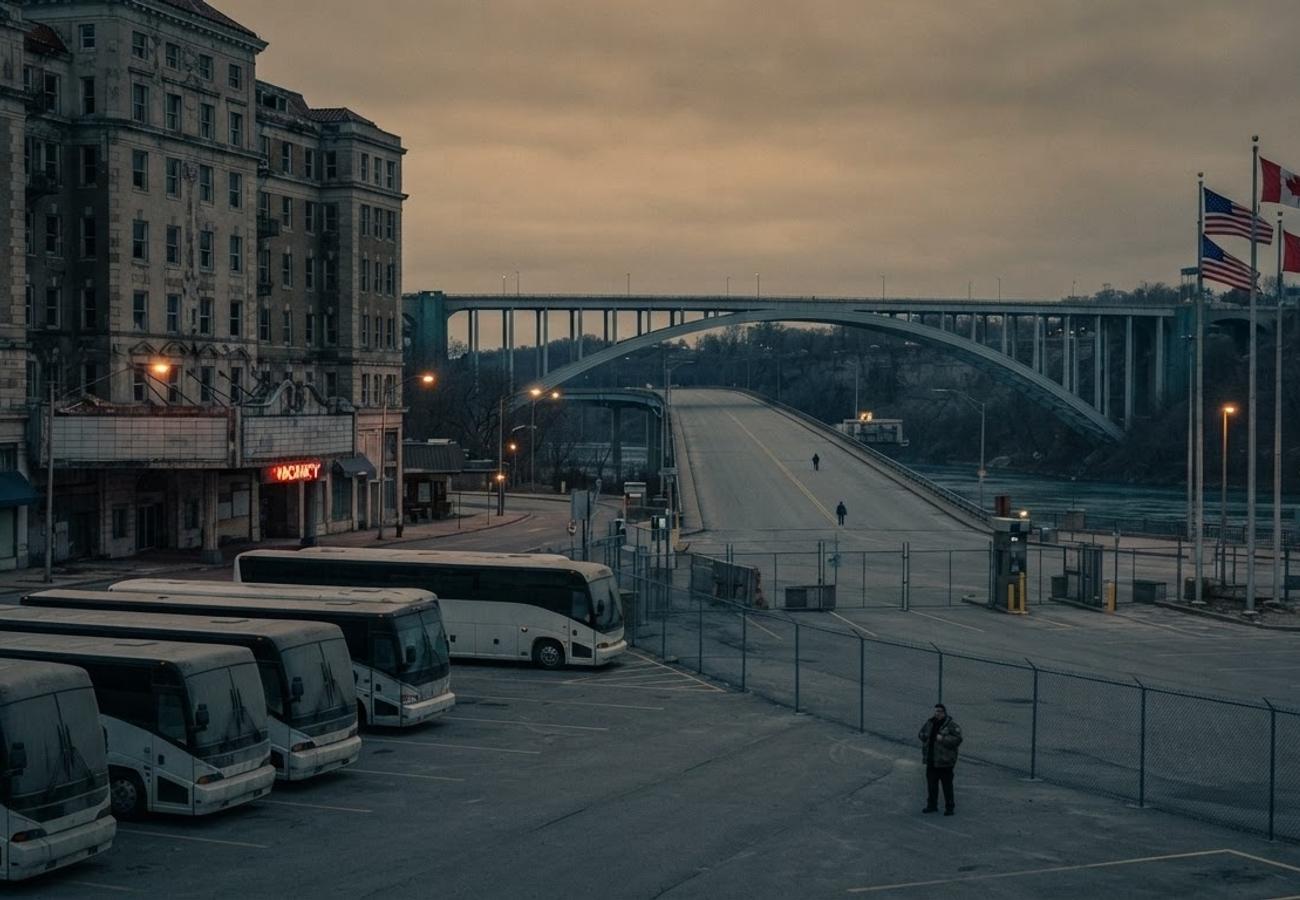
Image generated by AI
The escalating trade conflict between the United States and Canada has triggered a crisis for North American border tourism, threatening the stability of hotels, regional attractions, and thousands of hospitality jobs. As punitive tariffs reach 50% on select goods, a sharp decline in cross-border travel is creating a ripple effect that now extends to Asian markets, including Japan, China, and South Korea.
The diplomatic rift marks a volatile shift in one of the world's most integrated economic relationships. What began as a strategy to bolster domestic production has devolved into a full-scale trade war, turning the longest undefended border in the world into a site of economic friction. For the travel sector, the result is a sudden evaporation of a primary visitor demographic.
Origins of the North American Trade Conflict
The current instability is the result of a rapid escalation in protectionist policies. The friction began in early 2025 when the US administration implemented a 25% tariff on various Canadian products and a 10% tariff specifically targeting the energy sector. While these measures were intended to stimulate US manufacturing, they instead sparked a diplomatic firestorm.
Despite attempts to resolve the impasse, negotiations collapsed in August 2026. This failure led Washington to increase punitive measures, enforcing tariffs as high as 50% on specific Canadian exports. In a direct response, Canada announced comprehensive countermeasures effective September 8, 2026. These retaliatory tariffs target approximately $27.6 billion CAD (roughly $20 billion USD) in American goods.
While trade disputes typically focus on agriculture and raw materials, the hospitality industry has become the most immediate casualty. The seamless movement of people—the lifeblood of border-state economies—has been replaced by political hostility and financial barriers.
Historical Reliance on Canadian Travelers
Historically, the US-Canada border functioned as a commercial artery rather than a boundary. Border states, including Maine, Michigan, Washington, and New York, built their local economies around the consistent spending of Canadian visitors.
Data highlights the scale of this dependency. According to the World Travel & Tourism Council (WTTC), the US hosted 72.3 million international travelers in 2024, generating $194 billion in revenue. Canadian citizens represented 20.24 million of those visitors, meaning more than 25% of all inbound international travel to the US originated from Canada. The disruption of this specific flow creates a void that cannot be easily filled by other markets.
Economic Devastation in US Border States
The fallout is most acute in the northern US. New York State officials have sounded the alarm over the catastrophic decline in visitor numbers. Governor Kathy Hochul reported in late August 2026 that New York has seen 3 million fewer visits from Canada compared to the previous year.
This decline is crippling northern New York communities where the economy relies on Canadian steel, aluminum, and general commerce. The impact extends beyond hotels to regional wineries and agricultural producers. Local business owners report a near-total cessation of Canadian traffic, draining millions from municipal budgets and threatening the viability of family-owned enterprises.
Political Friction and the Lake Ontario Controversy
Beyond the financial tariffs, symbolic political battles are further alienating Canadian tourists. On August 27, 2026, a US executive order directed federal agencies to rename Lake Ontario as "Lake America" in official records, citing American commercial investment in the region.
Canadian authorities and the provincial government of Ontario swiftly rejected the move. Natural Resources Canada noted that "Ontario" is derived from the Iroquois word "kanadario," meaning sparkling water, and predates modern national borders. This move has shifted the perception of travel from a leisure activity to a politically charged statement, making Canadians less likely to spend disposable income in the US.
Crisis in the Hospitality and Accommodation Sector
The hospitality industry, which operates on thin margins, is struggling to absorb the shock. Major tourism hubs are reporting a significant drop in international occupancy.
| Metric/Entity | Impact Detail |
|---|---|
| Las Vegas | 7.5% drop in overall tourist numbers in 2025 linked to border tensions |
| New York State | 3 million fewer Canadian visitors year-over-year |
| Canadian Retaliatory Tariffs | $27.6 billion CAD (~$20 billion USD) in targeted US goods |
| US Punitive Tariffs | Up to 50% on select Canadian exports |
| WTTC 2024 Data | Canada provided 20.24 million of 72.3 million total US international visitors |
In early September 2026, emergency summits were held between US officials and executives from major hospitality groups, including IHG Hotels & Resorts, Caesars Entertainment, Hard Rock International, Venetian, and Raffles & Fairmont. These leaders emphasized that the loss is not limited to budget travel; high-value corporate bookings and luxury packages from Canada have nearly disappeared. Simultaneously, these hotels are facing higher operational costs for food, beverages, and construction materials due to the very tariffs causing the guest shortage.
Why This Matters: The Traveler's Perspective
For the average traveler, this trade war transforms a simple border crossing into a complex financial and emotional decision. When a destination becomes a political battleground, the "frictionless" nature of travel vanishes.
From a logistical standpoint, the increase in tariffs on goods means that the cost of services—from hotel room rates to dining—is likely to rise even as demand falls. For the Canadian traveler, the perceived hostility of the "Lake America" renaming and the economic penalties create a psychological barrier that is harder to dismantle than a tariff.
Furthermore, the ripple effect on Asian markets suggests a broader trend: global travelers are increasingly sensitive to geopolitical stability. When two close allies engage in a public trade war, it signals instability that can deter luxury travelers from Japan, China, and South Korea, who may view the region as volatile.
The North American tourism corridor is discovering that economic integration is fragile when political rhetoric overrides commercial logic.
Related Travel Guides
Disclaimer
This article is for informational and educational purposes only. It does not constitute legal, financial, or professional advice. While we strive to provide accurate and up-to-date information, travel policies, regulations, and conditions change rapidly. Always verify information with official sources before making travel decisions. Nomad Lawyer makes no representations about the accuracy, reliability, completeness, or suitability of the information provided. Readers should consult qualified professionals for advice specific to their circumstances. The views expressed in this article are those of the author and do not necessarily reflect the views of Nomad Lawyer.
Preeti Gunjan
Contributor & Community Manager
A passionate traveller and community builder. Preeti helps grow the Nomad Lawyer community, fostering engagement and bringing the reader experience to life.
Learn more about our team →