
Cairo Metro Line 4 Opens 2028: New Pyramids Station and 2M Daily Passengers
Cairo Metro Line 4 Phase 1 launches mid-2028 with 17 stations, a landmark Pyramids stop, and capacity for 2 million daily passengers. Japan funds $640M infrastructure expansion across Egypt's capital.

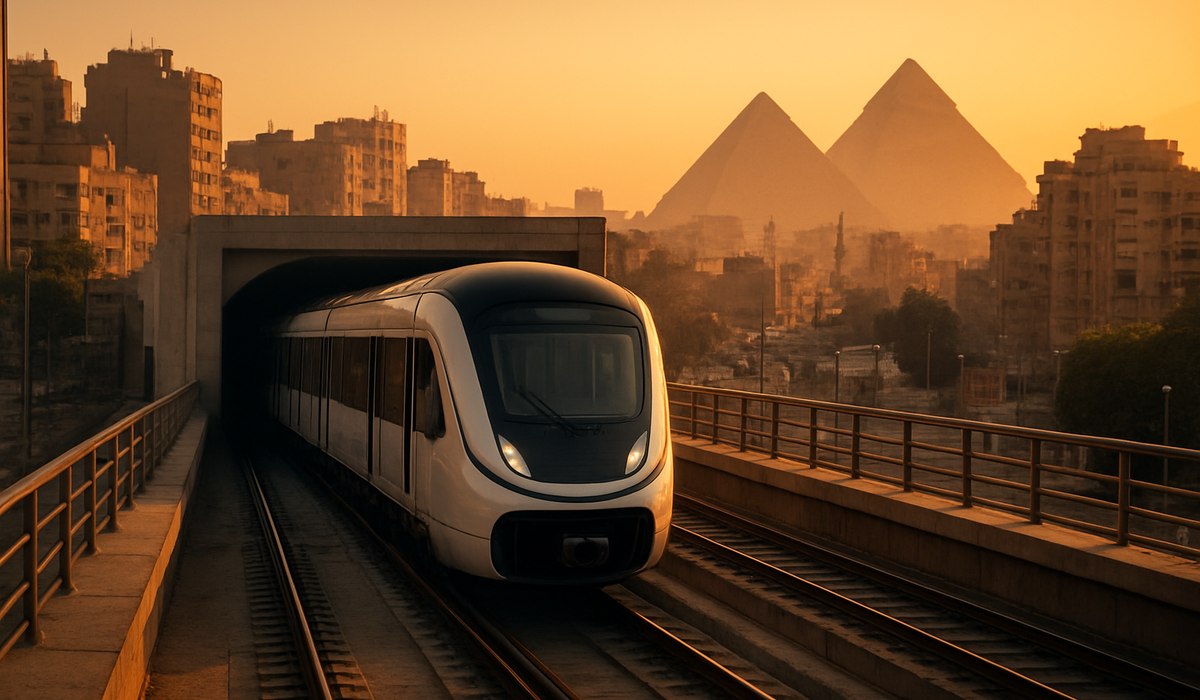
Image generated by AI
Cairo Metro Line 4 Phase 1 Launches Mid-2028
Egypt's Cairo Metro Line 4 is set to revolutionize urban transit across the capital when its first phase opens in the first half of 2028. The 19-kilometer Phase 1 project will serve 17 stations stretching from the boundary between Cairo and 6th of October City through to the Grand Egyptian Museum district. A major highlight is the new Pyramids station, marking the first direct metro connection to one of the world's most iconic archaeological sites. Dr. Tarek Gewaily, chairman of the National Authority for Tunnels, announced the milestone on April 28 during an event where Egyptian President Abdel Fattah Al-Sisi launched the tunnel boring machine (TBM) completing the final 6.35-kilometer underground segment between Hadaeq El Ashgar and the Pyramids station.
The project represents a transformative infrastructure investment for Egypt's most populous city. When fully operational, Cairo Metro Line 4 will accommodate approximately 2 million daily passengers, significantly easing congestion on existing transit networks. The predominantly underground route will connect major districts including Haram Street, Giza Station, El-Malek El-Saleh, and Fustat, creating seamless access across Cairo's sprawling metropolitan area.
Japanese Funding and Mitsubishi's Role in Construction
Japan is playing a central role in bringing Cairo Metro Line 4 to life through substantial financial and technical support. The Japan International Cooperation Agency (JICA) is providing lending of up to 100 billion Japanese Yen—approximately $640 million USD—to fund construction operations. Yo Ebisawa, JICA's chief representative in Egypt, participated in the ceremonial tunnel launch alongside Prime Minister Mostafa Madbouly and Transport Minister Kamel al-Wazir, underscoring the bilateral partnership's importance.
Mitsubishi is supplying 23 modern trains for the metro line, with deliveries beginning in May 2026. Beyond rolling stock provision, Mitsubishi has contracted with local partner Orascom Construction to handle tracklaying, depot facility construction, and installation of all electromechanical systems. This collaborative approach combines Japanese engineering expertise with Egyptian construction capabilities. Civil engineering works are being executed by established domestic firms including Arab Contractors, Orascom, Concord, Petrojet, and Hassan Allam Construction. This mixed public-private approach ensures knowledge transfer while supporting local employment and industry development across Egypt's infrastructure sector.
Phase 1 Route: 17 Stations Connecting Cairo's Key Districts
The Cairo Metro Line 4 Phase 1 connects Cairo and 6th of October City boundary directly to the Grand Egyptian Museum via 17 strategically positioned stations. The underground route passes through several critical urban zones: Remaya Square serves commercial and residential districts; Haram Street provides access to shopping and entertainment areas; Giza Station connects to railway infrastructure; El-Malek El-Saleh serves administrative zones; and Fustat provides connections to historical Cairo. The Pyramids station represents the jewel in Phase 1's crown, offering unprecedented metro access to the Giza Plateau's archaeological treasures. This station placement is expected to dramatically increase visitor accessibility while reducing traffic congestion around one of Egypt's most visited attractions. The underground design minimizes surface disruption in densely populated areas while maintaining consistent journey reliability regardless of weather conditions.
Future Expansion Plans: Phases 2, 3, and 4
The Egyptian government is actively considering three additional phases that will substantially expand Cairo Metro Line 4's network reach and integration capabilities. Phase 2 will extend service from Fustat to New Cairo, targeting suburban growth corridors. Phase 3 is planned from Hadaeq El Ashgar to Hosary Square, improving connectivity across northern Cairo. Phase 4 envisions an ambitious link from New Cairo directly to the Capital Airport, positioning the metro as the primary transit connection to Egypt's newest international aviation hub. These subsequent phases promise interchange connectivity with the planned Metro Line 6, the developing Light Rail Transit network, and both East of Nile and West of Nile monorail systems. Such integration will create a comprehensive, interconnected public transit ecosystem serving the broader Greater Cairo metropolitan region. The phased approach allows for staged investment while delivering immediate benefits through Phase 1's opening.
Expected Capacity and Economic Impact
When Cairo Metro Line 4 Phase 1 launches in 2028, it will fundamentally reshape daily commuting patterns across Egypt's capital. The projected capacity of 2 million daily passengers represents a significant portion of Cairo's 10+ million metropolitan commuters. This capacity alleviation will reduce dependency on congested road networks, potentially decreasing travel times and improving air quality through modal shift away from private vehicles. Economic benefits extend beyond transit efficiency: reduced commute times enhance worker productivity; improved accessibility to business districts stimulates economic activity; and reliable connections to the Grand Egyptian Museum and Pyramids station boost tourism infrastructure. The construction phase already supports thousands of jobs across Egyptian firms and partner organizations. Long-term operational employment will include train operators, maintenance technicians, station staff, and administrative positions. Tourism accessibility improvements position Cairo as an increasingly convenient destination for international visitors seeking archaeological experiences combined with modern metropolitan infrastructure.
| Project Element | Details |
|---|---|
| Phase 1 Length | 19 kilometers underground and surface segments |
| Station Count | 17 stations from Cairo/6th of October City boundary to Grand Egyptian Museum |
| Opening Timeline | First half of 2028 |
| Daily Capacity | Approximately 2 million passengers |
| Japanese Funding | 100 billion Yen (~$640 million USD) via JICA |
| Train Supplier | Mitsubishi—23 trains with May 2026 delivery start |
| Key Landmark Station | Pyramids station providing direct metro access to Giza Plateau |
| Major Civil Contractors | Arab Contractors, Orascom, Concord, Petrojet, Hassan Allam Construction |
| Planned Phases | Phase 2 (Fustat-New Cairo), Phase 3 (Hadaeq El Ashgar-Hosary Square), Phase 4 (New Cairo-Capital Airport) |
| Network Integration | Future interchange with Metro Line 6, LRT, East/West of Nile monorails |
What This Means for Travelers
The opening of Cairo Metro Line 4 transforms how visitors and residents navigate Egypt's sprawling capital:
-
Direct Pyramids Access: The new Pyramids station eliminates navigating Cairo's congested streets to reach the Giza Plateau. Visitors can transit directly from accommodations to archaeological sites via modern metro infrastructure.
-
Reduced Journey Times: With 2 million daily capacity and 17 strategically placed stops, commute times across Cairo will decrease substantially compared to road-dependent travel methods.
-
Cost-Effective Transit: Metro fares remain significantly cheaper than taxis or ride-sharing services, making Cairo more accessible for budget-conscious travelers and daily commuters alike.
-
Enhanced Accessibility: Underground design ensures year-round reliability unaffected by Cairo's intense summer heat, dust storms, or seasonal flooding concerns affecting surface transportation.
-
Future Network Expansion: Phases 2-4 will eventually connect the Capital Airport directly to downtown Cairo, streamlining international visitor arrivals and departures through seamless metro transit.
-
Tourism Infrastructure: Improved metro connectivity to the Grand Egyptian Museum and Pyramids station establishes Cairo as increasingly visitor-friendly, encouraging longer stays and deeper exploration of cultural attractions.
FAQ
**When does Cairo Metro Line
Disclaimer
This article is for informational and educational purposes only. It does not constitute legal, financial, or professional advice. While we strive to provide accurate and up-to-date information, travel policies, regulations, and conditions change rapidly. Always verify information with official sources before making travel decisions. Nomad Lawyer makes no representations about the accuracy, reliability, completeness, or suitability of the information provided. Readers should consult qualified professionals for advice specific to their circumstances. The views expressed in this article are those of the author and do not necessarily reflect the views of Nomad Lawyer.
Kunal K Choudhary
Co-Founder & Contributor
A passionate traveller and tech enthusiast. Kunal contributes to the vision and growth of Nomad Lawyer, bringing fresh perspectives and driving the community forward.
Learn more about our team →