
19 World-Class Museums Worth Planning Your Travels Around in 2026
From the Louvre's Mona Lisa to MoMA's modern masterpieces, discover 19 must-visit museums globally that justify entire trips. Complete visitor guides included.

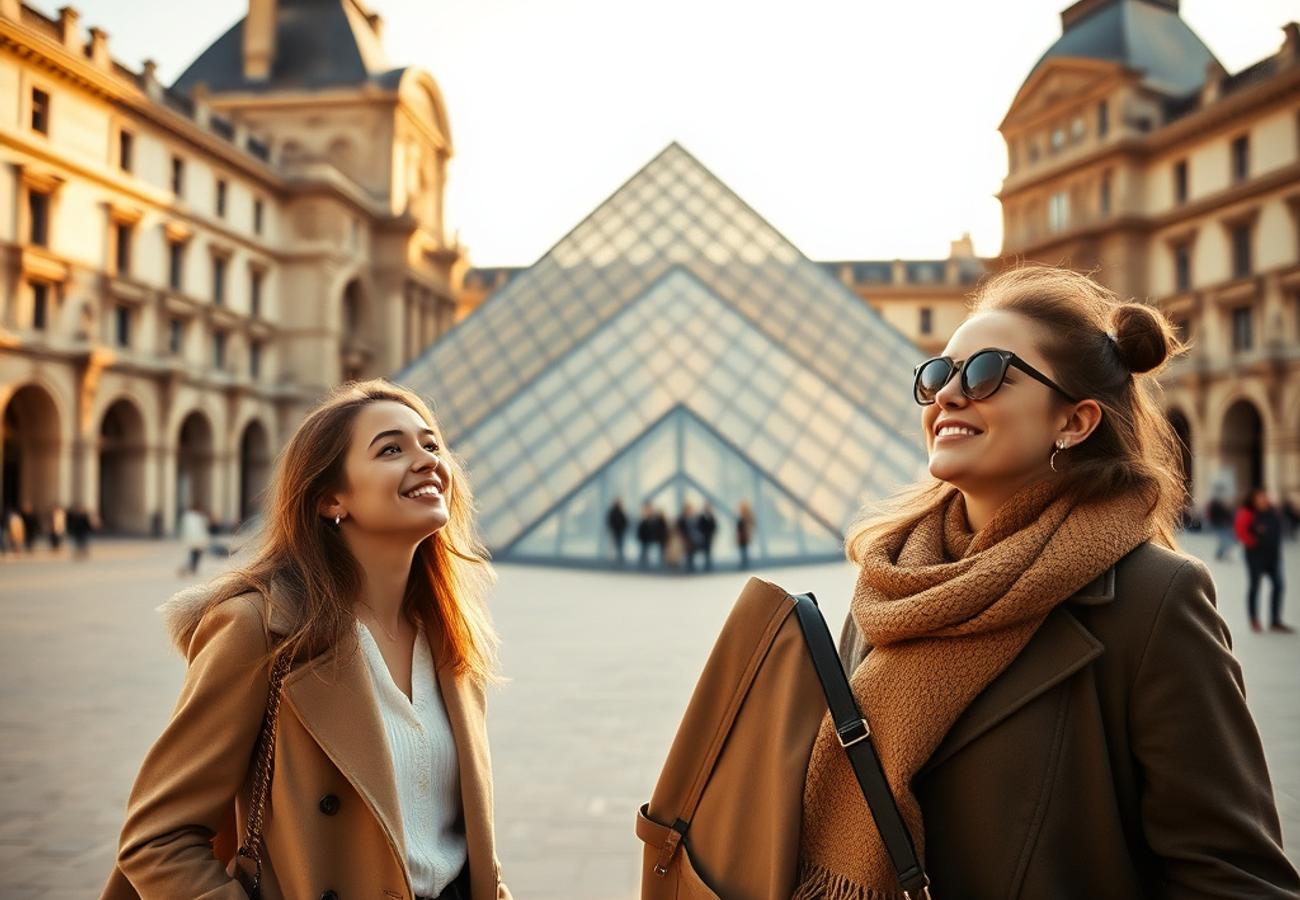
Image generated by AI
Museums aren't just repositories of art—they're portals to human civilization. Walking through their halls, you're not simply observing history; you're experiencing the collective genius of centuries. I've witnessed firsthand how a single painting can stop a traveler mid-step, transforming them from casual visitor to awestruck observer.
For anyone serious about cultural travel, these 19 world-class museums represent non-negotiable destinations. They're worth building entire trips around. Here's where and why to go.
The European Powerhouses
Louvre Museum, Paris — Where 35,000 Works Tell Humanity's Story
Paris isn't just a city; it's a living museum. But the Louvre Museum is the crown jewel. Since opening its doors in 1793, it's accumulated over 35,000 works of art, making it the most visited museum on the planet.
The numbers alone don't capture it. Standing before Leonardo da Vinci's "Mona Lisa" or the ancient Greek marble "Venus de Milo," you understand why art history textbooks center on these pieces. The sheer scale—spread across two wings with galleries stretching endlessly—demands multiple visits.
Address: Rue de Rivoli, 75001 Paris, France
Hours: Monday, Wednesday–Thursday, Saturday–Sunday 9:00 AM–6:00 PM | Friday 9:00 AM–9:00 PM | Closed Tuesday
Pro tip: Skip-the-line tours are essential. Summer crowds can reach crushing levels.
Reddit: "Went to the Louvre without booking ahead. Waited 3 hours just to see the Mona Lisa from 20 feet away. Book the skip-the-line tour. Your sanity depends on it." — r/travel
Rijksmuseum, Amsterdam — Eight Centuries of Dutch Mastery
Founded in 1798, the Rijksmuseum displays roughly 8,000 works from a collection exceeding one million objects spanning 800 years of Dutch history. This isn't a museum that dabbles; it's an encyclopedic statement.
Rembrandt's "The Night Watch" and Vermeer's "The Milkmaid" represent the pinnacle of Dutch Golden Age painting. The museum's architecture itself—a 19th-century palace—adds gravitas to every viewing room.
Address: Museumstraat 1, 1071 XX Amsterdam
Hours: Daily 9:00 AM–5:00 PM
Amsterdam's canal system means you can float past the museum's entrance before entering. The city itself becomes part of the experience.
Uffizi Gallery, Florence — Renaissance Concentrated
The Uffizi Gallery isn't just old; it's foundational. Housed in a 16th-century palace in Florence's historic center, it holds some of the most consequential Renaissance works ever created.
Sandro Botticelli's "The Birth of Venus," Leonardo da Vinci's "Annunciation," and Caravaggio's "Medusa" represent artistic revolutions. Each painting marks a moment when artists fundamentally reimagined what art could express.
Address: Piazzale degli Uffizi, 6, 50122 Florence
Hours: Tuesday–Sunday 8:15 AM–6:30 PM | Closed Monday
The long corridors connecting galleries create a natural narrative flow through art history.
The American Giants
Museum of Modern Art (MoMA), New York — Where 20th Century Art Lives
MoMA occupies a unique position: it's simultaneously an institution of staggering importance and a place of genuine accessibility. Spread across six floors in Midtown Manhattan, it tracks the explosion of modern art from the late 19th century forward.
Picasso's "Les Demoiselles d'Avignon," Warhol's "Campbell's Soup Cans," and Dalí's "The Persistence of Memory" aren't just famous—they represent pivotal moments when artists asked new questions about form, meaning, and consumer culture.
Address: 11 W 53rd St, New York, NY 10019
Hours: Saturday–Thursday 10:30 AM–5:30 PM | Friday 10:30 AM–8:30 PM
The museum's rooftop sculpture garden offers Manhattan skyline views that complement contemporary installations perfectly.
Metropolitan Museum of Art, New York — 5,000 Years Under One Roof
The Met is simply vast. Founded in 1870, it's the largest museum in the United States, holding collections spanning over 5,000 years of human civilization—from Egyptian sarcophagi to contemporary installations.
Located on Fifth Avenue overlooking Central Park, the building's Beaux-Arts architecture frames the collection appropriately. The Egyptian Temple of Dendur, reconstructed within the museum's walls, transports visitors across millennia.
Address: 1000 5th Ave, New York, NY 10028
Hours: Friday–Saturday 10:00 AM–9:00 PM | Sunday–Tuesday, Thursday 10:00 AM–5:00 PM | Closed Wednesday
Pro tip: The Met operates on a "pay what you wish" basis for New York residents and students. Standard admission for visitors is more substantial.
Vatican Museums, Rome — Michelangelo's Sistine Chapel
You cannot discuss world museums without immediately addressing the Vatican Museums. The Sistine Chapel ceiling, painted by Michelangelo between 1508 and 1512, represents perhaps the single most important artwork in Western civilization.
The experience of lying back on a bench, neck craned upward, watching Michelangelo's vision of divine creation unfold above you, remains transcendent. The museum's 1,400 rooms contain centuries of papal acquisitions.
Address: Viale Vaticano, Rome
Hours: Monday–Saturday 9:00 AM–6:00 PM (last entry 4:00 PM) | Closed Sundays (except last Sunday of each month)
The crowds here rival the Louvre. Book ahead or arrive before opening.
Guggenheim Museum Bilbao, Spain — Architecture as Art
Frank Gehry's titanium-clad Guggenheim Bilbao, which opened in 1997, fundamentally changed how museums present themselves. The building itself is the artwork—curved, reflective, organic.
Inside, modern and contemporary works from the mid-20th century forward fill curved galleries that challenge traditional exhibition logic. Louise Bourgeois's spider sculpture "Maman" presides outside, towering over the Nervión River.
Address: Abandoibarra Etorb., 2, 48009 Bilbao, Biscay
Hours: Tuesday–Sunday 10:00 AM–7:00 PM (8:00 PM mid-June to early September) | Closed Monday
Bilbao itself has been transformed by this single building's presence. The architecture is worth the visit alone.
Beyond Europe and America
British Museum, London — Humanity's Collected Heritage
The British Museum houses artifacts spanning human civilization—Egyptian mummies, the Rosetta Stone, Greek sculptures, and Mesopotamian tablets. The sheer comprehensiveness can overwhelm, but that's precisely the point.
The museum represents both the heights of cultural preservation and the complicated legacy of colonialism. Navigating both aspects makes for intellectually honest travel.
National Anthropology Museum, Mexico City — Pre-Columbian Mastery
This museum contains the Aztec Sun Stone and countless artifacts from Mesoamerican civilizations. The architecture—built around a reflecting pool with a central umbrella structure—creates an meditative atmosphere while showcasing Indigenous achievement.
Terracotta Army Museum, Xi'an — Ancient Military Legacy
The Terracotta Army, buried for over 2,000 years, represents one of archaeology's most staggering discoveries. Standing among thousands of life-sized clay soldiers, each with distinct features, creates a visceral connection to ancient China.
Planning Your Museum Pilgrimage
Museums demand intention. Don't sprint through galleries checking boxes. Select museums aligned with your interests and spend genuine time with works that resonate.
Many major museums now offer digital collections and virtual tours accessible before travel, allowing you to research pieces in advance. This transforms the in-person experience from passive observation to purposeful engagement.
Consider visiting during off-peak hours or securing skip-the-line access. The difference between viewing masterworks alongside crushing crowds versus in relative calm is significant.
Budget appropriately—major museums cost $15–30 USD per entry, though many offer discounts for students, seniors, and residents.
Museum tourism isn't about checking destinations off a list—it's about standing face-to-face with the moments that shaped human expression.
Related Travel Guides
Disclaimer
This article is for informational and educational purposes only. It does not constitute legal, financial, or professional advice. While we strive to provide accurate and up-to-date information, travel policies, regulations, and conditions change rapidly. Always verify information with official sources before making travel decisions. Nomad Lawyer makes no representations about the accuracy, reliability, completeness, or suitability of the information provided. Readers should consult qualified professionals for advice specific to their circumstances. The views expressed in this article are those of the author and do not necessarily reflect the views of Nomad Lawyer.
Preeti Gunjan
Contributor & Community Manager
A passionate traveller and community builder. Preeti helps grow the Nomad Lawyer community, fostering engagement and bringing the reader experience to life.
Learn more about our team →