
9 Breathtaking Natural Wonders of Italy Beyond Rome: Sicily's Cliffs to Tuscany's Hot Springs 2026
From dramatic white limestone cliffs to underground cave systems, discover Italy's most stunning natural landmarks that rival any man-made monument.

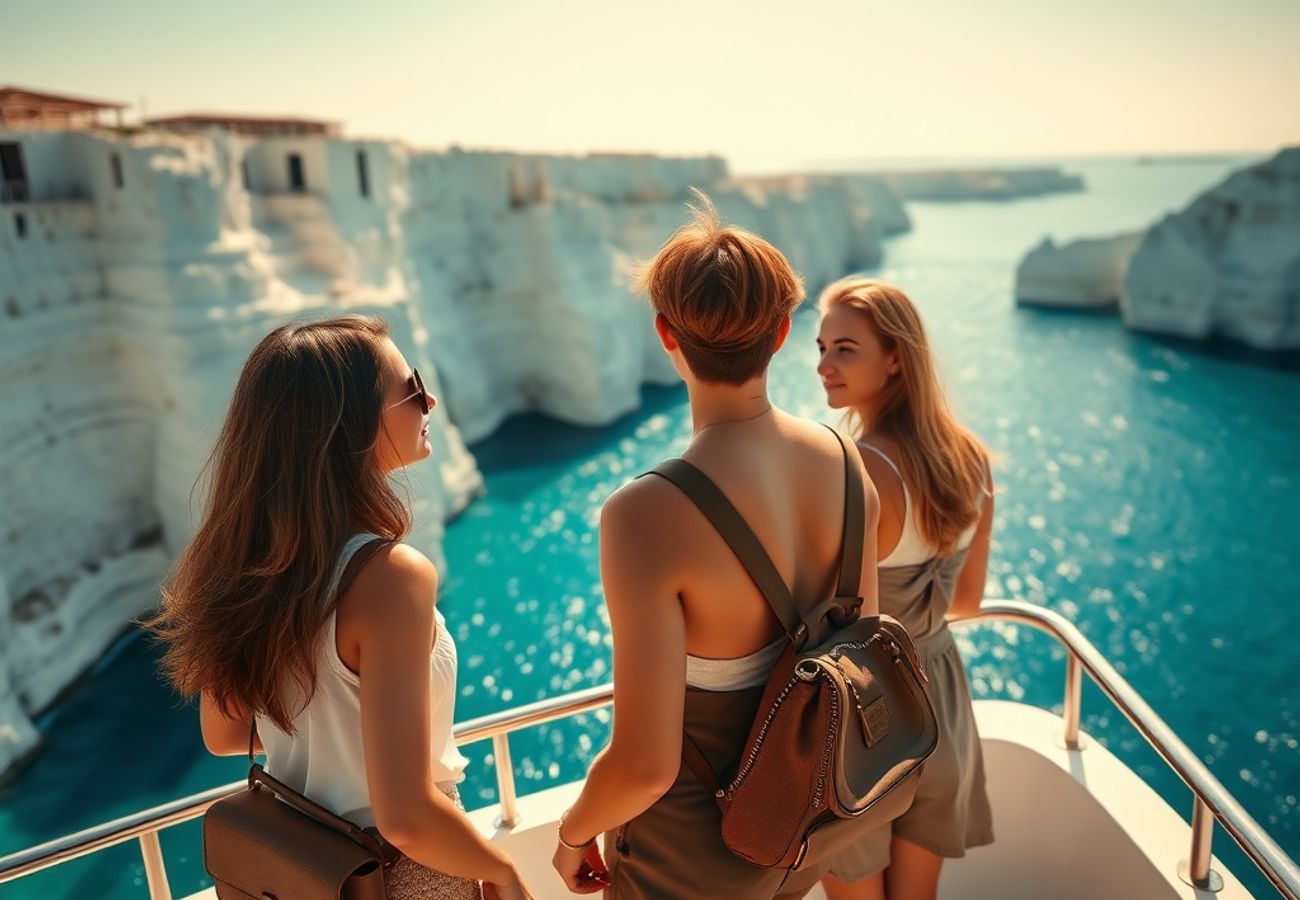
Image generated by AI
Italy's reputation rests on Renaissance masterpieces, Vatican splendor, and centuries-old architecture. But step beyond the crowded piazzas, and you'll discover something equally mesmerizing: a country sculpted by volcanic fury, carved by ancient seas, and blessed with geological phenomena that defy imagination.
I've chased countless landmarks across Europe, but nothing quite prepared me for the raw beauty of Italy's natural wonders. These aren't Instagram-filter destinations manufactured for tourism—they're the planet speaking in its most honest language.
Scala dei Turchi: Where the Sea Carved a Staircase
The first time I saw Scala dei Turchi rise from the turquoise waters of Sicily, I understood why locals call it the "Stair of the Turks." These aren't mountains or dramatic cliffs in the traditional sense. They're something more surreal: naturally tiered white limestone formations that appear as though some ancient architect stacked enormous slabs of crystalline rock against the coastline.
Located near Realmonte in Agrigento, the cliffs glow with an ethereal whiteness—the mineral-rich limestone refracts light so intensely that the entire formation seems almost unnatural. The terraces cascade into the sea like a frozen waterfall.
Here's the critical detail: you cannot walk directly on Scala dei Turchi anymore. Environmental protection measures have restricted ground access to preserve the site. A private boat tour from San Leone is your only option, and honestly, it's the superior experience. You get intimate views of the formation's architectural perfection without the crowds.
Reddit: "Took a boat tour at sunrise—the cliffs turned pink and gold. Worth every euro." — r/ItalyTravel
Grotta della Poesia: Nature's Own Infinity Pool
If you've ever dreamed of swimming in a natural pool fed by crystalline seawater, Grotta della Poesia in Puglia will haunt your travel bucket list.
This limestone cavern near the archaeological site of Roca Vecchia opens into the sea, creating what might legitimately be Europe's most stunning natural swimming hole. The water is so transparent that visibility extends 30+ meters down. The surrounding cliffs frame the pool in shades of ochre and cream, and the entire landscape screams Mediterranean perfection.
Insider wisdom: arrive at dawn. The early morning light transforms the grotto into something transcendent, and you'll have the place to yourself before tour groups arrive. Bring snorkeling gear—the underwater formations are equally spectacular.
Address: Roca Vecchia, Melendugno, Lecce, Puglia
Pyramids of Zone: Hoodoos in the Alps
The Pyramids of Zone near Lake Iseo in Lombardy are nature's accidental sculpture park. These earth formations—technically called hoodoos—rise up to 30 meters high and pepper the landscape with an almost otherworldly appearance.
What makes them exceptional is their stark incongruity with the surrounding environment. You're standing in Alpine terrain, expecting traditional mountain scenery, and instead you encounter formations that belong in Utah's canyon country.
Free hiking trails crisscross the area with multiple vantage points. The circular path from Via Sebina in Cislano offers the most comprehensive views. The trails suit all fitness levels, and the entire experience costs absolutely nothing—a rarity for premium natural attractions.
Frasassi Caves: Italy's Underground Cathedral
Few natural sites surprise me anymore. Frasassi Caves in Marche broke that pattern entirely.
Discovered as recently as 1971, these subterranean chambers have become some of Italy's most scientifically significant geological sites. Individual caves reach 200 meters high and 180 meters long—proportions that dwarf most European cave systems. Stalactites hang from every conceivable surface, and the delicate mineral formations create a landscape that feels genuinely alien.
The caves maintain a constant 14°C (57°F) temperature, so a light jacket is essential. Photography is permitted, but flash is prohibited—a necessary measure to protect the crystalline formations.
Address: San Vittore delle Chiuse, 60040 Genga, Ancona, Marche Hours: 10:00 AM to 5:00 PM daily
Terme di Saturnia: Bathing Where Romans Once Soaked
Tuscany's Terme di Saturnia offers something genuinely unique: thermal baths fed by natural hot springs containing sulfurous mineral water. The warm water cascades into emerald-colored pools surrounded by rolling Maremma countryside.
There's a paid thermal resort (Terme di Saturnia proper), but here's the local secret: Cascate del Mulino di Saturnia offers free public hot springs just nearby. Visit late afternoon or evening to avoid midday crowds, and you'll experience something that's part wellness retreat, part geological marvel.
Address: 58014 Saturnia, Manciano, Grosseto, Tuscany
Reddit: "Soaked in the free cascades at sunset with a glass of Tuscan wine. Peak travel moment achieved." — r/travel
Mount Vesuvius: History's Most Dramatic Volcano
Mount Vesuvius needs no introduction for history enthusiasts. This volcano's 79 AD eruption entombed Pompeii and Herculaneum in volcanic ash, preserving Roman life in extraordinary detail.
What many travelers overlook: the surrounding countryside is a biodiversity treasure. The volcanic soil creates unique ecological conditions—rare plant species thrive only on Vesuvius's slopes. A guided hike rewards you with panoramic views of the Bay of Naples, Pompeii's ruins below, and the knowledge that you're standing on one of Europe's most volatile geological features.
The shuttle service to the summit is essential—the climb is legitimately challenging, and the shuttle preserves your energy for the crater-rim walking trail.
Address: Metropolitan City of Naples, Campania Hours: 9:00 AM to 4:00 PM daily
Isola Dei Conigli: Europe's Mediterranean Jewel
Isola Dei Conigli (Rabbit Island) off Lampedusa in Sicily hosts what many consider Europe's most beautiful beach. The turquoise water rivals the Caribbean, the rugged coastline is genuinely dramatic, and the entire island feels like a secret that hasn't reached mainstream tourism.
The irony: there are no rabbits. The name persists despite the absence of its namesake creatures. What you'll actually encounter are rare royal seagulls and—during summer nights—endangered sea turtles nesting on the beach.
Here's the critical constraint: access is deliberately limited to preserve the ecosystem. Summer visiting hours are restricted to daytime only when turtles nest. This isn't a drawback—it's evidence that conservation actually works.
A boat tour maximizes your experience, accessing snorkeling spots that land-based visitors never reach.
Blue Grotto: Capri's Celestial Cave
Grotta Azzurra on Capri produces an optical phenomenon that photographs cannot adequately capture. The cave's entrance is so positioned that sunlight refracts through seawater and reflects off the cave's white limestone floor, creating an impossible blue glow that seems to emanate from the water itself.
The practical complication: the cave entrance is approximately one meter high. You must enter by small rowboat, and only during low tide when water levels permit passage. This engineering challenge is exactly why the Blue Grotto maintains its mystique—tourist access is naturally limited by physics.
Pre-organized tours from Sorrento, Piano di Sorrento, or Amalfi handle all logistics and secure entrance during optimal tidal windows.
Reddit: "Boat captain timed it perfectly—we glided through the entrance and suddenly the whole world turned blue. Completely otherworldly." — r/travel
Giardino di Ninfa: The Romantic Garden That Shouldn't Exist
Giardino di Ninfa in Lazio defies easy categorization. It's simultaneously a botanical garden, a historical monument, and a nature preserve—a landscape that combines Italian design sensibility with untamed natural beauty.
The gardens were built atop the ruins of a medieval town and incorporate ancient Roman structures, creating layered historical depth. Wisteria cascades over stone bridges, water channels mirror forgotten aqueduct engineering, and the entire 8-hectare property feels like stumbling into a secret world hidden inside organized nature.
Access requires advance reservation—the property strictly limits daily visitors. This isn't gatekeeping; it's preservation. When you arrive, you understand why.
Planning Your Natural Wonder Expedition
These nine sites span Sicily to Lombardy, coastal grottos to Alpine formations. They share one characteristic: they're being consciously protected through access limitations, seasonal restrictions, and conservation policies.
This isn't a warning—it's actually encouraging. These natural wonders are being treated as irreplaceable rather than exploitable. Travel here knowing that your visit contributes to preservation rather than destruction.
The best strategy is regional clustering. Combine Scala dei Turchi and Isola Dei Conigli during a Sicily itinerary. Pair Grotta della Poesia and Giardino di Ninfa during a longer southern exploration. Use Mount Vesuvius as a day trip anchored in Naples.
For current trail conditions, accessibility updates, and seasonal access restrictions, consult Italy's official tourism board before booking accommodation.
Nature doesn't wait for you to appreciate it—but Italy's wonders deserve the courtesy of preparation.
Related Travel Guides
Disclaimer
This article is for informational and educational purposes only. It does not constitute legal, financial, or professional advice. While we strive to provide accurate and up-to-date information, travel policies, regulations, and conditions change rapidly. Always verify information with official sources before making travel decisions. Nomad Lawyer makes no representations about the accuracy, reliability, completeness, or suitability of the information provided. Readers should consult qualified professionals for advice specific to their circumstances. The views expressed in this article are those of the author and do not necessarily reflect the views of Nomad Lawyer.
Preeti Gunjan
Contributor & Community Manager
A passionate traveller and community builder. Preeti helps grow the Nomad Lawyer community, fostering engagement and bringing the reader experience to life.
Learn more about our team →