
Visit Malaysia 2026 Campaign Ignites Unprecedented Domestic and International Tourism Growth
With a staggering target of 43 million global visitors, the 'Visit Malaysia 2026' initiative has officially triggered a massive boom in the nation's tourism economy.

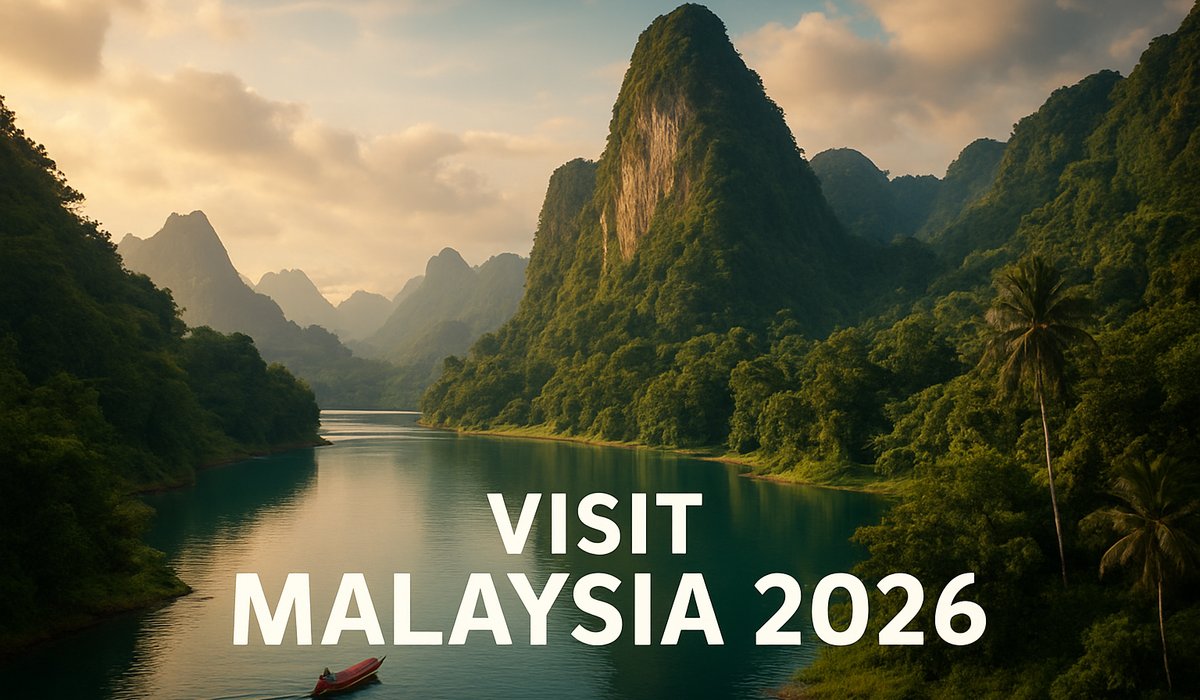
Image generated by AI
The Ultimate Southeast Asian Resurgence
Engineered as the absolute centerpiece of the nation's post-pandemic economic recovery, the highly anticipated "Visit Malaysia 2026" (VM2026) campaign has fully launched, sending a massive shockwave of growth directly through both domestic and international tourism sectors. Officially targeting an astronomical 43 million international arrivals for the year, the campaign is aggressively repositioning Malaysia from a "layover hub" into the definitive, primary cultural destination of Southeast Asia. By integrating over 300 massive cultural events into the calendar, the initiative forces travelers to look past the dense metropolis of Kuala Lumpur to explore deeply rooted traditions across the islands and rural states.
What sets VM2026 completely apart from previous iterations is its extreme reliance on the domestic market acting as an economic primary buffer. Over 74 million domestic visitors were tracked heavily exploring their own nation recently, representing double-digit year-on-year growth. By leveraging aggressive digital promotional campaigns (such as Cuti-Cuti Malaysia), the government has mathematically ensured that local money floods into highly rural communities, violently shielding the hospitality sector from external global shocks like rising aviation fuel costs or geopolitical conflict.
A Massive Injection into the GDP
The financial scale of the Malaysian tourism shift is staggering.
The Tourism Satellite Account metrics indicate that the tourism industries contributed a highly robust RM291.9 billion in gross value added, representing over 15% of the national GDP. This means tourism is no longer a secondary economic feature; it is the absolute backbone of the modern Malaysian economy. Inbound foreign expenditure reached RM107 billion, proving that international luxury travelers and backpackers alike are heavily choosing the massive rainforests of Borneo and the hyper-modern shopping districts of Penang over traditionally dominant neighbors like Thailand or Singapore.
Visit Malaysia 2026 (VM2026) Financial Metrics
| Tourism Sector | Key Metric (Recent Tracking) | Economic Impact |
|---|---|---|
| International Arrivals | Targeting 43 Million (2026) | Re-establishing global market dominance |
| Domestic Volume | 74 Million Local Trips | Shielding rural economies from global shocks |
| Total Domestic Spend | RM32.6 Billion | Massive boost to internal hospitality infrastructure |
What Guests Get
- Unmatched cultural density — realizing that VM2026 provides access to over 300 heavily subsidized, hyper-authentic local festivals explicitly designed for tourist integration.
- The internal stability advantage — grasping that because domestic tourism is so strong, highly remote restaurants and eco-lodges are deeply stable and mathematically guaranteed to be fully operational when you arrive.
- Sustainable development — understanding that the campaign is legally aligned with strict environmental goals, heavily prioritizing eco-tourism over high-density concrete developments.
What This Means for Travelers
If you are mapping an itinerary to Malaysia in 2026: You must fiercely align your travel dates with the official VM2026 calendar of events. The government is pouring millions of dollars into localized festivals ranging from indigenous harvest celebrations in Sarawak to massive night-market culinary competitions in Malacca. Booking a generic hotel stay completely defeats the purpose of the year. To experience the peak aesthetic, ensure your trip physically intersects with at least one of these massive, state-sponsored cultural displays.
Domestic Competition for Accommodations: Be highly aware that you are aggressively competing with millions of Malaysian locals for the exact same boutique hotels and island resorts. The Cuti-Cuti Malaysia initiative has made domestic travel incredibly popular. If you are targeting premier eco-lodges in the Cameron Highlands or private villas in Langkawi during Malaysian national holidays or school breaks, you must mathematically secure your reservations at least six months in advance.
FAQ: Exploring Malaysia in 2026
What are the primary goals of VM2026? Beyond hitting the 43 million arrival target, the initiative is deeply focused on dispersing tourist wealth into rural zones and prioritizing highly sustainable, eco-friendly luxury travel models.
Is it safe to travel deeply into rural Malaysia? Absolutely. Malaysia possesses one of the highest safety and infrastructural standards in Southeast Asia. Accessing rural states is relatively simple thanks to highly efficient domestic flight networks and well-maintained highway grids.
Do I need a visa to enter Malaysia for VM2026? The visa requirements vary heavily depending on your passport. However, to facilitate the VM2026 influx, Malaysia recently enacted highly generous visa-free entry periods (frequently up to 30 days) for citizens of massive tourism markets, including China and India.
External Resources
Related Travel Guides
The Ultimate 14-Day Malaysia Itinerary: From KL to Borneo
Disclaimer
This article is for informational and educational purposes only. It does not constitute legal, financial, or professional advice. While we strive to provide accurate and up-to-date information, travel policies, regulations, and conditions change rapidly. Always verify information with official sources before making travel decisions. Nomad Lawyer makes no representations about the accuracy, reliability, completeness, or suitability of the information provided. Readers should consult qualified professionals for advice specific to their circumstances. The views expressed in this article are those of the author and do not necessarily reflect the views of Nomad Lawyer.
Raushan Kumar
Founder & Lead Developer
Full-stack developer with 11+ years of experience and a passionate traveller. Raushan built Nomad Lawyer from the ground up with a vision to create the best travel and law experience on the web.
Learn more about our team →