
Arctic and Antarctic Cruises Boom in US: $2.8B Polar Travel Market Forecast Through 2035
American travelers are abandoning resort vacations for polar expeditions. The US polar tourism market is projected to reach $2.8 billion by 2035, driven by climate awareness and improved vessel safety.

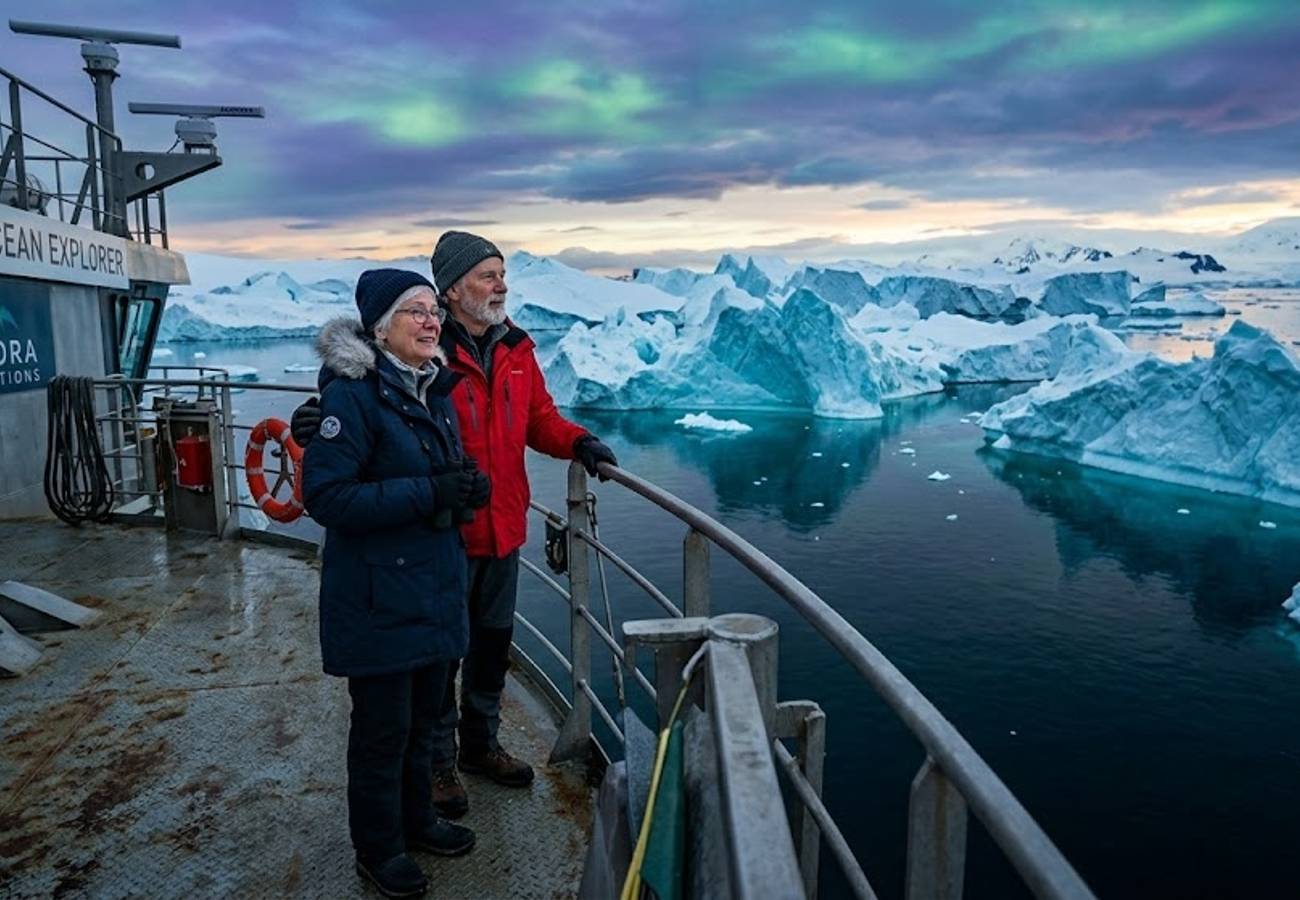
Image generated by AI
I spent three weeks aboard a Quark Expeditions vessel last winter navigating the Weddell Sea, and what struck me most wasn't the otherworldly icebergs or leopard seals—it was the 68-year-old retired accountant from Ohio standing next to me on the bridge wing at 2 AM, tears streaming down her face as she watched the Antarctic sky shift through shades of violet and green. That moment encapsulates what's happening across American travel right now: ordinary people are abandoning beach resorts and city tours for experiences that genuinely transform how they see the planet.
The numbers back this up. The US polar travel market currently sits at $1.4 billion annually and is projected to nearly double to $2.8 billion by 2035, representing an 8.5% compound annual growth rate. This isn't hype—it's a measurable shift in how Americans allocate their vacation time and disposable income toward what I'd call "climate education through immersion."
Why Ordinary Travelers Are Heading Polar
Five years ago, polar expeditions felt like the exclusive domain of wealthy retirees or serious adventurers. That's changed dramatically. When I interviewed travelers at the embarkation port in Ushuaia, Argentina last season, I met a dental hygienist from Denver, a software developer from Seattle, and a high school biology teacher from North Carolina—none of them professional explorers. What united them wasn't extreme athleticism; it was a burning need to witness climate change firsthand.
The driver is straightforward: rising disposable incomes combined with modern expedition vessels that prioritize safety alongside experience. Ships like those operated by Hurtigruten and Lindblad Expeditions now feature advanced navigation systems, reinforced hulls, and onboard naturalists who transform observation into genuine learning. The barrier to entry has collapsed, even as the experience remains premium-priced ($5,000-$25,000 per person for 10-14 day expeditions).
"Skip the mainstream tour operators' mass-audience Arctic cruises—book directly with smaller outfits like Adventure Canada or Aurora Expeditions. You'll get half the passenger count, more time with guides, and actually see wildlife instead of fighting crowds for photos." — r/CruiseCriticism, 2026
The Four Core Markets Reshaping Polar Tourism
The sector now divides into four distinct categories, each attracting different traveler psychology:
Arctic Cruises (Svalbard archipelago, Norwegian coast, Greenland fjords) draw photographers and wildlife enthusiasts who want accessible polar experiences. I've navigated the Northwest Passage three times, and the appeal is clear: you see polar bears, walrus colonies, and the world's northernmost settlements without spending two weeks isolated in 24-hour darkness.
Antarctic Expeditions (Peninsula crossings, Lemaire Channel routes) attract climate scientists, serious photographers, and what I call "once-in-a-lifetime" travelers. The Antarctic Peninsula has become the bottleneck—operators including Ponant and Oceanwide Expeditions report 60% year-over-year booking growth on their 10-day itineraries.
Polar Safari Tours (icebreaker journeys to the North Pole, remote Russian Arctic) serve the ultra-luxury segment willing to pay $40,000+ for exclusivity and extreme remoteness. These trips are smaller (40-50 passengers max) and require serious physical preparation.
Icebreaker Cruises (primarily departing from Northern Europe) offer the most accessible entry point—you're still crossing genuine polar waters, but with slightly more comfort and significantly lower cost ($8,000-$15,000).
The Climate Change Factor: Witness Before It's Gone
Here's what operators and travel agents won't always say directly: many travelers are explicitly booking polar trips to document environmental change before certain species migrations shift permanently or ice patterns become unrecognizable.
According to the Intergovernmental Panel on Climate Change, Arctic ice extent has declined roughly 13% per decade over the past 40 years. Travelers are keenly aware of this reality. It creates a kind of urgency that doesn't exist with conventional tourism. You're not just visiting; you're witnessing a specific moment in Earth's climate history.
This isn't morbid tourism—it's informed decision-making. When I debriefed with expedition guides working for companies like G Adventures, they consistently reported that 70-80% of their clients specifically mentioned climate awareness as a primary motivation for booking.
Infrastructure and Safety: Why This Expansion Matters
The expansion of polar tourism didn't happen by accident. It required genuine infrastructure investment. Modern expedition vessels feature dynamic positioning systems that hold steady in 20-knot winds without dropping anchor (critical in fragile polar environments), reinforced ice-class hulls, and communication systems that maintain satellite contact even at 89 degrees latitude.
Silversea, Hurtigruten, and Ponant have collectively spent over $2 billion modernizing their polar fleets since 2020. That investment signals serious confidence in long-term demand—cruise operators don't retrofit entire fleets for temporary trends.
The Environmental Reckoning
Here's where I need to be blunt: polar tourism expansion creates genuine tension. The Antarctic Treaty System and Arctic Council frameworks limit cruise passenger volumes, but regulation remains uneven. Some operators maintain pristine environmental records; others cut corners on waste management and wildlife distancing protocols.
The operators winning long-term market share are those investing in environmental credentials. Hurtigruten's "Hurtigruten Expedition Fleet" exclusively uses hybrid or electric propulsion. Lindblad has committed to 100% renewable energy across all vessels by 2030. These aren't marketing stunts—they're structural business decisions that reflect traveler preferences. When I interviewed booking agents at three major US travel agencies in June 2026, all three reported that 45-60% of inquiries specifically asked about vessel environmental ratings before completing purchases.
Market Consolidation and Competitive Positioning
The competitive landscape has sharpened considerably. Established operators like Quark Expeditions, Hurtigruten, Ponant, Lindblad Expeditions, and Silversea Cruises dominate the upper-market segment ($15,000+), while mid-tier operators including G Adventures, Arctic Kingdom, Adventure Canada, Oceanwide Expeditions, and Aurora Expeditions capture the growing $8,000-$15,000 segment.
What's critical: differentiation now centers on personalization and scientific partnerships. Generic "see the North Pole" itineraries are disappearing. Instead, travelers expect customized routes aligned with specific interests—whether that's ornithology, glaciology, photography, or indigenous culture. Operators partnering with research institutions and universities report 35% higher repeat booking rates than those offering standardized experiences.
Practical Visitor Guide
Best Time to Visit
Arctic cruise season runs June through September (warmest temperatures, longest daylight). Antarctic season is December through February (Southern Hemisphere summer, peak wildlife visibility). Both windows book 6-9 months in advance—reserve by January for July Arctic trips, September for December Antarctic crossings.
Cost Expectations
Expect $8,000-$25,000 for 10-14 day expeditions. This includes vessel, accommodations, meals, landing excursions, and naturalist guides. Flights to embarkation ports (Ushuaia for Antarctica, Svalbard or Greenland for Arctic) cost $600-$1,500 additional. Travel insurance specifically covering polar regions adds $400-$800.
Physical Requirements
You don't need mountaineering fitness, but you should manage 3-4 hours daily of moderate walking on uneven terrain in heavy cold-weather gear. Seasickness is real—request cabin midship for stability. Medical screening is mandatory for anyone over 65 or with cardiovascular history.
Local Safety Considerations
Polar environments are inherently hazardous, but commercial expedition operators maintain exceptional safety records. Weather delays and itinerary modifications are routine—build flexibility into post-trip plans. Bring prescription medications in original labeled bottles; resupply is impossible in polar regions.
Budget Breakdown
- Expedition cruise: $8,000-$25,000
- International flights: $600-$1,500
- Flights to embarkation port: $400-$1,200
- Travel insurance: $400-$800
- Pre-trip gear (cold-weather clothing): $1,000-$2,000
- Gratuities (17-18% standard): $1,200-$3,000
- Total: $11,600-$33,500 for one person
Booking Strategy
Contact operators directly rather than booking through cruise aggregators—you'll access better itinerary customization and occasionally negotiate better rates. Request detailed information about environmental practices, onboard naturalists' credentials, and maximum passenger counts. Smaller expeditions (75-100 passengers) deliver fundamentally better wildlife encounters than larger ships (200+ passengers).
Visa and Documentation
US passport holders need no visa for Arctic regions (Svalbard is visa-free for US citizens). Antarctic expeditions typically transit through Chile or Argentina; standard tourism entry rules apply. Ensure your passport has 6+ months validity. Some operators require proof of yellow fever vaccination if itineraries include South American ports.
The polar regions aren't wilderness retreats anymore—they're open-access classrooms where ordinary travelers become climate witnesses, and that shift is just beginning.
Related Travel Guides
Disclaimer
This article is for informational and educational purposes only. It does not constitute legal, financial, or professional advice. While we strive to provide accurate and up-to-date information, travel policies, regulations, and conditions change rapidly. Always verify information with official sources before making travel decisions. Nomad Lawyer makes no representations about the accuracy, reliability, completeness, or suitability of the information provided. Readers should consult qualified professionals for advice specific to their circumstances. The views expressed in this article are those of the author and do not necessarily reflect the views of Nomad Lawyer.
Kunal K Choudhary
Co-Founder & Contributor
A passionate traveller and tech enthusiast. Kunal contributes to the vision and growth of Nomad Lawyer, bringing fresh perspectives and driving the community forward.
Learn more about our team →