
American Airlines Deploys Massive Strategy to Prevent FIFA World Cup Travel Chaos Amid 75 Million Passenger Surge
American Airlines launches a massive operational defense to prevent travel chaos and flight cancellations during the 2026 FIFA World Cup passenger surge.

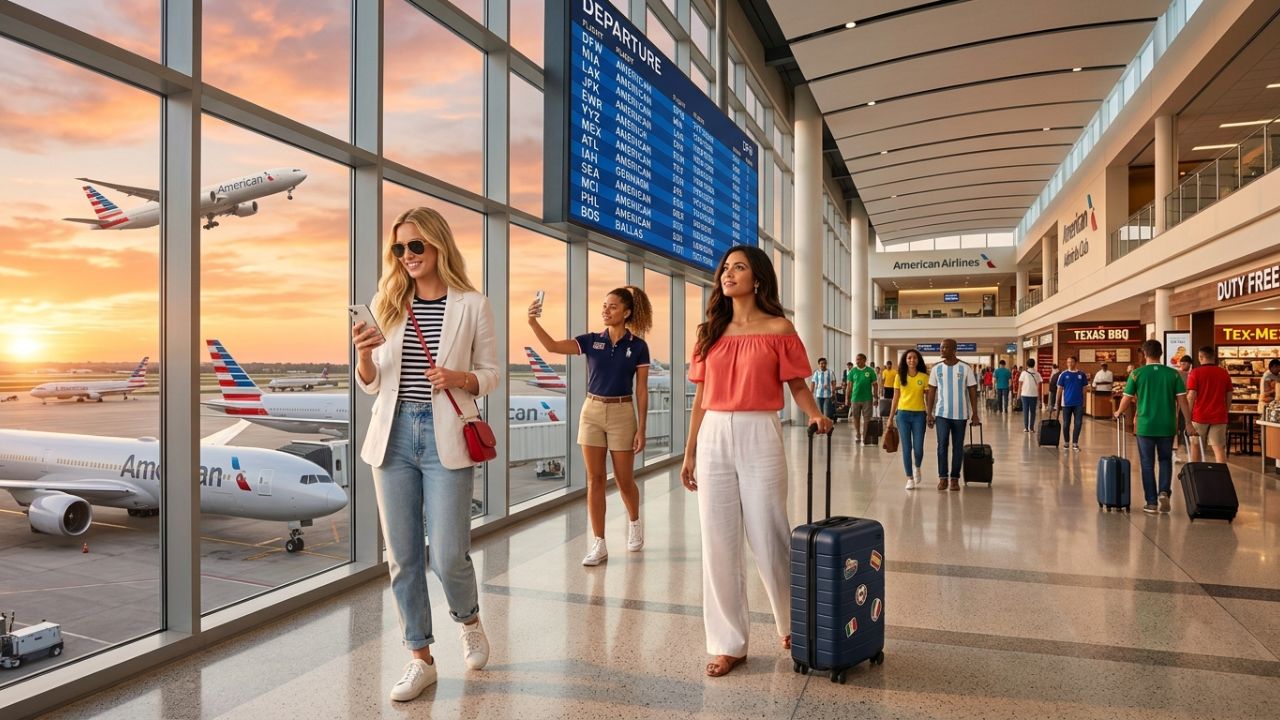
Image generated by AI
As the global aviation industry nervously braces for the largest passenger surge in modern history, American Airlines is aggressively executing a massive operational defense to prevent catastrophic travel chaos. With global tourism rebounding fiercely and staggering anticipation building for the 2026 FIFA World Cup across North America, the airline officially announced it expects to carry an unprecedented 75 million passengers between late May and early September. Fearful that this monumental volume could easily trigger uncontrollable airport disruptions and cascading flight cancellations, the major U.S. carrier has spent well over a year ruthlessly strengthening its operations. This breaking airline news and aviation updates report explores how American Airlines—an official airline partner of the tournament—is completely restructuring its network to survive the impending summer gridlock.
Expanded Overview: Surviving the 75 Million Surge
The 2026 FIFA World Cup is officially slated to become the absolute largest edition of the tournament ever staged. Violently expanding to feature 48 national teams competing in more than 100 matches across the United States, Canada, and Mexico, the event is heavily projected to attract millions of rabid international visitors.
This unprecedented surge is actively fueling fears of massive airport disruptions. The combination of traditional peak summer vacations, massive international sporting events, and skyrocketing demand for long-haul international travel threatens to push airport infrastructure to its absolute breaking point. Recognizing that the tournament could easily become the largest, most highly volatile aviation event in North American history, American Airlines has legally identified the World Cup as the absolute defining travel driver of the 2026 summer season. To actively combat potential travel chaos, the carrier has already begun aggressively adjusting schedules and rapidly increasing seat capacity across its entire massive network.
Section-Wise Breakdown: Defending the Mega-Hubs
To successfully manage millions of displaced travelers violently moving between massive host cities during the tournament’s group and knockout stages, American Airlines is heavily reinforcing critical geographic chokepoints.
The DFW Global Gateway Overhaul
Dallas Fort Worth International Airport (DFW) is officially expected to play the absolute most critical role during the World Cup period. Operating as American Airlines’ largest global hub, the massive facility must remain perfectly stable to prevent network-wide flight cancellations. To desperately prepare for the terrifying rise in demand, American Airlines has officially introduced a heavily redesigned scheduling system at DFW. This highly advanced operational structure is explicitly aimed at drastically improving turnaround efficiency, massively reducing departure delays, and violently minimizing missed connections. The airline proudly reports that the updated system is already producing vastly better baggage handling performance and radically smoother passenger flow.
This DFW stability is highly critical because North Texas is officially expected to become one of the most heavily visited regions on the planet during the tournament. Arlington’s massive AT&T Stadium is locked in to host several major fixtures, heavily including high-stakes knockout-stage matches that will drive insane regional transportation demand.
Reinforcing the Host City Network
Beyond Texas, the airline is aggressively adding thousands of additional seats on specific routes physically connecting major tournament destinations. Cities heavily targeted for massive spikes in both domestic and international passenger traffic explicitly include Dallas, Los Angeles, Miami, New York, Atlanta, Seattle, Toronto, and Mexico City. Fans frantically traveling between rapid-fire matches are highly likely to create sustained, terrifying demand for short-haul and medium-haul flights throughout all of June and July.
Flight Details: The FIFA World Cup Strategy Data
The following table explicitly details the verified passenger volume metrics, specific host city route reinforcements, and technological upgrades deployed by American Airlines to survive the summer 2026 surge.
| Operational Strategy Metric | Verified American Airlines Data |
|---|---|
| Projected Summer Passenger Volume | Nearly 75 Million (Late May - Early Sept 2026) |
| Tournament Scale | 48 National Teams, >100 Matches (USA/CAN/MEX) |
| Primary Defensive Hub | Dallas Fort Worth (DFW) - Redesigned Scheduling System |
| Key Host Cities Reinforced | Dallas, LA, Miami, NY, Atlanta, Seattle, Toronto, Mexico City |
| Major Texas Venue | AT&T Stadium (Arlington) - Knockout Stage Matches |
| Capacity Adjustments | Thousands of Additional Seats Added to WC Routes |
| Passenger Tech Upgrades | Free Inflight Wi-Fi (Loyalty Members), Biometric Screening |
Passenger Impact: Upgrading the Travel Experience
As brutal competition aggressively intensifies across the global airline industry, carriers are heavily focusing on ironclad operational reliability to physically survive the summer. Acknowledging that sudden flight cancellations during the World Cup would generate catastrophic public relations nightmares, American Airlines has heavily invested in intense preventive aircraft maintenance and massively expanded ground staffing.
Furthermore, the airline has officially introduced several passenger-focused digital improvements explicitly designed to severely reduce travel stress. These highly critical survival tools include massively enhanced mobile rebooking options, vastly improved digital baggage tracking systems, and immediate real-time travel notifications. At select massive airports, the airline is also furiously expanding its biometric screening capabilities to legally accelerate boarding. Additionally, the carrier is actively rolling out free inflight Wi-Fi for many of its loyalty program members, perfectly reflecting the massive importance of digital connectivity during the tournament.
Industry Analysis: Dynamic Scheduling Takes Over
The terrifyingly anticipated summer travel surge vividly reflects much broader, highly aggressive recovery trends tearing across the global tourism sector. International travel demand has violently accelerated throughout 2025 and 2026. However, because new aircraft deliveries remain severely delayed across the industry, airlines are increasingly relying on highly aggressive "dynamic scheduling" strategies to rapidly respond to sudden demand spikes.
Rather than foolishly launching entirely new, highly risky routes that could trigger logistical travel chaos, American Airlines is legally deploying larger wide-body aircraft on domestic routes and violently adjusting schedules on highly stable existing services to securely absorb the World Cup traffic.
Conclusion: The Ultimate Operational Test
For the global aviation industry, the massive summer of 2026 represents vastly more than just another busy travel season; it is the ultimate stress test. The terrifying combination of peak leisure travel and the absolute largest FIFA World Cup in human history creates enormous, incredibly dangerous logistical challenges. Severe staffing pressures, sudden summer thunderstorms, and violent airport congestion could instantly become major, catastrophic concerns if passenger demand physically exceeds operational capacity. However, because American Airlines has been actively building its operational defenses for well over a year, the carrier is violently determined to successfully process 75 million travelers without surrendering its network to flight cancellations.
Key Takeaways
- American Airlines expects to carry 75 million passengers between late May and early September 2026.
- The surge is driven by the 2026 FIFA World Cup (48 teams, >100 matches across NA).
- The airline introduced a redesigned scheduling system at its massive DFW hub to prevent travel chaos.
- Thousands of seats added to key routes: Dallas, LA, Miami, NY, Atlanta, Seattle, Toronto, Mexico City.
- AT&T Stadium in Arlington, Texas, will host major knockout-stage matches.
- American upgraded its app with enhanced mobile rebooking, baggage tracking, and biometric screening.
- The airline is actively utilizing "dynamic scheduling" to deploy larger aircraft and prevent flight cancellations.
Related Travel Guides
Disclaimer
This article is for informational and educational purposes only. It does not constitute legal, financial, or professional advice. While we strive to provide accurate and up-to-date information, travel policies, regulations, and conditions change rapidly. Always verify information with official sources before making travel decisions. Nomad Lawyer makes no representations about the accuracy, reliability, completeness, or suitability of the information provided. Readers should consult qualified professionals for advice specific to their circumstances. The views expressed in this article are those of the author and do not necessarily reflect the views of Nomad Lawyer.
Kunal K Choudhary
Co-Founder & Contributor
A passionate traveller and tech enthusiast. Kunal contributes to the vision and growth of Nomad Lawyer, bringing fresh perspectives and driving the community forward.
Learn more about our team →