
Amazing Thailand Fest 2026 Amsterdam Opens: Europe's Food-Tourism Push Captivates Dutch & German Travelers
The Tourism Authority of Thailand launches Amazing Thailand Fest 2026 in Amsterdam, showcasing Thai cuisine and cultural heritage to European markets from June 3-16.

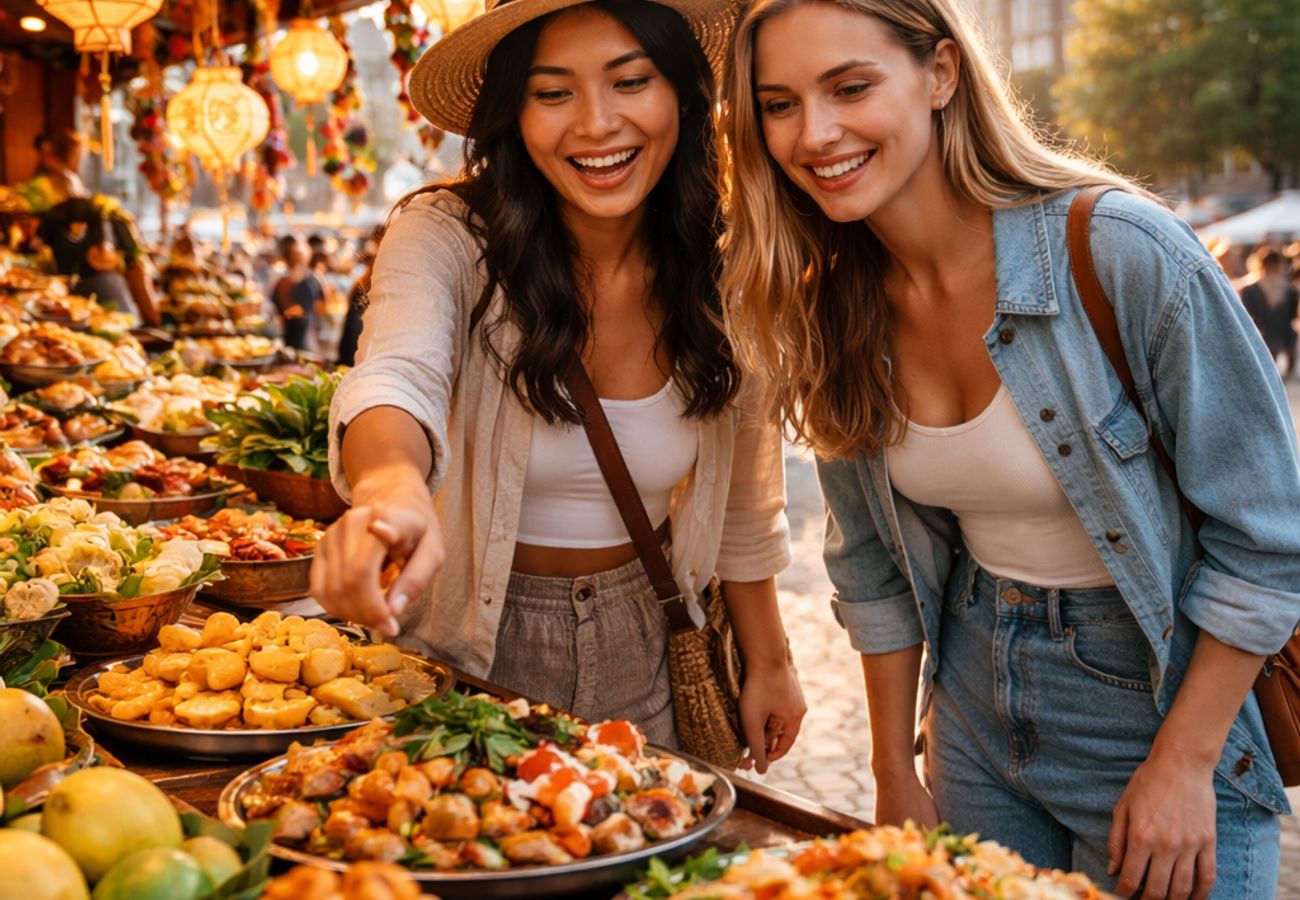
Image generated by AI
The Tourism Authority of Thailand just pulled off a masterstroke. On June 3, 2026, it launched Amazing Thailand Fest 2026 at the iconic de Bijenkorf in Amsterdam—a two-week cultural offensive designed to seduce European travelers through the most universal language: food.
This isn't just another tourism campaign. It's a carefully orchestrated strategy that positions Thai cuisine as the gateway to cultural discovery, leveraging one of travel's most explosive trends: gastronomy tourism.
Amsterdam Becomes Thailand's European Culinary Headquarters
The choice of Amsterdam wasn't accidental. The Netherlands and Germany represent critical long-haul markets for Thailand, populated by affluent travelers hungry for authentic experiences beyond beach resorts.
Running through June 16, the event transforms de Bijenkorf into an immersive Thai universe. Historical food displays, cooking demonstrations, and cultural performances collapse the distance between visitor and destination. You don't just learn about Thailand—you taste it.
Reddit: "Food tourism changed everything about how I travel. A cooking demo in a boutique hotel taught me more about a country than any guidebook." — r/travel
The momentum builds on proven success. Berlin hosted a similar activation that generated explosive engagement and measurable interest spikes in Thailand travel searches. Amsterdam represents the next phase of territorial expansion.
Princess Ubolratana Rajakanya: Royal Endorsement of Culinary Heritage
Here's where the campaign transcends marketing theatre. Princess Ubolratana Rajakanya participated directly in cooking demonstrations, preparing traditional dishes like pomelo salad and pork larb before live audiences.
Royal involvement signals something profound: Thailand's government treats food not as commercial product, but as national cultural asset. That symbolic weight carries extraordinary resonance with European audiences who increasingly seek "authentic" travel experiences backed by genuine cultural credentials.
The princess's hands preparing pomelo salad becomes the narrative. It's not about eating Thai food—it's about touching Thailand's soul.
Gastronomy Tourism: The Unstoppable Travel Megatrend
Global tourism data tells a stark story. According to research from the World Tourism Organization, food experiences now rank among the top three motivations for international travel, rivaling beaches and historical sites.
Thailand has already crowned itself the world's street food capital. Regional diversity—from northern khao soi to southern massaman curry—creates infinite storytelling opportunities. The Fest showcases this depth: cuisine becomes history, becomes culture, becomes reason to buy a plane ticket.
By positioning food at the campaign's center, Thailand captures travelers at their most emotionally vulnerable moment: hunger paired with curiosity.
Cultural Integration: Beyond Plate and Fork
The festival doesn't stop at cuisine. Traditional Thai music, visual arts, and heritage performances run parallel to culinary exhibitions. This multidimensional approach prevents the experience from flattening into mere consumption.
Visitors encounter Thailand as integrated cultural ecosystem, where food connects to art, spirituality, and daily life. That holistic narrative proves far more persuasive than isolated food demonstrations.
German Markets: Building on Berlin's Momentum
Germany represents a particularly strategic focus. The successful Berlin activation established proof-of-concept that German travelers respond powerfully to Thailand's culinary positioning.
Continuing investment in German market engagement reflects sophisticated data analytics: these travelers possess disposable income, spend longer in-destination, and prioritize cultural immersion over rapid resort cycling.
The Data Behind the Strategy
Thailand welcomes millions of international visitors annually, but the quality metric matters more than raw numbers. High-value European travelers—precisely the demographic targeting through Amsterdam and Berlin—stay longer and spend more.
Gastronomy tourism segments consistently demonstrate higher spending patterns than conventional leisure travelers. A cooking class participant becomes not just a customer but an ambassador, returning home with invested emotional connection to destination.
Why This Campaign Matters for 2026 Travel Trends
The Amazing Thailand Fest signals a fundamental shift in how destinations market themselves. Experiential tourism—particularly food-centered activation—has matured from novelty into strategic necessity.
Competitors watch closely. Other Asian tourism authorities are scrambling to develop similar campaigns. Thailand's first-mover advantage in European food-tourism positioning creates months of organic media coverage and influencer amplification.
What's Next: Measuring Success
The campaign's true metric arrives in booking data. How many Amsterdam visitors purchase Thailand packages in subsequent weeks? Do German travel agent inquiries spike? Does flight search volume from Netherlands and Germany increase measurably?
These numbers will determine whether Amazing Thailand Fest 2026 becomes the template for tourism promotion or an impressive one-off exhibition.
The experiment extends beyond Netherlands borders: Amsterdam serves as proof-of-concept for expanded European activation, potentially reaching Paris, London, and Barcelona over coming months.
The Bigger Picture: Travel's Food Revolution
Thailand's strategy reflects where global tourism has migrated. Travelers no longer accept passive sightseeing. They demand participation, education, and cultural legitimacy.
Food provides the perfect vehicle. It's accessible, shareable, and deeply personal. A tourist becomes a co-creator, not just consumer.
Thailand just reminded Europe that the best way to a traveler's heart runs directly through the stomach.
Related Travel Guides
Disclaimer
This article is for informational and educational purposes only. It does not constitute legal, financial, or professional advice. While we strive to provide accurate and up-to-date information, travel policies, regulations, and conditions change rapidly. Always verify information with official sources before making travel decisions. Nomad Lawyer makes no representations about the accuracy, reliability, completeness, or suitability of the information provided. Readers should consult qualified professionals for advice specific to their circumstances. The views expressed in this article are those of the author and do not necessarily reflect the views of Nomad Lawyer.
Kunal K Choudhary
Co-Founder & Contributor
A passionate traveller and tech enthusiast. Kunal contributes to the vision and growth of Nomad Lawyer, bringing fresh perspectives and driving the community forward.
Learn more about our team →