
Amazing Thailand Fest 2026 Amsterdam Opens June 3—Europe's Gastronomy Tourism Revolution Begins
Thailand launches flagship food-tourism campaign at Amsterdam's de Bijenkorf (June 3-16, 2026), featuring Princess Ubolratana Rajakanya and immersive culinary experiences targeting European travelers seeking authentic gastronomy tourism.

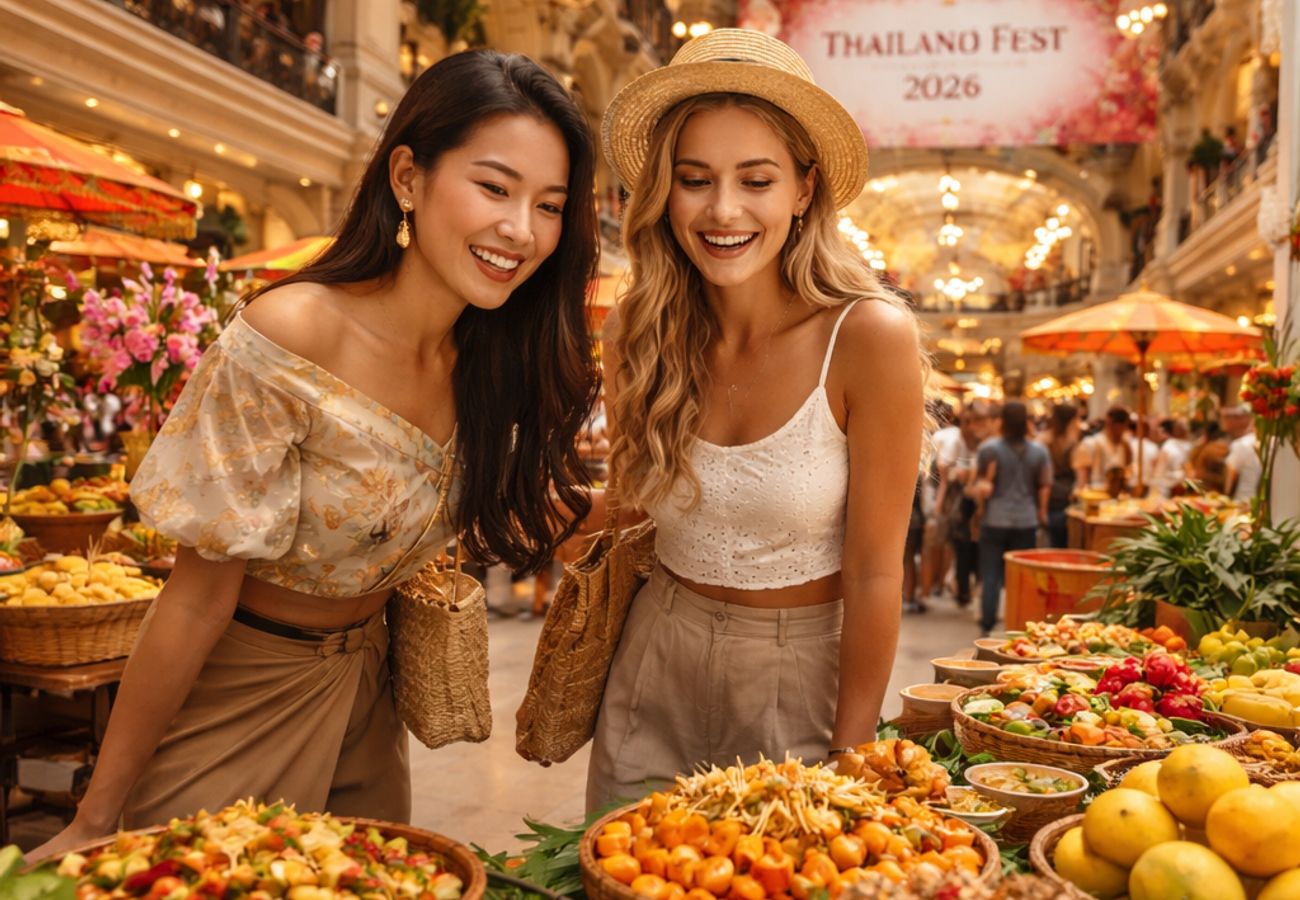
Image generated by AI
Thailand's Bold Gambit: Food Tourism Takes Center Stage in Amsterdam
The Tourism Authority of Thailand has made a decisive move that signals a fundamental shift in how luxury destinations market themselves to global audiences. Starting June 3, 2026, the Amazing Thailand Fest 2026 opened its doors at de Bijenkorf in Amsterdam, transforming a high-traffic retail landmark into a gateway for culinary-driven travel inspiration.
The two-week activation (running through June 16, 2026) represents far more than a standard tourism booth. This is a full-scale immersive experience designed to reposition Thailand in the minds of European travelers—moving beyond beach resorts to position the nation as a world-class gastronomy destination.
Reddit: "Food is the new passport. When I plan trips now, it's the restaurants that make the decision, not the hotels." — r/travel
The Amsterdam Location: Strategic Hub for European Influence
Choosing Amsterdam wasn't random. The Dutch capital sits at the intersection of Nordic, Central European, and Western European travel markets—making it an ideal testing ground for premium positioning strategies.
The Netherlands generates substantial long-haul tourism to Southeast Asia, and Germany (with a proven track record from a parallel Berlin activation) has demonstrated strong receptiveness to Thailand's culinary narrative. By anchoring the campaign in Amsterdam's most prestigious shopping district, the Tourism Authority of Thailand signaled confidence in reaching affluent, culturally-engaged travelers.
De Bijenkorf's location and brand positioning attracted exactly the demographic Thailand needs: educated, experientially-motivated European consumers for whom food experiences often determine destination choices.
Culinary Storytelling as Cultural Diplomacy
The festival's centerpiece consists of food-themed cultural window displays inspired by Thailand's historical culinary traditions. These aren't mere decoration—they're narrative tools.
Visitors encounter visual storytelling that traces the evolution of Thai cooking across regions, highlighting the balance of flavors, ingredient sourcing, and cooking techniques that define Thai gastronomy globally. The displays connect food directly to cultural identity, transforming casual shoppers into engaged learners.
Live cooking demonstrations have been scheduled throughout the two-week run, featuring traditional dishes like pomelo salad and pork larb—classics that embody Thailand's signature approach to balancing sweet, sour, salty, and spicy elements.
Princess Ubolratana Rajakanya: Royal Endorsement of Culinary Heritage
The participation of Princess Ubolratana Rajakanya in cooking demonstrations elevated the campaign beyond standard promotional activity. Her involvement signaled that Thai culinary traditions merit respect at the highest levels of Thai society.
This royal endorsement carries weight in European markets where cultural authenticity and heritage preservation resonate deeply with luxury travelers. The princess's hands-on participation in demonstrations reinforced a powerful message: these aren't tourist-ready adaptations, but genuine expressions of Thailand's living food culture.
Her presence transformed the event from marketing exercise into cultural diplomacy—a statement that Thailand takes its gastronomic heritage seriously enough to showcase it through its most prominent figures.
Gastronomy Tourism: The New Driver of Travel Decisions
Food has become the primary driver of travel inspiration for an increasingly influential segment of global tourism. Research from the World Tourism Organization consistently shows that culinary experiences rank among the top motivations for international travel.
Thailand has long held a reputation as one of the world's greatest food destinations. Street food culture, regional diversity, and internationally acclaimed restaurants position the nation as genuinely competitive in gastronomy tourism—a category where destinations like Italy, France, and Peru have historically dominated European imagination.
By foregrounding food in European markets, Thailand's tourism strategy addresses a psychological truth: people don't travel just to eat, they eat to understand where they are.
The Berlin Success Template
This Amsterdam activation builds directly on the success of a parallel campaign in Berlin earlier this year. The German market's strong engagement with Thailand's culinary narrative validated the broader strategy: European travelers are hungry (literally and figuratively) for authentic food-centered travel experiences.
Germany generates substantial tourism to Thailand, and the Berlin event's positive reception encouraged further investment across major European cities. Amsterdam represents the scaling of a proven model—testing success in one market, then replicating it across others.
This approach reflects sophisticated tourism marketing: validate the strategy, measure engagement metrics, then deploy resources toward cities with proven receptiveness.
Cultural Performances Extend the Narrative
Beyond cooking demonstrations, the Amazing Thailand Fest 2026 incorporates traditional Thai arts, music, and visual performances. These aren't diversions from the food focus—they're reinforcements of it.
Food exists within cultural context. By pairing culinary demonstrations with traditional performance art, the festival creates a multidimensional Thailand in visitors' minds. They experience not just dishes, but the music, aesthetics, and values that shape Thai foodways.
This integrated approach generates stronger emotional engagement than food alone could achieve. Visitors leave with sensory memories (taste, smell, sound, visual imagery) that stick far more effectively than promotional brochures.
The Broader European Tourism Strategy
The Amazing Thailand Fest 2026 operates within Thailand's long-term European expansion strategy. With strong engagement in Amsterdam and proven success in Berlin, tourism authorities expect measurable increases in long-haul bookings from German and Dutch markets.
This data-driven approach to destination marketing represents evolution in how tourism authorities position themselves. Rather than generic "visit Thailand" messaging, the strategy is laser-focused: attract affluent, culturally-motivated European travelers through food-centered experiential marketing.
The Netherlands and Germany have been identified as priority markets precisely because their populations demonstrate both the disposable income and the cultural values that align with Thailand's premium positioning.
Food Tourism's Role in Sustainable Travel
There's an often-overlooked benefit to gastronomy-focused tourism: it distributes visitor spending more widely across local communities. Street food vendors, small family restaurants, and regional producers benefit directly when travelers are motivated by culinary experiences.
This contrasts with traditional beach tourism, where spending concentrates in resort properties owned by international corporations. Food tourism creates incentive structures that keep tourism revenue circulating within Thai communities.
By positioning itself as a gastronomy destination, Thailand simultaneously addresses marketing objectives and sustainability concerns—a strategic alignment that increasingly matters to conscious European travelers.
Accessibility as a Competitive Advantage
Thai cuisine enjoys global recognition and positive sentiment. Unlike some culinary traditions, Thai food requires no market education. European consumers already know pad thai, massaman curry, and Thai street food culture.
This existing familiarity transforms Thailand's marketing challenge into an advantage: the goal isn't to introduce European travelers to Thai food, but to convert familiarity into travel motivation. "You love Thai food—come experience it at its source" is far more persuasive than "discover a new cuisine."
The Amazing Thailand Fest 2026 leverages this existing emotional connection, channeling food appreciation into destination desire.
Looking Ahead: Expected Impact on Tourism Numbers
Tourism authorities are modeling significant upticks in European arrivals following the Amsterdam activation. Previous campaigns have generated measurable increases in flight bookings, hotel reservations, and tour package sales from targeted markets.
With sustained promotional efforts planned across multiple European cities, Thailand expects gastronomy tourism to become a distinctive competitive advantage—differentiating it from competing Southeast Asian destinations like Vietnam and Indonesia.
The festival represents a carefully calculated bet: that European travelers increasingly view authentic food experiences as travel's highest value, and that Thailand possesses legitimate competitive advantages in delivering those experiences.
Related Travel Guides
-
Asia India Southeast Travel Retail Growth Reshapes Pacific Markets 2026
-
Aviation Magma Appointment: Paul Hoatson Elevates Global Cargo Strategy
-
Sleep Travel Rule: Does the 7:1 Formula Really Work for Jet-Lagged Professionals?
Food doesn't just feed the body—it feeds the imagination, and that's where real travel begins.
Disclaimer
This article is for informational and educational purposes only. It does not constitute legal, financial, or professional advice. While we strive to provide accurate and up-to-date information, travel policies, regulations, and conditions change rapidly. Always verify information with official sources before making travel decisions. Nomad Lawyer makes no representations about the accuracy, reliability, completeness, or suitability of the information provided. Readers should consult qualified professionals for advice specific to their circumstances. The views expressed in this article are those of the author and do not necessarily reflect the views of Nomad Lawyer.
Preeti Gunjan
Contributor & Community Manager
A passionate traveller and community builder. Preeti helps grow the Nomad Lawyer community, fostering engagement and bringing the reader experience to life.
Learn more about our team →