
Air New Zealand Flight Aborts Landing in Extreme Wind Shear, Diverts to Alternate Airport
Breaking airline news and aviation industry updates for 2026.

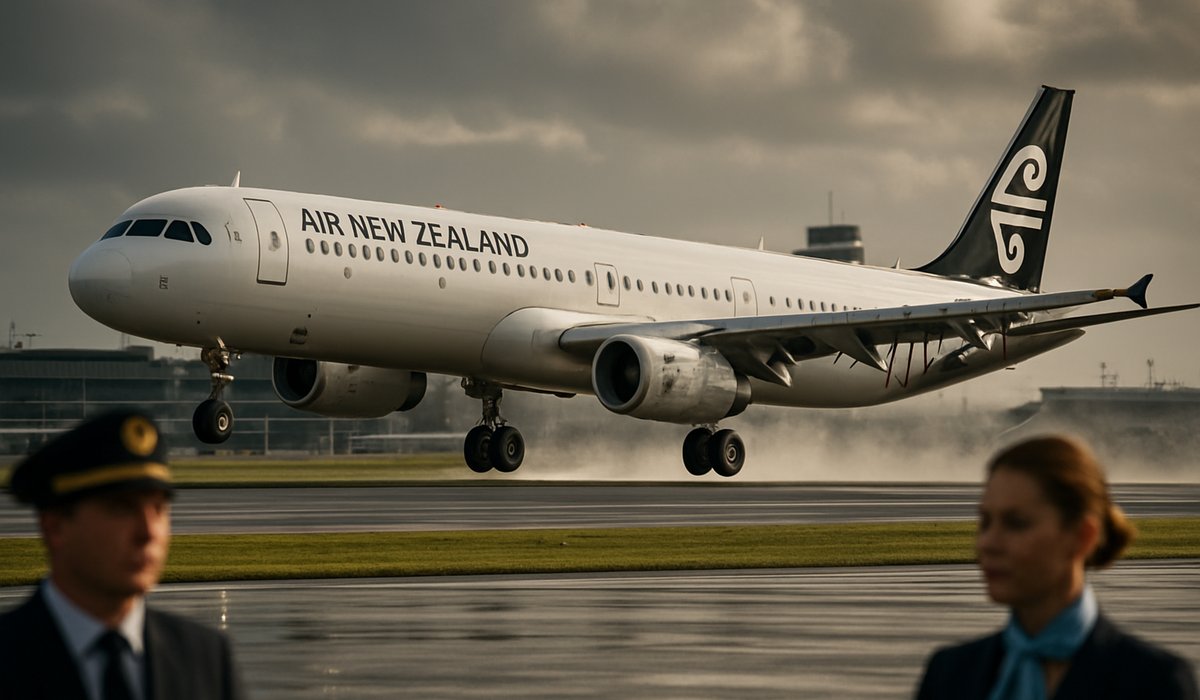
Image generated by AI
Air New Zealand Flight Aborts Landing in Extreme Wind Shear, Diverts to Alternate Airport
A321neo aircraft experiences dramatic approach as gale-force conditions force go-around decision over Wellington
Dramatic Approach Ends in Diversion
Passengers aboard Air New Zealand flight NZ272 endured a harrowing descent into Wellington Airport on a recent service from Brisbane, as severe wind shear conditions forced the aircraft to abort its landing attempt and divert to an alternate airport. The Airbus A321neo touched down briefly on the runway before pilots initiated a go-around maneuver, triggering what travellers described as a "roller coaster" experience as the narrow-body jet battled intense gale-force winds battering New Zealand's capital city.
Unable to safely complete the landing at Wellington Airport (WLG), the flight crew executed a diversion to Christchurch Airport (CHC), approximately 350 kilometers south, where conditions were more favorable for landing. The incident underscores the unpredictable operational challenges airlines face in regions prone to severe weather events and the critical safety protocols that govern modern commercial aviation.
Wind Shear Forces Pilot Decision
The go-around procedure—in which pilots abort a landing approach and circle back for another attempt—represents a standard safety measure employed when atmospheric conditions deteriorate below acceptable parameters. Wind shear, a sudden shift in wind speed and direction, poses significant risks during the critical phases of takeoff and landing when aircraft operate at lower altitudes and reduced airspeeds.
Wellington Airport is renowned within the aviation industry for challenging wind conditions due to its geographic location on New Zealand's North Island, where weather systems converge with particular intensity. The A321neo, a modern fuel-efficient variant of Airbus's popular narrow-body family, is equipped with advanced weather radar and flight management systems designed to handle demanding environmental conditions.
Broader Implications for Regional Aviation
The incident highlights the operational pressures facing airlines operating in the Asia-Pacific region, where unpredictable weather patterns and geographic constraints frequently necessitate diversions and schedule adjustments. For Air New Zealand, a carrier heavily dependent on domestic and trans-Tasman routes, such events remain a periodic operational reality rather than exceptional occurrences.
Passengers experiencing diversions typically face delays, potential overnight accommodations, and schedule disruptions—costs that impact both airline operations and traveler satisfaction in an increasingly competitive aviation market. While no injuries or aircraft damage was reported in this instance, the event reinforces why aviation authorities maintain stringent wind speed limits for landing operations.
FAQ: Airline Safety, Diversions, and Wind Shear
What is wind shear and why does it force aircraft to abort landings? Wind shear refers to sudden, significant changes in wind speed or direction at low altitudes. During landing, aircraft require stable wind conditions to maintain proper glide paths and control surfaces. Excessive wind shear can compromise aerodynamic stability, forcing pilots to abort and either attempt another landing or divert to an alternate airport.
How often do aviation diversions occur due to weather? Diversions remain relatively uncommon in modern aviation due to advanced weather forecasting and radar technology. However, airports in geographically challenging locations—like Wellington—experience occasional diversions during severe weather events several times annually.
Is a go-around dangerous for passengers and crew? Go-arounds are standard, well-practiced procedures taught extensively during pilot training. While passengers may experience discomfort or anxiety, modern aircraft are specifically designed to handle such maneuvers safely.
Why didn't the flight land at Wellington despite touching down? Pilots made the safety-critical decision during the landing sequence that wind conditions remained unsafe for completing the landing roll. Aborting was the appropriate action to protect the 200+ passengers and crew aboard.
What happens to passengers after a diversion? Airlines typically provide meals, accommodations if overnight stays are required, and rebook passengers on subsequent flights. Passenger compensation may apply depending on local aviation regulations and circumstances.
Related Travel Guides
-
Europe in Turmoil: 276 Delays Hit London, Paris, Frankfurt & Istanbul
-
How a Bold Fiji Airways–British Airways Deal Could Turbocharge Holidays for Canadians and Brits
External Resources
Disclaimer
This article is for informational and educational purposes only. It does not constitute legal, financial, or professional advice. While we strive to provide accurate and up-to-date information, travel policies, regulations, and conditions change rapidly. Always verify information with official sources before making travel decisions. Nomad Lawyer makes no representations about the accuracy, reliability, completeness, or suitability of the information provided. Readers should consult qualified professionals for advice specific to their circumstances. The views expressed in this article are those of the author and do not necessarily reflect the views of Nomad Lawyer.
Raushan Kumar
Founder & Lead Developer
Full-stack developer with 11+ years of experience and a passionate traveller. Raushan built Nomad Lawyer from the ground up with a vision to create the best travel and law experience on the web.
Learn more about our team →