
Aero K Restores Ibaraki to Cheongju Flights from September 1 to Boost Japan-Korea Regional Travel
South Korean low-cost carrier Aero K is relaunching its Ibaraki–Cheongju route on September 1, providing a strategic alternative to congested major hubs in Tokyo and Seoul.

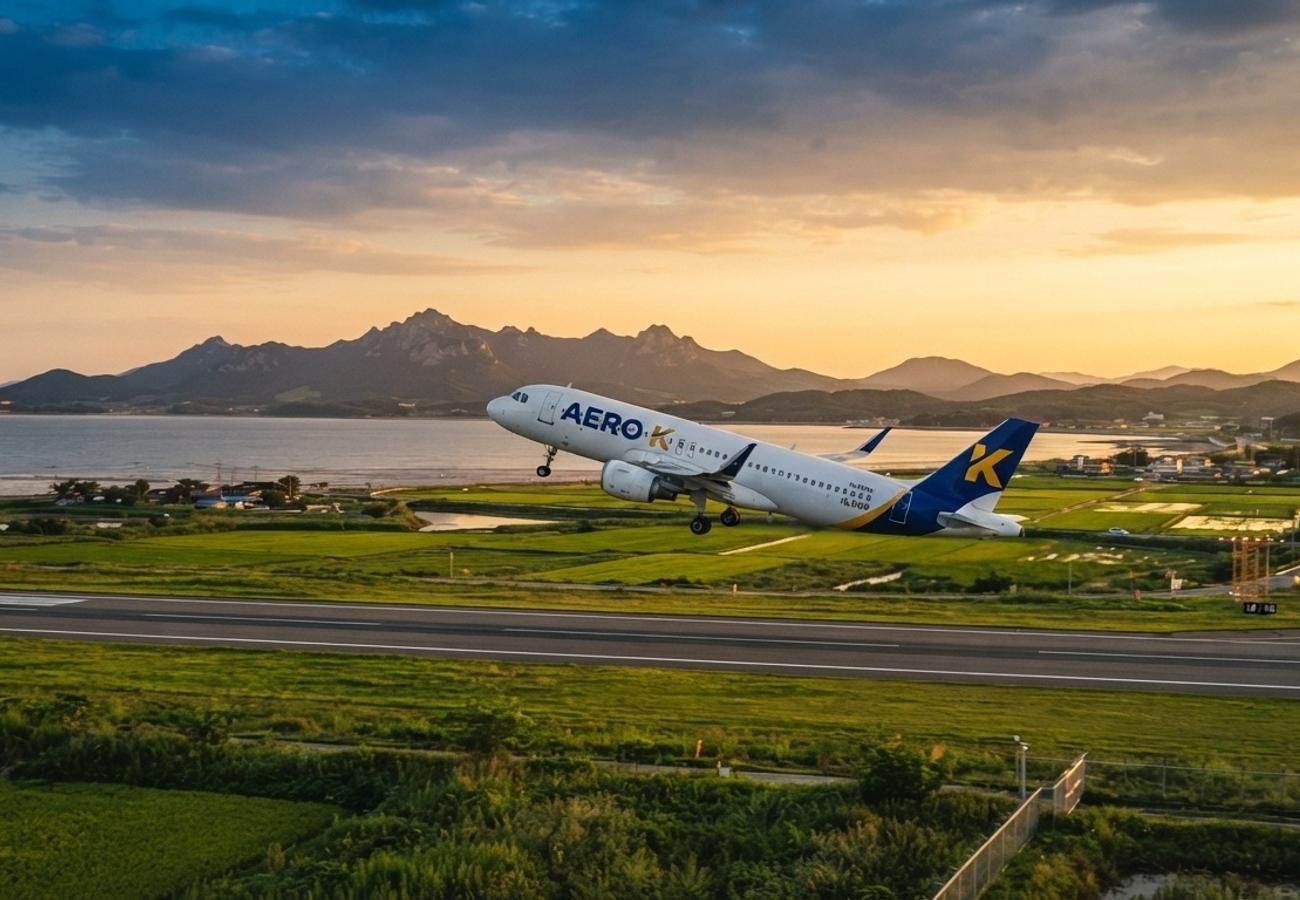
Image generated by AI
Starting September 1, South Korean budget airline Aero K will resume operations on the Ibaraki–Cheongju route, adding critical capacity to the high-growth leisure corridor connecting Japan and South Korea.
The move signals a strategic shift toward regional connectivity, bypassing the saturated primary hubs of Tokyo and Seoul to offer cost-conscious travelers a more streamlined transit experience.
Strategic Relaunch of Regional Gateway Connectivity
The decision to restart flights between Ibaraki Airport and Cheongju International Airport positions these secondary hubs as viable alternatives for the dense flow of traffic between the two nations. According to schedule data, Ibaraki is situated approximately 80 kilometers northeast of central Tokyo, while Cheongju serves as a primary aviation node for South Korea’s Chungcheong region.
Industry reports indicate that the service will operate several times per week. This operational frequency is designed to alleviate pressure on the traditional "trunk" routes—specifically those connecting Incheon, Gimpo, Narita, and Haneda—which are often plagued by congestion and higher landing fees. By targeting these regional gateways, Aero K is specifically courting tour groups and independent leisure travelers who prioritize lower ticket prices and faster airport processing over the prestige of major international hubs.
Current seasonal timetables reveal that Aero K has been aggressively expanding its footprint within Japan. The airline already maintains a robust presence in Cheongju with existing links to Osaka Kansai, Sapporo, and Tokyo Narita, complemented by services from Incheon to various Japanese regional cities. The restoration of the Ibaraki–Cheongju link is a calculated extension of this strategy, utilizing niche city pairs to stimulate new passenger demand.
Driving Tourism Growth in Chungcheong and Ibaraki
The resumption of this route coincides with a broader surge in bilateral tourism. Government statistics from both Japan and South Korea show a significant rebound in travel volumes, driven by competitive pricing and the proliferation of low-cost carrier (LCC) networks.
For travelers arriving in Cheongju, the direct link to the Tokyo metropolitan area opens up easier access to the heart of Korea. This allows for the development of specialized travel packages focusing on the Daejeon science corridor, the historic landmarks of Gongju, and various regional nature and ski resorts. For Japanese tourists, Cheongju offers a point of entry into central Korea that completely avoids the logistical bottlenecks of Seoul's primary airports.
Conversely, Ibaraki Airport and local prefectural authorities have integrated inbound South Korean tourism into their long-term economic development strategies. By channeling passengers directly into Ibaraki, the airline facilitates travel into the Tochigi and Fukushima prefectures. This encourages visitors to explore hot springs, cultural heritage sites, and nature-based tourism away from the overcrowded districts of central Tokyo.
Industry observers suggest that diversifying these tourism flows is essential for sustainable growth. By spreading visitors across regional prefectures and provinces, both countries can reduce the strain of "over-tourism" in flagship cities while distributing economic benefits to smaller local businesses.
Aero K's Operational Model and Market Expansion
Based at Cheongju International Airport, Aero K has carved out a niche as a short-haul specialist. Since its inception in the early 2020s, the carrier has systematically scaled its international network to include Taiwan and Japan, as evidenced by fleet and scheduling records.
The airline utilizes a standardized fleet of single-class Airbus narrowbody aircraft. This configuration is optimized for high-efficiency turnarounds and simplified maintenance on short sectors, such as the Cheongju–Ibaraki hop, which typically lasts under three hours. To maintain low base fares, the carrier relies heavily on ancillary revenue streams, including paid seat selection and onboard retail sales.
Data from the 2026 summer schedule highlights a comprehensive network linking Cheongju to major Japanese gateways, including daily or near-daily flights to Sapporo New Chitose and Osaka Kansai. The Ibaraki route functions as a strategic "spoke" in this hub-and-spoke model, providing the airline with a competitive edge over legacy carriers by offering point-to-point convenience that larger airlines often overlook.
The Rise of Secondary Airports in East Asian Aviation
The relaunch of the Ibaraki–Cheongju service underscores a wider trend where regional airports are becoming central to East Asian aviation strategy. Ibaraki Airport has actively marketed itself to LCCs by offering rapid ground handling and significantly lower operating costs than the major Tokyo terminals.
Similarly, Cheongju International Airport has been positioned by government planning documents as a relief valve for Incheon and Gimpo. The goal is to draw economic activity toward the Chungcheong region while providing a more efficient base for budget operators.
The success of this specific route may serve as a blueprint for other regional pairings. Airports such as Muan and Daegu in South Korea, as well as smaller Japanese gateways, are currently deploying incentive programs to attract LCC capacity. As airlines continue to refine their networks in the post-pandemic era, these regional links provide a low-risk method for testing new markets and increasing international visibility for smaller cities.
For the modern traveler, this shift means more options to avoid the stress of mega-hubs, potentially reducing total travel time from curb to cabin while lowering the cost of regional exploration.
Budget-conscious explorers now have a streamlined path between central Korea and the outskirts of Tokyo.
Related Travel Guides
Disclaimer
This article is for informational and educational purposes only. It does not constitute legal, financial, or professional advice. While we strive to provide accurate and up-to-date information, travel policies, regulations, and conditions change rapidly. Always verify information with official sources before making travel decisions. Nomad Lawyer makes no representations about the accuracy, reliability, completeness, or suitability of the information provided. Readers should consult qualified professionals for advice specific to their circumstances. The views expressed in this article are those of the author and do not necessarily reflect the views of Nomad Lawyer.
Raushan Kumar
Founder & Lead Developer
Full-stack developer with 11+ years of experience and a passionate traveller. Raushan built Nomad Lawyer from the ground up with a vision to create the best travel and law experience on the web.
Learn more about our team →