
Virgin Atlantic's Upper Class: Why Luxury Long-Haul Travel Commands Premium Loyalty in Competitive Transatlantic Market
Breaking airline news and aviation industry updates for 2026.

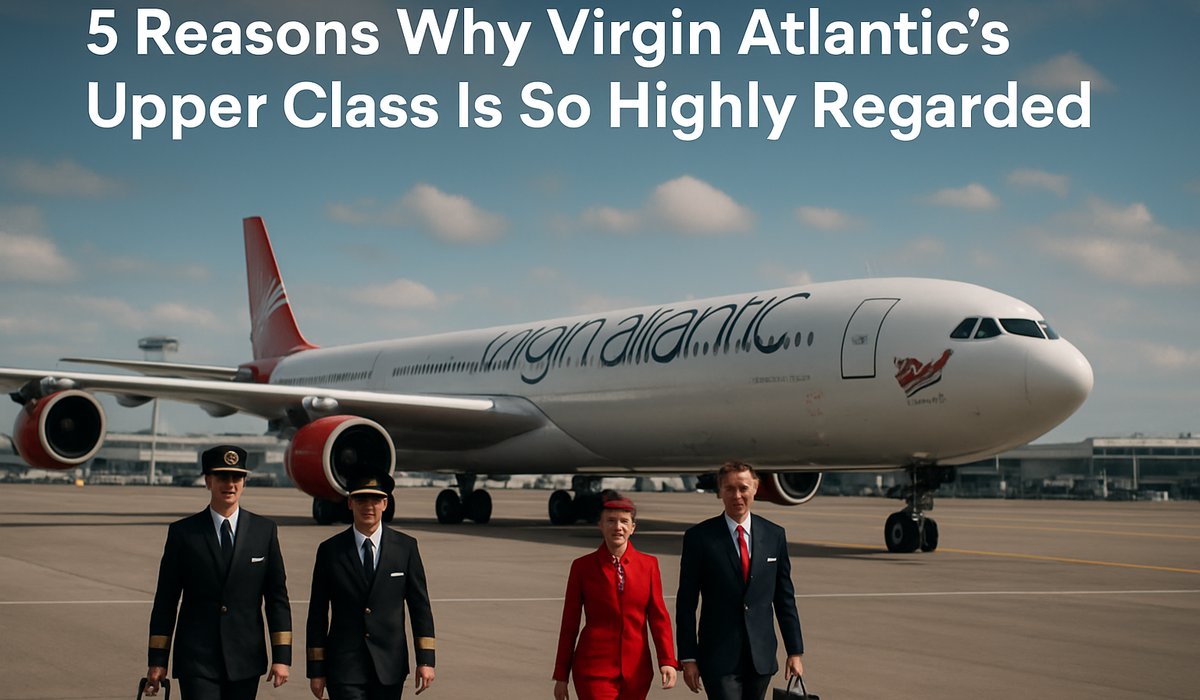
Image generated by AI
Virgin Atlantic's Upper Class: Why Luxury Long-Haul Travel Commands Premium Loyalty in Competitive Transatlantic Market
As traditional carriers reassess premium cabin offerings amid shifting passenger demand, Virgin Atlantic's Upper Class stands out—here's why travelers justify the investment
The Upper Class Difference in Premium Aviation
Virgin Atlantic has carved a distinctive niche in the fiercely competitive transatlantic aviation sector since its 1984 founding by entrepreneur Richard Branson. While the carrier markets itself as an accessible alternative to legacy carriers, its Upper Class cabin has emerged as a standout offering that commands genuine customer loyalty and industry recognition. Unlike leisure-focused competitors such as TUI Group and Jet2 holidays, Virgin Atlantic operates across three distinct service tiers—Economy (subdivided into Light, Classic, and Delight options), Premium, and Upper Class—positioning itself as a full-service international carrier rather than a budget alternative.
What Sets Upper Class Apart
The Upper Class product represents Virgin Atlantic's answer to competitors' business class offerings, delivered with the carrier's signature brand personality. The cabin combines technical specifications—lie-flat seating, enhanced privacy, premium bedding—with an emphasis on personalized service and passenger experience differentiation that extends beyond industry-standard amenities.
This positioning proves particularly strategic as the aviation sector grapples with shifting premium travel dynamics. Corporate travel patterns have transformed post-pandemic, while high-net-worth leisure travelers increasingly scrutinize value proposition in long-haul cabins. Virgin Atlantic's Upper Class addresses both segments by emphasizing the intangible elements of the journey—brand experience, crew interaction, and cabin atmosphere—alongside conventional luxury indicators.
Industry Context: Premium Cabin Competition Intensifies
The transatlantic premium travel market faces unprecedented competition from both traditional full-service carriers and emerging long-haul low-cost operators. Jet fuel price volatility and evolving airline fee structures continue reshaping pricing strategies across cabin classes. Meanwhile, corporate travel managers demand transparency and measurable return on premium cabin investments.
Virgin Atlantic's Upper Class strategy reflects a broader industry recognition that premium passengers increasingly value experiential differentiation over commodity amenities alone. The cabin's reputation suggests the carrier has successfully communicated this value proposition to its target demographic.
Market Implications
As aviation recovers and expands post-pandemic capacity, premium product innovation becomes critical for yield management and customer retention. Virgin Atlantic's Upper Class demonstrates how established carriers can maintain competitiveness by building distinctive brand identity within premium segments—a lesson relevant across the global aviation industry as carriers recalibrate route networks and pricing strategies.
FAQ: Virgin Atlantic Upper Class and Premium Long-Haul Travel
What makes Virgin Atlantic Upper Class different from standard business class on other airlines? Virgin Atlantic's Upper Class combines lie-flat seating and premium amenities with the carrier's distinctive brand personality and service approach, emphasizing personalized passenger experience alongside technical specifications.
How does Upper Class pricing compare to competitors on transatlantic routes? Pricing varies by route and booking window, but Virgin Atlantic positions Upper Class as competitively valued relative to equivalent offerings from legacy carriers on high-demand transatlantic corridors.
What amenities are included in Virgin Atlantic Upper Class fares? Upper Class typically includes lie-flat beds, premium dining, enhanced baggage allowances, lounge access, and priority services—specific inclusions vary by fare rules and booking class.
Is Virgin Atlantic Upper Class worth the premium price for business travelers? Value depends on individual priorities; corporate travelers prioritizing experience differentiation and consistent service quality often report high satisfaction, while price-sensitive bookers may compare yield against alternative premium options.
How does Virgin Atlantic's three-tier economy structure affect Upper Class positioning? The layered Economy offering (Light, Classic, Delight) creates clear service differentiation, potentially making the value jump to Premium and Upper Class more compelling for passengers seeking enhanced experiences.
Related Travel Guides
Flight Delay Compensation Guide 2026
Understanding Airline Route Changes
Airport Security Process Updated (2026)
External Resources
Disclaimer
This article is for informational and educational purposes only. It does not constitute legal, financial, or professional advice. While we strive to provide accurate and up-to-date information, travel policies, regulations, and conditions change rapidly. Always verify information with official sources before making travel decisions. Nomad Lawyer makes no representations about the accuracy, reliability, completeness, or suitability of the information provided. Readers should consult qualified professionals for advice specific to their circumstances. The views expressed in this article are those of the author and do not necessarily reflect the views of Nomad Lawyer.
Preeti Gunjan
Contributor & Community Manager
A passionate traveller and community builder. Preeti helps grow the Nomad Lawyer community, fostering engagement and bringing the reader experience to life.
Learn more about our team →