
Yosemite National Park Safety Concerns Rise as 2026 Removal of Timed Entry Sparks Overcrowding on Mist Trail
Viral footage of extreme crowding on Yosemite's Mist Trail has triggered urgent safety warnings following the park's decision to scrap timed-entry reservations for the 2026 peak season.

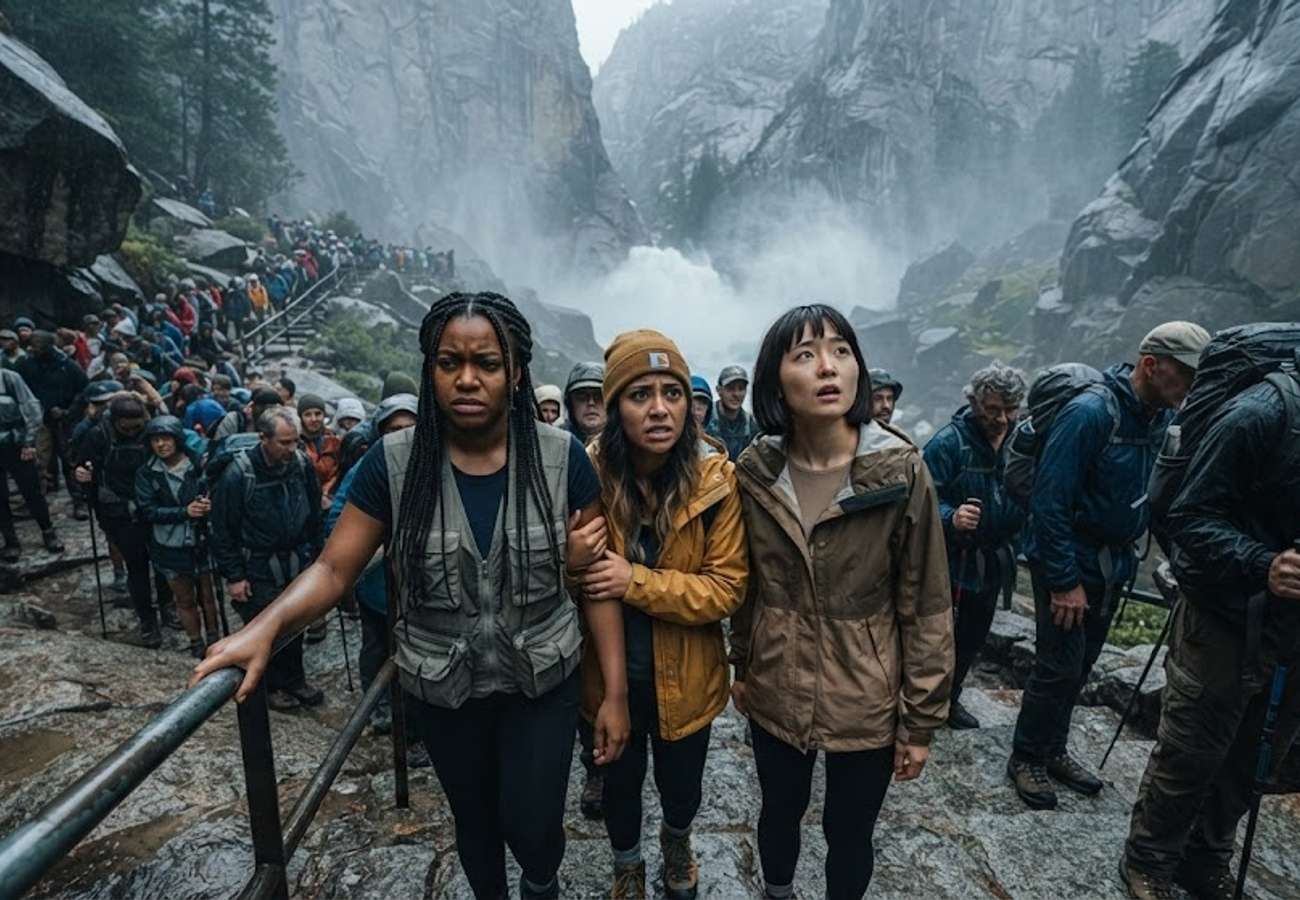
Image generated by AI
[California, July 17, 2026] — Serious safety alarms are being raised across Yosemite National Park after viral footage revealed dangerous levels of congestion on high-risk hiking routes. The surge in foot traffic follows a controversial administrative decision to eliminate the timed-entry reservation system for the 2026 peak season, a move that has resulted in record-breaking crowds and increased risks for thousands of visitors.
The shift in management strategy was intended to broaden public access, yet industry observers and park advocates warn that the result is a "perfect storm" of overcrowding. Recent clips circulating on social media, specifically showing the Mist Trail, depict a scene more akin to a theme park than a wilderness preserve, with hikers packed shoulder-to-shoulder on narrow, wet granite steps.
Critical Safety Risks on the Mist Trail Corridor
The focal point of current safety concerns is the Mist Trail, one of the most iconic but treacherous hikes in Yosemite. Footage captured by user @cloud333a and broadcast by Good Morning America shows a massive bottleneck of hikers descending from Vernal Fall around 11 a.m. on a Saturday. The video highlights a precarious situation where faster hikers attempt to overtake slower pedestrians on narrow sections of the path.
The geography of the Mist Trail makes such crowding particularly hazardous. The ascent to Vernal Fall involves a steep granite stairway consisting of more than 600 steps. During the spring and early summer, the constant spray from the waterfall renders the stone surfaces slick. According to National Park Service (NPS) warnings, the combination of loose rock, decomposed granite, and wet footing frequently leads to knee injuries and sprained ankles. In the most severe instances, the trail's inherent dangers have resulted in fatalities.
When the trail reaches the capacity seen in the viral footage, the ability for hikers to maintain safe footing or step aside for others is eliminated. This creates a high-stress environment where a single misstep by one individual can potentially trigger a chain reaction of falls in a densely packed crowd.
Management Shift and the 2026 Reservation Policy
In February, Yosemite National Park officials announced they would not implement a timed-entry reservation system for 2026, even during the busiest summer months. This decision was based on an internal evaluation of the 2025 season, which suggested that traffic flow remained stable and parking was available on most weekdays.
Yosemite Superintendent Ray McPadden stated in a formal news release that the park remains committed to resource protection and visitor access. McPadden argued that data indicated a season-wide reservation requirement was not the most effective tool for the 2026 operational cycle.
In place of the reservation system, the park has transitioned to a suite of real-time management tools, including:
- Active parking management and real-time traffic monitoring.
- Strategic placement of staff at key intersections.
- The issuance of congestion alerts and trip-planning guidance.
- Promotion of park areas located outside the main Yosemite Valley.
However, these measures are being implemented against a backdrop of significant staffing shortages. Reports indicate that the NPS has continued to reduce personnel, leaving fewer rangers to manage the massive influx of tourists.
Comparative National Park Policy Changes
Yosemite is not the only destination altering its access protocols. The National Park Service announced that Arches National Park would also forgo timed entry for 2026. Similarly, Glacier National Park opted not to require a park-wide vehicle reservation system. In contrast, Rocky Mountain National Park has chosen to maintain its timed-entry system during peak months to mitigate overcrowding.
The National Parks Conservation Association has been vocal in its criticism of the changes at Yosemite and Arches. Mark Rose, Senior Sierra Nevada Program Manager, noted that removing these proven management tools—while simultaneously facing a 25% forced cut in park staff nationwide—creates a dangerous environment that puts iconic natural resources at risk.
Record-Breaking Visitation Statistics for June 2026
The scale of the crisis is reflected in the recent public use reports. June 2026 saw a massive spike in attendance, with 634,508 total visits recorded. This represents the highest June visitation in a decade, surpassed only by the figures from June 2016. This current surge is approximately 20% higher than the average June visitation recorded between 2010 and 2024.
The following table tracks the recreational visitor trends for the first half of 2026:
| Date | Recreational Visitors |
|---|---|
| April 2026 | 303,860 |
| May 2026 | 511,587 |
| June 2026 | 610,463 |
Environmental and Operational Impact Analysis
The consequences of this unrestricted access extend beyond hiker safety. Reports from SFGATE indicate that the surge has led to unsafe roadside parking, overflowing lots, and an increase in litter. The tension of the crowds has even manifested in physical altercations, including at least one parking-lot fight that required ranger intervention.
Wildlife advocates, including conservation leader Beth Pratt, have warned that increased vehicle traffic and human presence correlate directly with higher wildlife mortality. Specifically, research indicates that as visitation increases, a higher number of bears are killed in vehicle collisions. Furthermore, the presence of more human food in overcrowded areas increases the likelihood of dangerous bear-human encounters.
To address these systemic issues, Yosemite has begun studying long-term infrastructure changes. In June, the park released a draft environmental assessment specifically targeting the rehabilitation of the Mist Trail Corridor to make it more sustainable and safer for the projected volume of visitors.
The tension between maintaining open public access and ensuring visitor safety has reached a breaking point in Yosemite's most fragile corridors.
Related Travel Guides
Disclaimer
This article is for informational and educational purposes only. It does not constitute legal, financial, or professional advice. While we strive to provide accurate and up-to-date information, travel policies, regulations, and conditions change rapidly. Always verify information with official sources before making travel decisions. Nomad Lawyer makes no representations about the accuracy, reliability, completeness, or suitability of the information provided. Readers should consult qualified professionals for advice specific to their circumstances. The views expressed in this article are those of the author and do not necessarily reflect the views of Nomad Lawyer.
Kunal K Choudhary
Co-Founder & Contributor
A passionate traveller and tech enthusiast. Kunal contributes to the vision and growth of Nomad Lawyer, bringing fresh perspectives and driving the community forward.
Learn more about our team →