Wizz Air Flight Diverts to Budapest After Mid-Flight Bomb Threat: Inside the NATO Gripen Intercept and Security Response

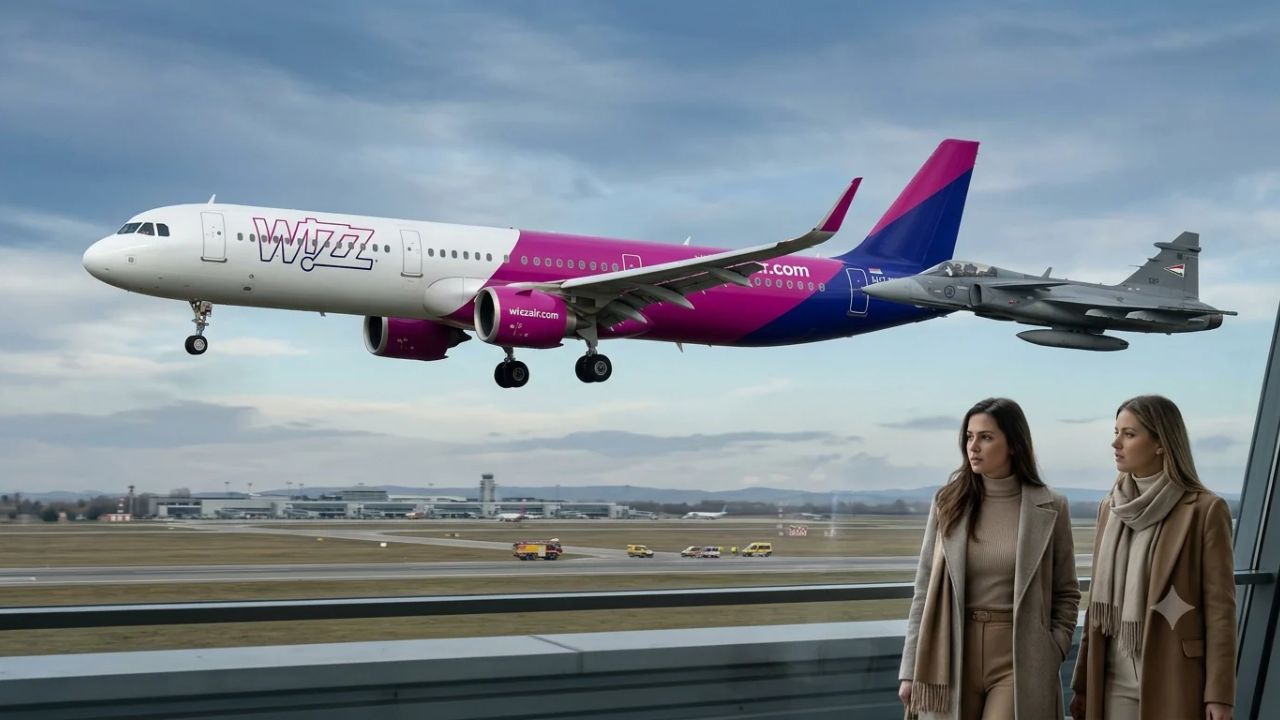
A Wizz Air Airbus A321neo en route from London Luton to Sofia diverted to Budapest Ferenc Liszt International Airport under military escort following an in-flight security threat.
BUDAPEST, November 3, 2026 — An international aviation security emergency unfolded across Central and Southeastern European airspace when Wizz Air flight W64302, en route from London Luton to Sofia, executed an urgent emergency diversion to Budapest Ferenc Liszt International Airport following an in-flight bomb threat. The security alert, received while the twin-engine Airbus A321neo was cruising over Bosnia and Herzegovina, triggered a high-readiness NATO ALPHA military scramble that dispatched a Hungarian Air Force Saab JAS 39 Gripen fighter jet to intercept and escort the passenger aircraft to a safe touchdown in the Hungarian capital. The incident initiated an extensive ground counter-terrorism sweep, temporary runway restrictions at Budapest Airport, and renewed scrutiny over European civil-military aviation defense protocols during hoaxes and hybrid security threats.
[!NOTE] Key Operational Summary of the Wizz Air W64302 Diversion: Wizz Air flight W64302 departed London Luton Airport (LTN) at 08:33 GMT on November 2, 2026, scheduled to arrive in Sofia (SOF) at 13:25 local time. While transiting airspace over Bosnia and Herzegovina, the flight crew received a reported bomb threat, prompting an immediate diversion to Budapest Ferenc Liszt International Airport (BUD). The aircraft touched down safely at 12:08 pm local time under military escort by a Hungarian Air Force Saab JAS 39 Gripen following a NATO ALPHA alert. Specialized counter-terrorism and explosive ordnance units conducted an exhaustive inspection, finding no suspicious items or explosive devices, clearing the aircraft to resume its onward journey to Bulgaria.
WIZZ AIR FLIGHT W64302 INCIDENT TIMELINE & TACTICAL PROFILE
| [ DEPARTURE: LONDON LUTON AIRPORT (LTN) ] |
|---|
| * Scheduled Destination: Sofia International Airport (SOF), Bulgaria. |
| * Take-off Time: Approximately 08:33 GMT. Routine climb to European cruising altitude. |
| [ MID-AIR ALERT: BOSNIA & HERZEGOVINA AIRSPACE ] |
| * Security Threat Received: Air traffic control relays unverified bomb threat aboard aircraft. |
| * Tactical Command: Flight crew declares security emergency; initiates diversion to Budapest. |
| [ MILITARY SCRAMBLE: NATO CAOC ALPHA ALERT ] |
| * Command Authority: NATO Combined Air Operations Centre (CAOC) triggers immediate ALPHA alert. |
| * Tactical Intercept: Hungarian Air Force Saab JAS 39 Gripen scrambles from Kecskemet Air Base. |
| * Escort Profile: Intercepts commercial jet, sanitizes airspace, & guides approach into BUD. |
| [ EMERGENCY ARRIVAL & SWEEP: BUDAPEST FERENC LISZT AIRPORT (BUD) ] |
| * Touchdown: 12:08 pm local time on Runway 13R. Aircraft taxied to isolated security stand. |
| * Ground Response: TEK Counter-Terrorism, police, canine explosives detection, & firefighters. |
| * Runway Operations: Single-runway restriction implemented; no general airport shutdown. |
| * Final Clearance: Negative explosives findings (confirmed hoax); aircraft cleared for Sofia. |
Mid-Air Emergency Over the Balkans: The Diversion of Flight W64302
The emergency diversion of Wizz Air flight W64302 represents an extraordinary operational disruption along one of Europe's routine east-west passenger corridors. Operating as a regularly scheduled service between London Luton Airport in the United Kingdom and Sofia International Airport in Bulgaria, the flight was operated by a modern Airbus A321neo, bearing Hungarian civil registration HA-LGR. Departing Luton at approximately 08:33 GMT, the aircraft climbed to its designated cruising altitude, carrying a full complement of passengers across French, German, and Balkan air traffic management sectors.
The routine flight profile altered dramatically while the aircraft was transiting the upper airspace over Bosnia and Herzegovina. Air traffic controllers and the flight deck received communication regarding a specific bomb threat alleging that an improvised explosive device had been placed aboard the aircraft. In international aviation protocol, any unverified bomb warning delivered while an aircraft is airborne must be handled with absolute operational gravity. Commercial flight crews are trained under International Civil Aviation Organization (ICAO) Annex 17 standards to treat all explosive warnings as credible until formal forensic verification proves otherwise.
Faced with this acute security threat, the flight crew promptly initiated emergency procedures, squawking the appropriate transponder codes and requesting an immediate diversion to Budapest Ferenc Liszt International Airport. The selection of Budapest as the diversion destination reflected sound aeronautical judgment. Budapest functions as the primary operational and maintenance hub for Wizz Air, providing extensive technical support facilities, company engineering personnel, and familiar ground operations. In addition, Budapest Ferenc Liszt Airport boasts long dual runways, specialized isolated parking pads designed for high-risk security interventions, and comprehensive airport emergency services capable of handling wide-scale aviation incidents.
As the aircraft initiated a steep, controlled descent and altered course northward toward Hungarian airspace, cabin crew maintained rigid flight deck security protocols. The fortified cockpit door remained locked, and flight attendants executed cabin security protocols designed to prevent panic while keeping passengers seated and monitoring the cabin for any suspicious activity or unattended baggage. The seamless management of the cockpit and cabin during this high-stress transition demonstrated the rigorous training standard applied across European commercial aviation.
The technical mechanics of the diversion were coordinated in real time across multiple European Flight Information Regions (FIRs). Once the flight deck squawked the international emergency transponder code, air traffic control towers across Sarajevo, Zagreb, and Budapest established an expedited routing corridor overseen by Eurocontrol's Network Manager Operations Centre in Brussels. Sector controllers cleared intermediate flight levels, commanding non-essential commercial flights to alter course or enter holding patterns. This high-priority airspace clearing gave the descending Airbus A321neo an unhindered, continuous-descent approach path into Hungarian sovereign airspace, ensuring that the aircraft burned minimal fuel while descending rapidly to an altitude where cabin depressurization risks were mitigated.
NATO ALPHA Scramble: The Hungarian Gripen Intercept Protocol
As flight W64302 crossed into Hungarian territorial airspace, the incident escalated from an isolated airline emergency into an international air defense operation. The presence of an unverified explosive threat aboard a commercial airliner within the European air transport network automatically triggered rapid-response mechanisms overseen by the North Atlantic Treaty Organization (NATO).
CIVIL-MILITARY AIRSPACE DEFENSE ARCHITECTURE (NATO & HUNGARY)
| Column 1 |
|---|
| [ 1. NATO INTEGRATED AIR AND MISSILE DEFENCE SYSTEM (NATINAMDS) ] |
| * Command Hub: Combined Air Operations Centre (CAOC) Torrejon monitors European skies. |
| * Threat Assessment: Rapid evaluation of civilian flight squawks and ATC security alerts. |
| * Alert State: Issuance of NATO ALPHA alert (high-readiness scramble of allied fighter jets). |
| [ 2. HUNGARIAN AIR FORCE (MAGYAR LEGIERO) TACTICAL RESPONSE ] |
| * Base of Deployment: 59th Szentgyorgyi Dezso Air Base, Kecskemet, Hungary. |
| * Aircraft Type: Saab JAS 39C/D Gripen multi-role fighter aircraft. |
| * Scramble Execution: Supersonic launch achieved within designated NATO alert readiness minutes. |
| [ 3. IN-FLIGHT ESCORT & APPROACH ESCORT MECHANICS ] |
| * Formation: Intercept fighter establishes non-threatening position off airliner's wing. |
| * Communication: Secure radio bridge between military pilot, civilian ATC, & airliner cockpit. |
| * Perimeter Security: Sanitizes approach corridor into Budapest; protects urban population centers |
Upon receiving notification from civil air traffic control agency HungaroControl that a commercial passenger aircraft with a reported bomb threat was inbound, NATO's Combined Air Operations Centre (CAOC) in Torrejón, Spain, authorized an immediate ALPHA alert for Hungary's air defense readiness service. An ALPHA alert represents the highest state of peacetime air policing readiness, directing armed fighter jets to scramble from standing alert status to intercept potential airborne threats.
At the 59th Szentgyörgyi Dezső Air Base located in Kecskemét, southeastern Hungary, the Hungarian Air Force (Magyar Légierő) maintained an alert pair of Saab JAS 39 Gripen multi-role fighters. Within minutes of the horn sounding, a Hungarian Gripen was airborne, climbing rapidly to intercept the descending Airbus A321neo. Hungarian Defence Minister Romulusz Ruszin-Szendi later publicly commended the tactical speed and technical precision of the military aviators, emphasizing that the scramble showcased the high readiness of personnel tasked with protecting Hungarian and sovereign NATO airspace.
The deployment of a military fighter jet alongside a civilian passenger airliner is an established precautionary measure rather than an indication of hostility. The Gripen's tactical role was multifaceted: visual verification of the aircraft's external condition, establishing a secure military communication link with the flight crew, escorting the passenger jet through busy domestic air traffic lanes, and ensuring a cleared, sterile arrival corridor into Budapest Ferenc Liszt Airport. Once the A321neo completed its final approach and touched down smoothly on the airport runway, the Gripen fighter disengaged, breaking formation and returning to its home station at Kecskemét.
This civil-military coordination highlights the seamless operational interface between NATO air defense structures and civilian aviation authorities across Europe. During airborne security contingencies where communication channels may be degraded or intentions remain uncertain, military air policing assets provide indispensable airborne reconnaissance and defense assurance to ground commanders managing the evolving situation.
The technical performance of the Saab JAS 39 Gripen multi-role fighter is purpose-built for rapid Quick Reaction Alert (QRA) missions of this nature. Powered by a Volvo RM12 afterburning turbofan engine, the lightweight Swedish-designed aircraft boasts exceptional acceleration and climb rates, capable of transitioning from runway standing alert to Mach 1.5 interception profiles in minutes. Utilizing its PS-05/A pulse-Doppler radar and secure Link 16 tactical datalink architecture, the Hungarian pilot received real-time situational feeds from NATO CAOC ground radars, enabling a precise radar intercept without requiring active radar lock on the commercial jet. Under standard international interception protocols governed by ICAO Annex 2, military pilots execute non-threatening visual approaches, maintaining a safe separation distance off the airliner's port wing while visually monitoring the cockpit windows and airframe exterior.
Ground Zero at Ferenc Liszt: Counter-Terrorism Sweep and Runway Operations
Flight W64302 touched down safely at Budapest Ferenc Liszt International Airport at 12:08 pm local time. Immediately upon vacating the active runway, the Airbus was directed by ground controllers to an isolated security apron situated on the airport perimeter, far removed from central passenger terminals, maintenance hangars, and jet fuel storage infrastructure.
BUDAPEST FERENC LISZT (BUD) GROUND SECURITY & SWEEP PROTOCOL
| Column 1 |
|---|
| [ 1. ISOLATED APRON STERILIZATION ] |
| * Remote Stand Placement: Maximum separation from passenger terminals & critical infrastructure. |
| * Rapid Perimeter Cordon: Airport Police (Rendorseg) & armed tactical units secure area. |
| * Fire & Rescue Readiness: Airport Firefighting Services positioned with foam tenders. |
| [ 2. PASSENGER DEPLANING & SPECIALIST INSPECTION ] |
| * Controlled Evacuation: Mobile air stairs deployed; passengers disembark in orderly sequence. |
| * Hand Luggage Quarantine: All carry-on baggage deposited for mobile x-ray and canine inspection. |
| * Passenger Processing: Identity verification & initial interviews in secure holding facility. |
| [ 3. COUNTER-TERRORISM (TEK) FORENSIC CLEARANCE ] |
| * Technical Sweep: Elite Terrorelharitasi Kozpont (TEK) teams conduct physical airframe search. |
| * Cargo & Baggage Screening: All checked luggage offloaded for secondary explosive detection. |
| * Final Result: Zero explosive devices or hazardous materials discovered (hoax confirmed). |
Waiting at the designated stand was a formidable contingent of specialized emergency and security services. Budapest Airport's Rescue and Firefighting Services had pre-positioned heavy foam tenders and emergency response vehicles along the taxiway. They were joined by tactical officers from the Hungarian Police (Rendőrség) and specialized counter-terrorism operators from Hungary's elite Counter Terrorism Centre (TEK - Terrorelhárítási Központ), equipped with advanced explosive ordnance disposal (EOD) gear and explosive-detection canine units.
Under the direction of security commanders, passengers disembarked the aircraft via mobile airstairs in a calm, controlled sequence. Each traveler was required to leave personal cabin baggage on board to allow for an unhindered forensic sweep. Passengers were transferred via secure shuttle buses to an isolated holding area inside the terminal precinct, where police conducted identity verifications and provided initial briefings.
Simultaneously, EOD technicians and canine teams initiated an exhaustive multi-hour search of the aircraft. Every square meter of the passenger cabin—including overhead stowage bins, seat cushions, galleys, lavatories, and the flight deck—was systematically screened. Ground handlers offloaded all checked baggage from the cargo holds, subjecting every piece of luggage to secondary x-ray scans and specialized explosive trace detection swabs.
The emergency security operation required Budapest Airport management to implement temporary runway restrictions. To guarantee a sterile safety zone around the emergency site, the airport authority temporarily suspended flight operations on one of its two runways (Runway 13R/31L). However, demonstrating the resilience of modern airport contingency planning, Budapest Airport continued handling all arriving and departing commercial traffic on its secondary runway (Runway 13L/31R). While air traffic controllers adjusted arrival spacing, the facility avoided a complete operational shutdown, preserving connectivity for thousands of travelers transiting the Central European hub.
Following hours of meticulous inspection, authorities officially confirmed that the bomb threat was entirely unsubstantiated. Sky News and Hungarian media outlets reported that security teams discovered no suspicious devices or explosive materials aboard the aircraft. Wizz Air subsequently confirmed the negative finding and initiated preparations to re-board passengers and complete the disrupted journey to Sofia.
The tactical choice to execute a controlled disembarkation via mobile airstairs rather than deploying emergency inflatable slides reflected deliberate risk mitigation by emergency incident commanders. While slide evacuations permit an entire twin-aisle cabin to empty within ninety seconds, they carry significant injury risks—including broken bones, sprains, and friction burns—which are magnified when evacuating young children or elderly passengers. Because the threat assessment did not indicate an active fuse or an immediate countdown timer, TEK tactical commanders opted for a disciplined, staircase-assisted egress into waiting security transport. This measured posture preserved passenger safety while ensuring that specialized counter-terrorism teams maintained strict chain-of-custody tracking over every individual and item removed from the aircraft.
Passenger Rights and European Law: Unpacking EU Regulation 261/2004
The diversion of flight W64302 brings into sharp focus the complex legal framework governing consumer protection during aviation security disruptions. Across the European Union and the United Kingdom, passenger entitlements during flight cancellations, extensive delays, and diversions are governed by Regulation (EC) No 261/2004 (and its post-Brexit UK equivalent).
EU REGULATION 261/2004: SECURITY DIVERSION LEGAL FRAMEWORK
| Entity / Route | Metrics | Operational Status |
|---|---|---|
| Statutory Provision | Legal Application to Bomb Threat Diversion | Passenger Entitlement |
| :--- | :--- | :--- |
| Article 5(3) Compensation | EXEMPT (Extraordinary Circumstances Apply) | No Cash Lump-Sum Payout |
| Article 7 Compensation | €250-€400 Standard Delay Compensation | Legally Disallowed |
| Article 8 Rerouting | Re-boarding or Alternative Transportation | Full Flight to Destination |
| Article 9 Duty of Care | MANDATORY (Meals, Drinks, Communications) | Legally Guaranteed |
| Article 9 Accommodation | MANDATORY (Hotel & Transfers if Overnight) | Legally Guaranteed |
| Article 14 Information | Written Notice of Rights & Assistance | Airline Must Provide |
A common misconception among airline passengers is that any flight arriving at its destination more than three hours behind schedule automatically entitles travelers to fixed statutory cash compensation (typically €250 for short-haul journeys under 1,500 kilometers). Under Article 5(3) of EU261, an operating air carrier is completely released from the obligation to pay financial compensation if it can demonstrate that the delay or cancellation was caused by 'extraordinary circumstances' that could not have been avoided even if all reasonable measures had been taken.
Recital 14 of the regulation explicitly cites security risks, unexpected flight safety shortcomings, and air traffic management decisions as quintessential extraordinary circumstances. In landmark rulings, the European Court of Justice (ECJ) has consistently affirmed that bomb threats, sabotage alerts, and state-mandated air defense interventions are external hazards beyond the control of airline management. Because Wizz Air diverted under directive from security authorities responding to an external threat, passengers on flight W64302 cannot legally claim standard monetary compensation for the hours lost during the Budapest diversion.
However, an extraordinary circumstance does not nullify an airline's absolute 'Duty of Care' under Article 9 of Regulation 261/2004. Regardless of why a flight is delayed or diverted, European law mandates that the operating carrier must provide passengers with reasonable assistance free of charge:
- Complimentary Food and Refreshments: Airlines must issue meal vouchers or refreshments proportionate to the waiting time spent at the diversion airport.
- Access to Communication: Passengers are entitled to two free telephone calls, faxes, or internet communication messages to notify family or employers of the delay.
- Overnight Hotel Accommodation: If the security inspection or crew duty time limitations necessitate an overnight delay in Budapest, the airline must provide free hotel accommodation and ground transportation to and from the airport.
In addition, an emergency diversion does not legally constitute a flight cancellation if the airline subsequently re-boards the passengers on the same aircraft (or a replacement hull) and completes the journey to the ticketed destination. Passengers who ultimately reached Sofia experienced an extended delayed arrival rather than a cancelled contract of carriage. Travelers incurring out-of-pocket expenses for food, drinks, or essential toiletries while waiting for the aircraft to be cleared are entitled to full reimbursement from Wizz Air, provided they retain itemized receipts.
A Pattern of Disruption: Hybrid Threats and European Commercial Aviation
The emergency diversion of Wizz Air flight W64302 is not an isolated event; it represents a disturbing, escalating pattern of hybrid security disruptions targeting European commercial aviation. In recent months, airlines operating throughout European airspace have faced an unprecedented wave of digital swatting attacks, malicious bomb hoaxes, and coordinated disruptions designed to sow operational chaos and strain civilian infrastructure.
Just two weeks prior to the Budapest incident, on October 18, 2026, an Austrian Airlines flight en route from Tel Aviv to Vienna was forced to execute an emergency diversion to Sofia, Bulgaria, following an identical mid-air bomb threat. That incident similarly prompted a high-readiness military scramble, with the Bulgarian Air Force deploying a Mikoyan MiG-29 fighter jet to escort the civilian Airbus A320 to a remote apron in Sofia. Following rigorous ground searches by Bulgarian security services, that alert was likewise declared a malicious hoax, allowing the aircraft to resume its journey after several hours of delay.
RECENT EUROPEAN AIRLINE BOMB HOAX INCIDENTS (COMPARATIVE MATRIX)
| Incident Metric | Wizz Air Flight W64302 Incident | Austrian Airlines Incident |
|---|---|---|
| :--- | :--- | :--- |
| Incident Date | November 2, 2026 | October 18, 2026 |
| Aircraft Model | Airbus A321neo (Registration HA-LGR) | Airbus A320-200 |
| Flight Route | London Luton (LTN) to Sofia (SOF) | Tel Aviv (TLV) to Vienna |
| Diversion Airport | Budapest Ferenc Liszt (BUD), Hungary | Sofia Airport (SOF) |
| Air Defense Asset | Hungarian Air Force Saab JAS 39 Gripen | Bulgarian Air Force MiG-29 |
| Military Command | NATO Combined Air Operations Centre (CAOC) | National Air Defense Alert |
| Inspection Finding | Negative (Confirmed Malicious Hoax) | Negative (Confirmed Hoax) |
| Operational Resolution | Aircraft Cleared to Continue to Sofia | Aircraft Resumed Journey |
Aviation security analysts and intelligence agencies view these coordinated hoax threats as a weaponized form of asymmetric disruption. Generating a false bomb threat requires minimal technical capability—often initiated via anonymous encrypted email services, voice-over-IP spoofing, or compromised social media channels directed at airport switchboards or air traffic facilities. However, the operational, military, and financial consequences of responding to such threats are immense.
Every commercial flight diversion costs airlines tens of thousands of euros in additional jet fuel burn, airport handling surcharges, technical inspection fees, and crew duty restructuring. When passenger jets divert unexpectedly, flight crews frequently exceed their strict Flight Duty Period (FDP) limits mandated by civil aviation safety authorities, requiring airlines to position relief crews or delay subsequent rotations across their network. For airports, dedicating emergency personnel, fire crews, and specialized police units to remote apron sweeps ties up critical resources and temporarily reduces overall runway throughput.
From a legal perspective, delivering a false bomb threat against a civilian aircraft is classified as an act of international terrorism and a severe criminal offense under the 1970 Hague Convention for the Suppression of Unlawful Seizure of Aircraft and the 1971 Montreal Convention. Perpetrators identified by law enforcement face extradition, massive civil liability lawsuits from airlines seeking to recover operational costs, and lengthy prison sentences under domestic anti-terrorism laws. European security agencies, working alongside Interpol and Eurojust, are actively expanding digital forensic tracing to unmask the perpetrators behind these destabilizing aviation hoaxes.
To combat the weaponization of false threats, European aviation authorities and cybersecurity agencies are pioneering advanced digital defense frameworks. Eurocontrol and the European Union Aviation Safety Agency (EASA) are collaborating with intelligence organizations to integrate artificial intelligence threat intelligence engines capable of analyzing the linguistic patterns, origin servers, and transmission routes of incoming security warnings. By automatically cross-referencing digital threat communications against known cyber-swatting syndicates and geopolitical disruption actors, these automated algorithms assist intelligence analysts in distinguishing low-credibility nuisance attacks from authentic hazards in seconds. While civilian aviation must always prioritize human life through conservative operational responses, strengthening automated digital forensics represents the most promising pathway to disarming bad actors who seek to exploit commercial airspace safety systems.
Comprehensive Security Diversion Verification Matrix
The following analytical matrix summarizes the technical parameters, operational actions, and regulatory aspects of the Wizz Air flight W64302 emergency diversion:
| Incident Dimension | Technical Specification | Operational Implementation | Aviation Governance Context |
|---|---|---|---|
| Operating Airline | Wizz Air Hungary Ltd (W6 / WZZ) | Flight operated under Hungarian AOC | Scheduled international passenger service. |
| Flight Identification | Flight W64302 (Callsign WZZ302) | Daily scheduled London–Sofia rotation | Operated under IFR flight plan in EU airspace. |
| Aircraft Equipment | Airbus A321-271NX (A321neo) | Registration HA-LGR; Serial Number 10189 | Powered by Pratt & Whitney GTF engines. |
| Departure Point | London Luton Airport (LTN) | Wheels-up at 08:33 GMT from Runway 07/25 | Passenger origin; standard pre-flight screening. |
| Original Destination | Sofia International Airport (SOF) | Scheduled arrival time: 13:25 local time | Capital airport of Bulgaria; primary gateway. |
| Diversion Airport | Budapest Ferenc Liszt Airport (BUD) | Landed at 12:08 local time on Runway 13R | Primary engineering & operational base for Wizz Air. |
| Incident Trigger | In-flight bomb threat communication | Received while cruising over Bosnia | Treated as credible in-flight security emergency. |
| Air Defense Asset | Saab JAS 39C/D Gripen Multi-Role Fighter | Scrambled from 59th Air Base, Kecskemét | Hungarian Air Force under NATO CAOC authority. |
| Alert Classification | NATO ALPHA Peacetime Scramble Alert | Authorized by CAOC Torrejón, Spain | Highest state of air policing interception readiness. |
| Ground Responders | TEK Counter-Terrorism, Police, ARFF | Deployed to remote sterile taxiway apron | Canine explosives sweeps & cargo hold scans. |
| Inspection Outcome | 100% Negative for Explosive Devices | Declared an unsubstantiated false alarm | Aircraft cleared by police for flight resumption. |
| Airport Disruption | Single-runway restriction at Budapest | Runway 13R closed temporarily for sweep | Runway 13L remained operational; no full closure. |
| Passenger Rights | EU Regulation (EC) No 261/2004 | Security risk = Extraordinary Circumstance | Compensation exempt; Duty of Care strictly enforced. |
Essential Guidance for Passengers Experiencing In-Flight Security Diversions
Travelers encountering sudden emergency diversions, military escorts, or security investigations during commercial flights should observe several critical behavioral and administrative recommendations:
- Follow Flight and Cabin Crew Instructions Explicitly: During in-flight security alerts, the flight deck and cabin crew operate under sealed emergency checklists. Passengers must remain seated with seatbelts fastened, refrain from attempting to approach the cockpit door, and leave all personal carry-on luggage on board if an emergency evacuation or rapid deplaning is ordered. Taking bags during an emergency slows cabin egress and creates dangerous obstacles.
- Remain Calm During Military Intercepts: Seeing an armed fighter jet flying alongside a civilian passenger window can be alarming, but it is an established safety procedure. Fighter pilots position themselves alongside the airliner to verify flight deck control and escort the aircraft through airspace. Passengers should remain seated and avoid crowding windows or creating sudden weight shifts in the cabin.
- Retain All Travel Receipts and Documentation: While standard cash compensation under EU261 is not payable due to the extraordinary nature of security hoaxes, airlines are legally bound to reimburse out-of-pocket expenses for food, non-alcoholic drinks, phone communications, and local transportation. Retain every physical and digital receipt, alongside original boarding passes, baggage tags, and flight booking references.
- Maintain Current Contact Information on Airline Mobile Apps: During airport ground security sweeps, authorities frequently restrict passengers from accessing departure concourses. Airlines communicate gate updates, re-boarding times, and hotel voucher distributions via automated push notifications and SMS text alerts. Ensure your active mobile phone number and email address are accurately logged in your booking profile.
- Communicate Proactively Regarding Connecting Itineraries: If a security diversion causes you to miss an onward flight or rail connection booked on a separate ticket, contact your travel insurance provider and ticket issuer immediately. While airlines operating separate tickets bear no statutory liability for missed downstream connections, travel insurance policies featuring trip interruption coverage often reimburse non-refundable expenses when supported by official delay certificates.
Frequently Asked Questions About the Wizz Air Budapest Diversion
Why was Wizz Air flight W64302 diverted to Budapest?
Wizz Air flight W64302, traveling from London Luton to Sofia on November 2, 2026, diverted to Budapest Ferenc Liszt International Airport after the flight crew received notification of an unverified bomb threat while flying over Bosnia and Herzegovina.
Why did a Hungarian Gripen fighter jet escort the passenger plane?
Following notification of the in-flight bomb threat, NATO's Combined Air Operations Centre (CAOC) issued an ALPHA air defense alert. A Hungarian Air Force Saab JAS 39 Gripen was scrambled from Kecskemét Air Base to intercept and escort the passenger aircraft into Budapest, ensuring airspace safety and approach clearance.
Did emergency services find an explosive device on the aircraft?
No. Following a comprehensive search of the Airbus A321neo by Hungarian Police, airport rescue services, and elite counter-terrorism officers (TEK) using canine detection and EOD equipment, authorities confirmed that no explosive devices or hazardous items were found. The alert was confirmed to be a malicious hoax.
Are passengers on the diverted flight entitled to EU261 delay compensation?
Under European Regulation (EC) No 261/2004, bomb threats and military security diversions are classified as extraordinary circumstances that airlines cannot prevent. Consequently, passengers are not entitled to standard cash delay compensation (€250–€400). However, the airline remains legally obligated to fulfill its Duty of Care, providing meals, refreshments, and accommodation where required.
Did Budapest Airport shut down completely during the incident?
No. Budapest Airport temporarily closed one of its two operational runways to establish a safe sterile buffer around the isolated aircraft. The airport continued handling arriving and departing passenger flights on its secondary runway, preventing a general airport closure.
Related Travel Guides
- Sydney Airport Unveils First Independent Domestic Lounge in Terminal 2: Inside Plaza Premium's Australian Expansion
- Jet Airways vs. Boeing NCLAT Battle: Why Manufacturer Litigation Offers No Quick Ticket Refunds for Indian Travel Agents
- easyJet Launches Direct Liverpool to Reykjavik Flights: Inside the North West's New Winter Gateway to Iceland
- British Airways Revives Long-Haul Meal Pre-Orders on Las Vegas Flights: Inside the World Traveller Plus Dining Trial
This article is for informational purposes. Flight routes, passenger regulations, visa rules, and transit advisories are subject to change by airlines and aviation authorities. Readers are advised to verify schedules and travel documentation with relevant carriers and border agencies before departure.
Related Stories

Solomon Airlines Overhauls Flight Schedules from December 2026: Inside the Brisbane, Honiara, and Munda Network Restructuring
easyJet Launches Direct Liverpool to Reykjavik Flights: Inside the North West's New Winter Gateway to Iceland