
US Air Force's T-7A Trainer Jet Emerges as Military's First Software-Defined Combat Aircraft
Breaking airline news and aviation industry updates for 2026.

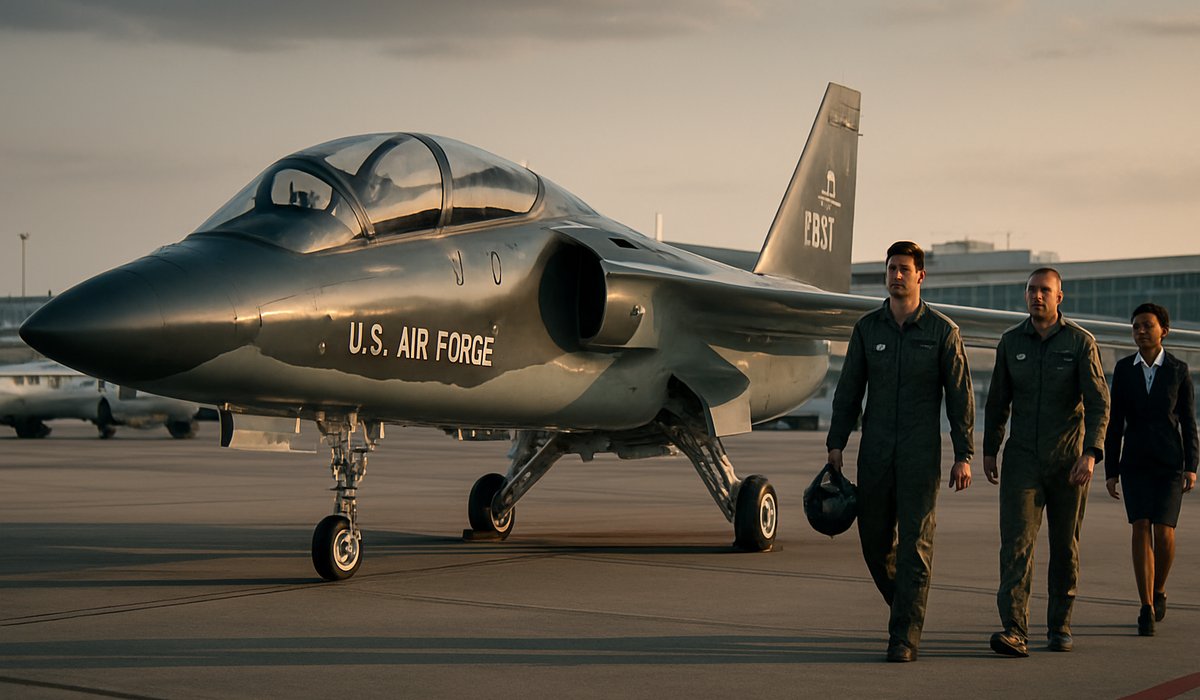
Image generated by AI
US Air Force's T-7A Trainer Jet Emerges as Military's First Software-Defined Combat Aircraft
Boeing-built platform signals shift toward digital-first fighter jet architecture as Pentagon modernizes pilot training
USAF Moves Forward with Next-Generation Training Platform
The United States Air Force is transitioning to a fundamentally different approach to pilot preparation, with the newly developed T-7A Red Hawk trainer aircraft representing a watershed moment in military aviation. The platform marks the service's first operational embrace of software-defined architecture—a technological leap that extends far beyond traditional flight training and signals how future combat jets will operate.
The urgency behind this modernization effort is unmistakable. The USAF has relied on the Northrop T-38 Talon for over six decades, a venerable platform originally engineered to prepare aviators for Cold War-era fighters including the Republic F-105 Thunderchief and the McDonnell Douglas F-4 Phantom II. While successive upgrades have extended the airframe's operational lifespan, the T-38's fundamental design philosophy has grown increasingly misaligned with the demands of contemporary pilot training.
The Obsolescence Problem
The technological chasm between sixth-decade trainer and fifth-generation combat aircraft has become untenable. Modern fighter pilots transitioning from the aging T-38 encounter avionics systems, flight envelope characteristics, and operational doctrines that bear little resemblance to platforms like the F-35 Lightning II and F-22 Raptor. This mismatch has intensified calls within Pentagon leadership for a comprehensive replacement, stretching expectations for a new trainer across multiple administrations.
Software Architecture as Game-Changer
What distinguishes the T-7A from incremental upgrades is its foundational reliance on software-defined systems. Rather than embedding flight control logic and operational parameters into hardware, the platform enables rapid software updates and operational reconfiguration—capabilities essential for training pilots on evolving combat doctrine and emerging threats.
This architectural philosophy has cascading implications throughout the training pipeline. Instructors can modify simulated combat scenarios, threat environments, and aircraft performance parameters through software alone, without hardware redesigns. The approach dramatically reduces lifecycle costs while maintaining pedagogical relevance as military requirements evolve.
Strategic Implications
Boeing's T-7A selection represents the Air Force's recognition that future air superiority depends not just on hardware platforms, but on pilots trained within software-centric operational frameworks. As peer competitors advance comparable platforms, the ability to rapidly iterate training protocols through software becomes a competitive advantage in combat readiness.
FAQ: T-7A Red Hawk Trainer Aircraft & USAF Modernization
What is the T-7A Red Hawk and why is it significant? The T-7A is Boeing's next-generation trainer aircraft incorporating software-defined architecture, replacing the 60-year-old T-38 Talon and enabling modern pilot preparation for fifth-generation fighters.
How long has the T-38 been in service? The T-38 Talon has served the USAF for over 60 years, originally designed to train pilots for Cold War-era fighters like the F-105 and F-4 Phantom.
What does "software-defined" mean for military aircraft? Software-defined systems allow operational parameters, flight characteristics, and combat scenarios to be modified through software updates rather than physical hardware changes, enabling rapid adaptation.
How will the T-7A improve pilot training? The platform can simulate contemporary threats and fifth-generation aircraft characteristics, providing pilots with realistic preparation for operational F-35 and F-22 environments.
What is the broader industry impact of this transition? The T-7A signals a shift toward software-centric military aviation architecture, influencing future fighter jet development and establishing new standards for pilot readiness protocols globally.
Related Travel Guides
External Resources
Disclaimer
This article is for informational and educational purposes only. It does not constitute legal, financial, or professional advice. While we strive to provide accurate and up-to-date information, travel policies, regulations, and conditions change rapidly. Always verify information with official sources before making travel decisions. Nomad Lawyer makes no representations about the accuracy, reliability, completeness, or suitability of the information provided. Readers should consult qualified professionals for advice specific to their circumstances. The views expressed in this article are those of the author and do not necessarily reflect the views of Nomad Lawyer.
Preeti Gunjan
Contributor & Community Manager
A passionate traveller and community builder. Preeti helps grow the Nomad Lawyer community, fostering engagement and bringing the reader experience to life.
Learn more about our team →