
Breaking Airline News: Western Sydney International Airport Deploys Massive 24/7 Operations to Shield Australia from Paralyzing Curfew-Induced Travel Chaos
Breaking airline news: Amidst a terrifying era of massive curfew restrictions and severe airport congestion, Western Sydney International Airport executes a brilliant tactical bypass, launching 24/7 operations to rescue passengers from extreme travel chaos.

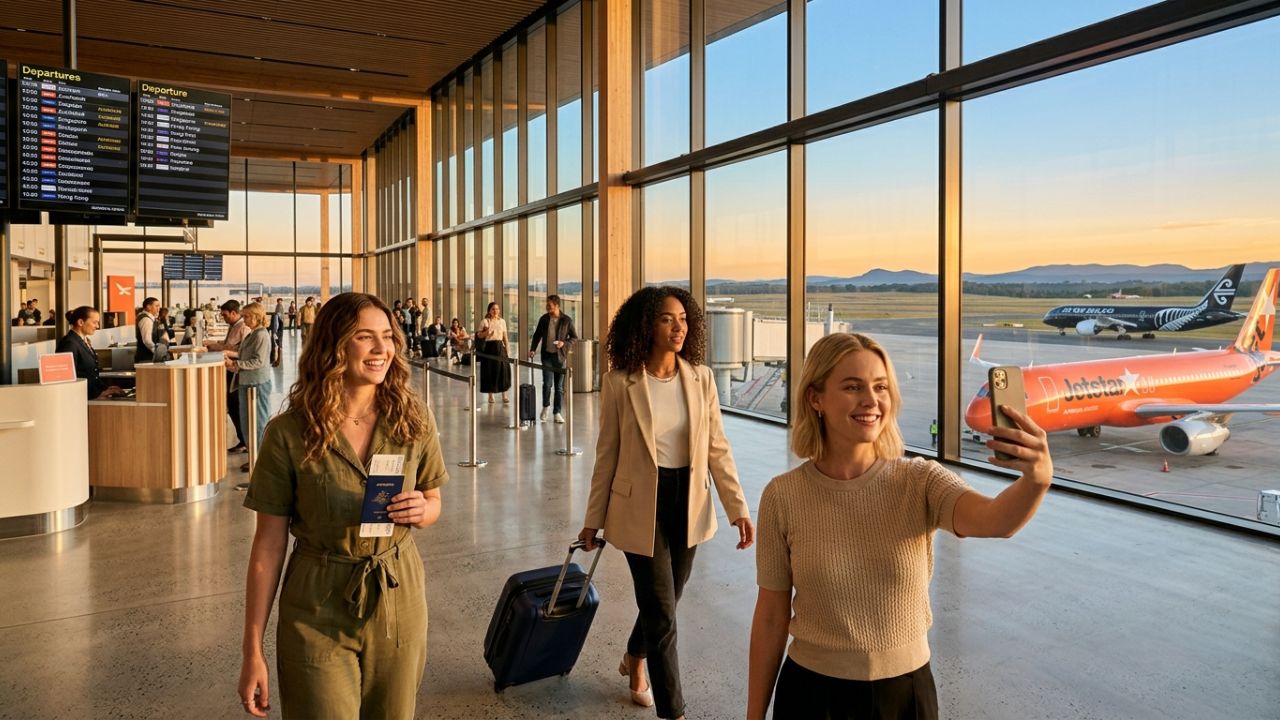
Image representing the intense strategic battle as global aviation authorities aggressively deploy unrestricted 24/7 airport infrastructure to combat severe curfew limitations and bypass paralyzing transit congestion across Australia.
Breaking Airline News: Western Sydney International Airport Deploys Massive 24/7 Operations to Shield Australia from Paralyzing Curfew-Induced Travel Chaos
As paralyzing terminal congestion, terrifying curfew restrictions, and severe operational friction violently threaten to completely choke Australia’s primary aviation gateway, the nation has executed a high-stakes infrastructural maneuver. In a desperate bid to physically and economically rescue global travelers from the terrifying threat of extreme travel chaos triggered by severe operational ceilings at Sydney’s legacy airport, a massive tactical bypass is officially accelerating toward launch. Officially confirming commercial operations for October 25, 2026, Western Sydney International Airport (Nancy-Bird Walton) at Badgerys Creek will forcefully deploy an unrestricted, 24/7 mega-hub. By aggressively establishing this unified, curfew-free defense perimeter, this deployment is directly fighting to prevent the complete collapse of intercontinental and domestic passenger mobility, ensuring that furious corporate travelers and cargo logistics chains are no longer trapped by the terrifying unreliability and severe stress historically defining the congested airspace above New South Wales.
In a harrowing display of modern aviation vulnerability, the sheer logistical nightmare of attempting to navigate Sydney’s Kingsford Smith Airport has historically forced airlines into terrifying transit scenarios. For years, attempting to survive the highly restrictive 11 p.m. to 6 a.m. curfew required airlines to execute highly fragile, high-pressure schedules. This disjointed operational model frequently triggered terrifying bottlenecks; a single afternoon weather delay violently guaranteed that late-evening flights would miss the curfew window, instantly triggering massive flight cancellations, severe missed connections, and entirely ruined passenger itineraries. However, Western Sydney International (WSI) is aggressively fighting back against this structural paralysis. By forcefully locking in round-the-clock operations, the massive new facility ensures that passengers can violently slash their exposure to cascading logistical failures. This highly optimized, curfew-free model completely decompresses transit anxiety, ultimately shielding millions of travelers from the agonizing misery of paralyzed transport networks by guaranteeing total operational flexibility during massive international surges.
Expanded Overview: The Massive Scale of the Transit Contagion
The terrifying crisis of overwhelming passenger stress currently gripping complex global itineraries brutally exposes the severe limitations of flying into saturated, curfew-restricted airports. Recognizing that aggressively forcing travelers to compete for limited daytime runway slots leads directly to severe psychological friction and terrifyingly unpredictable extreme ticket pricing, aviation authorities are attempting to forcefully decompress the tension. The sheer scale of the WSI mega-hub is staggering, sprawling across nearly 1,800 hectares in Badgerys Creek. Featuring a massive 3.7-kilometer runway and an initial capacity to instantly absorb 10 million passengers annually, this massive infrastructural shift will aggressively decentralize the industry's reliance on Kingsford Smith. This entirely destroys the terrifying threat of capacity-induced travel chaos, establishing a powerfully resilient transit bridge that will redefine the Asia-Pacific network.
Section-Wise Breakdown: The Operational Realignment
Breaking the Domestic Transit Gridlock
To survive the terrifying surge in domestic passenger demand without triggering immediate terminal meltdowns at existing facilities, this massive deployment specifically targets highly vulnerable regional routes. The absolute cornerstone of the launch is Jetstar’s aggressive deployment. On October 25, 2026, Jetstar will forcefully push an Airbus A320 to the Gold Coast, initiating an aggressive schedule that includes 14 weekly flights to Melbourne, four to the Gold Coast, and three to Brisbane. Furthermore, QantasLink will deploy additional massive capacity to Brisbane and Melbourne in March 2027. This massive logistical integration brutally undercuts traditional travel barriers, immediately rescuing domestic travelers from the terrifying threat of terminal congestion.
Deploying the International Tactical Shield
To guarantee the absolute reliability of this restored operational model, the airport has executed a brilliant strategic deployment of international heavy metal. Because WSI operates without the crippling restrictions of a nighttime curfew, airlines can execute highly lucrative overnight departures and early morning arrivals. Air New Zealand will violently slash transit friction by launching flights to Auckland on October 26, 2026. Following closely, Singapore Airlines will deploy massive daily flights to Singapore starting November 23, 2026. By funneling massive volumes of international traffic seamlessly into WSI, this strategic defense mechanism drastically lowers operational risk for global carriers.
Securing the Freight and Transport Lifeline
The massive infrastructural shift aggressively centers around completely defending the physical logistics supply chain. Recognizing the terrifying vulnerability of global cargo networks, WSI will forcefully launch its massive freight operations on July 26, 2026—months ahead of the passenger launch. This allows overnight freighters to bypass daytime congestion completely. Additionally, the airport is physically locked into the grid via the brand-new M12 Motorway and the Sydney Metro – Western Sydney Airport rail line. This aggressive network linking ensures that travelers and cargo are entirely shielded from the terrifying mass congestion currently paralyzing standard Sydney roadways.
Defending the Aerotropolis Economic Zone
Looking beyond the immediate aviation benefit, this massive project aggressively protects the economic future of the region. WSI is the absolute operational core of the Western Sydney Aerotropolis, a massive urban and industrial district. This unified approach violently undercuts the traditional anxiety associated with disconnected infrastructure; businesses, logistics hubs, and tourists can now completely trust that their operations are supported by a continuous chain of 24/7 connectivity, entirely removing the threat of being economically isolated by inadequate transport links.
Strategic Airport Deployment Matrix
To fully comprehend the massive logistical and strategic fallout of this new network integration, corporate travel managers and affected tourists must review the exact operational metrics defining the WSI deployment. The following matrix provides a granular breakdown of the specific, officially verified strategic data driving this massive disruption mitigation effort.
| Strategic Aviation Metric | Confirmed Operational Deployment Data |
|---|---|
| Commercial Passenger Launch | 25 October 2026 |
| Freight Operations Launch | 26 July 2026 |
| Operating Model | 24/7 Unrestricted (Curfew-Free) Operations |
| Initial Passenger Capacity | 10 Million Passengers Annually |
| Domestic Launch Partners | Jetstar (Oct 2026) & QantasLink (March 2027) |
| International Launch Partners | Air New Zealand (Oct 26) & Singapore Airlines (Nov 23) |
| Physical Infrastructure | 3.7-kilometre runway across 1,800 hectares |
Passenger Impact: Surviving the Curfew Trap
For the millions of global tourists and corporate commuters attempting to navigate the rapidly expanding Australian transit corridors, this massive WSI deployment represents a highly anticipated lifeline against severe operational delays. The brutal reality of enduring a terrifyingly sudden weather delay in Melbourne, only to realize your evening flight to Sydney is entirely cancelled because it cannot beat the 11 p.m. curfew, inflicts intense psychological stress and completely destroys meticulously planned itineraries. By aggressively deploying this massive 24/7 facility, authorities are attempting to actively prevent the terrifying friction that results in severely abandoned travel plans and entirely ruined cross-border business summits.
Survival Guide for Transit Travelers
Travelers desperately preparing to navigate the modernized Australian network must immediately execute the following survival protocols:
- Leverage Curfew-Free Security: Passengers attempting complex evening or international jumps must aggressively book flights arriving into WSI rather than Kingsford Smith; attempting to fly into legacy airports late at night almost guarantees terrifying travel chaos if severe weather restricts runway movements prior to the curfew deadline.
- Exploit Integrated Rail Logistics: Corporate travelers must relentlessly utilize the new Sydney Metro rail link; because massive metropolitan roadways can experience terrifying sudden congestion, bypassing surface traffic is an absolute requirement for surviving the terminal transfer.
- Acknowledge Freight Timelines: Logistics coordinators and supply chain managers must aggressively shift high-value international cargo to the WSI freight terminal by July 2026 to completely bypass the daytime passenger congestion that currently strangles legacy airport cargo facilities.
Industry Analysis: The Economics of Tactical Expansion
From a strategic aviation perspective, the travel turmoil currently forcing these massive network realignments highlights the terrifying vulnerability of legacy cities reliant on single, curfew-restricted airports. Industry analysts confirm that securing massive 24/7 operational capability is an absolute masterstroke in corporate crisis management. Historically, airlines that attempted to aggressively expand their schedules into Sydney frequently suffered terrifying financial losses when aircraft were stranded overnight due to missed curfews. The aggressive WSI strategy lowers systemic risk, providing the aviation ecosystem with massive market penetration without the terrifying threat of regulatory groundings, ultimately shielding the tourism economy from severe congestion-induced travel chaos.
Conclusion: A Strategic Retreat to Ensure Aviation Survival
As the extremely critical late-2026 global travel season approaches, the massive deployment of Western Sydney International Airport represents a massive warning to cities attempting to operate without secondary mega-hubs. The aggressive maneuvering by Australian authorities proves that capturing market dominance requires terrifyingly swift and highly optimized infrastructure integration, maximizing capacity while shielding passengers from the brutal reality of curfews. Corporate travel buyers and everyday passengers attempting to navigate this highly unstable era of airport disruptions must embrace these new, highly efficient 24/7 lifelines. By acting aggressively to leverage optimized, unrestricted airport access, travelers can successfully survive the intense travel surges and completely avoid the paralyzing threat of curfew-induced travel chaos.
Key Takeaways
- Massive Tactical Bypass: Western Sydney International Airport will violently eradicate Sydney's aviation congestion by launching massive 24/7, curfew-free operations on October 25, 2026.
- Crushing the Curfew Gridlock: Unrestricted runway access entirely eliminates the terrifying threat of evening flight cancellations that frequently plague curfew-bound legacy airports.
- Strategic Airline Deployments: Jetstar and QantasLink will aggressively lock down the domestic grid, while Air New Zealand and Singapore Airlines deploy massive international widebodies.
- Global Ecosystem Expanded: The massive 1,800-hectare Aerotropolis will violently expand cargo and freight capacity, with dedicated logistics operations launching months early in July 2026.
- Traveler Advisory: Passengers navigating the Australian east coast must aggressively route late-evening or highly sensitive international connections through WSI to ensure they are completely shielded from the severe operational unpredictability of sudden curfew groundings.
Related Travel Guides
- Etihad Airways Ignites Massive Aviation Shakeup With Free Abu Dhabi Medical Insurance Blitz to Combat 'Do Not Travel' Chaos and Eradicate Middle East Transit Fears: Latest Airline News
- Pratt & Whitney Launches $100 Million Expansion to Resolve Critical Aircraft Engine Maintenance Bottleneck
- Frontier Airlines Pilots Avert Potential Disaster After Ground Vehicle Incursion at LAX
Disclaimer
This article is for informational and educational purposes only. It does not constitute legal, financial, or professional advice. While we strive to provide accurate and up-to-date information, travel policies, regulations, and conditions change rapidly. Always verify information with official sources before making travel decisions. Nomad Lawyer makes no representations about the accuracy, reliability, completeness, or suitability of the information provided. Readers should consult qualified professionals for advice specific to their circumstances. The views expressed in this article are those of the author and do not necessarily reflect the views of Nomad Lawyer.
Kunal K Choudhary
Co-Founder & Contributor
A passionate traveller and tech enthusiast. Kunal contributes to the vision and growth of Nomad Lawyer, bringing fresh perspectives and driving the community forward.
Learn more about our team →