
Airbus A220 Emerges as North America's Most Profitable Narrowbody, Reshaping Airline Economics
Breaking airline news and aviation industry updates for 2026.

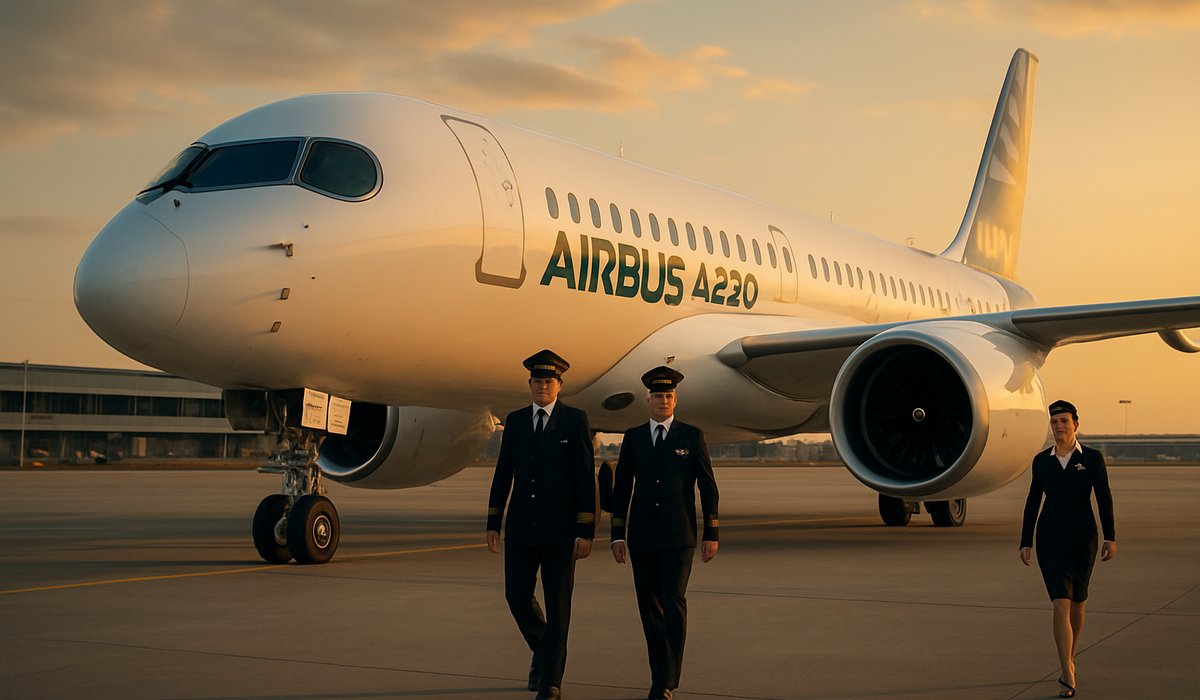
Image generated by AI
Airbus A220 Emerges as North America's Most Profitable Narrowbody, Reshaping Airline Economics
Once dismissed as risky, the twin-engine jet is now transforming carrier profitability across the region—and challenging conventional wisdom about aircraft sizing
From Troubled Start to Industry Game-Changer
The Airbus A220 has undergone a remarkable transformation in North America's aviation market. Once saddled with production delays and early-stage operational concerns, the narrowbody aircraft has evolved into one of the most financially rewarding jets operating across the continent, fundamentally altering how carriers approach fleet planning and route profitability.
The shift marks a significant vindication for Airbus's mid-size strategy at a time when the aviation industry faces mounting pressure to optimize operating costs. Fuel efficiency, reduced maintenance expenses, and optimized seating configurations are combining to deliver margins that exceed expectations—even surpassing some larger competitors in specific market segments.
Why Size Matters: The Economics of Right-Sizing
The A220's ascent reflects a broader industry trend toward "right-sizing"—deploying aircraft calibrated precisely to route demand rather than forcing larger jets onto lower-density services. With seating configurations typically ranging between 120 and 160 passengers, the aircraft strikes a critical balance between capacity and operational efficiency.
The jet's advanced aerodynamics and fuel-efficient engines translate directly to lower per-seat operating costs, a decisive advantage on regional and point-to-point routes where legacy narrowbodies struggle. Carriers operating the A220 report significantly reduced jet fuel consumption compared to older generation competitors, providing critical protection against volatile energy markets.
Market Adoption Accelerates Across North America
Major carriers and emerging low-cost operators alike have embraced the platform. Airlines ranging from established legacy carriers to newer entrants have placed substantial orders, signaling confidence in the aircraft's commercial viability. This expanding fleet presence is driving down unit costs while improving maintenance supply chains—creating a virtuous cycle for operators.
The aircraft's reliability profile has stabilized considerably since initial deployments, eliminating earlier concerns about engine performance and parts availability. This operational maturation has translated into higher aircraft utilization rates and improved on-time performance metrics.
Industry Implications and Future Outlook
The A220's financial success carries broader implications for the narrowbody market. Boeing and other competitors must contend with an increasingly formidable rival that combines efficiency with passenger appeal. For airlines confronting structural cost pressures and climate-conscious consumer demands, the aircraft represents a hedge against future aviation fuel price volatility while supporting sustainability objectives.
Industry observers expect continued A220 deployment growth, particularly as production ramps accelerate and airlines retire older, less efficient fleets.
FAQ: Understanding the Airbus A220's Market Impact
What makes the A220 more profitable than competing narrowbody aircraft? Superior fuel efficiency, lower maintenance costs, and optimized seating configurations reduce per-seat operating expenses, enabling higher margins on regional and mid-range routes.
How does the A220 compare to Boeing's 737 or Airbus's own A320? The A220 targets a mid-size sweet spot with better efficiency than legacy narrowbodies, particularly on routes with 120-160 passenger demand where larger jets create excess capacity costs.
Which North American airlines operate the A220? Multiple carriers spanning legacy and low-cost operators have deployed or ordered the aircraft, though specific fleet sizes vary by operator and route networks.
How have jet fuel prices affected A220 adoption? Rising aviation fuel costs have accelerated interest in the fuel-efficient A220, as carriers seek to mitigate exposure to volatile energy markets through lower consumption profiles.
When will A220 production meet current airline demand? Airbus has been expanding manufacturing capacity, though supply chain constraints continue to influence delivery timelines and fleet expansion rates across North America.
Related Travel Guides
Flight Delay Compensation Guide 2026
Understanding Airline Route Changes
Airport Security Process Updated (2026)
External Resources
Disclaimer
This article is for informational and educational purposes only. It does not constitute legal, financial, or professional advice. While we strive to provide accurate and up-to-date information, travel policies, regulations, and conditions change rapidly. Always verify information with official sources before making travel decisions. Nomad Lawyer makes no representations about the accuracy, reliability, completeness, or suitability of the information provided. Readers should consult qualified professionals for advice specific to their circumstances. The views expressed in this article are those of the author and do not necessarily reflect the views of Nomad Lawyer.
Preeti Gunjan
Contributor & Community Manager
A passionate traveller and community builder. Preeti helps grow the Nomad Lawyer community, fostering engagement and bringing the reader experience to life.
Learn more about our team →