
Why the US Air Force Refuses to Retire the A-10 Warthog Despite Five Decades of Service
Breaking airline news and aviation industry updates for 2026.

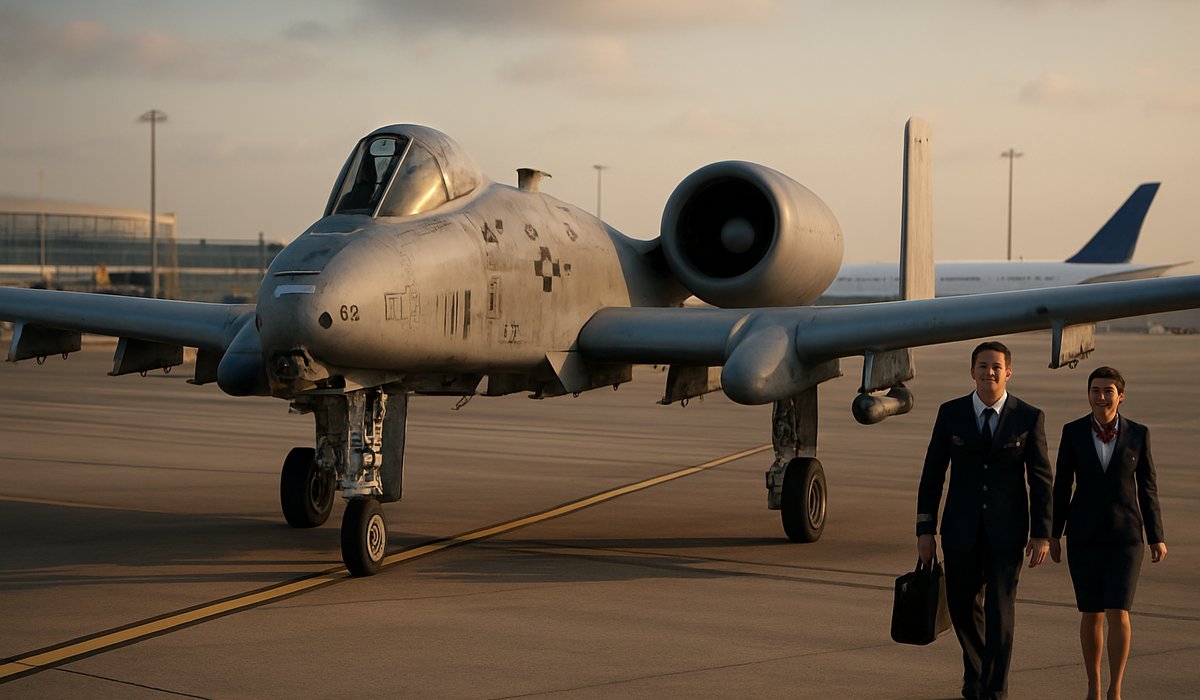
Image generated by AI
Why the US Air Force Refuses to Retire the A-10 Warthog Despite Five Decades of Service
Military aviation experts debate the future of America's most specialized combat aircraft as Pentagon weighs modernization costs against operational irreplaceability
A Half-Century-Old Warbird Remains Irreplaceable in Modern Combat
The United States Air Force confronts a persistent strategic puzzle: why does the world's most advanced military continue to depend heavily on a specialized ground-attack aircraft conceived during the Cold War era and first deployed over 50 years ago? The Fairchild-Republic A-10, colloquially known as the Warthog, has become the subject of intense debate within defense circles—with some military strategists questioning its continued relevance while operational commanders in the field insist the platform remains without viable replacement.
The aircraft's enduring presence in active service reveals fundamental complexities in military procurement, the challenges of designing successor systems, and the irreplaceable capabilities that have made the A-10 indispensable across multiple combat theaters.
Built for a Specialized Mission That Remains Difficult to Replicate
The A-10 was engineered with a singular purpose: close air support operations that require flying at extremely low altitudes and reduced speeds directly above friendly forces to identify and neutralize enemy armor and ground positions. This demanding role demands precision, survivability in hostile environments, and the ability to loiter over battlefields for extended periods—characteristics that proved decisive during extensive operations across Iraq and Afghanistan.
The aircraft's legendary durability, particularly its heavily armored fuselage designed to withstand small-arms fire and shrapnel, established a combat reputation that subsequent platforms have struggled to match. Its distinctive rotating cannon system and weapons flexibility transformed the A-10 into a force multiplier for ground commanders who valued its responsiveness and accuracy in close-quarters engagements.
Retirement Challenges and the Succession Problem
Military planners have repeatedly attempted to retire the A-10 fleet in favor of next-generation alternatives, yet these modernization initiatives have consistently encountered technical, budgetary, and operational obstacles. Successor platforms—including adaptations of the F-35 Lightning II—have proven inadequate at replicating the Warthog's specific capabilities in close air support scenarios.
The Pentagon's retirement calculus remains complicated by several factors: the substantial remaining service life in existing airframes, the absence of a production-ready replacement offering equivalent performance, and continued operational demands from theater commanders who maintain that ground forces require the A-10's specialized capabilities.
Implications for Future Force Structure
The persistence of 1970s-era technology within America's military arsenal underscores broader challenges in defense modernization. Until the Air Force successfully develops and deploys a genuinely comparable successor system, military strategists acknowledge that decommissioning the A-10 prematurely could leave ground forces without critical fire support capabilities.
FAQ: Understanding the A-10 Warthog's Continued Service
Why hasn't the US Air Force retired the A-10 Warthog yet? The A-10 remains irreplaceable due to its specialized close air support design and durability. Successor platforms like the F-35 have failed to adequately replicate its low-altitude, precision capabilities, making retirement operationally risky.
What makes the A-10 superior to modern fighters for ground support? The Warthog's armored design, ability to fly slowly at low altitudes, extended loiter time, and devastating cannon system provide unmatched close air support capabilities that newer jets cannot efficiently replicate.
Could the F-35 replace the A-10 Warthog? While the F-35 offers advanced avionics, it cannot match the A-10's survivability, weapons load, or operational flexibility in close air support missions, making it an inadequate successor.
When will the A-10 finally be retired? Retirement timelines remain uncertain until the Air Force develops and deploys a legitimate successor platform. Current projections suggest the A-10 will remain operational through the 2030s.
Why is the A-10 called the Warthog? The nickname derives from the aircraft's distinctive appearance—its ungainly profile, protruding nose, and compact fuselage resemble a warthog, though pilots affectionately refer to it as one of aviation's most capable combat platforms.
Related Travel Guides
Flight Delay Compensation Guide 2026
Understanding Airline Route Changes
Airport Security Process Updated (2026)
External Resources
Disclaimer
This article is for informational and educational purposes only. It does not constitute legal, financial, or professional advice. While we strive to provide accurate and up-to-date information, travel policies, regulations, and conditions change rapidly. Always verify information with official sources before making travel decisions. Nomad Lawyer makes no representations about the accuracy, reliability, completeness, or suitability of the information provided. Readers should consult qualified professionals for advice specific to their circumstances. The views expressed in this article are those of the author and do not necessarily reflect the views of Nomad Lawyer.
Kunal K Choudhary
Co-Founder & Contributor
A passionate traveller and tech enthusiast. Kunal contributes to the vision and growth of Nomad Lawyer, bringing fresh perspectives and driving the community forward.
Learn more about our team →