
Western Australia Faces New Beach Safety Crisis After Fatal Shark Attack Shuts Perth Coastline
Western Australia Faces New Beach Safety Crisis After Fatal Shark Attack Shuts Perth Coastline

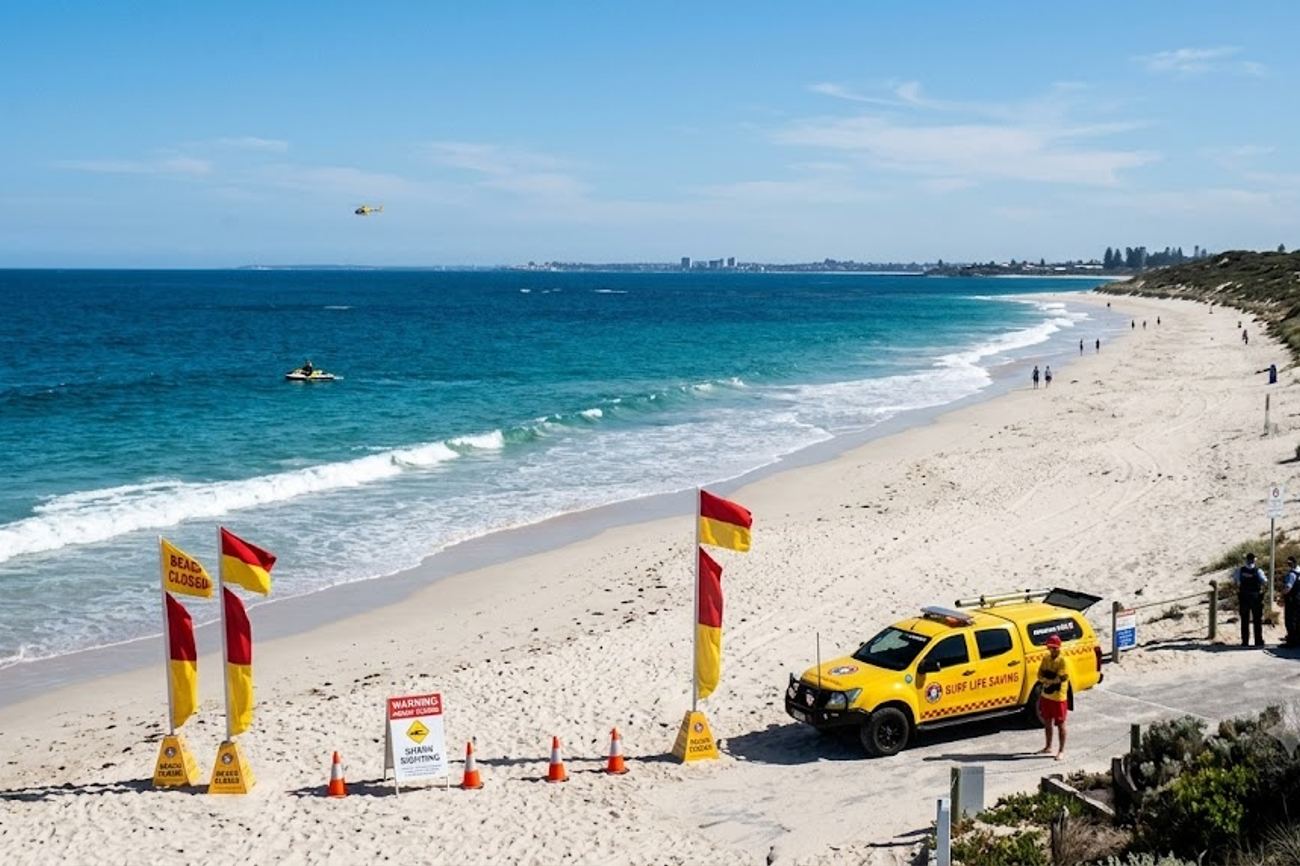
Image generated by AI
[Perth, September 18, 2026] — A fatal shark attack at Sorrento Beach has triggered emergency closures across Perth’s northern coastline and sparked urgent safety warnings for international and domestic travelers.
The incident occurred at approximately 10:15 am on Friday, September 18, when a male swimmer was attacked just a few meters from the shore at Raleigh Road, near the Hillarys Boat Harbor precinct. Despite a massive search and rescue operation involving the Western Australia Police, Water Police, St John Ambulance, and Surf Life Saving WA, officials confirmed the victim died from catastrophic injuries.
The Trigger: High-Risk Marine Activity
The fatality follows a period of heightened shark activity along the Western Australian coast. The immediate cause of the emergency response was the sudden nature of the attack in a high-traffic recreational zone. Adding to the volatility of the situation, authorities reported a sighting of a large great white shark near Boyinaboat Reef shortly after the Sorrento Beach fatality, prompting an expansion of the exclusion zones.
This event is not an isolated occurrence this month. On Monday, September 14, 2026, a 56-year-old surfer named Mel Ismail suffered a severe attack at Glenfield Beach near Geraldton, located roughly 400 to 430 kilometers north of Perth. Ismail sustained major leg trauma and the loss of a foot; he was stabilized at the Geraldton Health Campus. The proximity of these two violent encounters within a single week has placed the state's marine safety protocols under intense scrutiny.
Affected Travelers, Airlines and Logistics
The closures and warnings impact a wide range of residents and tourists, particularly those utilizing the northern suburbs of Perth. The following areas are currently under restriction or heightened monitoring:
| Location | Status | Safety Mandate |
|---|---|---|
| Sorrento Beach | Closed until at least midday Saturday, Sept 19 | Total ban on swimming, surfing, and water sports |
| City of Wanneroo Coastline | Closed as a precaution | Visitors must remain out of the water |
| Perth Northern Beaches | Under active monitoring | Mandatory adherence to SharkSmart alerts |
The impact extends beyond the immediate shoreline to the Hillarys Boat Harbour area, a primary hub for marine tourism, dining, and recreation. International visitors who frequent Western Australia’s protected marine areas for diving and snorkeling are now facing a landscape of temporary restrictions and increased surveillance.
Practical Traveler Advisory and Strategic Insights
For anyone currently booking travel to Western Australia or arriving in Perth, the immediate impact is a restriction on ocean access in the northern metropolitan corridor. You cannot assume a beach is open simply because it is a public space; you must verify the status via official channels before entering the water.
Travelers should prioritize the SharkSmart monitoring system for real-time updates. If you have booked marine-based excursions—such as surfing lessons or diving trips—near Sorrento or Geraldton, expect potential cancellations or route diversions as operators prioritize safety.
While the state employs helicopter surveillance and beach patrols, the recent spike in activity suggests that "safe zones" are fluid. Travelers should be aware that 2026 has seen an unusual surge in fatalities; this incident marks the fifth fatal shark attack in Australia this year, significantly higher than the national annual average of two to three deaths.
Escalation of Coastal Surveillance
In response to the Sorrento and Geraldton attacks, Western Australian authorities are accelerating their summer safety deployments. Surf Life Saving WA had already begun increasing helicopter shark patrol operations, and these daily patrols are now scheduled to intensify throughout the remainder of September.
Visitors to the region are advised to monitor real-time beach closures and safety warnings issued by the Department of Fire and Emergency Services. Travelers should adhere to all signage and official directives to ensure safety while exploring the coastline.
The state is relying on a multi-layered defense strategy to restore visitor confidence, including:
- Enhanced aerial surveillance during peak visitor hours.
- Rapid-response public warning systems integrated with local government alerts.
- Increased deployment of beach patrol units in high-risk "hotspots."
- Expanded use of shark detection technology to provide early warnings to swimmers.
The regional economy depends heavily on the millions of visitors who come for the coral reefs and outdoor adventures. Local businesses and tourism operators are now under pressure to provide clear, transparent communication to prevent a long-term decline in visitor numbers.
FAQ: Perth Marine Safety 2026
Are all beaches in Perth currently closed? No. Closures are concentrated in the northern suburbs, specifically Sorrento Beach and the City of Wanneroo coastline. However, other northern beaches remain under monitoring. Always check official local government notices before entering the water.
What is the SharkSmart system? SharkSmart is the official Western Australian monitoring tool used to provide real-time updates on shark sightings and activity. It is the primary resource for travelers to determine if a beach is safe for swimming or surfing.
Is it safe to visit Hillarys Boat Harbour? The harbor's dining and recreational facilities remain operational, but swimming and marine activities in the adjacent Sorrento Beach area are restricted. Visitors should follow all posted signage and police directions.
How does 2026 compare to previous years for shark attacks? This year is significantly more dangerous than average. With five fatalities already recorded across Australia in 2026, the numbers have nearly doubled the typical annual average of two to three deaths.
Coastal access remains volatile as authorities track great white movements.
Related Travel Guides
- Scotland’s Glasgow Subway Faces New Travel Warning As Delayed Underground Services Disrupt Morning Passengers
- Discover How Jakarta Is Rapidly Becoming Asia’s Ultimate Fashion and Culinary Tourism Capital
- Sweden Highlights Railway Culture for Travel as Inlandsbanefestivalen Reaches Östersund and Jokkmokk
Disclaimer
This article is for informational and educational purposes only. It does not constitute legal, financial, or professional advice. While we strive to provide accurate and up-to-date information, travel policies, regulations, and conditions change rapidly. Always verify information with official sources before making travel decisions. Nomad Lawyer makes no representations about the accuracy, reliability, completeness, or suitability of the information provided. Readers should consult qualified professionals for advice specific to their circumstances. The views expressed in this article are those of the author and do not necessarily reflect the views of Nomad Lawyer.
Naina Thakur
Contributor & Travel Specialist
Travel enthusiast and legal writer covering visa regulations, responsible tourism, and cultural journeys across global destinations.
Learn more about our team →