
10 Weirdest Statues Around the World: From Giant Spiders to Angry Babies in 2026
Explore the world's most bizarre sculptures—from a Dalmatian balancing a taxi in NYC to an upside-down Victorian governor in Melbourne. Discover where to find them.

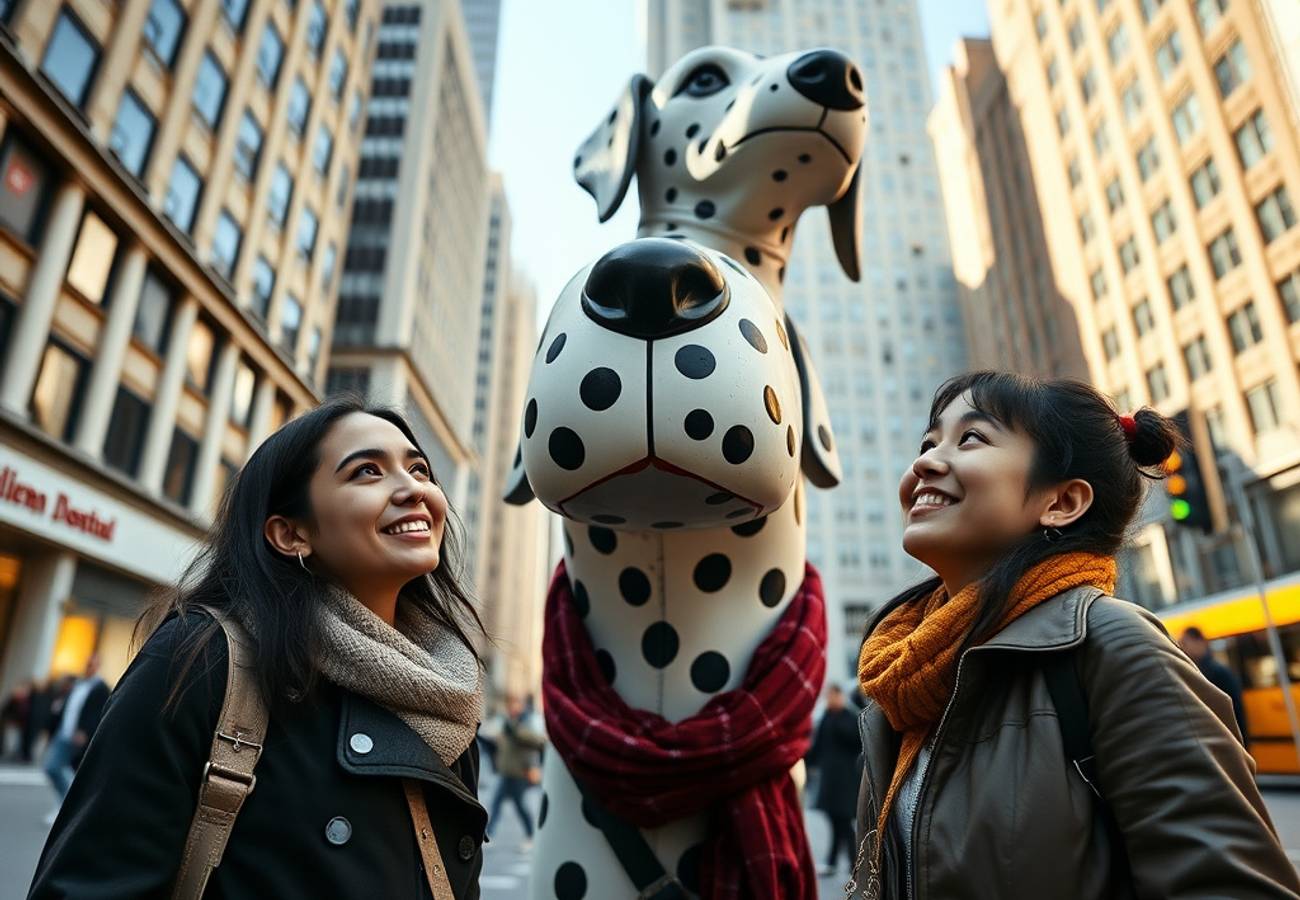
Image generated by AI
The Strangest Sculptures on Earth Are Calling Your Name
Listen, if you're tired of staring at the same Renaissance marble busts and classical Greek statues, the world's most eccentric contemporary artists have something far more... interesting waiting for you. We're talking bronze babies throwing tantrums, giant spiders clutching marble eggs, and upside-down Victorian governors that will make you question everything.
I've tracked down the planet's 10 most genuinely bizarre statues—and what makes them worth the detour.
Spot! The Dalmatian with a Taxi Problem in NYC
Here's what stops you dead in your tracks when you visit Hassenfeld Children's Hospital in Manhattan: a 30-foot-tall Dalmatian named "Spot!" balancing an actual Yellow Cab on its nose.
Chicago sculptor Donald Lipski designed this monstrosity to comfort children entering the facility. The kicker? The donor family also founded Hasbro, so Lipski's obsession with toys made perfect sense.
Reddit: "It's the kind of sculpture that makes you do a double-take. Genuinely unsettling in the best way possible." — r/travel
But here's the fact that blew my mind: that taxi on top? A real Toyota Prius. It has working windshield wipers that famously activated during the unveiling ceremony when it rained.
The Traveler: Sleeping Through Your Flight at Orlando International
Walk through Level 3 of Orlando International Airport's Main Terminal, and you might mistake a bronze figure slumped on a bench for an actual exhausted traveler.
You're looking at "The Traveler," a hyperrealistic sculpture by Duane Hanson depicting a man from the 1980s. Hanson used casts of real people—finishing them with actual paint, real human hair, and genuine clothing. The uncanny valley effect is intentional and deeply unsettling.
Originally installed near a bar, the sculpture's popularity (and physical touching by travelers) took its toll. Now it's safely preserved in glass, watching airports transform while remaining frozen in time.
Landmark: The Upside-Down Governor in Melbourne
In 2004, Charles Robb unveiled a sculpture on the Bundoora campus of La Trobe University in Melbourne that flipped convention literally: a 16-foot-tall bronze figure of Charles La Trobe, Victoria's first Lieutenant-Governor, standing completely upside down.
"Landmark" exists because Robb believed traditional statues of historical figures went unnoticed. His solution? Turn the entire thing on its head. Genius provocation or artistic madness? The sculpture answers that question daily.
The statue has become a cultural fixture—a constant reminder that even monuments to authority can be reimagined.
Maman: Louise Bourgeois's Giant Spider in Ottawa
If arachnophobia runs deep, skip the National Gallery of Canada. But if you're brave, witness Maman—a colossal stainless steel and bronze spider created by French artist Louise Bourgeois.
This isn't random creepiness. The spider symbolizes Bourgeois's mother, a tapestry weaver, nurturing and protecting 32 marble eggs housed within the sculpture's thorax. Multiple versions exist worldwide, but the original steel version resides at the Tate Modern in London.
The sculpture towers approximately 30 meters high. Standing beneath it, you feel genuinely small.
The Angry Boy: Oslo's Beloved Furious Infant
At Vigeland Sculpture Park in Oslo, you'll find "The Angry Boy" (locally called Sinnataggen)—a bronze sculpture of a completely naked, absolutely furious toddler, stomping with clenched fists and a face twisted in pure rage.
This sculpture has become Oslo's unofficial mascot. Visitors touch its left hand for good luck, polishing that particular bronze surface to a bright shine that contrasts sharply with the rest of the figure's darker patina.
Local legend insists this ritual brings fortune. Whether true or not, thousands of travelers have tested it annually.
Victor Noir's Notorious Grave in Paris
In the legendary Père Lachaise Cemetery in Paris, journalists, musicians, and politicians rest eternally. But one grave draws crowds for entirely unconventional reasons: Victor Noir, a journalist assassinated by an aristocrat in 1870.
The bronze statue depicts Noir lying on his back with an anatomically prominent detail that's impossible to ignore. Legend claims kissing the statue on the lips guarantees meeting your soulmate that year.
The statue has become less a memorial and more a fertility-adjacent cultural phenomenon.
The Appennine Colossus: A 35-Foot Stone Giant in Tuscany
Carved from stone in the 16th century by Flemish sculptor Jehan Boulougne, the Appennine Colossus stands 35 feet tall with a beard made of actual stalactites. Originally, water flowed from its mouth while smoke billowed from its nostrils via an internal fireplace.
You can still enter the sculpture and explore interior rooms decorated with shell mosaics and smaller sculptures. Located at Villa Demidoff, approximately 6 miles from Florence, it's a genuinely otherworldly day trip.
This statue predates modern art movements by centuries yet feels avant-garde.
Sedlec Ossuary: A Chandelier Built from Human Bones
Travel deep into the Czech Republic and visit the Sedlec Ossuary—a 14th-century chapel decorated almost entirely with human remains. The most disturbing artifact? A chandelier constructed entirely from human bones, adorned with skulls and cherubs.
This isn't morbid curiosity for its own sake. The bones come from plague victims and war casualties, transformed into an elaborate memento mori—a visual reminder of mortality's inevitability.
Why These Statues Matter for Modern Travelers
These sculptures represent something crucial: art existing beyond museum walls and classical traditions. They're conversation starters, Instagram moments, and genuine cultural touchstones that define cities as much as cathedrals or government buildings.
UNESCO and major tourism boards increasingly recognize public sculpture as integral to destination identity. When you visit these statues, you're participating in ongoing cultural dialogue.
Reddit: "The Angry Boy in Oslo changed how I think about art. It's furious, honest, and completely alive." — r/Europe
Planning Your Sculpture Pilgrimage
Most of these statues are freely accessible or require minimal entrance fees. Vigeland Sculpture Park (Oslo) is free. La Trobe University welcomes visitors. Père Lachaise Cemetery charges modest admission.
The best time? Visit during shoulder seasons (spring and fall) when crowds thin but weather remains favorable. Summer brings tour groups; winter offers solitude.
The Bottom Line
Forget classical marble busts and polished statuary. The world's weirdest sculptures challenge, disturb, and delight in equal measure. They're art that refuses politeness—and that's precisely why they've endured.
Pack your camera, check your sense of humor, and prepare for statues that will genuinely haunt your Instagram feed for years.
Related Travel Guides
Disclaimer
This article is for informational and educational purposes only. It does not constitute legal, financial, or professional advice. While we strive to provide accurate and up-to-date information, travel policies, regulations, and conditions change rapidly. Always verify information with official sources before making travel decisions. Nomad Lawyer makes no representations about the accuracy, reliability, completeness, or suitability of the information provided. Readers should consult qualified professionals for advice specific to their circumstances. The views expressed in this article are those of the author and do not necessarily reflect the views of Nomad Lawyer.
Kunal K Choudhary
Co-Founder & Contributor
A passionate traveller and tech enthusiast. Kunal contributes to the vision and growth of Nomad Lawyer, bringing fresh perspectives and driving the community forward.
Learn more about our team →