
Weather turbulence disrupts Seoul–Jeju corridor amid spring storms
Heavy spring storms and winter snow have grounded hundreds of flights on the Seoul–Jeju route in 2026, stranding thousands of travelers and exposing fragility in aviation's busiest air corridor between two major Korean hubs.

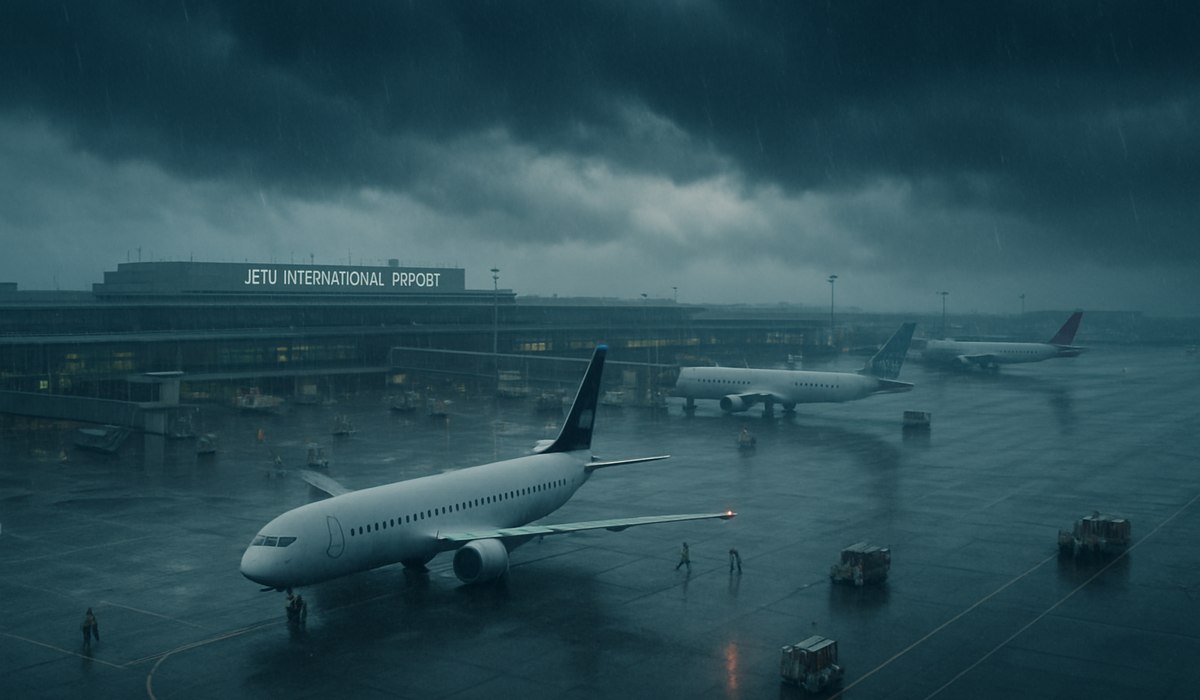
Image generated by AI
Heavy Weather Grounds Hundreds on World's Busiest Air Route
The Seoul–Jeju corridor, consistently ranked as the world's busiest commercial airline route, faces severe operational strain from recurring weather events in spring 2026. Nearly 250 flights were canceled in a single day during early April when wind speeds near Jeju Island exceeded 30 meters per second, leaving thousands stranded and exposing critical vulnerabilities in one of aviation's most densely scheduled networks. February's winter snowstorm compounded pressure on the system, with over 160 cancellations in 24 hours. These disruptions highlight how quickly a tightly choreographed shuttle system unravels when severe conditions interrupt the flow of traffic between South Korea's capital and its popular island destination.
Spring Storms Trigger Mass Cancellations at Jeju Airport
Jeju International Airport experienced its most significant operational disruption in recent memory during early April 2026 when powerful spring storms swept across the island. Aviation authorities imposed immediate restrictions as wind gusts approached dangerous thresholds, forcing carriers to ground aircraft and suspend scheduled rotations. Major airlines operating the Seoul–Jeju corridor—including full-service carriers and low-cost operators—had no choice but to issue mass cancellations. Departure boards transformed into seas of red cancellation notices as operations management struggled to maintain safety protocols. The impact concentrated on the Seoul region's two primary airports: Gimpo and Incheon. Passengers reported chaotic scenes at Jeju's terminals, with extended queues, limited seating, and overnight waits as rebooking systems became overwhelmed. Weather turbulence disrupts even the most sophisticated networks, and the Seoul–Jeju corridor proved no exception. Recovery stretched across multiple days as crews repositioned and subsequent flights attempted to clear backlogs. Read more about Korea's aviation infrastructure challenges.
February Snowstorm Precedes April Weather Crisis
Before spring brought severe wind events, February 2026 delivered a different challenge: heavy snow that temporarily halted runway operations at Jeju International Airport. More than 160 flights were canceled during the winter weather event, affecting primarily the shuttle services connecting Seoul's major hubs with the island. Passenger accounts from that period painted pictures of overcrowded terminals, insufficient accommodation options, and frustration over limited rebooking alternatives. The snowstorm demonstrated that weather turbulence disrupts operations across seasons, and that Jeju's exposure to meteorological events extends beyond spring months. Airlines had limited ability to deploy additional aircraft, as regional fleets were already committed to other domestic and international services. The consecutive disruptions—February snow followed by April storms—raised concerns among industry observers about the corridor's resilience. See ICAO operational guidelines for aviation safety standards during adverse weather.
Cascading Delays Expose Network Vulnerability
The Seoul–Jeju corridor's extreme density creates both efficiency and fragility. With dozens of daily rotations scheduled between Seoul Gimpo, Seoul Incheon, and Jeju, a single day of cancellations strands thousands across a network designed for minimal slack. When weather turbulence disrupts normal operations, the ripple effects persist for days beyond the initial weather event. Aircraft and crew are scheduled in tight cycles; once a rotation breaks, repositioning becomes a complex puzzle. Airlines have occasionally deployed relief flights after major weather events, but available seats rarely match pent-up demand. Travelers report difficulty securing same-day alternatives, particularly those coordinating with international connections or time-sensitive itineraries. Peak travel periods—weekends, public holidays, cherry blossom season—amplify the squeeze when cancellations occur. Those unable to depart face cascading consequences: missed ferry connections, canceled tour bookings, shortened stays, and disrupted plans elsewhere throughout the Korean peninsula. The system's vulnerability underscores the operational risk embedded in maximizing density at the expense of resilience.
What Travelers Need to Know
Experiencing weather turbulence disrupts on the Seoul–Jeju corridor? Here's what recent disruptions reveal and how to prepare:
1. Build Extra Time into Peak Season Travel April through May brings both maximum passenger demand and unpredictable spring weather. Add buffer days to your itinerary, especially if connecting internationally through Incheon. Airlines cannot guarantee same-day rebooking during major disruptions.
2. Monitor Weather Forecasts Daily Download weather apps tracking Jeju conditions. Wind speeds above 20 meters per second typically trigger operational restrictions. Check your airline's website and social media for updates at least 48 hours before travel.
3. Consider Alternative Transport Ferries operate between multiple Korean ports and Jeju, though sea conditions may also be affected during storms. Overnight ferries and hydrofoils offer flexibility when flights cancel, though they require advance booking and 2-10 hour transit times.
4. Arrive Early for Check-In During unsettled weather periods, arrive 3+ hours before departure. Cancellations often occur with limited notice, and early check-in maximizes rebooking options before seats fill.
5. Purchase Travel Insurance with Weather Coverage Standard policies rarely cover weather delays. Seek comprehensive travel insurance explicitly covering airline weather disruptions, cancelations, and rebooking expenses.
6. Maintain Flexible Hotel Bookings Use accommodations with flexible cancellation policies when traveling during April or when weather forecasts show deteriorating conditions. Last-minute rebooking may force overnight stays at your origin.
Key Disruptions Data: Seoul–Jeju Corridor 2026
| Date Range | Event Type | Flights Canceled | Peak Wind Speed | Duration | Primary Route |
|---|---|---|---|---|---|
| February 2026 | Heavy Snowstorm | 160+ | 25 m/s | 24 hours | Seoul–Jeju |
| April 2026 | Spring Storm System | 250 | 30+ m/s | 36+ hours | Seoul Gimpo/Incheon–Jeju |
| April 2026 (Follow-up) | Operational Backlog | 85+ | 15 m/s | 48 hours | Seoul–Jeju |
| Year-round | Average Daily Operations | — | — | — | 200+ daily flights |
| Typical Load Factor | Peak season (April–May) | — | — | — | 85–95% capacity |
| Recovery Timeline | Major disruptions | — | — | 2–5 days | Rebooking challenges persist |
FAQ
Q: How often does weather turbulence disrupt flights on the Seoul–Jeju route? Spring (March–May) and winter (December–February) present the highest disruption risk. While major cancellations affecting 100+ flights occur several times yearly, minor delays happen weekly during unsettled seasons. The corridor's extreme density means even weather-related turnarounds cascade quickly.
Q: What should I do if my Seoul–Jeju flight is canceled? Contact your airline immediately through their app or hotline; phone lines overwhelm quickly during major disruptions. Request rebooking on the next available flight or alternative date. If no same-day option exists, inquire about ferry alternatives, hotel compensation, or meal vouchers per airline policy.
Q: Is it safer to fly Seoul–Jeju or take a ferry during bad weather? Neither option is inherently safer during storms; both face weather-related cancellations. Ferries typically operate in worse conditions than aircraft but move slower and are affected by different wind/wave thresholds. Check real-time weather and both airlines' and ferry operators' operational status before departure.
Q: Can airlines predict and prevent weather-related cancellations? Modern forecasting
Disclaimer
This article is for informational and educational purposes only. It does not constitute legal, financial, or professional advice. While we strive to provide accurate and up-to-date information, travel policies, regulations, and conditions change rapidly. Always verify information with official sources before making travel decisions. Nomad Lawyer makes no representations about the accuracy, reliability, completeness, or suitability of the information provided. Readers should consult qualified professionals for advice specific to their circumstances. The views expressed in this article are those of the author and do not necessarily reflect the views of Nomad Lawyer.
Raushan Kumar
Founder & Lead Developer
Full-stack developer with 11+ years of experience and a passionate traveller. Raushan built Nomad Lawyer from the ground up with a vision to create the best travel and law experience on the web.
Learn more about our team →