
Atlanta Delays Ripple Across North America: 218 Departures Disrupted
Hartsfield-Jackson Atlanta International Airport experienced 218 delayed departures on May 8, 2026, triggering network disruptions across Dallas, San Francisco, and Toronto. Delta, Frontier, and SkyWest face cascading schedule pressures.

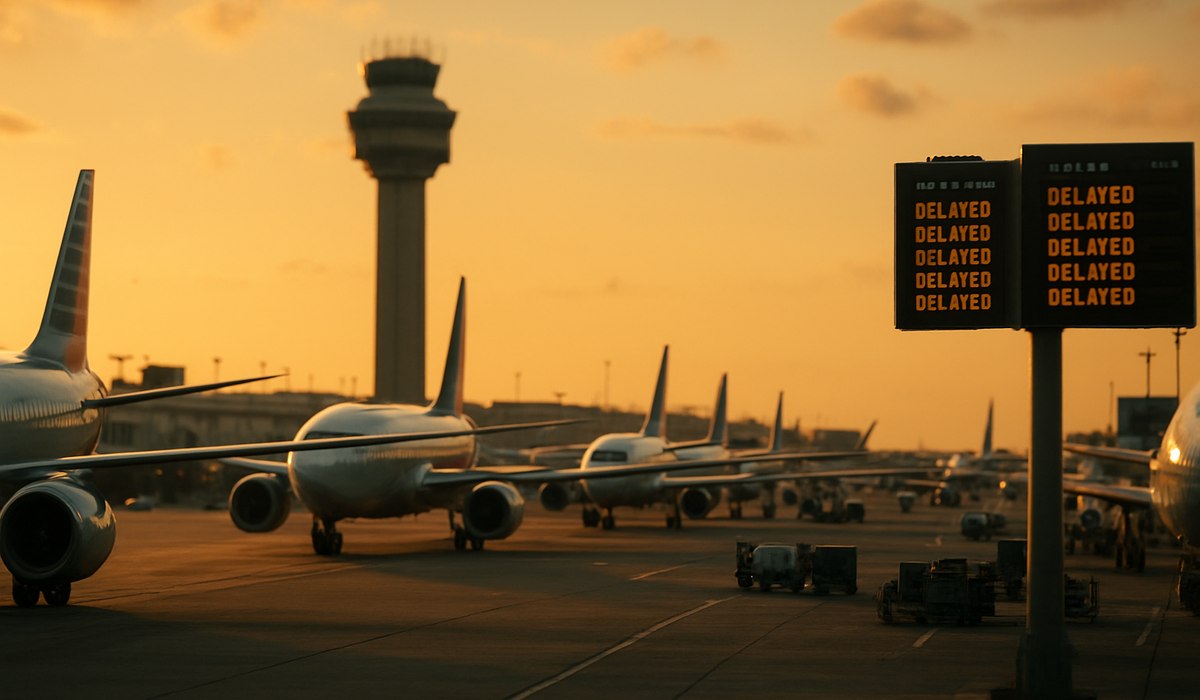
Image generated by AI
Hartsfield-Jackson Logs 218 Delayed Departures, Triggering Nationwide Ripple Effects
Hartsfield-Jackson Atlanta International Airport documented 218 delayed departures and six cancelled flights on Friday, May 8, 2026, igniting a cascade of schedule disruptions that rippled across North American networks. The operational strain at the nation's busiest airport by passenger volume reverberated through major hubs including Dallas-Fort Worth, San Francisco International, and Toronto Pearson, affecting thousands of travelers. Delta Air Lines, Frontier Airlines, and regional carrier SkyWest emerged as the most impacted operators, their connection-dependent networks amplifying even modest delays into widespread travel chaos.
Atlanta Remains a National Bottleneck for Air Travel
Atlanta's position as a continental nexus makes it uniquely vulnerable to domino-effect disruptions. The airport's role as Delta's primary operational hub, combined with significant Frontier operations and substantial regional traffic, creates inherent network fragility. When delays accumulate at Hartsfield-Jackson, they compress connection times and compromise subsequent flight rotations across the country.
The Friday disruption, while smaller than severe weather events earlier in 2026, still generated substantial ripple effects due to the airport's scale. Historical Department of Transportation data indicates roughly 25% of flights at Atlanta arrive late, with cancellation rates hovering above 1%. At an airport handling 300,000+ daily passengers, these percentages translate into thousands of affected travelers daily.
According to FlightAware real-time tracking, the 218 delays and six cancellations Friday reflected operational pressures distinct from severe weather but consistent with the airport's vulnerability to network congestion. Airlines operating through Atlanta typically experience tighter turnaround schedules and reduced buffer times compared to secondary hubs, making recovery from any initial disruption exponentially harder.
Frontier, SkyWest, and Delta Among the Most Affected Carriers
Delta Air Lines operates the dominant share of mainline departures at Hartsfield-Jackson while depending on regional partners like SkyWest to feed smaller markets into the hub. When Atlanta delays ripple through the network, Delta's comprehensive route structure amplifies impact across domestic and international services.
Frontier Airlines maintains a significant Atlanta presence but operates with historically tighter on-time performance margins. Recent Department of Transportation analyses show Frontier experienced elevated disruption rates in prior periods, with causes ranging from carrier-controlled maintenance to systemic airspace constraints. Friday's delays exacerbated existing schedule volatility on Frontier's Atlanta routes.
SkyWest, operating as a regional partner for multiple major carriers, creates particular complexity during disruptions. Aircraft and crews technically belong to SkyWest but operate under Delta, United, and American branding. When SkyWest flights encounter delays at Atlanta, the disruption appears across multiple airline apps simultaneously, confusing passengers about which carrier controls their rebooking options.
Historical performance data compiled by the U.S. Department of Transportation reveals both Frontier and SkyWest already operate with minimal cushion for unplanned disruptions. Friday's Atlanta delays ripple scenario tested the limits of their operational resilience.
Network Ripple Effects Stretch to Dallas, San Francisco, Toronto and Beyond
The operational strain centered on Atlanta produced immediate knock-on effects at three critical continental hubs: Dallas-Fort Worth International, San Francisco International, and Toronto Pearson International Airport.
Dallas maintains one of Atlanta's busiest routes by annual passenger volume. When Atlanta departures run behind, inbound aircraft to DFW compress turnaround times, putting subsequent westbound and connecting flights at risk. The compounding effect creates rolling delays throughout Friday afternoon and evening operations.
San Francisco, a major transpacific gateway, connects to Atlanta through multiple daily Delta and partner services. Westbound flights experienced secondary delays as aircraft rotations struggled to reach San Francisco on schedule. Passengers on one-stop itineraries—particularly those connecting from Atlanta to San Francisco for international onward travel—faced missed connections, same-day rebookings, or overnight hotel stays.
Toronto Pearson, handling significant business and leisure traffic to Atlanta, experienced similar effects. The high concentration of business demand between Atlanta and Toronto means disruptions ripple through corporate travel itineraries, adding urgency to recovery efforts.
Travelers with connections through secondary hubs like Chicago O'Hare, Charlotte Douglas, or Houston Intercontinental sometimes found alternative routing during the disruption window. However, inventory constraints and weekend demand typically limit rerouting flexibility.
Real-Time Flight Status and Tracking Resources
Passengers facing delays during the Atlanta ripple event accessed FlightAware for real-time status updates, departure time changes, and gate information. The platform's crowdsourced delay tracking helps identify system-wide disruptions beyond individual airline websites.
The [Federal Aviation Administration (FAA)](https://www.faa.gov) maintains official operational information, including ground stops, flow control restrictions, and airport capacity advisories. Checking the FAA website provides authoritative status for significant disruptions affecting entire airports or regions.
Airlines maintain their own delay tracking tools, though third-party platforms often update faster than carrier systems during cascading disruptions. Passengers should monitor both their airline's app and independent flight trackers for comprehensive situational awareness.
Passenger Rights and Compensation During Network Disruptions
The U.S. Department of Transportation's Aviation Consumer Protection Division governs passenger rights during schedule disruptions and cancellations. Airlines must provide meals, hotel accommodations, and ground transportation for significant delays and cancellations within their control.
Operational factors (weather, airport congestion, air traffic control restrictions) may limit compensation obligations, but Atlanta's disruption Friday stemmed partially from airport-specific operational pressures, potentially triggering carrier responsibility. Passengers denied boarding or experiencing cancellations should request written explanation of cause before accepting rebookings.
Delayed passengers reaching destinations more than three hours late qualify for compensation under Department of Transportation rules when carriers bear responsibility. Documenting delay duration, airline notifications, and any accommodations provided strengthens compensation claims filed weeks later.
Data Summary: Atlanta Delays Ripple Impact Across the Network
| Metric | Value | Impact Level |
|---|---|---|
| Delayed Departures (Atlanta) | 218 | High |
| Cancelled Flights (Atlanta) | 6 | Moderate |
| Primary Hub Carrier | Delta Air Lines | Critical |
| Secondary Affected Carrier | Frontier Airlines | High |
| Regional Operator | SkyWest | Cascading |
| Affected Hub: Dallas | Rolling delays | High |
| Affected Hub: San Francisco | Westbound disruptions | Moderate-High |
| Affected Hub: Toronto | Connection bottleneck | High |
| Typical Atlanta Delay Rate | 25% late arrivals | Structural |
| Typical Atlanta Cancellation Rate | 1%+ annually | Baseline |
What This Means for Nomadic Professionals and Remote Workers
Nomadic professionals and location-independent workers relying on air travel face particular vulnerability when atlanta delays ripple across networks. Unlike traditional business travelers with fixed schedules, digital nomads often book economy fares with minimal connection time to maximize savings—exactly the scenario where Atlanta disruptions create maximum disruption.
Remote workers transiting between workspaces depend on predictable travel windows to maintain client schedules and productivity commitments. A cascading delay from Atlanta potentially cascades into missed meetings, video call rescheduling, and timezone-dependent work complications.
The Friday disruption highlighted network fragility even during non-severe-weather conditions. Nomadic professionals planning travel through Atlanta should expect periodic disruptions as structural reality, not exceptional circumstances.
Disclaimer
This article is for informational and educational purposes only. It does not constitute legal, financial, or professional advice. While we strive to provide accurate and up-to-date information, travel policies, regulations, and conditions change rapidly. Always verify information with official sources before making travel decisions. Nomad Lawyer makes no representations about the accuracy, reliability, completeness, or suitability of the information provided. Readers should consult qualified professionals for advice specific to their circumstances. The views expressed in this article are those of the author and do not necessarily reflect the views of Nomad Lawyer.
Raushan Kumar
Founder & Lead Developer
Full-stack developer with 11+ years of experience and a passionate traveller. Raushan built Nomad Lawyer from the ground up with a vision to create the best travel and law experience on the web.
Learn more about our team →