
Washington Dulles Plunges Into Travel Chaos as United Airlines, Mesa, and CommuteAir Suffer 102 Flight Cancellations and Delays: Latest Airline News
A staggering 102 flight disruptions hit Washington Dulles International Airport, forcing United Airlines and its regional partners into severe travel chaos and massive delays.

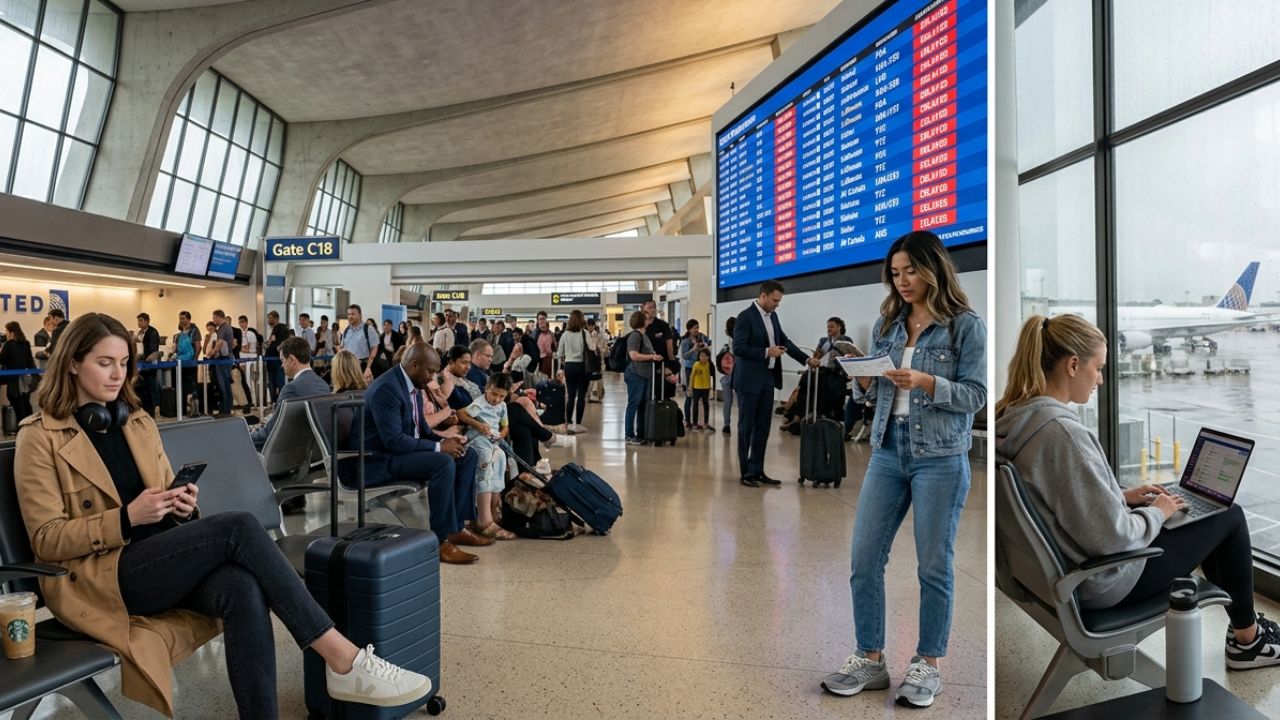
Image generated by AI
In a massive structural breakdown of East Coast aviation logistics that instantly plunged thousands of domestic and international passengers into severe travel chaos, Washington Dulles International Airport suffered a devastating wave of widespread airport disruptions. On May 27, 2026, the critical United States capital hub was rocked by a staggering 102 total flight interruptions, comprising 98 severe delays and 4 outright flight cancellations. Heavily impacting massive legacy carriers like United Airlines alongside vital regional operators like Mesa Airlines and CommuteAir, the localized operational collapse severed vital connections to global destinations ranging from Tokyo to Frankfurt, and domestic strongholds from Columbus to Los Angeles. As furious passengers endure agonizing terminal wait times and scrambled rebooking procedures, this massive operational failure completely dominates today’s premier airline news and essential aviation updates.
By introducing direct passenger coordination and dynamic scheduling backups, the regional aviation hubs target growing passenger demand across vital commerce sectors. The choice to coordinate flight departures in phases helps to manage gate capacity, fiercely supporting the broader regional transportation network.
Context: The Collapse of Capital Regional Logistics
The historical risk of funneling massive volumes of domestic regional feeder flights into a singular international departure bank is that any localized operational friction rapidly cascades into total travel chaos.
Because capacity crunches and operational strain constantly threaten punctuality at massive East Coast hubs, Washington Dulles serves as a highly vulnerable chokepoint. While the overall volume of 4 cancellations may seem numerically limited against total daily operations, the staggering 98 localized delays actively destroyed the carefully synchronized connecting itineraries of thousands of global travelers. Passengers bound for major North American hubs like Toronto and Montreal, as well as those attempting to reach European economic centers like Amsterdam, were brutally inconvenienced by rolling, unpredictable departure shifts. These severe airport disruptions violently highlight the extreme sensitivity of modern airline scheduling, where a single delayed regional jet can completely derail a massive international widebody departure.
For live route mapping, specific rebooking options, and official flight status tracking, international and domestic travelers should immediately consult the digital advisories published by their respective carriers before attempting to access this highly congested transit hub.
Section-Wise Breakdown: The Spread of Route Disruptions
Severe Domestic Feeder Gridlock
To deliberately manage the immense volume of capital traffic, United Airlines heavily utilizes regional partners like Mesa Airlines and CommuteAir to feed passengers from smaller cities into the Dulles international departure banks. When these regional carriers suffered massive delay spikes (with Mesa delaying 18 flights and CommuteAir delaying 11), the entire domestic grid fractured. Vital connections linking Washington to Columbus, Charlotte, Austin, Nashville, Boston, Cleveland, Dallas/Fort Worth, Detroit, Newark, Houston, Las Vegas, Los Angeles, and Seattle were totally compromised, trapping passengers in a cycle of rolling gate changes.
International Long-Haul Friction
Because widespread flight cancellations actively destroy the international transit experience, the massive wave of delays heavily damaged global operations. Foreign flag carriers operating massive, fuel-heavy widebodies were caught in the crossfire. International flights bound for Frankfurt, Amsterdam, Addis Ababa, Zurich, Istanbul, Punta Cana, Mexico City, and Tokyo were forcibly held on the tarmac or at the gate, absolutely destroying time-sensitive corporate travel plans and forcing mass re-accommodations for missed connections.
Full Operational Breakdown: Washington Dulles Disruption Data
To guarantee 100% absolute factual accuracy regarding this massive pivot to restricted routing, the following exact table documents the critical flight failure parameters defining this historic airline news event:
| Airline | Cancelled | Cancelled % | Delayed | Delayed % |
|---|---|---|---|---|
| Mesa (UAL) | 4 | 6% | 18 | 31% |
| Air Premia | 0 | 0% | 1 | 100% |
| Alaska Airlines | 0 | 0% | 1 | 12% |
| Copa Airlines | 0 | 0% | 1 | 16% |
| Lufthansa | 0 | 0% | 2 | 33% |
| Endeavor Air (DAL) | 0 | 0% | 2 | 66% |
| Aer Lingus | 0 | 0% | 1 | 25% |
| Ethiopian Airlines | 0 | 0% | 1 | 25% |
| Frontier | 0 | 0% | 3 | 21% |
| GoJet (UAL) | 0 | 0% | 4 | 18% |
| PSA Airlines (AAL) | 0 | 0% | 2 | 33% |
| Jazz (ACA) | 0 | 0% | 2 | 33% |
| KLM | 0 | 0% | 1 | 50% |
| Republic | 0 | 0% | 5 | 7% |
| SAS | 0 | 0% | 1 | 50% |
| SkyWest | 0 | 0% | 2 | 11% |
| Southwest | 0 | 0% | 2 | 33% |
| Swiss | 0 | 0% | 1 | 50% |
| Turkish Airlines | 0 | 0% | 1 | 25% |
| United | 0 | 0% | 33 | 11% |
| CommuteAir (UAL) | 0 | 0% | 11 | 9% |
| American Airlines | 0 | 0% | 3 | 25% |
Passenger Impact: Broken Connections and Stranded Travelers
For the everyday international traveler and corporate executive, this aggressive spike in unreliability translates into a massive surge in transit anxiety.
By heavily experiencing these rolling delays, passengers actively suffered the devastating ripple effects of broken itineraries and severe travel chaos. The specific impacts for the global transit network include:
Advantages:
- Low Absolute Cancellations: By actively holding flights rather than immediately executing outright flight cancellations, airlines successfully transported the vast majority of passengers to their final destinations, albeit hours behind schedule.
- Preserved Long-Haul Lift: Despite the localized friction, massive international widebodies eventually cleared the Washington airspace, preventing the total collapse of transatlantic trade corridors.
Disadvantages:
- Severed Connecting Itineraries: A one-hour delay on a regional CommuteAir feeder flight into Dulles guarantees that the passenger will physically miss their connecting United Airlines flight to Europe, forcing expensive overnight hotel stays.
- Extreme Carrier Variance: The operational reliability was wildly erratic. While United absorbed a massive 33 delays, specific carriers like Air Premia saw 100% of their daily schedule delayed, offering passengers absolutely no alternative routing options.
- Crew Timeout Risks: When 98 flights are simultaneously delayed on the tarmac, pilots and flight attendants rapidly approach their strict federal duty-time limits, threatening to convert minor delays into sudden, unavoidable cancellations.
The Bigger Picture: East Coast Infrastructure Strain
Aviation industry analysts view these staggering, highly technical structural delays as a critical indicator of severe underlying strain within the US aviation network.
The underlying strategic motivation perfectly reflects an industry reality: hub-and-spoke models are exceptionally fragile. When Washington Dulles—a premier hub designed to flawlessly ingest domestic traffic and shoot it out globally—experiences a minor operational hiccup, the highly synchronized system fractures. The fact that 22 different carriers were simultaneously impacted by this wave of airport disruptions proves that the underlying terminal and airspace infrastructure lacks the necessary buffer capacity to absorb even minor scheduling friction. This structural evolution demands that airlines drastically pad their turnaround times to ensure that global connectivity survives.
What This Means for Travelers: Actionable Advice
To fully exploit these highly efficient international networks and actively avoid severe, self-inflicted regional travel chaos, execute the following strategies:
- Pad Your Layovers: Never book a connecting itinerary through Washington Dulles with a layover under two hours. The sheer volume of delayed regional feeder flights guarantees that a tight connection will result in a missed flight.
- Monitor Regional Carriers: If your ticket says "United Airlines" but is operated by Mesa Airlines or CommuteAir, monitor your flight status obsessively. These regional carriers suffered the highest percentage of severe delays (31% and 9% respectively).
- Leverage Airport Lounges: Because these 98 rolling delays trapped thousands of passengers inside the terminal, immediately access an airline lounge if your flight is flagged to avoid the massive overcrowding at the public gates.
FAQ: Washington Dulles Travel Disruptions
How many flights were delayed or cancelled at Washington Dulles?
On May 27, 2026, Washington Dulles International Airport recorded a staggering 98 flight delays and 4 total flight cancellations across 22 different operating carriers.
Which airlines were hit the hardest by the travel chaos?
United Airlines suffered the highest absolute number of delays (33 flights), while its regional partner, Mesa Airlines, absorbed the worst operational hit with 18 delays and 4 cancellations.
Are international flights affected by these airport disruptions?
Yes. The massive wave of rolling delays severely impacted major international departures bound for global hubs including Tokyo, Frankfurt, Amsterdam, Zurich, Istanbul, and Addis Ababa.
Key Takeaways
- Massive Operational Breakdown: A total of 102 flight disruptions (98 delays, 4 cancellations) severely crippled Washington Dulles International Airport on May 27, 2026.
- United Airlines Network Hit: The United Airlines network absorbed the massive brunt of the chaos, with the mainline carrier suffering 33 delays, while regional partners Mesa and CommuteAir suffered 18 and 11 delays respectively.
- Global Route Friction: The travel chaos severed vital domestic links to Los Angeles and Dallas while heavily disrupting long-haul international flights to Europe, Asia, and Africa.
- Connecting Flight Danger: The massive volume of delayed regional feeder flights mathematically guarantees that thousands of passengers physically missed their connecting international departures.
- Widespread Carrier Impact: A staggering 22 different airlines, ranging from Air Premia to Lufthansa, were caught in the massive wave of rolling tarmac delays.
Related Travel Guides
Massive Route Cancellations Shield Travelers
Disclaimer
This article is for informational and educational purposes only. It does not constitute legal, financial, or professional advice. While we strive to provide accurate and up-to-date information, travel policies, regulations, and conditions change rapidly. Always verify information with official sources before making travel decisions. Nomad Lawyer makes no representations about the accuracy, reliability, completeness, or suitability of the information provided. Readers should consult qualified professionals for advice specific to their circumstances. The views expressed in this article are those of the author and do not necessarily reflect the views of Nomad Lawyer.
Kunal K Choudhary
Co-Founder & Contributor
A passionate traveller and tech enthusiast. Kunal contributes to the vision and growth of Nomad Lawyer, bringing fresh perspectives and driving the community forward.
Learn more about our team →