
Aviation Updates: Washington Dulles Plunged into Travel Chaos as Frontier, United, and Lufthansa Grapple with 35 Flight Cancellations and Delays
As localized operational bottlenecks cripple the capital region's primary transit hub, Washington Dulles International Airport records 32 flight delays and 3 outright cancellations.

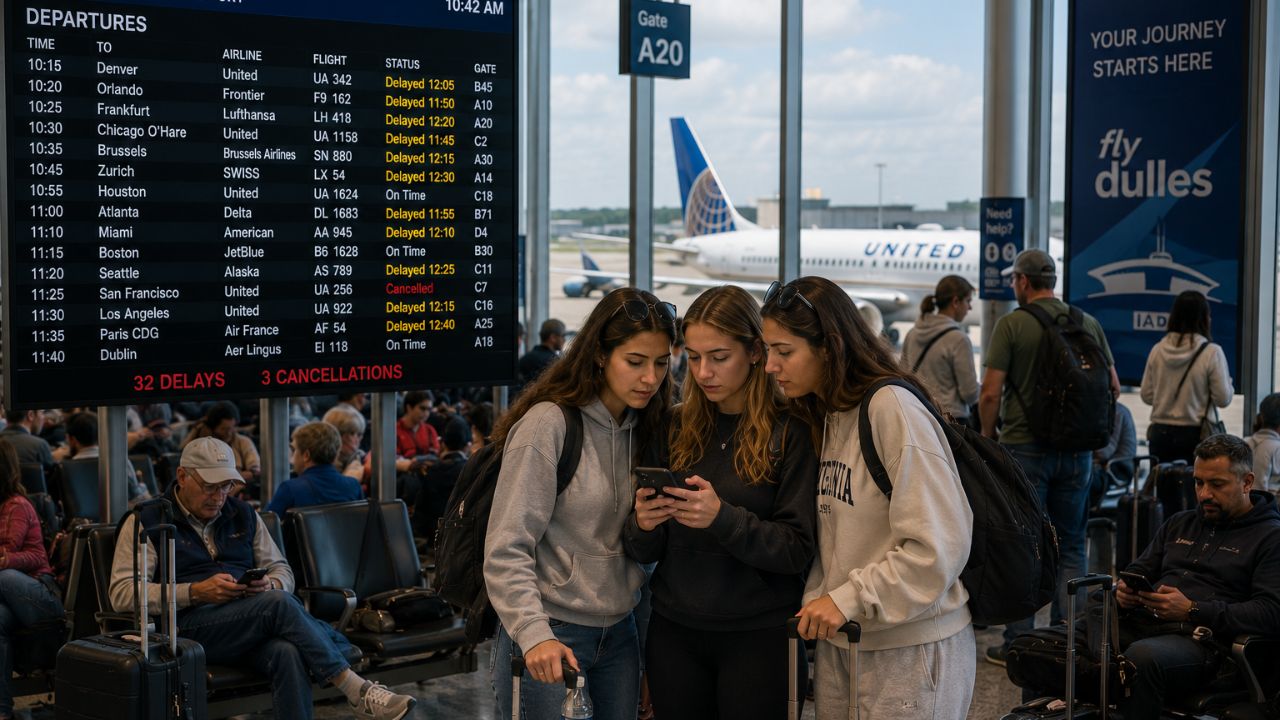
Image generated by AI
Aviation Updates: Washington Dulles Plunged into Travel Chaos as Frontier, United, and Lufthansa Grapple with 35 Flight Cancellations and Delays
As sudden operational bottlenecks violently disrupt the nation's capital, Washington Dulles International Airport has descended into logistical gridlock, stranding domestic commuters and international travelers under the intense scrutiny of federal regulators.
Image generated by AI
As high-impact airline news platforms issue continuous aviation updates regarding the intense fragility of the American transit grid, a highly disruptive operational snag has just impacted the US capital region. Washington Dulles International Airport (IAD)—the absolute primary international gateway for Washington, D.C.—has been hit by an acute wave of unexpected airport disruptions. According to data verified by federal aviation systems, the airport recorded 32 localized flight delays alongside 3 outright flight cancellations. While this volume may seem moderate compared to severe weather events, the sheer concentration of the disruption instantly crippled critical schedules for major operators including Frontier Airlines, United Airlines, Lufthansa, Swiss International Air Lines, and Brussels Airlines. With vital domestic connections and premium transatlantic routes to Frankfurt and Brussels heavily compromised, thousands of frustrated passengers have been violently thrust into a sudden wave of localized travel chaos, forcing them to desperately seek rebooking options under strict federal consumer protection frameworks.
Expanded Overview: The Collapse of the Capital's Gateway
To fully comprehend the massive logistical friction caused by these delays, aviation analysts must examine the intense operational dependency placed upon Dulles.
Washington Dulles International Airport operates as the premier international portal and a fiercely busy domestic hub for the entire District, Maryland, and Virginia (DMV) area. When 35 combined scheduling failures strike a hub of this specific caliber, the damage instantly extends far beyond the perimeter of the airfield. Because airlines rely on tightly coordinated flight banks to cycle aircraft efficiently, even minor gate-holds rapidly evolve into devastating, cascading schedule friction. As federal agencies like the Federal Aviation Administration (FAA) aggressively monitor these disruptions to improve data management at major bottlenecks, stranded passengers are left navigating severely compromised itineraries during peak operating hours.
Section-Wise Breakdown: Regional and Budget Carrier Strain
A forensic look at the affected domestic operators reveals that budget carriers and regional commuter affiliates bore a highly disproportionate percentage of the operational friction.
Frontier Airlines experienced notable, severe strain during this disruption window. According to verified flight telemetry, a massive portion of Frontier's scheduled regional operations faced terrifying timing adjustments, completely destroying their daily percentage baseline for on-time performance. Furthermore, critical regional affiliates operating out of the Dulles hub were similarly crippled. Mesa Airlines (operating explicitly as United Express) and CommuteAir both experienced severe, compounding schedule slippages. Because regional aircraft rely on rapid, hyper-efficient turnaround times, these initial delays aggressively compromised connection fluidities, ensuring that domestic passengers missed their secondary flights later in the evening.
Section-Wise Breakdown: The Transatlantic Ripple Effect
While regional carriers struggled domestically, the operational collapse simultaneously corrupted massive, high-yield intercontinental routes connecting Washington to Europe.
Prominent European legacy operators, specifically Lufthansa, Brussels Airlines, and Swiss International Air Lines, registered intense, localized delays on their outbound transatlantic sectors. Because these specific carriers utilize massive, widebody aircraft carrying hundreds of passengers simultaneously, a single late departure triggers an absolute logistical nightmare. Structural flight tracking confirms that these international delays were highly complex, frequently stemming from upstream constraints such as aggressive European air traffic control limitations and strict international crew-rest requirements. Consequently, vital long-haul connections to Frankfurt and Brussels were severely compromised, trapping international tourists and business executives inside the terminal for hours.
Flight Details: Washington Dulles (IAD) Operational Disruption Matrix
To fully comprehend the exact volume of delayed and canceled flights, alongside the specific regulatory frameworks protecting the stranded passengers, the verified operational telemetry has been consolidated into the mandatory matrix below.
| Operational Metric | Verified Disruption Data |
|---|---|
| Total Flight Delays | 32 Flights |
| Total Cancellations | 3 Flights |
| Primary Airlines Affected | Frontier, United, Lufthansa, Swiss, Brussels Airlines |
| Regional Affiliates Impacted | Mesa Airlines (United Express), CommuteAir |
| Key International Routes | Frankfurt, Brussels |
| Regulatory Authorities | FAA, DOT |
Passenger Impact: Enforcing DOT Consumer Protections
For the hundreds of passengers trapped inside Dulles’ heavily congested concourses, surviving this localized gridlock requires immediate, aggressive legal advocacy.
Travelers completely stranded by the 3 cancellations or facing prolonged waits due to the 32 delays are heavily protected by the Department of Transportation (DOT) consumer protection frameworks. Under recently updated, highly strict DOT rules, airlines are explicitly required to provide prompt, automatic cash refunds or execute timely rebookings when a carrier significantly delays or outright cancels a domestic flight. Furthermore, passengers flying aboard European Union-based carriers like Lufthansa or Swiss are simultaneously protected by incredibly stringent overseas passenger rights regulations. These EU frameworks provide additional avenues for massive financial compensation depending on the exact, legally verifiable root cause of the operational delay. Affected flyers are urged to immediately coordinate with customer service representatives to demand alternative routing and statutory accommodation.
Industry Analysis: Cascading Economic Pressures on the DMV
From a macro-economic perspective, the disruptions at Washington Dulles deal a direct, brutal blow to the region's massive tourism and hospitality sectors.
As the premier international portal to the nation’s capital, IAD welcomes thousands of leisure travelers, high-value museum-goers, and lucrative international tour groups daily. When 35 flights fail, the localized travel ecosystem experiences immediate, devastating friction. Regional hotels must instantly contend with a sudden, chaotic influx of displaced, late-night bookings from stranded travelers. Conversely, downtown hospitality venues, boutique tour operators, and high-end restaurants physically suffer from missed reservations and violently shortened visitor stays. When inbound tour groups are severely delayed, it compresses local sightseeing schedules, resulting in massively reduced consumer spending at federal historical sites, monuments, and independent local businesses throughout the entire DMV area.
Conclusion: A Test of Systemic Resilience
Ultimately, the sudden operational disruptions at Washington Dulles International Airport serve as a terrifying warning regarding the extreme fragility of modern American aviation. With major carriers like Frontier, United Express, Lufthansa, Swiss, and Brussels Airlines caught in a localized web of 32 flight delays and 3 cancellations, the resulting travel chaos instantly rippled across the Atlantic to Frankfurt and Brussels. As unexpected operational bottlenecks continue to trigger severe airport disruptions and sudden flight cancellations across the capital region, it is abundantly clear that passengers must fiercely advocate for themselves. By strictly enforcing their rights under DOT consumer protection rules and EU compensation frameworks, travelers can aggressively mitigate the massive physical and financial devastation that inevitably follows a terminal meltdown.
Key Takeaways
- Localized Operational Collapse: Washington Dulles International Airport (IAD) suffered an acute disruption resulting in 32 flight delays and 3 flight cancellations.
- Domestic Carriers Devastated: Frontier Airlines suffered a disproportionately high percentage of delays, while regional operators Mesa Airlines (United Express) and CommuteAir faced severe schedule slippages.
- Transatlantic Routes Compromised: Massive widebody operations by Lufthansa, Swiss, and Brussels Airlines were delayed, severely impacting connections to Frankfurt and Brussels.
- Strict Passenger Rights: Stranded travelers are legally protected by aggressive DOT consumer protection rules mandating prompt refunds, alongside highly stringent EU passenger rights for European carriers.
- Regional Economic Damage: The delays generated a cascading economic impact on the DMV area, causing massive logistical friction for regional hotels, tour operators, and downtown hospitality venues.
FAQ: Washington Dulles Airport Flight Disruptions
How many flights were affected at Washington Dulles Airport today? The airport recorded a highly disruptive operational snag consisting of 32 localized flight delays and 3 outright flight cancellations.
Which airlines and routes were impacted? The delays heavily impacted Frontier Airlines, Mesa Airlines (United Express), and CommuteAir domestically. Internationally, widebody flights operated by Lufthansa, Swiss, and Brussels Airlines were severely delayed, compromising routes to Frankfurt and Brussels.
Are passengers entitled to compensation or refunds for these delays? Yes. Passengers are heavily protected under updated Department of Transportation (DOT) rules requiring prompt refunds or rebooking for significant delays and cancellations. Additionally, passengers on EU carriers like Lufthansa are protected by European compensation frameworks.
What is the broader impact of these delays on Washington D.C.? Beyond the airport, the disruptions cause massive friction for the District, Maryland, and Virginia (DMV) tourism economy, resulting in missed restaurant reservations, compressed tour schedules, and chaotic late-night hotel bookings.
Related Travel Guides
France Airports 1075 Delays Air France easyJet Travel Chaos 2026
Germany Airports 1472 Delays Lufthansa Eurowings Travel Chaos 2026
North America Regional Flight Disruption Survival Guide 2026
Disclaimer: This article is strictly for informational and aviation safety analysis purposes. The specific operational telemetry (32 delays, 3 cancellations), affected airlines (Frontier, United Express, Lufthansa, etc.), and passenger compensation guidelines (DOT rules and EU frameworks) are based on verified flight tracking data and federal consumer protection guidelines available at the time of publication. American airspace conditions, ATC congestion, and specific airline schedules are highly dynamic and subject to immediate, unannounced modification by Air Traffic Control or the operating carrier. Passengers traveling through Washington Dulles International Airport (IAD) should explicitly prepare for potential severe delays, aggressively monitor their airline's mobile application, and verify their exact compensation eligibility directly with their airline prior to departure.
Disclaimer
This article is for informational and educational purposes only. It does not constitute legal, financial, or professional advice. While we strive to provide accurate and up-to-date information, travel policies, regulations, and conditions change rapidly. Always verify information with official sources before making travel decisions. Nomad Lawyer makes no representations about the accuracy, reliability, completeness, or suitability of the information provided. Readers should consult qualified professionals for advice specific to their circumstances. The views expressed in this article are those of the author and do not necessarily reflect the views of Nomad Lawyer.
Preeti Gunjan
Contributor & Community Manager
A passionate traveller and community builder. Preeti helps grow the Nomad Lawyer community, fostering engagement and bringing the reader experience to life.
Learn more about our team →