
Visiting Upper Mustang Nepal 2026: A Guide to the Last Forbidden Kingdom's High-Value Tourism
Explore Upper Mustang, Nepal, a restricted Himalayan enclave shifting toward high-value, low-volume sustainable tourism to preserve ancient Tibetan Buddhist heritage and fragile alpine ecosystems.

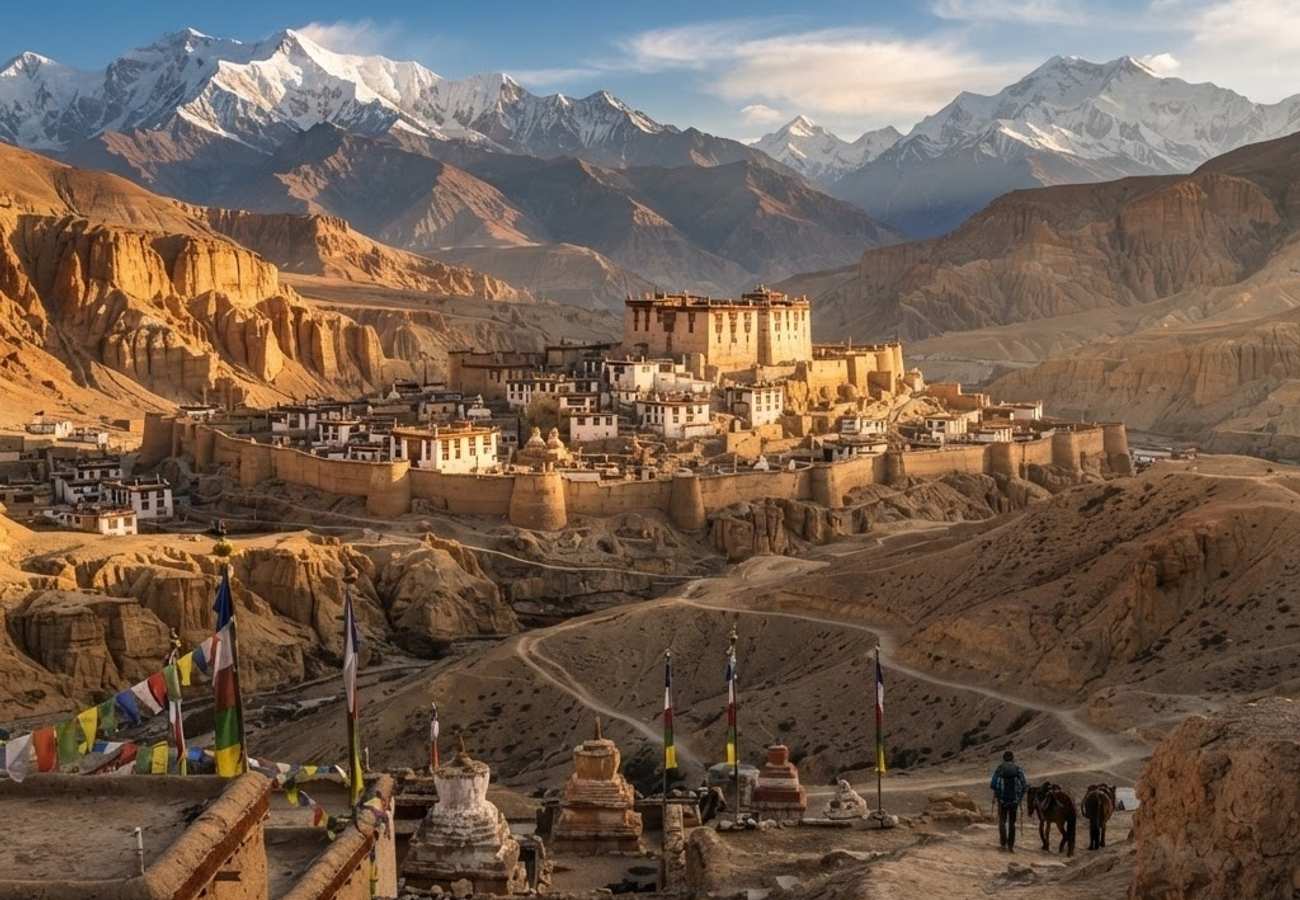
Image generated by AI
A shift toward high-value, low-volume tourism in Upper Mustang is redefining Himalayan travel, replacing mass commercialization with strict cultural preservation.
The travel industry is witnessing a pivot away from fabricated luxury toward "authentic" scarcity. In the remote enclave of Upper Mustang, located beyond the Annapurna and Dhaulagiri mountain ranges, this shift is not just a trend but a survival strategy for one of the world's most fragile cultural landscapes. By limiting visitor numbers and requiring specialized permits, the region has transitioned from a closed territory to a model for conservation-led tourism.
The Rise of High-Value Heritage Tourism
For centuries, Upper Mustang remained closed to foreign observers, preserving a living Tibetan Buddhist culture that now stands in stark contrast to the commercialized hubs of global tourism. The current movement in the region reflects a broader global trend: the "luxury of access." Modern travelers are increasingly willing to pay premiums for restricted permits to ensure they encounter unfiltered historical interactions rather than overcrowded tourist bottlenecks.
This economic model prioritizes ecological resilience over total visitor counts. By regulating access, local authorities protect ancient architectural wonders and fragile alpine ecosystems, ensuring that the economic inflow benefits local communities directly without erasing the region's historical soul.
The 11-Day Expedition Blueprint
A standard comprehensive journey through this high-altitude haven typically spans eleven days, serving as a blueprint for structured eco-expeditions. This itinerary is designed to distribute the economic footprint evenly across rural populations.
The journey generally follows this trajectory:
- Urban Gateways: Starting in Kathmandu and Pokhara.
- The Ascent: A scenic mountain flight to Jomsom, leading into the high-desert terrain of Kagbeni.
- The High Plateau: Traversing through the villages of Tangbe, Chhusang, Samar, Ghiling, and Ghami.
- The Destination: Lo Manthang, the legendary walled settlement. Here, visitors spend several days exploring royal palaces, century-old monasteries, and the 2,000-year-old Sky Caves of Chhoser.
- Spiritual Return: A visit to the sacred Muktinath Temple before descending through the Kali Gandaki Valley.
Cultural and Environmental Value
For the visitor, the real impact of Upper Mustang is the removal of the "tourist bubble." Because the region resists modern urbanization, the experience is defined by a raw connection to the land and its people. The network of ancient cliff-carved caves and the panoramic views of the Nilgiri peaks provide a backdrop for a journey that is as much spiritual as it is geographic.
This commitment to authenticity supports regional heritage by making the preservation of Tibetan Buddhist traditions economically viable. When the "product" being sold is authenticity, the local community is incentivized to protect their language, architecture, and religious practices rather than replacing them with westernized amenities.
Visitor Insider Tips
To make the most of a journey into the Last Forbidden Kingdom, travelers should consider the following:
- Permit Precision: Upper Mustang requires a special restricted area permit. Ensure your agency handles this well in advance, as these are strictly monitored by the Nepal Department of Immigration.
- The "Dust" Factor: The region is a high-altitude rain shadow; it is incredibly dry and dusty. High-quality buffs and respiratory protection are essential for the trek between Kagbeni and Lo Manthang.
- Cultural Etiquette: When visiting monasteries and the Sky Caves, always walk clockwise around shrines and stupas. This is a fundamental sign of respect in Tibetan Buddhism.
- Dining Specialty: Try the local buckwheat pancakes and salt-butter tea, which are staples for the high-altitude residents and provide necessary calories for the thin air.
- Off-Peak Window: While spring is popular, visiting in late autumn offers the clearest views of the Annapurna and Dhaulagiri ranges, though temperatures drop significantly.
Tourism Outlook
The long-term impact of Upper Mustang's strategy is a blueprint for other endangered cultural sites globally. By shifting the metric of success from "number of arrivals" to "cultural impact per visitor," Nepal is proving that environmental stewardship and economic growth can coexist. As global travelers continue to seek out protected pockets of history, the region is poised to remain a sanctuary of original spiritual identity, far removed from the artificial conveniences of modern mass tourism.
A journey to the dusty alleyways of Lo Manthang is less about the destination and more about the quiet, sacred piece of the mountains you carry home.
Related Travel Guides
Disclaimer
This article is for informational and educational purposes only. It does not constitute legal, financial, or professional advice. While we strive to provide accurate and up-to-date information, travel policies, regulations, and conditions change rapidly. Always verify information with official sources before making travel decisions. Nomad Lawyer makes no representations about the accuracy, reliability, completeness, or suitability of the information provided. Readers should consult qualified professionals for advice specific to their circumstances. The views expressed in this article are those of the author and do not necessarily reflect the views of Nomad Lawyer.
Raushan Kumar
Founder & Lead Developer
Full-stack developer with 11+ years of experience and a passionate traveller. Raushan built Nomad Lawyer from the ground up with a vision to create the best travel and law experience on the web.
Learn more about our team →