
Transatlantic Travel Chaos: Virgin Atlantic Flight VS148 Forced into Terrifying Emergency Diversion to Halifax After Severe Smoke Alert Paralyzes Toronto to London Route
As sudden mid-air emergencies trigger massive airport disruptions, a Virgin Atlantic A350-1000 executes a terrifying diversion to Halifax following a severe cabin smoke alert, plunging passengers into travel chaos.

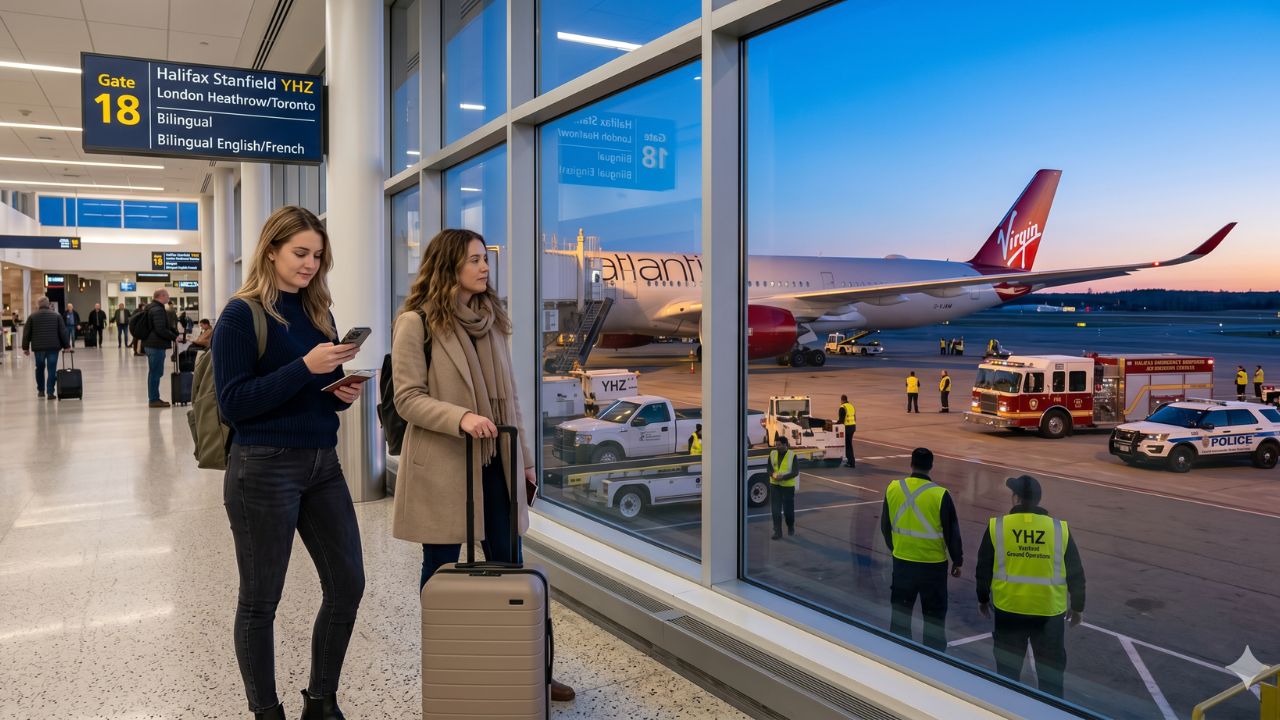
Image generated by AI
A Massive Mid-Air Crisis Triggers Transatlantic Panic
While massive sectors of the global passenger network frequently battle highly unpredictable extreme weather events, synchronized logistical bottlenecks, and horrific commercial fleet constraints, a sudden mid-flight technical emergency involving cabin smoke remains the absolute most terrifying catalyst for cascading airport disruptions. Delivering highly urgent, breaking airline news, verified international aviation trackers confirm that a massive operational crisis actively detonated over the Atlantic Ocean on June 2, 2026, completely exposing vulnerable international commuters and tourists to severe travel chaos across the highly congested transatlantic aviation network. This week, highly alarming operational news forcefully emerged confirming that a massive Virgin Atlantic widebody aircraft operating a critical overnight route was forced into a sudden, highly disruptive emergency diversion after the flight crew detected a severe smoke smell inside the main cabin.
While desperate travelers usually attempt to navigate terrifying terminal gridlock caused by ground-level flight cancellations, this exclusive aviation update reveals a highly systemic, incredibly dangerous mid-air logistical nightmare actively fracturing flight schedules between Canada and the United Kingdom. Official tracking data confirms that Virgin Atlantic Flight VS148, operating from Toronto Pearson International Airport (YYZ) to the massive airline hub at London Heathrow (LHR), was violently forced to reverse course shortly after entering the Atlantic crossing. The sheer scale of this sudden mid-air disruption immediately plunged passengers into an absolute state of anxiety. With the safety of the entire aircraft suddenly compromised, highly vulnerable transit passengers became completely trapped inside the aircraft, facing totally ruined itineraries and brutal missed connections as the massive widebody executed an immediate emergency landing in Halifax, Canada.
Expanded Overview: The Scale of the Transatlantic Disruption
The sudden, highly publicized execution of this massive mid-air diversion serves as an undeniable example of how rapidly complex transatlantic logistics can collapse into extreme transit pressure. Virgin Atlantic heavily relies on the Toronto to London sector, providing a massive, highly lucrative direct connection linking Canadian corporate travelers and international tourists with the United Kingdom. When a sudden technical disruption of this magnitude strikes a flight completely isolated over the freezing Atlantic Ocean, it shatters the entire operational pipeline.
The terrifying reality of the current transit crisis is found in the sheer vulnerability of passengers utilizing overnight intercontinental routes. A sudden mid-air diversion to a regional airport instantly triggers violently missed onward connections in massive mega-hubs like London Heathrow, creating devastating ripple effects that destroy carefully planned holidays, vital corporate schedules, and subsequent onward flights to Europe and Asia.
Section-Wise Breakdown of the Mid-Air Gridlock
The Atlantic Smoke Emergency and Reversal
The massive operational strain of bridging Canada and the UK actively buckled under the threat of a potential in-flight fire. The massive Airbus A350-1000, a highly modern 4.3-year-old widebody jet officially registered as G-VLIB, had only just begun its oceanic crossing when the flight crew identified a terrifying smell of smoke permeating the cabin. In aviation safety protocols, in-flight smoke is treated as an absolute worst-case scenario. Faced with a massive safety risk, Virgin Atlantic command aggressively executed a calculated decision to abort the crossing. Air traffic control immediately coordinated a massive rerouting, forcing the aircraft to violently reverse course and head straight for Halifax Stanfield International Airport (YHZ).
The Halifax Emergency Landing and Inspection
Upon arrival in Halifax, standard emergency protocols were aggressively implemented. Massive fleets of fire and safety personnel violently swarmed the tarmac, meeting the aircraft as a strict precaution. Passengers were forced to disembark the A350-1000 while emergency crews and technical teams conducted an immediate, highly invasive inspection to determine the absolute origin of the smoke alert. The massive aircraft was immediately grounded in Halifax, completely severing the direct route to London and stranding hundreds of passengers in Nova Scotia.
The Virgin Atlantic Rescue Operation
To mitigate the massive travel chaos, Virgin Atlantic executed a rapid contingency plan. The airline deployed a massive replacement Boeing 787-9, a 10.8-year-old aircraft officially registered as G-VCRU, operating under the special rescue flight number VIR148A (VS1148). This massive rescue jet boarded the terrified passengers in Halifax and departed later that evening, finally delivering them to London Heathrow. Demonstrating the massive ripple effects of fleet deployment, this specific replacement aircraft was immediately scheduled for further massive operations, including deployment on ultra-long-haul routes from London to Delhi, India.
Verified Aviation Disruption and Flight Data
To fully comprehend the massive operational scale and strategic deployment dictating this highly destructive mid-air crisis, the following mandatory table explicitly details the exact flight metrics heavily impacting Virgin Atlantic today:
Complete Virgin Atlantic VS148 Operational Disruption Breakdown
The violent disruption of transatlantic schedules severely compromised on-time performance across Virgin Atlantic's massive international network.
| Operational Disruption Metric | Verified Aviation Data | Direct Impact on Passenger Logistics |
|---|---|---|
| Operating Airline | Virgin Atlantic | Massive UK carrier suffers severe operational strain. |
| Original Flight Number | VS148 | Transatlantic flight completely aborts original routing. |
| Original Aircraft Model | Airbus A350-1000 | 4.3-year-old widebody aircraft forced into sudden diversion. |
| Original Registration | G-VLIB | Aircraft completely grounded in Halifax for inspection. |
| Original Route | Toronto (YYZ) to London (LHR) | Vital Canadian-UK artery violently severed. |
| Diversion Hub | Halifax Stanfield (YHZ) | Emergency landing executed with fire crews on standby. |
| Rescue Flight Number | VIR148A (VS1148) | Deployed to transport stranded passengers to London. |
| Replacement Aircraft | Boeing 787-9 (10.8 years old) | Registration G-VCRU executed the massive rescue mission. |
Passenger Impact: Navigating the Mid-Air Gridlock
For the modern commuter attempting to navigate this highly volatile international network, the passenger impact of this massive mid-air meltdown is completely terrifying. Reliable, direct flights are the absolute backbone of surviving intercontinental transit, and this sudden diversion completely destroyed that promise. Passengers facing these massive disruptions must employ immediate survival tactics.
Immediate Survival Strategies:
- Survive the Rebooking Gridlock: When a flight is violently diverted to Halifax, stranded travelers heading to London are aggressively urged to demand immediate rebooking for their final onward connections out of Heathrow via the Virgin Atlantic mobile app before arriving in the UK.
- The Threat of Ruined Connections: Because London Heathrow is heavily utilized as a massive connecting hub for Europe and the Middle East, a massive mid-air diversion guarantees that hundreds of passengers will violently miss their connecting flights. Always aggressively demand that your operating carrier rebook the entire onward journey.
- Prepare for Ground Exhaustion: While a rescue aircraft is highly strategic, passengers must violently prepare for massive physical exhaustion while waiting for the Boeing 787-9 to arrive in Halifax, completely destroying all scheduled arrival times and planned hotel check-ins in the United Kingdom.
Conclusion: A Highly Destructive Aviation Meltdown
The massive, highly publicized mid-air diversion of Virgin Atlantic Flight VS148 represents a severe, incredibly dangerous wake-up call for the transatlantic aviation sector. By actively demonstrating that a sudden cabin smoke alert can instantly trigger a massive diversion, paralyzing a state-of-the-art A350-1000 and plunging hundreds of passengers into terrifying travel chaos, this incident completely shatters passenger confidence in uninterrupted trans-oceanic reliability. As executive leadership across Virgin Atlantic frantically scrambles to manage the logistical failures, inspect the grounded aircraft in Canada, and appease thousands of isolated passengers in London, international tourists are heavily urged to aggressively monitor their flight status via airline apps, actively prepare for sudden flight delays, and fully expect this unprecedented disaster to trigger massive regional travel chaos.
Key Takeaways
- Massive Transatlantic Meltdown: Virgin Atlantic Flight VS148 violently executed a sudden emergency diversion to Halifax (YHZ) while operating the Toronto to London route.
- Severe Technical Crisis: A terrifying cabin smoke alert forced the 4.3-year-old Airbus A350-1000 (G-VLIB) to immediately abort its Atlantic crossing.
- Emergency Ground Response: Halifax fire and rescue crews violently swarmed the aircraft upon landing to secure the safety of all passengers.
- Strategic Rescue Mission: A 10.8-year-old Boeing 787-9 (G-VCRU) operating as flight VIR148A was rapidly deployed to rescue the stranded passengers and complete the journey to London Heathrow.
- Passenger Survival Tactics: Travelers caught in the diversion are aggressively urged to use digital apps to bypass massive terminal queues in London and secure immediate rebooking for connecting flights across Europe.
Disclaimer: The specific aircraft registrations, flight metrics, and emergency protocols presented in this report are based on verified aviation tracking data regarding operations between Canada and the United Kingdom on June 2, 2026. Official airline technical reports, cabin inspection results, and regional air traffic control clearances are highly volatile and subject to continuous, real-time update based on active operational shifts and mechanical investigations. Prospective passengers are urgently advised to fiercely monitor their specific flight status and verify active route networks directly via the airline's official portal prior to boarding.
Disclaimer
This article is for informational and educational purposes only. It does not constitute legal, financial, or professional advice. While we strive to provide accurate and up-to-date information, travel policies, regulations, and conditions change rapidly. Always verify information with official sources before making travel decisions. Nomad Lawyer makes no representations about the accuracy, reliability, completeness, or suitability of the information provided. Readers should consult qualified professionals for advice specific to their circumstances. The views expressed in this article are those of the author and do not necessarily reflect the views of Nomad Lawyer.
Kunal K Choudhary
Co-Founder & Contributor
A passionate traveller and tech enthusiast. Kunal contributes to the vision and growth of Nomad Lawyer, bringing fresh perspectives and driving the community forward.
Learn more about our team →