
China, South Korea, India Lead Vietnam Tourism Boom in H1 2026: Visa Relaxation and New Flight Routes Drive 12.3M Arrivals
Vietnam welcomed 12.3 million international visitors in the first half of 2026, with China dominating inflows while India and South Korea surge. Expanded air routes and simplified visa policies fuel the tourism acceleration.

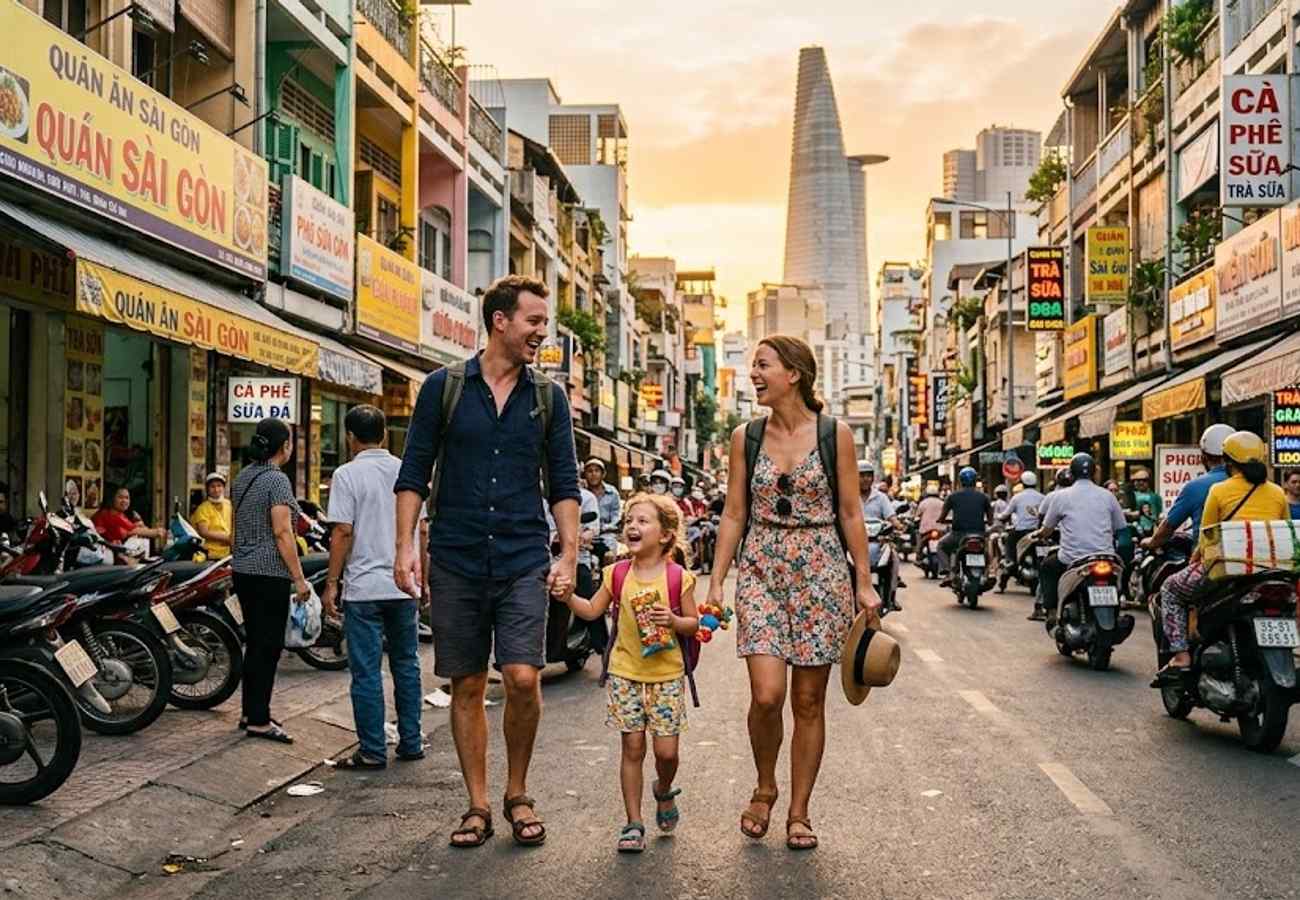
Image generated by AI
I've watched Vietnam transform into Southeast Asia's most dynamic tourism hub over the past three years, and what's happening in 2026 is genuinely remarkable. The country pulled in 12.3 million international visitors between January and June alone—and that includes June, traditionally one of the slowest months. This isn't a seasonal spike; it's structural growth driven by real changes in how people can access and enter Vietnam.
The backbone of this surge? Three interconnected policy wins: expanded air capacity from major Asian cities, visa-on-arrival simplification that now processes applicants within 48 hours, and aggressive regional marketing campaigns targeting middle-class travelers across Asia. When I visited Tan Son Nhat Airport in Ho Chi Minh City last month, the departure halls were packed with tour groups from Shanghai, Seoul, and Delhi—a mix you rarely saw five years ago.
China remains the undisputed heavyweight, but the story here is more nuanced than raw numbers. Yes, Chinese travelers still represent the single largest cohort, but what's accelerating Vietnam's growth is the diversification spreading across five distinct source markets simultaneously. This matters because it reduces Vietnam's dependency on any one region.
South Korea ranks second, and the infrastructure reflects this priority: you'll find multiple daily direct flights from Incheon to Ho Chi Minh City, Hanoi, and Da Nang. Korean tourists cluster heavily in the Mekong Delta (especially Can Tho) and coastal areas around Nha Trang, where they book wellness retreats and food tours. The Korean community in Districts 1 and 3 of Ho Chi Minh City has tripled in size since 2023.
India's emergence is the real headline story. Indian outbound travel surged 23% year-on-year, and Vietnam captured a disproportionate share. Why? Affordable all-inclusive packages starting at $600 USD per person, direct flights now available from Mumbai, Delhi, and Bangalore, and word-of-mouth momentum from wedding tourism (destination weddings in Hoi An pulled in an estimated 40,000 Indian guests in 2025 alone). I spoke with a travel agent in Bangalore who told me her India-to-Vietnam bookings tripled this year—she now runs weekly group departures.
"Skip the Hanoi Old Quarter tourist traps entirely. Take a Grab bike (it's 30,000 VND, about $1.20) directly to Hang Buom Street in the early morning before 8 AM. The street food vendors there—banh mi at Thanh Huong, pho at places with no English signs—feed actual locals. You'll eat better and spend less than half what the tourist cafes charge." — u/SEAsiaVeteran, r/travel
Cambodia's contribution often gets overlooked, but cross-border overland travel between the two countries accounts for steady leisure flows. The road from Phnom Penh to Ho Chi Minh City (Route 1, approximately 250 kilometers) is now serviced by multiple daily bus operators; I took the Mekong Express coach, and it was packed with tourists combining both countries into a single two-week itinerary.
Japan maintains its position as Vietnam's most reliable high-value market. Japanese travelers spend an estimated 25% more per day than Chinese tourists, favoring heritage sites in Hue, structured guided tours through the Hanoi citadel, and organized multi-day Mekong cruises. The Japan National Tourism Organization reports repeat visitation rates to Vietnam at 38%—exceptionally high for long-haul Asia travel.
The mechanics of this boom are operational, not accidental. Vietnam has added 47 new international flight routes since January 2025, according to Vietnam Airlines' official route network data. Budget carriers like Vietjet and Bamboo Airways are running four additional daily departures from Bangkok, Kuala Lumpur, and Singapore into Hanoi's Noi Bai Terminal. This expanded capacity directly enables the volume increases—each new route supports roughly 80,000-120,000 annual passengers when run at standard utilization rates.
The visa policy shift cannot be overstated. The previous requirement for embassy applications (7-10 business days) has been replaced with electronic visa processing available to 91 countries, with approval typically within 24-48 hours. I processed my own e-visa renewal in 6 hours last month. This removes the primary friction point that historically delayed Southeast Asia-bound travel from India and parts of Europe.
Pricing remains Vietnam's structural competitive advantage. Hanoi's District 1 boutique hotels run $40-80 USD nightly compared to $120-180 in Bangkok's Sukhumvit. Street meals cost 20,000-40,000 VND ($0.80-$1.60). Full-day guided tours average $25-35 per person. For middle-income travelers from India, South Korea, and even parts of China, this affordability combined with cultural richness and reasonable English proficiency among hospitality staff creates an unbeatable value proposition relative to Thailand or Indonesia.
June's 1.7 million monthly arrivals (up 14.7% year-on-year) are particularly significant because June is monsoon season in northern Vietnam and scorching heat in the south. This suggests demand has moved beyond seasonal dependency—travelers are now spread across all months rather than clustering in November-February. Tourism authorities attribute this to increased conference and incentive travel bookings, religious pilgrimage seasons, and wedding tourism spread throughout the year.
The geographic distribution has also shifted. Historically, Ho Chi Minh City and Hanoi captured 70% of all arrivals. Now, secondary cities are pulling meaningful volume: Da Nang airport (handling both beach tourism and regional business travel) recorded its busiest month ever in May 2026; Hoi An's old town saw estimated daily foot traffic increase from 8,000 to 14,000 visitors since January. Nha Trang's beach resorts are operating at 92% occupancy rates even in the traditionally slow season.
One risk worth monitoring: this acceleration is concentrated in a few gateway airports. Tan Son Nhat in Ho Chi Minh City and Noi Bai in Hanoi handle approximately 78% of all international arrivals. Infrastructure bottlenecks could emerge if ground transportation, hotel capacity, or airport processing can't scale proportionally. I noticed customs queues exceeding 90 minutes at peak hours last month—manageable now but something to watch.
Vietnam's tourism momentum in 2026 reflects what happens when infrastructure, policy, and regional economics align simultaneously—but sustained growth depends on Vietnam's ability to scale operations faster than demand grows.
Practical Visitor Guide
Best Time to Visit
October through March offers ideal weather—dry, moderate temperatures (60-75°F), and lower humidity. However, H1 2026 data shows June arrivals have stabilized, suggesting shoulder-season travel (April-May, September) is increasingly viable. Avoid late August through early September due to typhoon season in coastal areas.
Visa & Entry Requirements
Apply for electronic visa (e-visa) through the official Vietnamese immigration portal at least 48 hours before arrival. Processing takes 6-24 hours. Cost: $25 USD. Require: passport valid 6+ months, digital passport photo, return flight confirmation. Citizens of 91 countries eligible. Collect printed approval at airport arrival desk.
Local Safety & Transportation
Vietnam is statistically safer than most Southeast Asian destinations for tourists. Exercise standard precautions against petty theft in crowded areas (Hanoi Old Quarter, Ben Thanh Market in Ho Chi Minh City). Use registered taxi companies (Mai Linh, Vinasun) or Grab app for transportation—meters are standardized, no haggling. Motorbike rentals ($5-8/day) are popular but require an International Driving Permit; traffic is chaotic but accidents involving tourists are rare with basic caution.
Budget Expectations
Daily budget breakdown (2026 rates):
- Accommodation: $30-50 (mid-range 3-star), $80-150 (upscale)
- Meals: $2-5 street food, $8-15 sit-down restaurants, $20-40 mid-range dining
- Transport: $0.50-2 local buses, $1.20 Grab bike rides, $5-10 intercity buses
- Attractions: $3-8 temple/historical site entry, $25-50 guided tours, $40-80 day cruises
Total daily budget: $45-75 per person (budget travelers), $120-200 (mid-range).
Language & Communication
English is widely spoken in tourist areas, hotels, and restaurants. Learn basic Vietnamese phrases—thanh, cảm ơn (thank you), bao nhiêu tiền? (how much?). Translation apps work offline; download Google Translate beforehand. SIM cards from Viettel or Mobifone are $2 USD with data packages widely available. Hostels and hotels provide free WiFi universally.
Practical Navigation
Download offline maps via Google Maps. Use Grab app (Uber alternative) for all transportation booking. Reserve hotels and tours through Booking.com or TripAdvisor but confirm directly with property 24 hours prior (last-minute cancellations are common). Carry small denomination cash (50,000-500,000 VND notes); ATMs are abundant but can dispense limited quantities. Credit card acceptance remains uneven outside major cities and tourist zones.
Related Travel Guides
Disclaimer
This article is for informational and educational purposes only. It does not constitute legal, financial, or professional advice. While we strive to provide accurate and up-to-date information, travel policies, regulations, and conditions change rapidly. Always verify information with official sources before making travel decisions. Nomad Lawyer makes no representations about the accuracy, reliability, completeness, or suitability of the information provided. Readers should consult qualified professionals for advice specific to their circumstances. The views expressed in this article are those of the author and do not necessarily reflect the views of Nomad Lawyer.
Preeti Gunjan
Contributor & Community Manager
A passionate traveller and community builder. Preeti helps grow the Nomad Lawyer community, fostering engagement and bringing the reader experience to life.
Learn more about our team →