
Vietnam's Luxury Tourism Pivot Highlighted by Amanoi Expansion
Vietnam shifts its tourism focus toward premium value and sustainability as the Amanoi resort announces a VND800 billion expansion in Ninh Thuan.

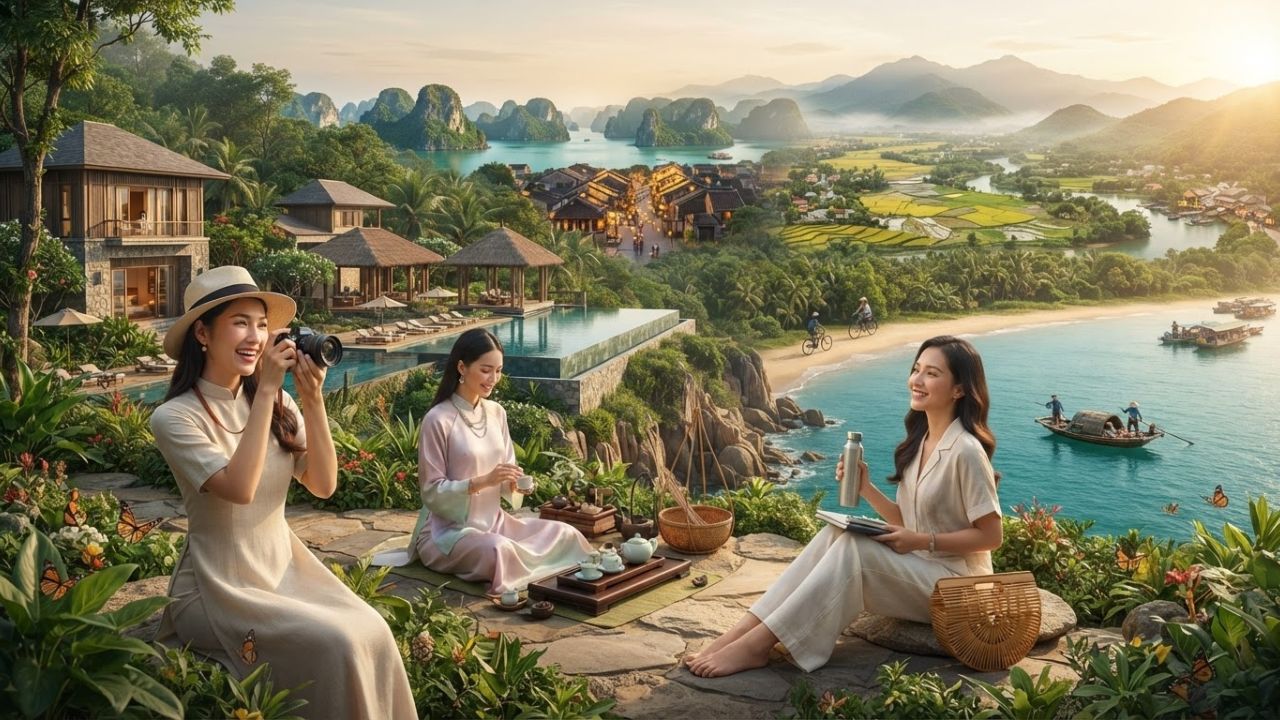
Image generated by AI
Vietnam's hospitality sector is prioritizing sustainable high-value development over arrival volumes, underscored by a VND800 billion expansion at the Amanoi ultra-luxury resort in Ninh Thuan Province.
A structural shift in hospitality investment is reshaping the region's leisure sector, with Vietnam sustainable luxury tourism growth taking precedence over simple arrival statistics. Rather than competing solely on passenger volumes, developers are focusing on low-impact, high-yield products. This strategy is highlighted by the expansion of the Amanoi resort, situated inside the protected ecosystem of Nui Chua National Park in south-central Vietnam.
Amanoi's VND800 Billion Controlled Expansion
Amanoi has operated for two decades under a model prioritizing low guest density and personalized service, currently employing more than 400 staff to service 68 rooms. The resort has announced its second development phase, representing a reinvestment of VND800 billion (approximately US$30.4 million).
Key parameters of the expansion include:
- Capacity Adjustment: Increasing room inventory from 68 to 78 units.
- Land-to-Room Ratio: Despite possessing more than 90 hectares of land, the property has capped future expansion at a maximum of 90 rooms to preserve the surrounding forest.
- High-End Positioning: The resort features a three-bedroom villa priced at $15,000 per night, requiring a minimum three-night stay that totals approximately VND1 billion ($38,000).
- Cultural Additions: The expansion includes the construction of the "Vietnam House"—a dedicated cultural space highlighting local heritage—alongside an executive conference center, family facilities, and upgraded staff accommodation.
The development model indicates that premium destinations can generate significant economic returns without exceeding local environmental capacities.
The table below outlines the core parameters of the Amanoi expansion and its conservation constraints:
Amanoi Resort Phase II Expansion Parameters 2026
| Project Parameter | Value / Dimension | Regulatory / Design Constraint | Strategic Development Goal |
|---|---|---|---|
| Total Reinvestment | VND800 billion ($30.4 million) | Located in Nui Chua National Park | Upgrade guest experiences & facilities |
| Land Footprint | Over 90 hectares | Max room cap set at 90 rooms | Maintain low density & preserve forest |
| Room Inventory | Increasing from 68 to 78 rooms | Personal service ratio (400+ staff) | Strengthen operational standards |
| Premium Villa Pricing | $15,000 per night (3-night minimum) | Total booking minimum: VND1 billion ($38,000) | Target high-yield international travelers |
| New Infrastructure | Vietnam House, conference center | Low-impact architectural design | Integrate local heritage and culture |
Why This Matters
From a logistical perspective, this shift highlights the growth of experiential travel, where visitors seek a deeper connection to local heritage, art, and gastronomy rather than just beach holidays. For travelers planning their summer trips, this means that selecting a destination with diverse activities reduces the risk of weather-related disruptions. If rain or extreme heat makes outdoor sightseeing uncomfortable, visitors can easily pivot to indoor museums, wellness retreats, or culinary tours.
For the travel industry, this trend demonstrates that marketing a country requires highlighting its cultural and conservation assets alongside its natural scenery. Destinations that invest in preserving their historic architecture, supporting local artists, and promoting regional food systems are better positioned to attract high-value, long-stay travelers who contribute more to the local economy than day-trippers.
Industry Outlook
Market trends suggest that the demand for multi-dimensional travel will continue to grow as travelers seek to maximize their holiday budgets. As travel costs remain high, consumers are looking for destinations that offer a variety of experiences within a single geographic area. This pattern favors countries that can offer a blend of outdoor recreation, cultural education, and premium dining.
In response to these trends, local tourism boards are focusing on off-season campaigns to attract visitors during the autumn and winter months, when cultural attractions and historic tours remain fully operational. This strategy helps stabilize the local hospitality sector, ensuring year-round employment and reducing the environmental pressure associated with summer overcrowding.
Related: Vietnam, Singapore, and Thailand Lead Southeast Asian Travel Boom in 2026
Related: St. Lawrence County Launches America 250 Commemorative Heritage Pins
Related: US Domestic Travel Boom Drives Record Airport Passenger Demand
Disclaimer
This article is for informational and educational purposes only. It does not constitute legal, financial, or professional advice. While we strive to provide accurate and up-to-date information, travel policies, regulations, and conditions change rapidly. Always verify information with official sources before making travel decisions. Nomad Lawyer makes no representations about the accuracy, reliability, completeness, or suitability of the information provided. Readers should consult qualified professionals for advice specific to their circumstances. The views expressed in this article are those of the author and do not necessarily reflect the views of Nomad Lawyer.
Raushan Kumar
Founder & Lead Developer
Full-stack developer with 11+ years of experience and a passionate traveller. Raushan built Nomad Lawyer from the ground up with a vision to create the best travel and law experience on the web.
Learn more about our team →