
Vietnam Surpasses ASEAN Rivals With 12.3 Million International Visitors and 14.9% Growth in 2026
Vietnam's tourism surge in 2026 delivers 12.3 million international visitors in the first half of the year, outpacing Singapore, Philippines, and Malaysia with 14.9% year-on-year growth driven by European long-haul expansion and Asian regional connectivity improvements.

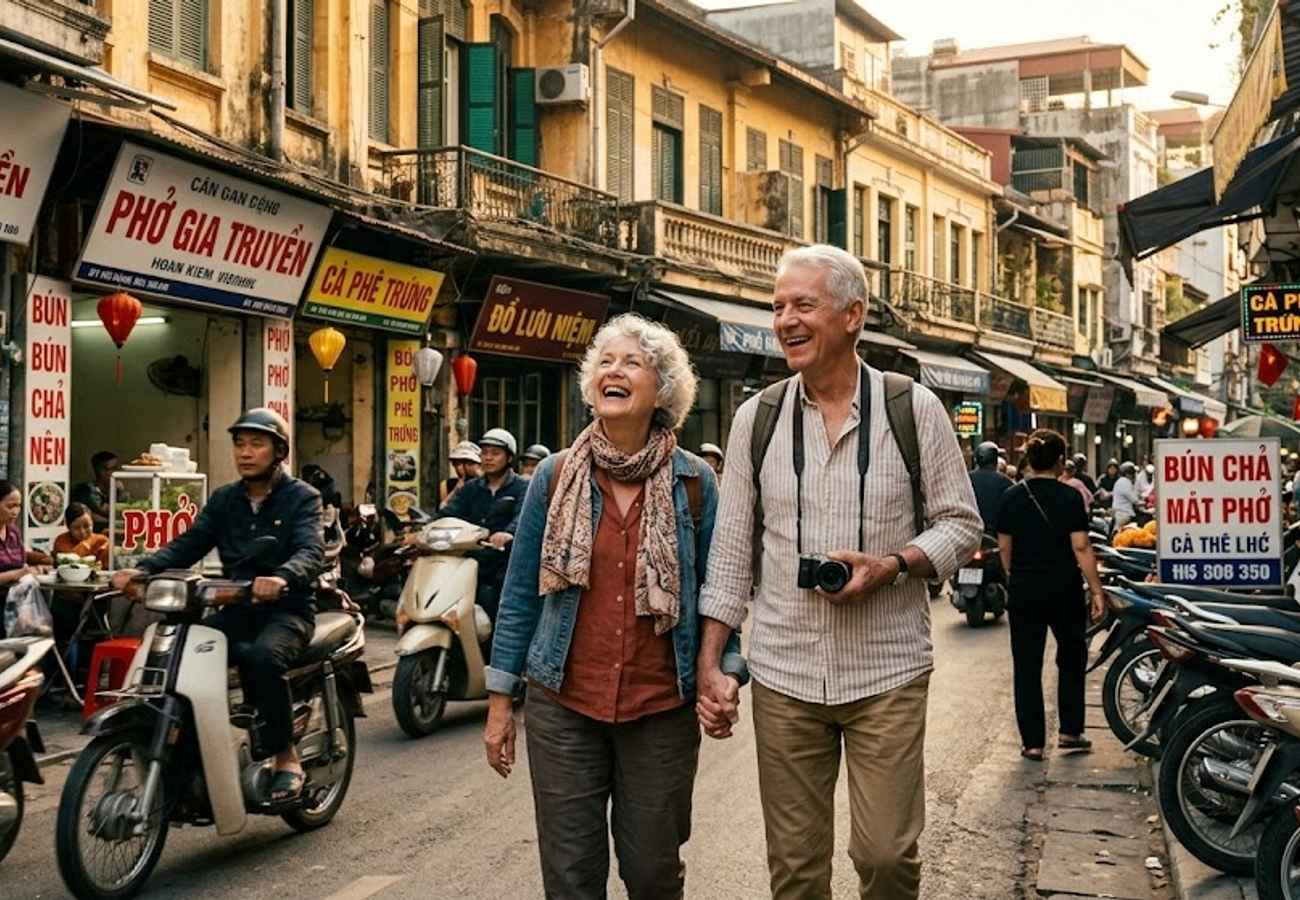
Image generated by AI
I've been watching Vietnam's tourism trajectory for over two decades, and what I'm seeing on the ground in 2026 is unlike anything I've witnessed before. The numbers from the National Statistics Office of Vietnam and the Vietnam National Authority of Tourism tell a remarkable story: 12.3 million international visitors in the first half of 2026 alone.
That's a 14.9% year-on-year increase, pushing Vietnam past Singapore, the Philippines, and even challenging Malaysia's growth momentum. When I last walked through Hoan Kiem District in Hanoi this past March, the contrast with even two years ago was striking.
What the Numbers Actually Mean on the Ground
The headline figure of 12.3 million represents nearly 50% of Vietnam's annual target of 25–26 million international arrivals. What's more telling is the domestic figure: 81 million trips by Vietnamese travelers themselves.
I've spent time in Da Nang's An Thuong area, where local guesthouse owners told me their booking patterns have shifted dramatically. Where they once relied heavily on Korean and Chinese tour groups, they're now seeing independent travelers from Germany, France, and the UK booking directly through platforms.
The tourism revenue figure of approximately VND 569 trillion backs up what I've observed anecdotally. Spending per visitor is up. People aren't just passing through on whirlwind bus tours anymore.
Asia Still Drives, but Europe Is the Story
Asia accounts for over 9 million of those visitors, growing at a steady 7.7%. That's the baseline. The real shift is in European arrivals.
Europe generated around 2 million arrivals with growth exceeding 56% year-on-year. That's not incremental growth — that's a structural change in who is coming to Vietnam.
I noticed this firsthand at Tan Son Nhat International Airport in Ho Chi Minh City. The immigration queues for European passport holders were longer than I'd ever seen. Lufthansa, Air France, and Finnair have all expanded their Vietnam routes, and the connectivity is showing up in the arrival halls.
The Americas contributed roughly 694,000 visitors. Oceania added 371,000. Even Africa sent over 30,000 travelers. These regions collectively grew between 19% and 22%.
How People Are Arriving
The transport breakdown reveals important patterns about how Vietnam is opening up.
Air arrivals dominated at 10.1 million, accounting for 82.6% of all international entries. But what caught my attention was the land arrival figure: 1.9 million, up over 37% year-on-year. That's cross-border traffic from Cambodia, Laos, and China flowing through improved border crossings.
I crossed into Vietnam from Cambodia via the Moc Bai border gate last February. The process was smoother than I expected, and the bus from Phnom Penh to Ho Chi Minh City was packed with backpackers and budget travelers taking advantage of improved ASEAN mobility agreements.
Sea arrivals reached 209,000, reflecting growing cruise traffic along Vietnam's coastline. Halong Bay and Chan May port near Hue are seeing more regular cruise calls from international lines.
Where Vietnam Stands Against Its Neighbors
Let me break down the competitive picture based on what I've observed across the region.
Singapore maintains its premium high-spend model, but Vietnam has surpassed it in total international arrivals. Singapore's tourism is about business travel and luxury. Vietnam's is about volume, diversity, and value.
Malaysia still records higher total annual arrivals. But Vietnam's growth acceleration is faster, particularly from European markets. The recovery trajectory here is steeper.
Thailand remains the regional leader by total arrivals. The gap is narrowing, though. Vietnam's expanding short-haul market share and competitive pricing are making inroads.
Indonesia has strong domestic tourism and structural potential. But Vietnam has demonstrated faster international recovery momentum in recent comparative data.
"I skipped the standard Thailand-Vietnam itinerary comparison and went straight to Vietnam for three weeks. The visa process took me under an hour online, my accommodation in Hoi An was a third of what I'd pay in Phuket, and I never felt like I was in a tourist factory. The food in Da Nang's street markets alone was worth the trip." — u/backpacker_chronicles, r/travel
Why This Growth Is Happening
Several structural factors are driving this surge, and they're not accidental.
Vietnam has reformed its visa policies significantly. The e-visa system now covers all countries with 90-day validity options. I've guided travelers through the process, and it's genuinely straightforward compared to the old letter-based system that required approval letters and uncertain wait times.
International airline routes have expanded substantially. Vietnam Airlines, VietJet, and Bamboo Airways have all added long-haul capacity. New routes connect Hanoi and Ho Chi Minh City to secondary European cities that previously required connections through Bangkok or Singapore.
The tourism product has diversified beyond the traditional Hanoi-Halong-Hoi An triangle. Eco-tourism in Phong Nha-Ke Bang, community-based tourism in Sapa's less-visited valleys, and cultural experiences in the Mekong Delta are drawing longer stays and higher spending.
What This Means for Travelers Planning a 2026 Visit
The growth surge means both opportunities and challenges. Popular sites are busier. But Vietnam's tourism infrastructure has expanded to handle it.
I've found that the key is timing and routing. Avoid the peak months of July and August when domestic travel surges. October through April offers the best weather across most of the country, and the crowds are more manageable at major sites like Halong Bay and the Imperial City in Hue.
Practical Visitor Guide
Best Times to Visit: October through April for most of Vietnam. Central Vietnam (Hoi An, Hue, Da Nang) is ideal from February to May. The north (Hanoi, Sapa, Halong Bay) is best from October to November or March to April. Avoid Tet (Lunar New Year, late January or early February) as many businesses close for a week.
Getting Around: Domestic flights between Hanoi, Da Nang, Nha Trang, and Ho Chi Minh City are cheap and frequent. VietJet and Bamboo Airways compete aggressively on price. The reunification express train from Hanoi to Ho Chi Minh City takes over 32 hours but offers spectacular coastal scenery. I recommend the SE3 or SE4 trains for the soft sleeper compartments.
Visa Process: Apply for the e-visa at the official Vietnam immigration portal. Processing takes 3–5 working days. The 90-day e-visa allows multiple entries and costs approximately $25 USD for single entry or $50 for multiple entry.
Local Safety: Vietnam is one of Southeast Asia's safest destinations for travelers. Petty theft exists in tourist areas, particularly in Ho Chi Minh City's District 1 and Hanoi's Old Quarter. Keep bags closed and phones secured while walking near traffic. Motorbike traffic is the biggest actual danger — I never cross streets without watching how locals do it first.
Budget Expectations: Budget travelers can manage on $25–35 per day outside major cities. Mid-range travel runs $60–100 daily. Hanoi's Old Quarter hostels start at $8–12 per night. A bowl of bun cha on Hang Manh street costs around 45,000 VND ($1.80). Domestic flights between major cities start at $30–50 one-way if booked two weeks ahead.
Where to Go Beyond the Standard Route: Phong Nha-Ke Bang for cave systems that rival anything in the region. The Hai Van Pass between Hue and Da Nang for motorbike touring. Can Tho and the Mekong Delta for floating markets at dawn. Con Dao islands for beaches without the crowds of Nha Trang.
Vietnam's tourism surge isn't a fluke. It's the result of deliberate policy choices, infrastructure investment, and a travel product that keeps delivering value. I'll be back before the year ends.
Related Travel Guides
Disclaimer
This article is for informational and educational purposes only. It does not constitute legal, financial, or professional advice. While we strive to provide accurate and up-to-date information, travel policies, regulations, and conditions change rapidly. Always verify information with official sources before making travel decisions. Nomad Lawyer makes no representations about the accuracy, reliability, completeness, or suitability of the information provided. Readers should consult qualified professionals for advice specific to their circumstances. The views expressed in this article are those of the author and do not necessarily reflect the views of Nomad Lawyer.
Preeti Gunjan
Contributor & Community Manager
A passionate traveller and community builder. Preeti helps grow the Nomad Lawyer community, fostering engagement and bringing the reader experience to life.
Learn more about our team →