
Vietjet Shines In Forbes Vietnam Ranking With Robust Financial Performance In 2026
Vietjet Shines In Forbes Vietnam Ranking With Robust Financial Performance In 2026

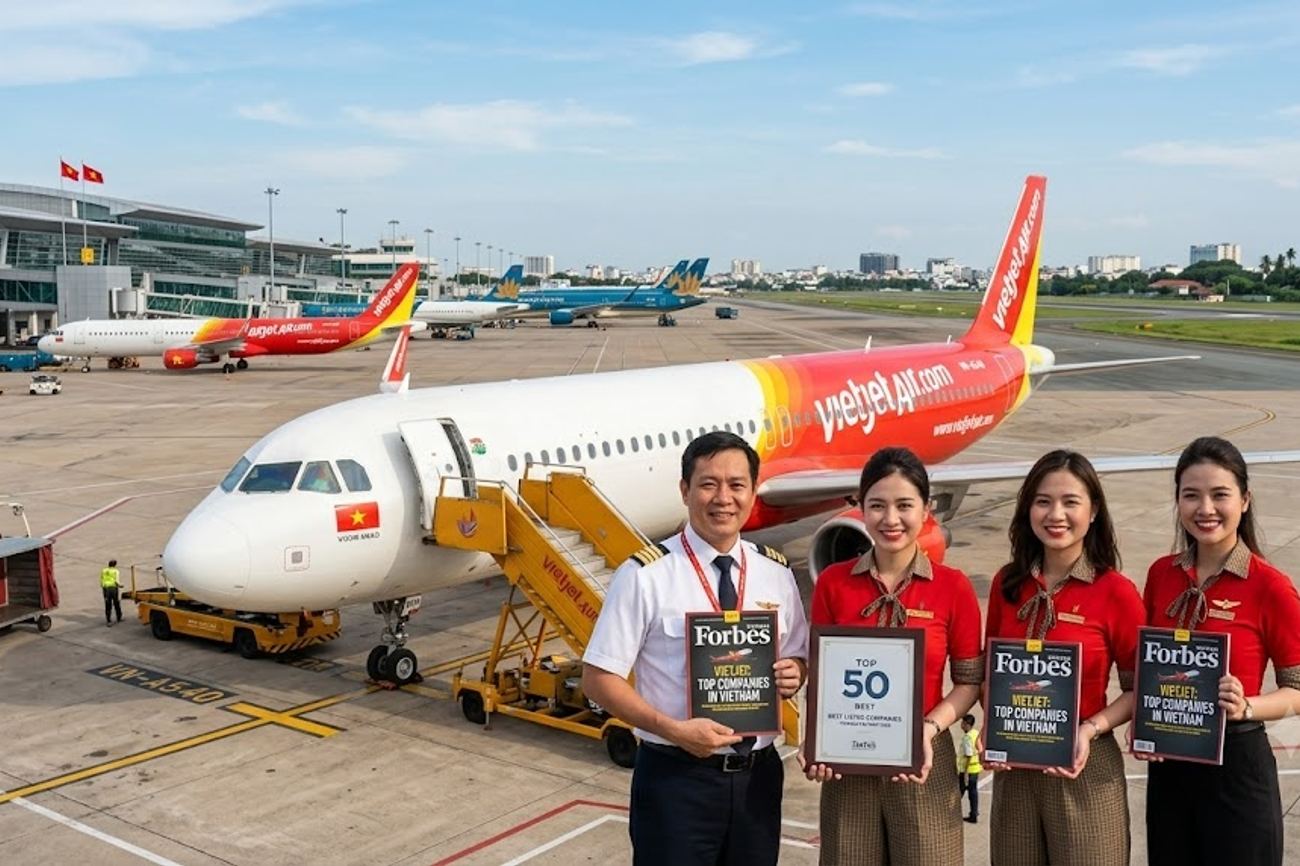
Image generated by AI
While most travelers view budget airlines as mere transport, Vietjet has evolved into a financial powerhouse, securing a spot on Forbes Vietnam’s Top 50 Best Listed Companies for 2026. This isn't just a corporate milestone; it signals a massive shift in how Vietnam is positioning itself as a global hub, moving away from being a secondary stopover to a primary gateway for the Asia-Pacific region.
The Shift in Vietnamese Air Connectivity
The aviation sector in Vietnam is currently undergoing a radical transformation. For years, the country relied on a rigid structure of state-backed carriers, but the recent trajectory of Vietjet shows a pivot toward aggressive, capital-efficient expansion. In the first half of 2026 alone, the airline reported consolidated revenue of VND51,536 billion, which translates to roughly USD1.98 billion. This represents a 44% increase compared to the previous year, hitting 59.4% of their total annual revenue target in just six months.
For the seasoned traveler, this financial surge means more than just numbers on a balance sheet. It manifests as a denser web of international routes and a modernized fleet. When an airline hits 64.5% of its full-year profit plan—reaching VND1,372 billion (approximately USD52.7 million) by mid-year—it allows for the rapid opening of routes that were previously deemed too risky. We are seeing a strategic push to link Vietnam not just with neighboring ASEAN countries, but with major economic centers in Australia and across the wider Asia-Pacific.
This expansion is part of a broader effort to integrate Vietnam into the global economy. By focusing on "capital efficiency" and "financial discipline," as noted by CFO Ho Ngoc Yen Phuong, the airline is effectively lowering the barrier to entry for international visitors. The result is a democratization of travel to Vietnam, where the cost of arrival is dropping while the frequency of flights is increasing.
What Makes Vietnam's Aviation Ecosystem Unique
Vietnam does not treat its airports as simple transit points; they are the front doors to a culture defined by rapid modernization and deep tradition. Traveling into the country now feels different than it did five years ago. There is a palpable energy in the terminals of Tan Son Nhat in Ho Chi Minh City and Noi Bai in Hanoi, driven by a new generation of "aviation ecosystems" that blend retail, luxury, and rapid transit.
The uniqueness of the current Vietnamese travel experience lies in this contrast. You can fly in on a next-generation aircraft, utilize high-tech booking platforms, and within thirty minutes be navigating a street market where transactions are still handled in cash and tradition dictates the pace of life. The growth of carriers like Vietjet has accelerated this collision of worlds. More flights mean more diverse visitor profiles—not just the backpacker circuit, but corporate travelers and digital nomads who require the reliability of a Forbes-recognized company.
To truly understand the destination, one must look at the connectivity. Vietnam is no longer a linear destination where you start in the North and end in the South. The expanded flight networks allow for a "hub and spoke" approach. Travelers can now land in a major city and use regional connections to reach the highlands of Da Lat or the coastal serenity of Phu Quoc without the grueling long-haul bus rides that once defined the experience. For those planning their logistics, consulting the Visit Vietnam official portal provides a clear picture of how these new routes integrate with local tourism.
Visitor Insider Tips
Having spent significant time navigating the rhythms of Vietnam, I can tell you that the "brochure" version of the country is rarely the reality. To move like a local and avoid the common pitfalls of the 2026 travel surge, follow these guidelines:
Timing the Transit If you are landing in Ho Chi Minh City, avoid the 4:00 PM to 7:00 PM window. This is the peak of the local commute, and the traffic from the airport into District 1 can be grueling. Instead, schedule your arrivals for mid-morning or late evening. If you are using a budget carrier, always factor in an extra 45 minutes for baggage claim, as the increased passenger volume has put pressure on ground handling.
The Neighborhood Strategy Stop basing yourself solely in the tourist centers. In Ho Chi Minh City, look toward District 3 for a more authentic, leafy atmosphere with colonial architecture and quieter cafes. In Hanoi, venture beyond the Old Quarter into the Truc Bach area around the lake for a more relaxed pace and superior local eateries that aren't catering exclusively to foreigners.
Vietjet's robust financial performance in 2026 has earned the airline a spot in Forbes Vietnam's ranking, solidifying its position as a leading low-cost carrier in the region. According to the airline's official reports, its passenger traffic has increased significantly, with more travelers opting for affordable and convenient flights to popular destinations. For more information on Vietjet's flight schedules and routes, visit the official Vietjet website.
Local Etiquette and Interaction Respect is the primary currency in Vietnam. When visiting pagodas or government buildings, ensure your shoulders and knees are covered. A small but significant tip: when handing over money or business cards, use both hands. It is a subtle gesture that signals respect and is deeply appreciated by the local population.
Transport Hacks While the airlines handle the long haul, the "last mile" is where most travelers struggle. Download the Grab app immediately upon arrival. It is the gold standard for ride-hailing and prevents the need to negotiate fares with independent taxi drivers. For those venturing to UNESCO sites like Hoi An Ancient Town, consider renting a bicycle; the narrow alleys are inaccessible to cars and are best explored at a slow pace.
Cultural and Environmental Context
The rapid growth of the aviation sector, while economically beneficial, creates a complex tension with environmental preservation. The surge in visitor numbers—facilitated by cheaper, more frequent flights—places immense pressure on Vietnam's fragile ecosystems. From the limestone karsts of Ha Long Bay to the terraced fields of Sapa, the influx of tourism can lead to "over-tourism" if not managed correctly.
There is a growing movement within Vietnam to pivot toward sustainable tourism. The government and local communities are increasingly focusing on heritage preservation to ensure that the growth recorded in financial reports doesn't come at the cost of cultural erosion. The challenge for the modern traveler is to be a conscious consumer. This means choosing homestays over international hotel chains and supporting local artisans rather than buying mass-produced souvenirs.
Furthermore, the expansion of the aviation network is a tool for social mobility. By creating more connectivity, rural provinces are seeing an increase in direct investment and tourism revenue, which helps distribute the economic benefits of travel beyond the major cities. However, this requires a delicate balance. The goal is to integrate these regions into the global market without stripping them of the authenticity that makes them attractive in the first place.
FAQ: Visiting Vietnam 2026
What is the best time to visit? The ideal windows are March to May and September to November. During these periods, you avoid the extreme humidity of the summer and the biting chill of the northern winter, ensuring the most comfortable weather for exploration.
Do I need a visa? Visa requirements vary by nationality. Many travelers can now utilize the e-visa system, which is the most efficient method. Check the official government portal at least three weeks before departure to ensure your documentation is processed.
How do I get from the airport to the city center? The most reliable method is using a ride-hailing app like Grab or taking an official airport taxi. Avoid unverified drivers offering rides in the arrivals hall to ensure fair pricing and safety.
Is it safe for solo travelers? Yes, Vietnam is generally very safe for solo travelers. Common sense applies: be mindful of your belongings in crowded markets and use reputable transport services. The local people are famously hospitable and helpful to those traveling alone.
The true soul of Vietnam isn't found in the flight schedules, but in the quiet steam of a morning pho bowl and the chaotic harmony of a motorbike-filled street.
Related Travel Guides
- Qatar Aligns With Egypt And More Countries As Middle East Tourism Unites To Win Back Travellers Through New Visa Plans And Mega Events
- France Joins UK and Other Countries as Airlines Boost Pet-Friendly Flights for Global Travellers
- Kazakhstan Boosts International Tourism With Air Astana Deal To Expand Visitor Growth In 2027
Disclaimer
This article is for informational and educational purposes only. It does not constitute legal, financial, or professional advice. While we strive to provide accurate and up-to-date information, travel policies, regulations, and conditions change rapidly. Always verify information with official sources before making travel decisions. Nomad Lawyer makes no representations about the accuracy, reliability, completeness, or suitability of the information provided. Readers should consult qualified professionals for advice specific to their circumstances. The views expressed in this article are those of the author and do not necessarily reflect the views of Nomad Lawyer.
Kunal K Choudhary
Co-Founder & Contributor
A passionate traveller and tech enthusiast. Kunal contributes to the vision and growth of Nomad Lawyer, bringing fresh perspectives and driving the community forward.
Learn more about our team →