
France Joins UK and Other Countries as Airlines Boost Pet-Friendly Flights for Global Travellers
France Joins UK and Other Countries as Airlines Boost Pet-Friendly Flights for Global Travellers

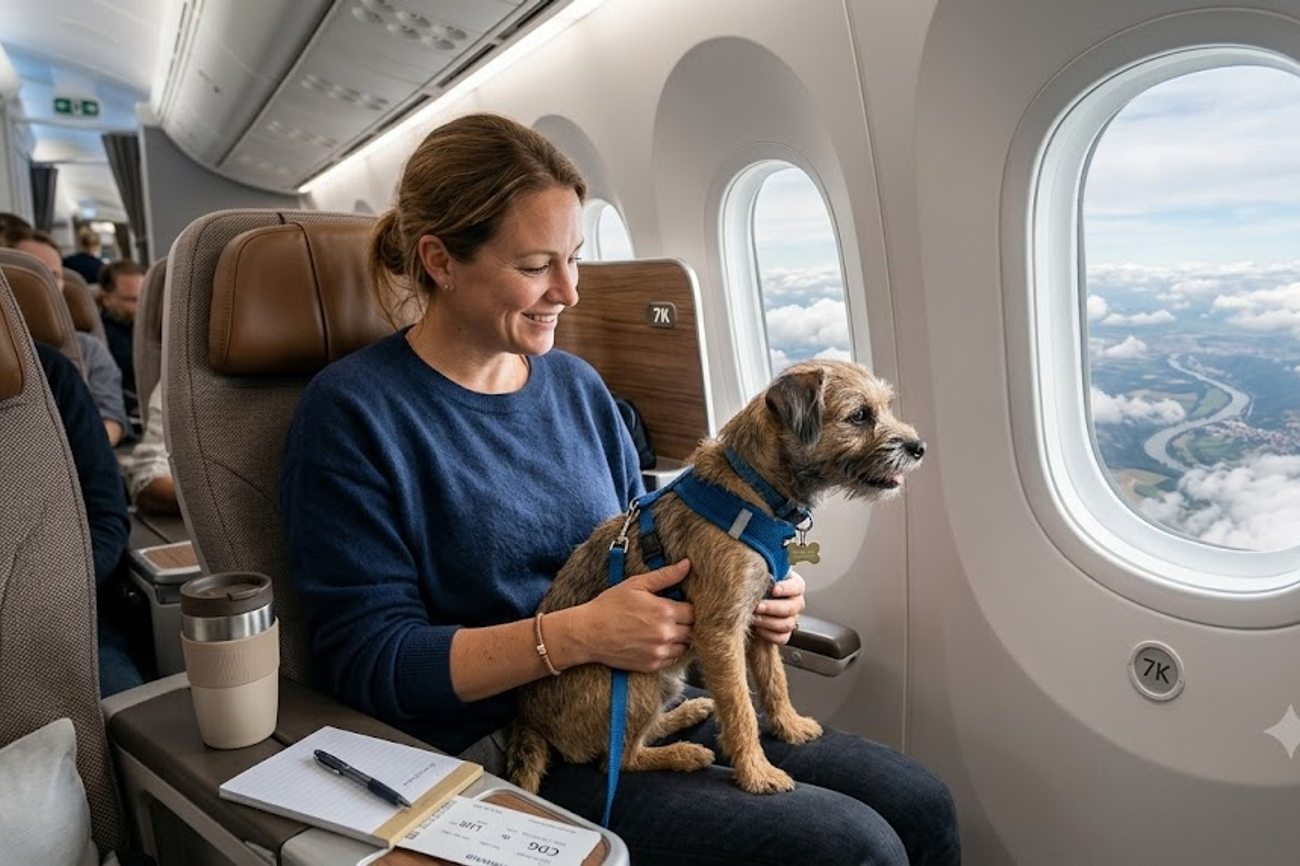
Image generated by AI
8 kilograms is the definitive dividing line for pet travel on Air France-KLM, serving as the threshold between a pet residing under a passenger's seat and being relegated to the aircraft hold. This specific weight limit, which includes the transport carrier, underscores a broader shift in European aviation where carriers are increasingly tailoring their logistics to accommodate the "pet-parent" demographic. However, as France expands its accessibility for animal companions, a stark regulatory divergence persists between the EU and the United Kingdom, creating a fragmented landscape for travelers moving between these two major hubs.
The French Framework for Animal Aviation
France has established a highly structured environment for pet transport, where government aviation guidance is synchronized with carrier policies to minimize friction at the terminal. For those flying with Air France, the logistics are dictated by a strict weight-based hierarchy. Small cats and dogs that remain under the 8kg limit (carrier included) are permitted within the cabin, allowing owners to maintain proximity to their pets throughout the flight.
For animals exceeding this limit, the airline provides hold transport for pets weighing up to 75kg, including the carrier. This wide range allows for the transport of larger breeds, though it introduces a layer of logistical complexity. To avoid the complications of late-request conditions, Air France mandates that hold transport be added to the booking at least 24 hours prior to departure. This window is not merely administrative; it allows ground crews to ensure the aircraft has the necessary temperature-controlled environments and space to safely house larger animals.
The French approach treats the airline as a service provider and the state as the regulator. While the airline manages the physical movement of the animal, the French Ministry responsible for transport emphasizes that cabin space is finite. Because airlines limit the number of animals permitted on any single flight, the "first-come, first-served" nature of these bookings means that a pet-friendly policy does not guarantee a seat for the animal.
Border Logistics and Health Mandates
A critical distinction for the nomad traveler is the gap between "airline acceptance" and "border eligibility." Being cleared for boarding by Air France does not grant an animal legal entry into French territory. French Customs enforces a rigorous set of animal-health conditions that apply to dogs, cats, and ferrets.
Under the current non-commercial movement framework, a single owner or authorized traveler is typically limited to five animals. While exceptions exist for animals participating in sporting events, exhibitions, or professional training—provided the correct documentation is presented—the five-pet cap remains the standard for leisure travelers.
Furthermore, the integration of EU-wide health standards means that electronic identification is a non-negotiable requirement. All dogs and cats traveling within the European Union must be microchipped and possess valid rabies vaccinations. These mandates are overseen by bodies such as the International Air Transport Association (IATA), which helps standardize the documentation required for the safe global movement of live animals.
| France Pet Travel Factor | Policy/Requirement |
|---|---|
| Cabin Weight Limit | Max 8kg (including carrier) |
| Hold Weight Limit | 8kg to 75kg (including carrier) |
| Booking Deadline | Hold transport must be added $\ge$ 24 hours before flight |
| Non-Commercial Limit | Maximum 5 pets per traveler |
| Mandatory ID | Electronic microchip |
| Health Requirement | Valid Rabies vaccination and documentation |
The UK Contrast: Cargo-Centric Transit
While France facilitates cabin travel for small pets, the United Kingdom maintains a significantly more restrictive posture. This is not merely a choice by the airlines, but a reflection of national law. In the UK, ordinary pets arriving via commercial aircraft are legally required to travel as cargo.
British Airways exemplifies this rigidity. The carrier does not permit ordinary pets in the passenger cabin on its routes. Instead, all pets traveling to or from the UK are processed through the aircraft hold, with inbound logistics managed specifically through IAG Cargo. This creates a vastly different experience for the traveler: rather than a simple cabin add-on, the process becomes a cargo shipment.
The UK Government maintains a strict list of approved air routes for pet arrivals, updated as recently as 11 September 2026. For those using British Airways, arrivals are limited to London Heathrow and London Gatwick. The only exception to the cargo rule is for recognized assistance or guide dogs, who are granted cabin access subject to specific verification requirements.
Expert Analysis: The Regulatory Friction of 2026
The divergence between French and British pet policies creates a "logistical cliff" for travelers crossing the English Channel. For the nomad traveler, the direct consequence is a complete shift in planning requirements depending on the direction of travel.
France has joined the UK and other countries in boosting pet-friendly flights for global travellers, with airlines such as Air France now allowing pets in the cabin on certain routes. For more information on pet travel requirements, passengers can visit the official Air France website to review the airline's pet policy and book their flights accordingly. This move is expected to increase tourism and travel opportunities for pet owners.
The most significant disruption arrived on 22 April 2026, when the UK Department for Environment, Food and Rural Affairs and the Animal and Plant Health Agency implemented new rules for Great Britain residents. The era of relying on an EU pet passport for entry into the EU has effectively ended for those from England, Scotland, and Wales. Travelers must now secure an Animal Health Certificate (AHC).
The pricing and timing pressure this creates is substantial. An AHC is only valid for entry into the EU within 10 days of its issuance. While it allows for onward travel within the EU and return to Great Britain for up to six months (provided rabies vaccinations are current), the 10-day window for initial entry forces travelers into a tight synchronization between their veterinary appointment and their flight departure.
This shift indicates a broader geopolitical trend: the "de-coupling" of pet travel logistics following the UK's exit from EU frameworks. For the traveler, this means that a journey from London to Paris is no longer a simple flight, but a multi-stage regulatory process involving cargo manifests, veterinary certifications, and strict weight thresholds. The financial cost of pet travel is also rising, as the shift from "cabin pet" to "cargo animal" often involves higher fees and the need for more expensive, IATA-compliant crates.
Key Takeaways
- Weight Thresholds: Air France permits pets in the cabin only if they weigh 8kg or less (including the carrier); pets up to 75kg are permitted in the hold.
- Booking Deadlines: Hold transport for Air France must be confirmed at least 24 hours before departure to avoid late-request penalties.
- UK Cargo Mandate: Ordinary pets entering the UK via commercial flights must travel as cargo; cabin access is reserved exclusively for recognized assistance dogs.
- Documentation Shift: As of 22 April 2026, GB residents must use an Animal Health Certificate (AHC) rather than an EU pet passport for EU entry.
- Entry Window: The AHC provides a strict 10-day window to enter the EU after the date of issue.
FAQ: Pet Travel France & UK 2026
Can my dog fly in the cabin from London to Paris? No. UK regulations require ordinary pets arriving or departing via commercial aircraft to travel as cargo. While Air France allows cabin pets, the UK's departure and arrival laws override this for ordinary pets.
What happens if my pet weighs 9kg on an Air France flight? Any pet exceeding the 8kg limit (including the carrier) must travel in the aircraft hold. You must add this to your booking at least 24 hours before your flight.
Do I still need an EU pet passport if I live in the UK? No. Since 22 April 2026, residents of Great Britain must obtain an Animal Health Certificate (AHC) to enter the EU, as EU passports are no longer sufficient for this purpose.
How many pets can I legally bring into France? For non-commercial travel, the standard limit is five pets per owner. Exceptions are made for animals involved in professional competitions or sporting events with proper documentation.
The gap between a cabin carrier and a cargo crate is now the defining boundary of European pet travel.
Tags: Air France, British Airways, EU Pet Passport, Animal Health Certificate 2026, London Heathrow, Paris Charles de Gaulle
Related Travel Guides
Disclaimer
This article is for informational and educational purposes only. It does not constitute legal, financial, or professional advice. While we strive to provide accurate and up-to-date information, travel policies, regulations, and conditions change rapidly. Always verify information with official sources before making travel decisions. Nomad Lawyer makes no representations about the accuracy, reliability, completeness, or suitability of the information provided. Readers should consult qualified professionals for advice specific to their circumstances. The views expressed in this article are those of the author and do not necessarily reflect the views of Nomad Lawyer.
Raushan Kumar
Founder & Lead Developer
Full-stack developer with 11+ years of experience and a passionate traveller. Raushan built Nomad Lawyer from the ground up with a vision to create the best travel and law experience on the web.
Learn more about our team →